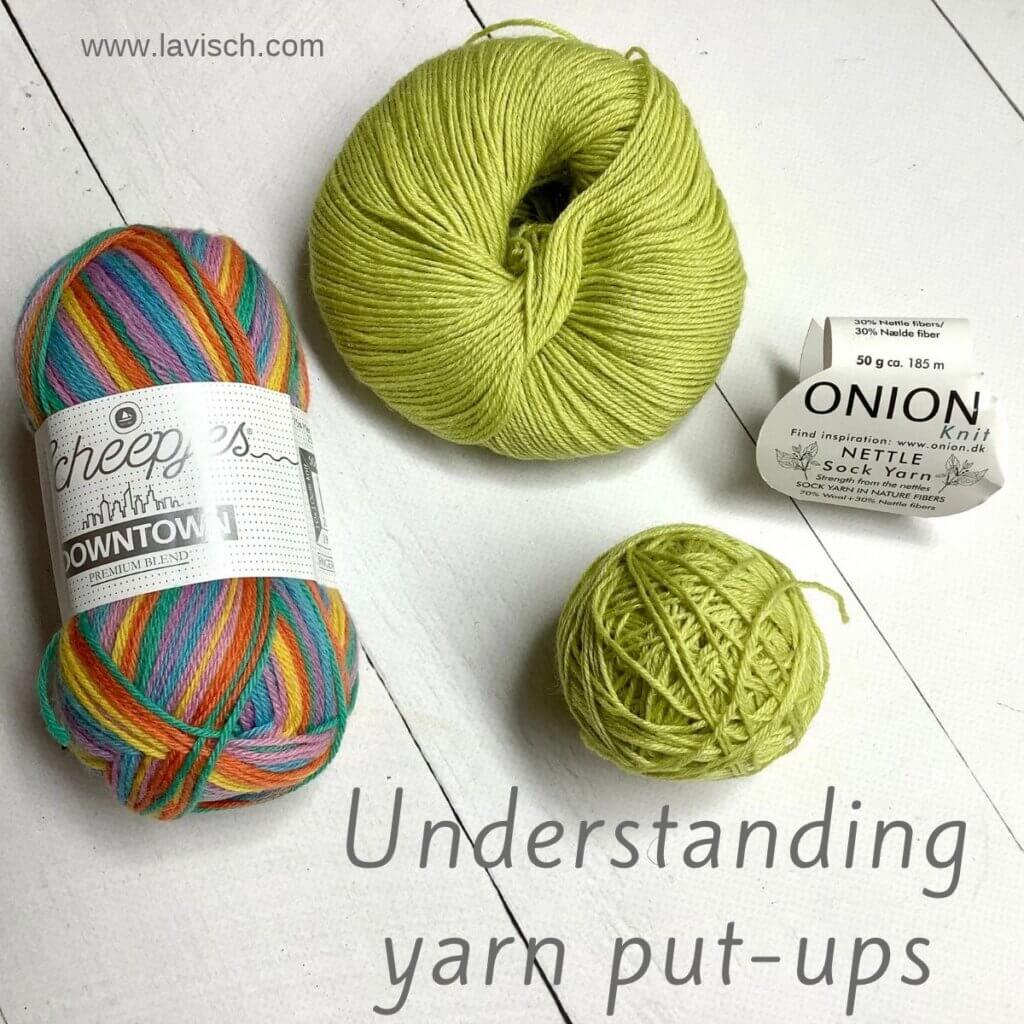
When you buy yarn, you may notice that it does not always arrive in the same shape. One yarn comes in a neat little ball, another in a long oval cake, while a third looks like a beautifully twisted braid. These different forms are called put-ups. A put-up is simply the way a yarn is wound, packaged, and presented for sale. The put-up does not necessarily tell you anything about the quality of the yarn, or the weight of the yarn. It mainly affects how the yarn is stored, how you work with it, and whether you need to prepare it before knitting.
In this tutorial, we will look at the most common yarn put-ups. To show you the differences, I will use pictures of my past, and present stash. If you follow me on social media, you may recognize some of these yarns from projects I’ve been working on. I will tell you more about:
- Skeins
- Hanks
- Balls
- Donuts
- Cakes
- Cones
The skein
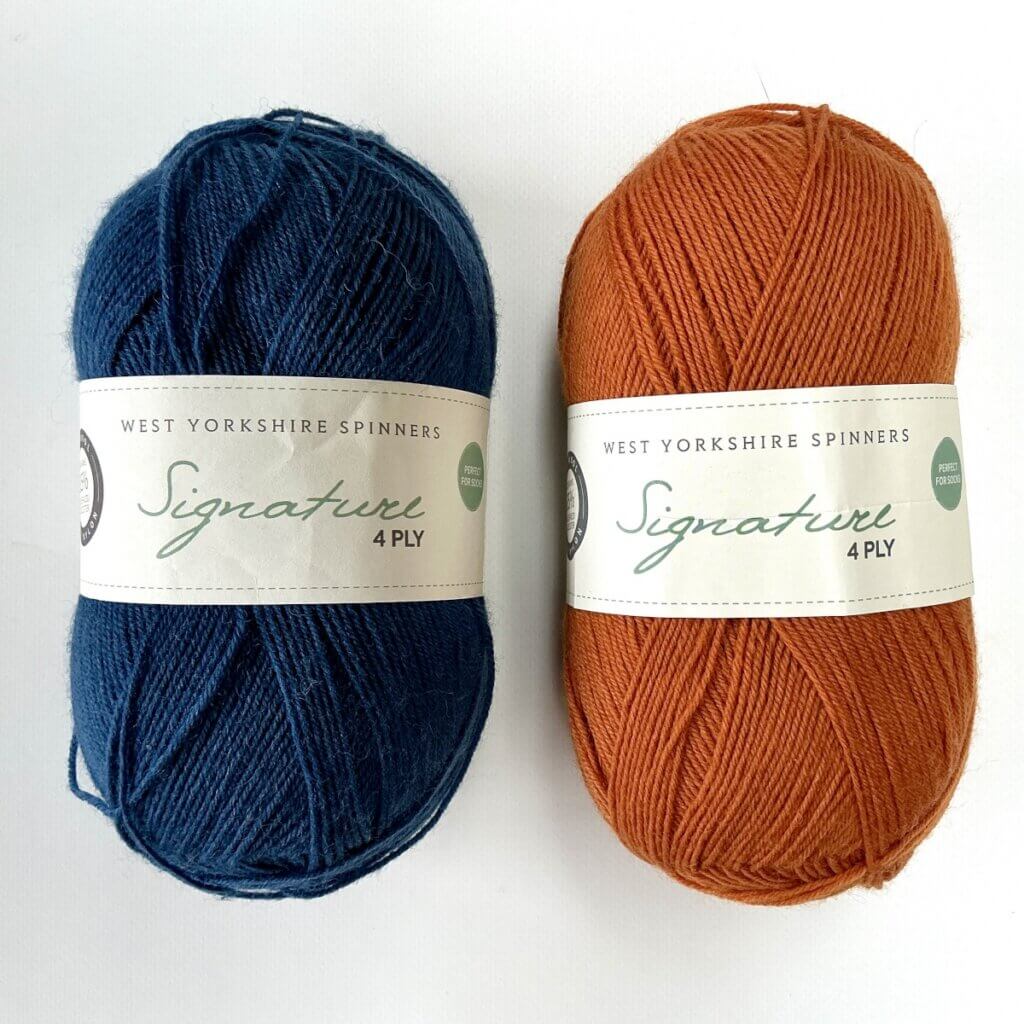
A skein is one of the most familiar forms of yarn. The yarn is wound into an elongated shape, usually with a loose outer strand that allows you to pull the yarn directly from the center. Many commercial yarns are sold this way because the skein is practical to store and easy to use. Some skeins, however, are designed to be knitted from the center, if this is the case, it’s usually indicated on the ball band. If not, you can still try to gently pull out the yarn tail form the center to make it a center-pull skein. be aware that this can result in the dreaded “yarn barf”: The tangled insides of the skein that may take some patience to resolve into something knittable.
If finding the center feels like a wrestling match with the yarn, it is often easier to place the skein in a yarn bowl or let it roll gently beside you and work from the outside.
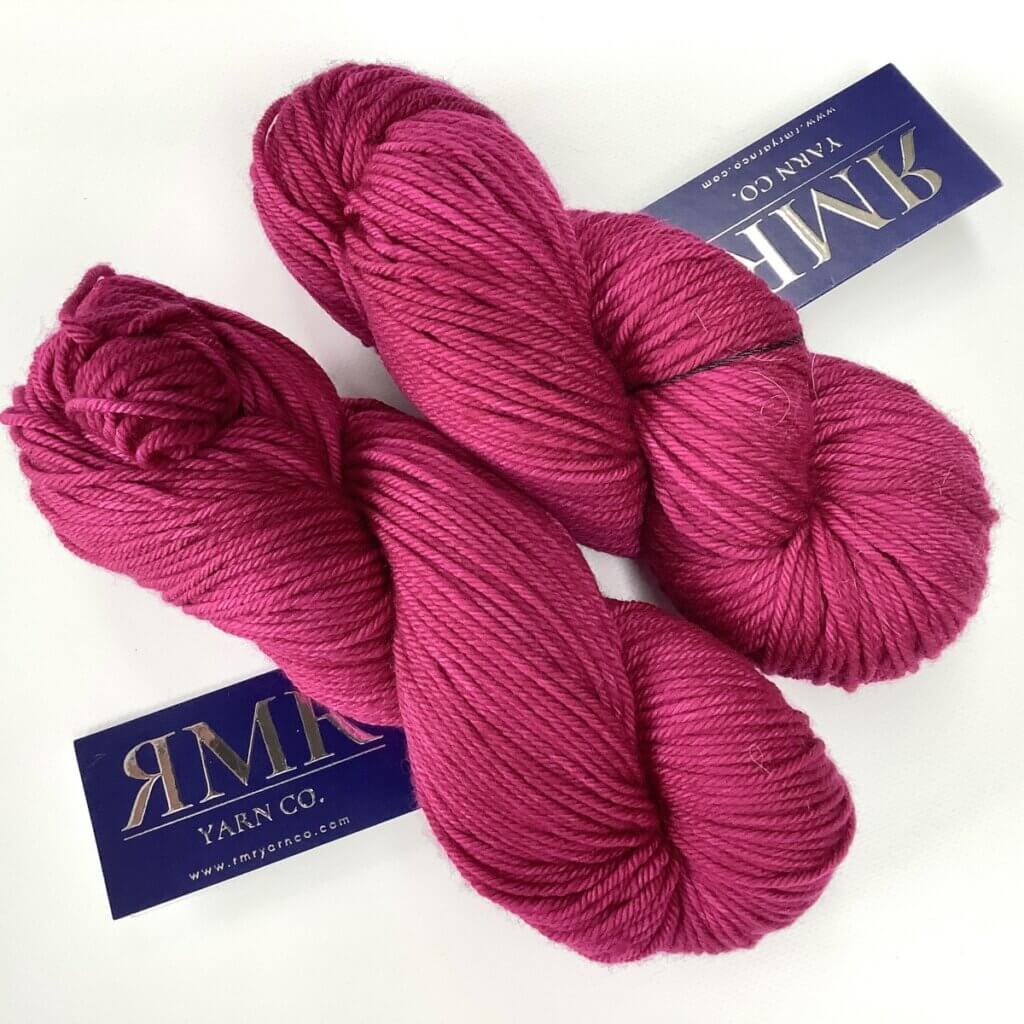
The hank
A hank is a large loop of yarn that has been wound using a niddy noddy or another winding device and then twisted into a compact shape. This is the traditional shape you often see with hand-dyed yarn. Such a large loop makes it possible for dye to penetrate all the strands, which it wouldn’t be able to do in other yarn put-ups. A hank is not normally ready to knit from. I mean, you may try, but it will be very prone to tangling. So, before knitting, you need to untwist the hank, open it into a loop and wind it into a ball or cake. You may wish to use like a swift and ball winder, for this. Personally, I don’t own these, so I just wrap the hank around my knees, and wind by hand into a ball.
I’ve put mini skeins also in the hank-category, because they usually consist of small quantities of yarn wound into miniature version of a regular hank. They are often sold individually or in sets, and are particularly useful for color work.
The ball
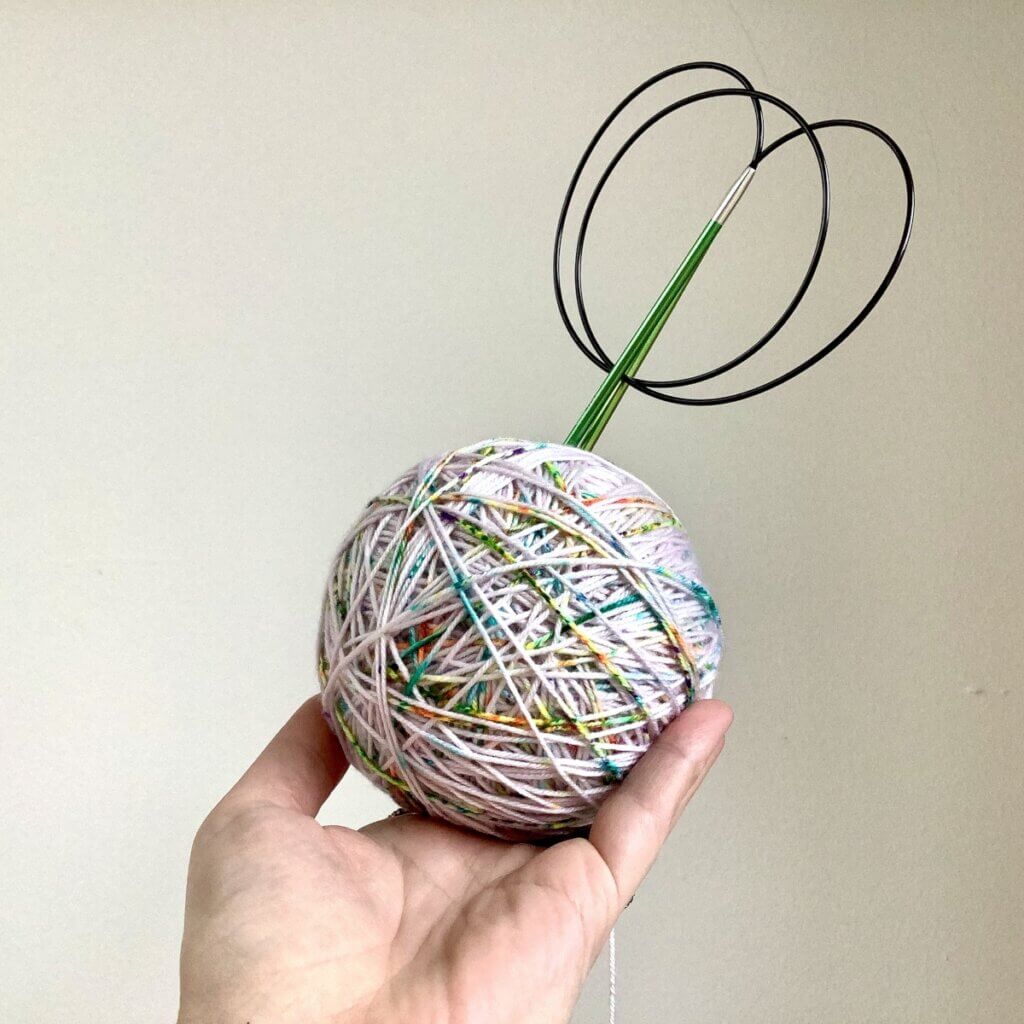
A ball is exactly what it sounds like: the yarn has been wound into a round shape. Balls can be wound by hand or by machine. There are two common ways to work from a ball: From the outside, and from the inside.
- Outside-pull ball: The yarn comes from the outside of the ball. The ball will usually move around as you knit, so a yarn bowl can be useful for keeping everything in place.
- Center-pull ball: The yarn comes from the center. This allows the ball to remain relatively still while you knit, which many knitters find convenient.
The cake
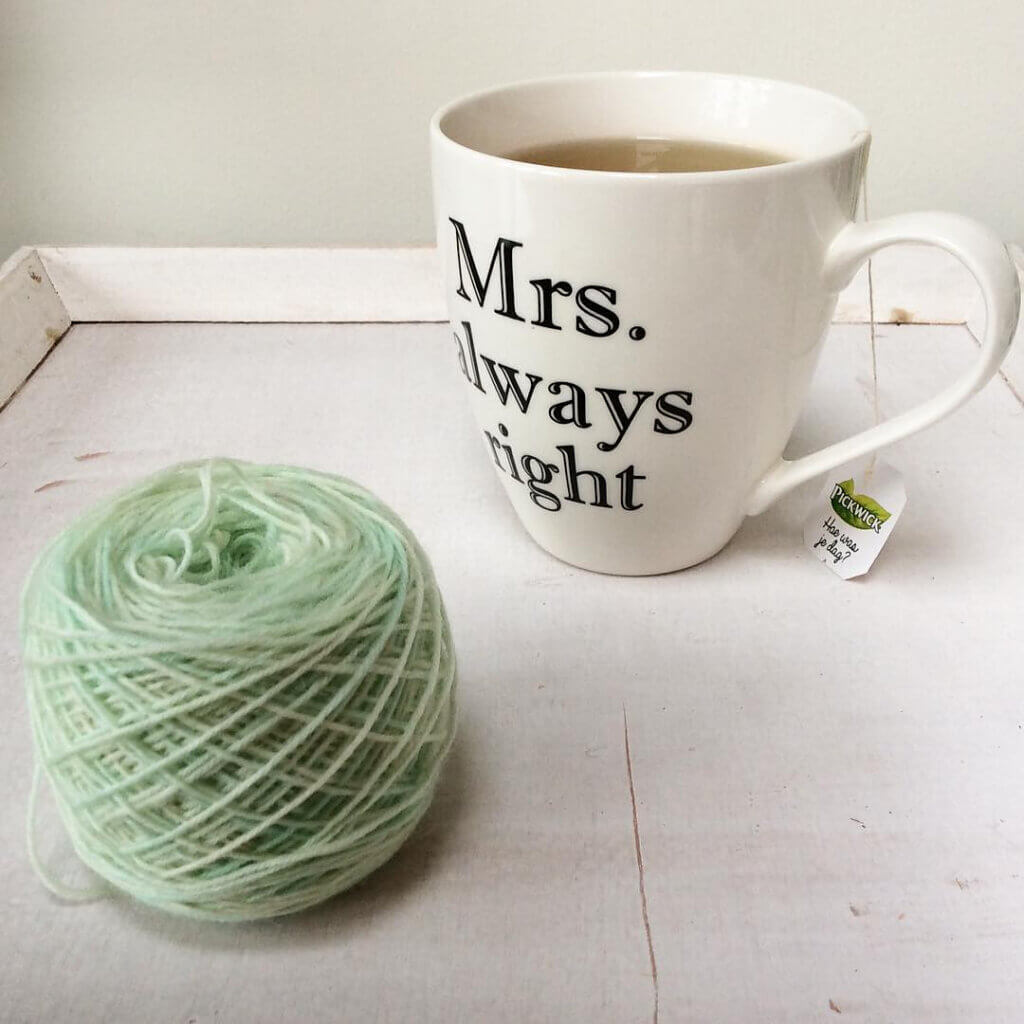
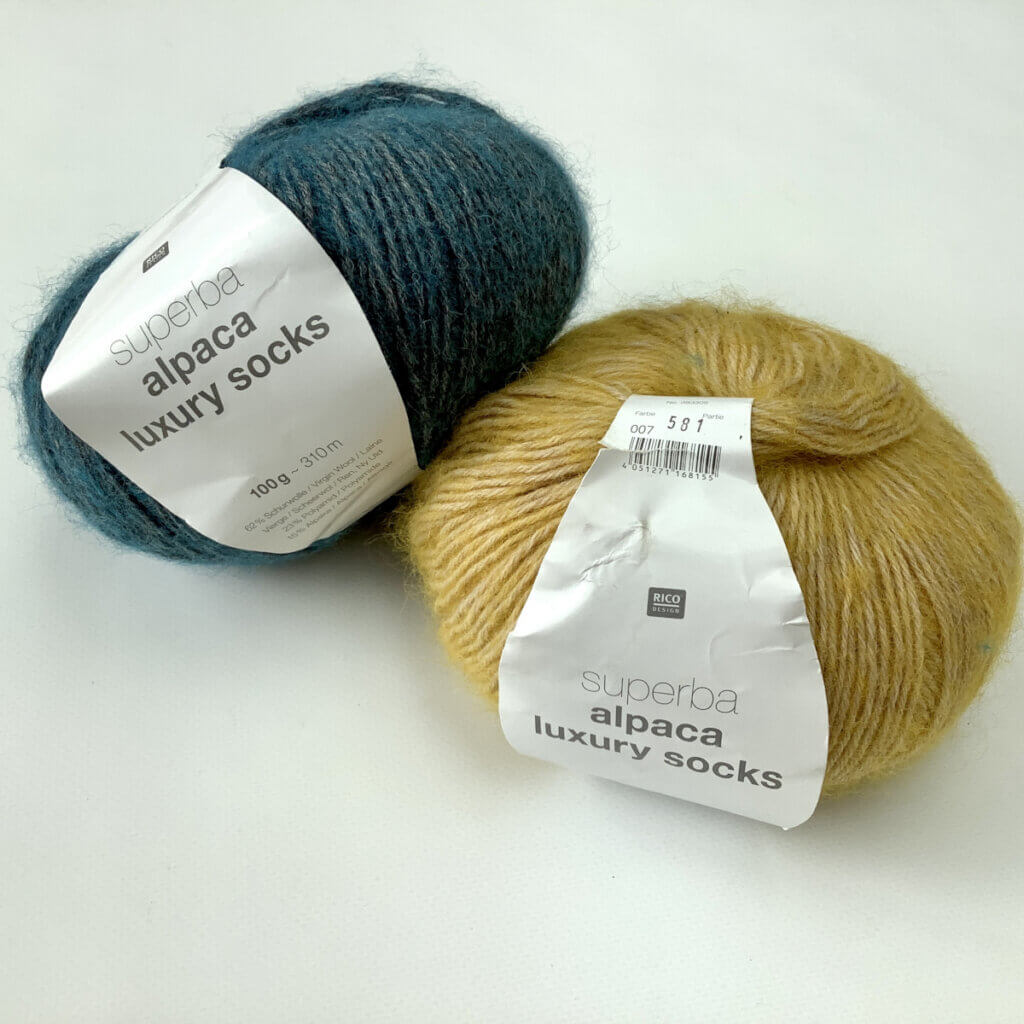
A cake is a very popular put-up among knitters. It has a flat top and bottom and slightly sloping sides, giving it the appearance of a little cake. A cake is usually made with a ball winder. The yarn is wound around a central core, producing a shape that sits neatly on a table. Like a ball, a cake can be made to be either worked from the outside, or from the center. This really depends on the preference of the knitter. An advantage of yarn cakes is, that they stack rather neatly in a project bag or on a shelf.
The cone
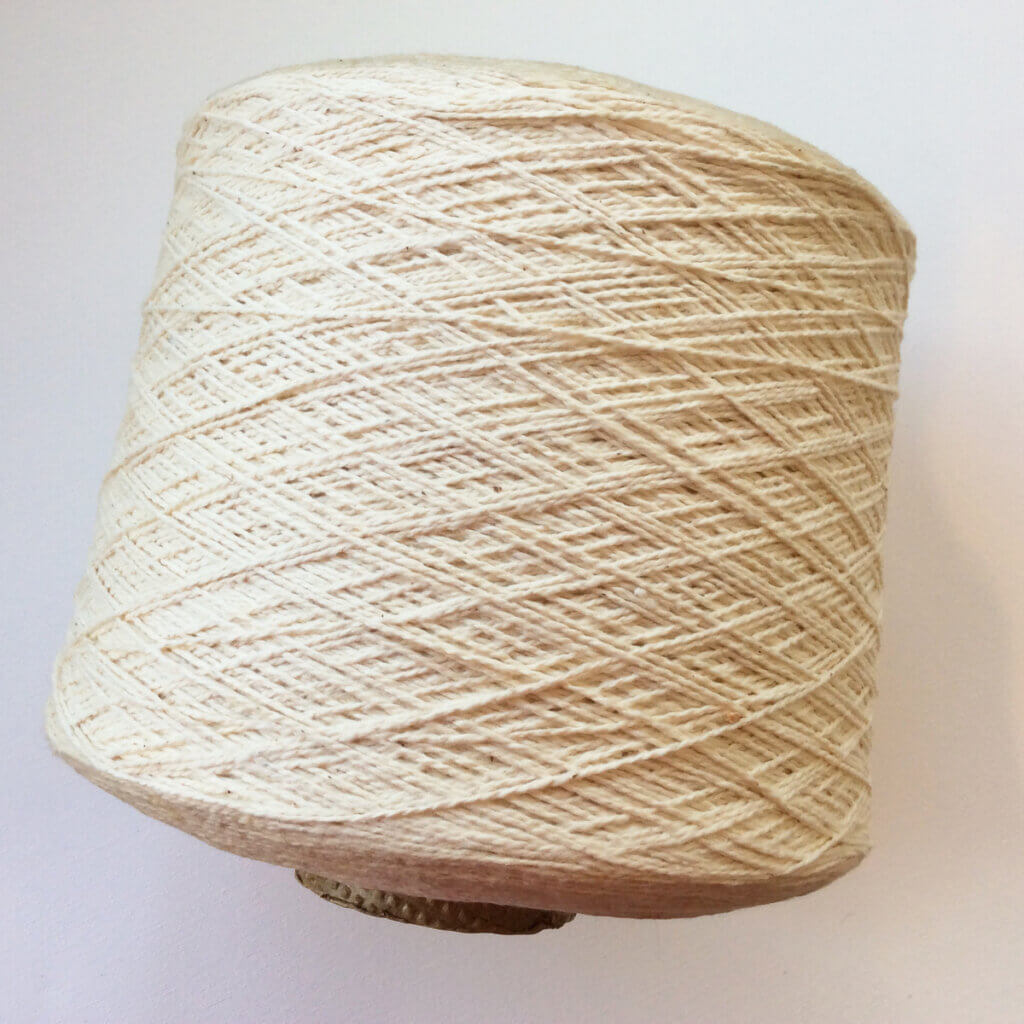
A cone is a long, tapered form of yarn wound around a cardboard or plastic core. Cones are particularly common with industrial or mill-spun yarns and with yarns sold in larger quantities. They can be especially useful for the thinner types of yarn, because on a cone it’s really not prone to tangling as a ball or cake might get once it’s on its way to being used up. A cone is often used directly from the outside, no special treatment necessary.
Because cones can contain a considerable amount of yarn, they are a practical choice when you need a lot of yardage. Do keep in mind, that if you have an industrial or weaving yarn on a cone, they usually contain spinning oil. You may want to wash your swatch, and project to determine it’s final gauge, and texture.
The donut
Some yarns are sold in a donut-shaped ball. This put-up is pretty similar to a skein, but instead of in an elongated shape, the yarn is wound around an empty center, leaving a visible hole. A donut is generally ready to knit from, although the direction from which the yarn should be pulled depends on how it was wound.

Thanks to my Patreon supporters for bringing you this freebie! Creating quality patterns and tutorials is a lot of work and resource-intensive. However, I find it important to give you free content like this tutorial. Thanks to the generous support of my Patreon supporters, I can make it happen. Thank you, patrons! Click here to join, or click here to read more about La Visch Designs on Patreon.