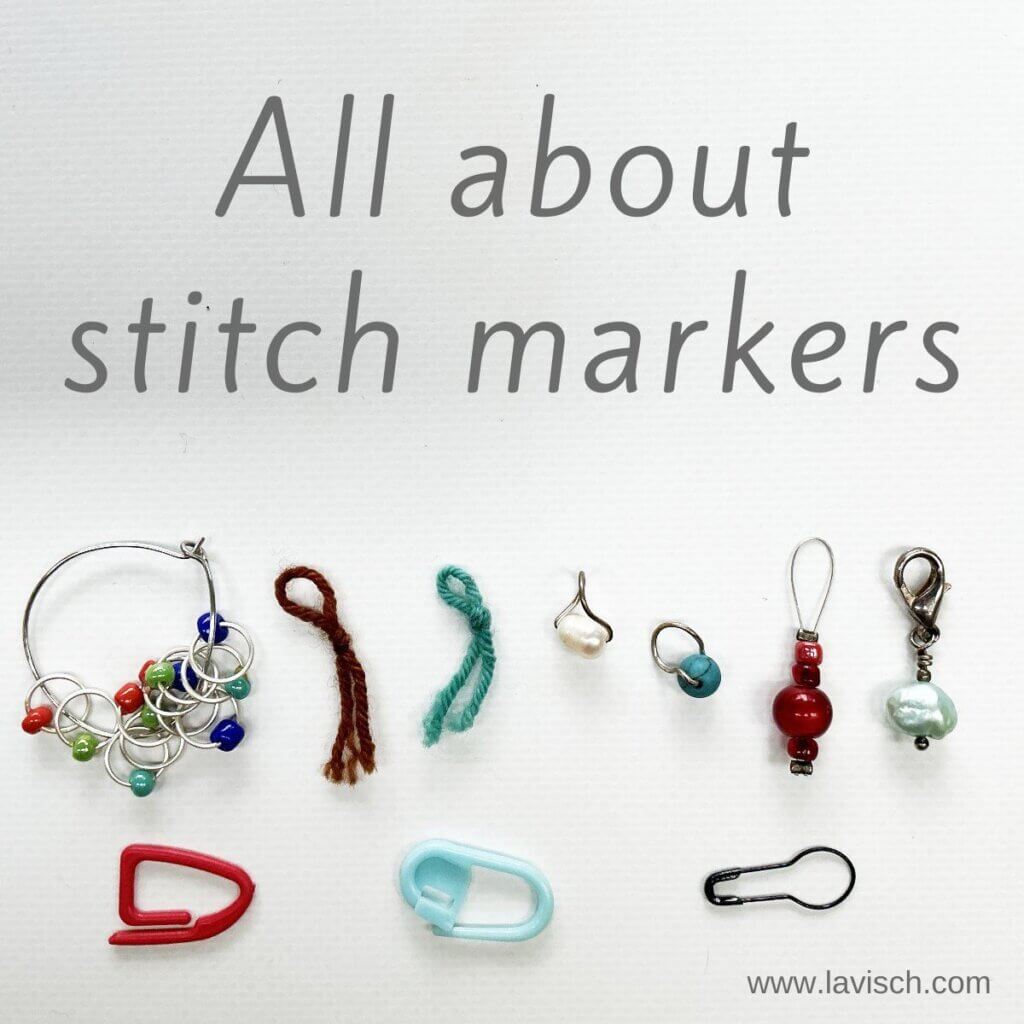
In every knitter’s or crocheter’s notions pouch, there’s a small but very useful tool: The humble stitch marker. Whether the design is simple or elaborate, stitch markers are the highly practical tools of the trade. They help you keep track of your work and make it easier to follow pattern instructions accurately. In knitting, stitch markers are usually placed on the needle and move along as you work. In crochet, stitch markers are usually clipped into a stitch and remain in place until you move them. This usually happens when the marked stitch has been worked, and is moved up to the new stitch directly above it, in the new row or round.
Using stitch markers helps prevent mistakes and makes it easier to spot any issues early on. This last one I especially appreciate when working the more complex lace patterning in projects. In this post, I’ll show you the different types of stitch markers, and how to use them in both knitting and crochet. Let’s get started!
Closed stitch markers
Below, you can see a variation of closed stitch markers as found among my notions. They all have in common that they are placed on the knitting needle to mark a shaping point, a pattern repeat or the beginning (or end!) of a round. This type of stitch marker cannot be used in crochet.
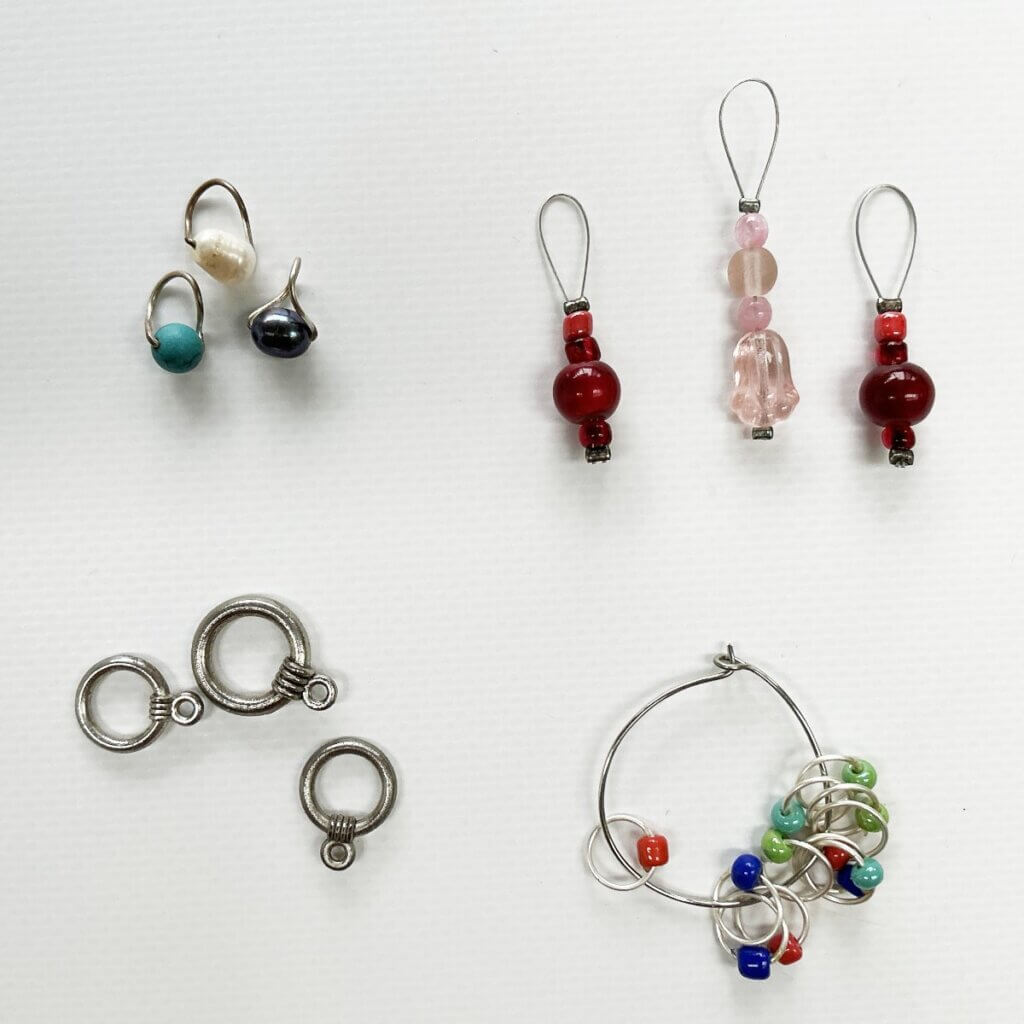
Here you can read some of the ways to use this kind of stitch marker:
Marking the Beginning of a Round (BOR): In circular, seamless projects, the BOR marker is placed so that you know when you have completed a full round. It’s best to use a unique marker for the BOR so you don’t confuse it with others that you may have in your project for shaping, for example. In knitting, this marker is placed on the right needle after working the last stitch of the round, so basically in-between the last and first stitches. For this reason it’s also often called the “End of Round (EOR)” marker. I like to use my row counter, suspended from a piece of cotton for this.
Marking increases and decreases: When working projects such as garments or shawls, that require shaping, stitch markers are used to ensure these are performed in the correct place each time.
Separating pattern repeats: For simple pattern repeats or when working lace, cables or colourwork, I often place a marker at each repeat. This allows me to confidently work without the need for constant counting. Also, it enables me to easily spot mistakes in one small, manageable section at a time.
Reminders: At certain points in your knitting, you may need to work a single stitch differently, such as working short rows when you knit the turning stitches together. Use markers to remind you where these are and save time and possible mistakes.
A draw back I’ve noticed of this type of stitch marker, is that they tend to catch the yarn. This, in turn, makes the tension a bit looser in the area of the marker than in other places in the fabric. I’m a pretty loose knitter, so anything that makes the tension even more loose is not something I want.
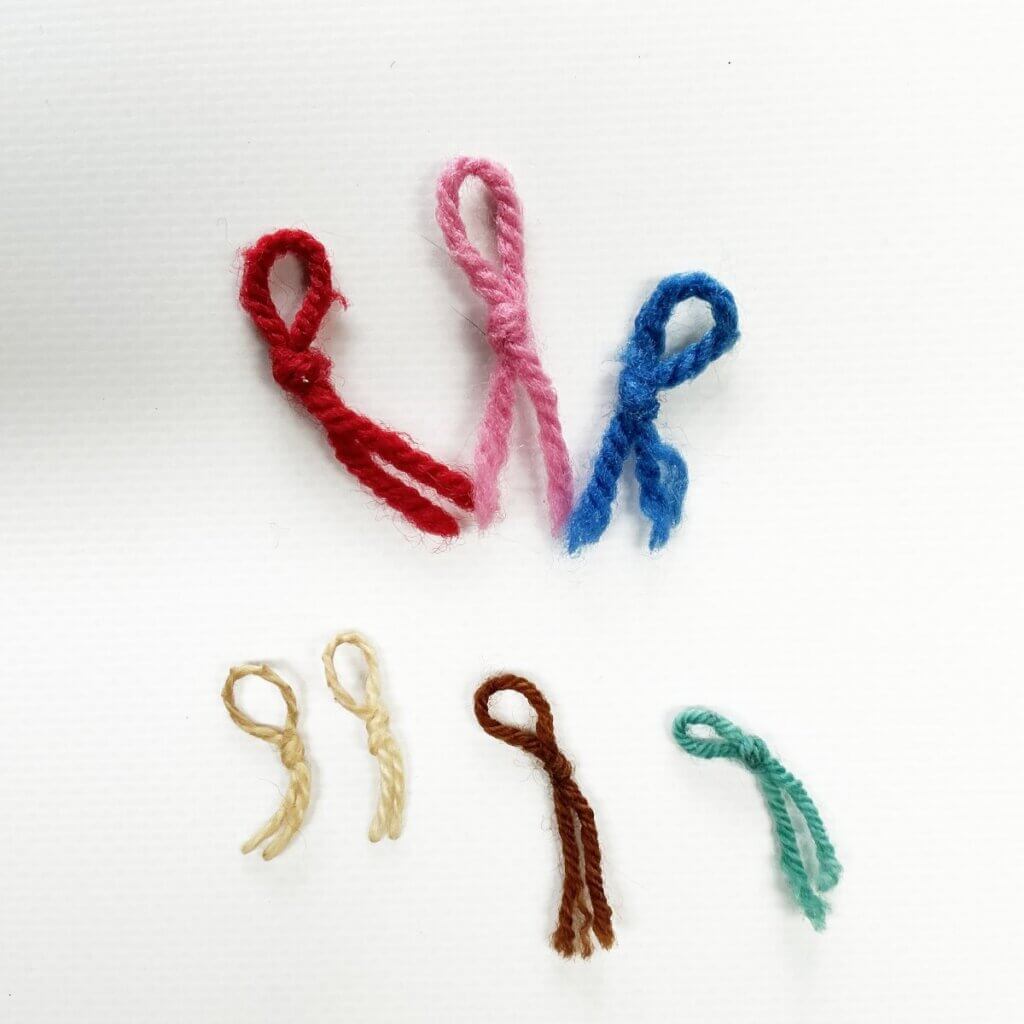
This is the reason that I prefer the looped yarn variety of closed stitch marker: Just tie a bit of yarn into a loop, and you’re good to go! I match the weight of the yarn for the stitch marker with the yarn used in the project. Not only have these stitch markers enough give in the part that goes around the needle to prevent tension issues. The tails also make it possible to determine the correct place of the stitch marker, even if the loops of the knitting slide over the loop of the stitch marker. Also nice: If you lose one, you can easily make new stitch markers with just a small piece of waste yarn!
Locking or removable stitch markers
Removable stitch markers like the ones below, are generally used to clip onto a particular stitch. Because of this, they can be used in both knitting and crochet. If the needle size is small enough, you can also slide them onto a knitting needle. In that case, they work just like a closed stitch marker. The bulb pins shown in the lower right corner are a budget-friendly alternative. They offer a simple alternative for other ,usually more expensive versions of removable stitch markers.
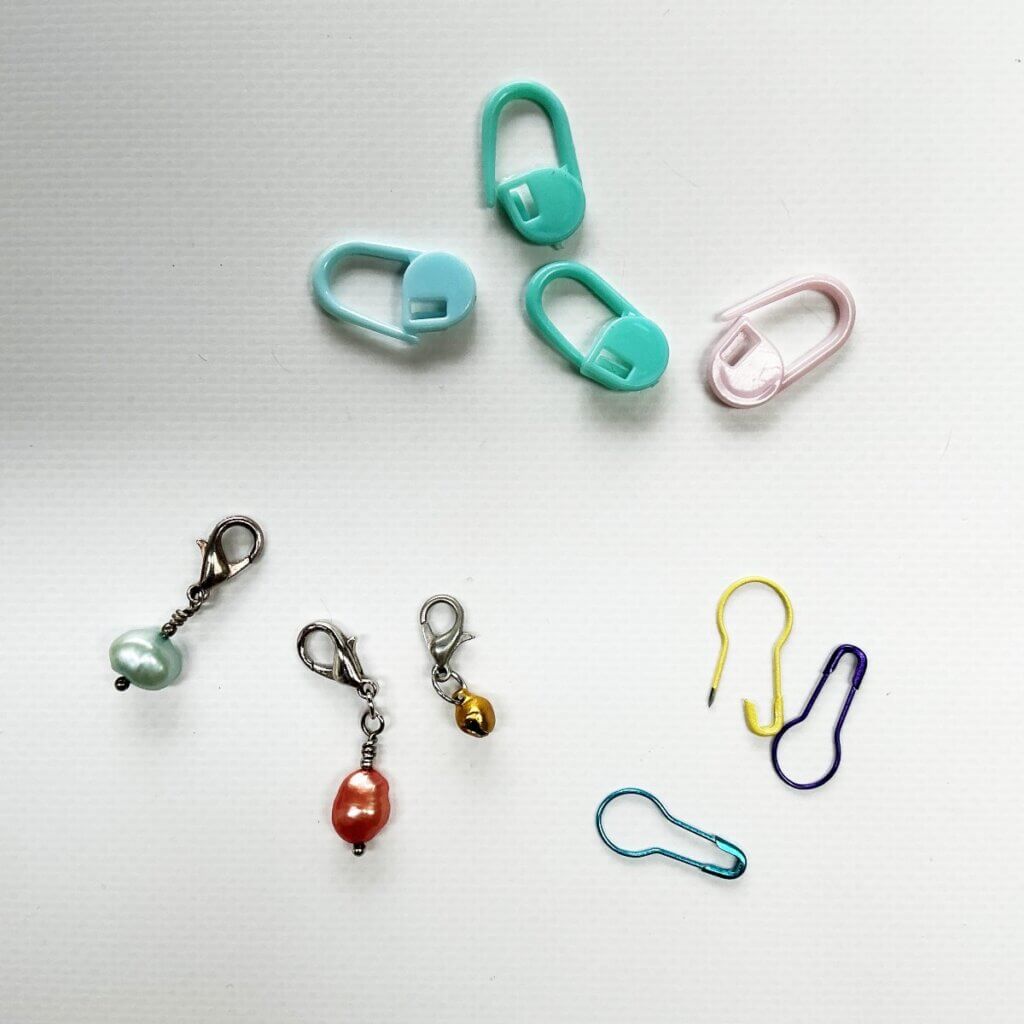
There are various ways to use this kind of stitch marker. In crochet many uses are similar to those mentioned above for the closed stitch markers. For both knitting and crochet, you can think of the following:
Using a locking stitch marker to mark stitches for later: There are times when a pattern tells you to do something, but not right away. Think of things like the start of a round, or where increases or decreases will happen a few rows further on. In those cases, you can place a locking stitch marker right in the stitch itself. When you get to the relevant row, you can simply trace the stitches upward to find the exact spot. It’s a lovely way to keep knitting or crocheting without breaking your rhythm. Especially in larger projects or when working in a spiral, like with amigurumi.
Keeping track of rows without constant counting: If you find yourself losing track of rows or rounds (and honestly, who doesn’t?), locking stitch markers can really help. Just place one every 10 or 20 rows. That way, you always have a quick visual reference, and you don’t have to count everything over and over again.
Marking points for neat seaming: When working pieces separately that will be joined later, it can be tricky to line everything up just right. By placing locking markers at the points that need to match, you give yourself little guides to follow when seaming. It makes the finishing much easier and helps keep everything nice and tidy. This is exactly what you’re seeing below in this picture of a cardigan I made.
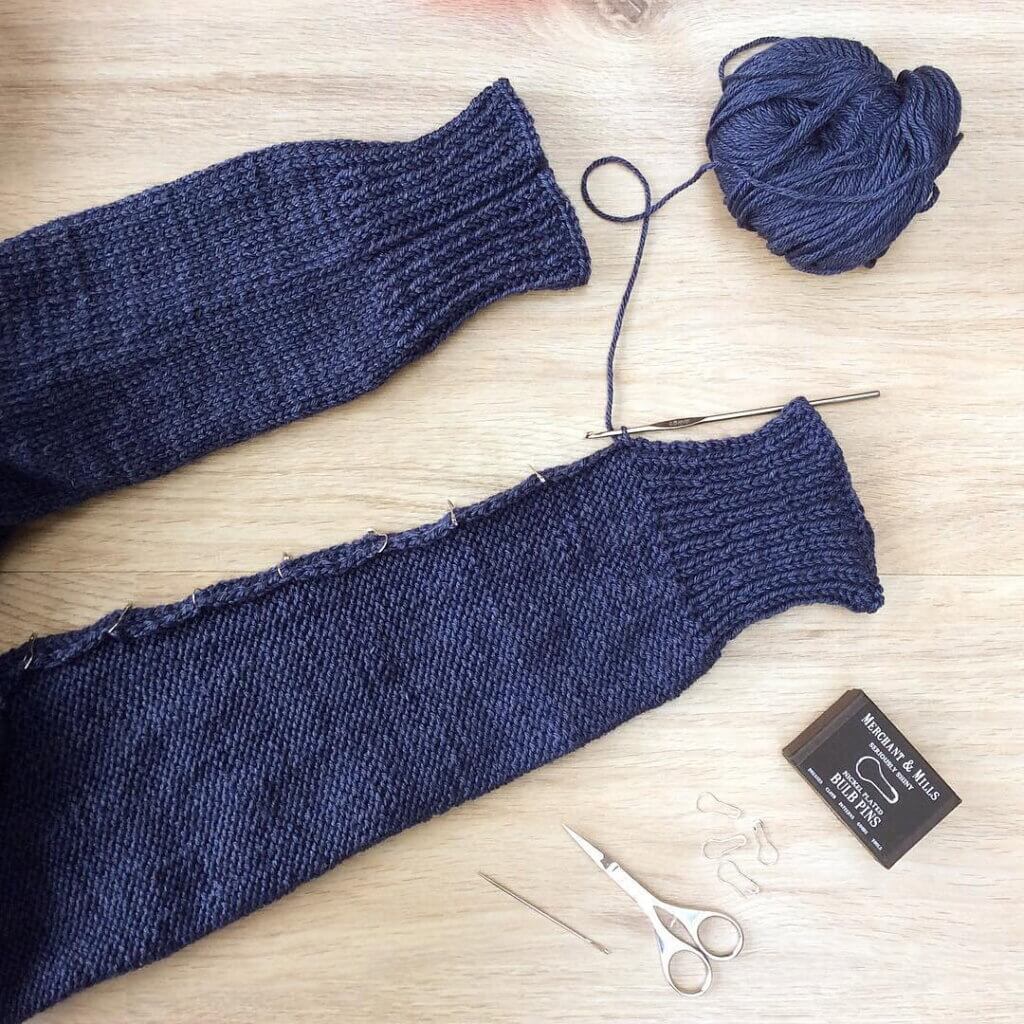
Catching and securing dropped stitches: A dropped stitch doesn’t have to be a disaster. Just catch the loop with a locking stitch marker to stop it from unraveling further. You can then fix it at your convenience, without worrying that things will get worse in the meantime. I had this happen once while blocking a lace shawl. A thread snapped, where I must have knit into the fluff of the kid silk. Anyway, I secured it with a bulb pin, and repaired the hole when the shawl came off the blocking mats.
Keeping your work safe when putting it down: This one is especially relevant for crochet. If you need to put your project aside or take it with you, it’s a good idea to secure the live stitch with a locking marker. It only takes a moment, and it helps make sure your work is exactly as you left it when you pick it up again!
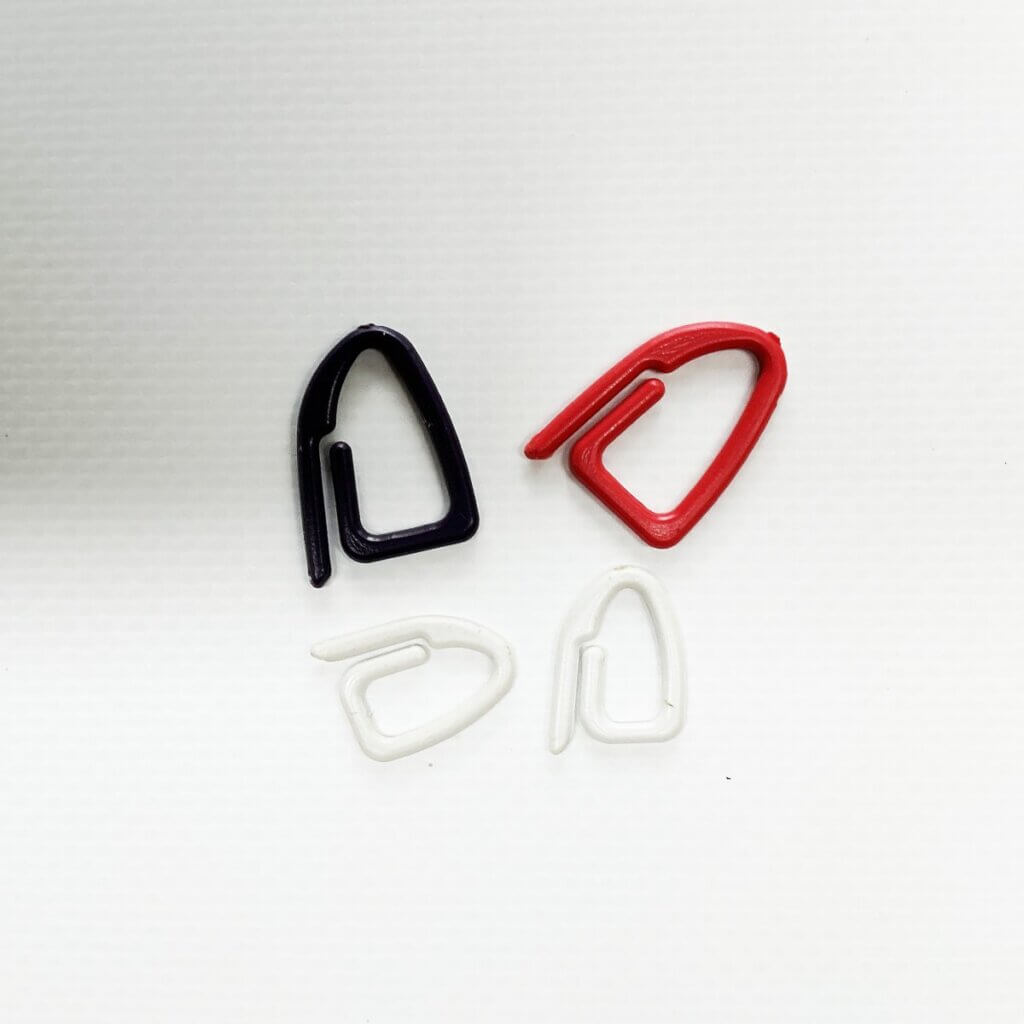
The stitch markers you can see above, are a special variation of the locking stitch marker. They are often called spiral or split-ring stitch markers. These stitch markers are easy to recognize by their open, spiral-like shape. They’re not fully closed, with just a small overlapping gap. Because of this, they can be slipped in and out of stitches very quickly. This makes them particularly popular for crochet, where you often need to move markers around as you work. That said, they can also be quite useful in knitting, especially because they can be inserted, and removed very easily. I use them often when knitting a garter stitch tab for a new shawl!

Thanks to my Patreon supporters for bringing you this freebie! Creating quality patterns and tutorials is a lot of work and resource-intensive. However, I find it important to give you free content like this tutorial. Thanks to the generous support of my Patreon supporters, I can make it happen. Thank you, patrons! Click here to join, or click here to read more about La Visch Designs on Patreon.