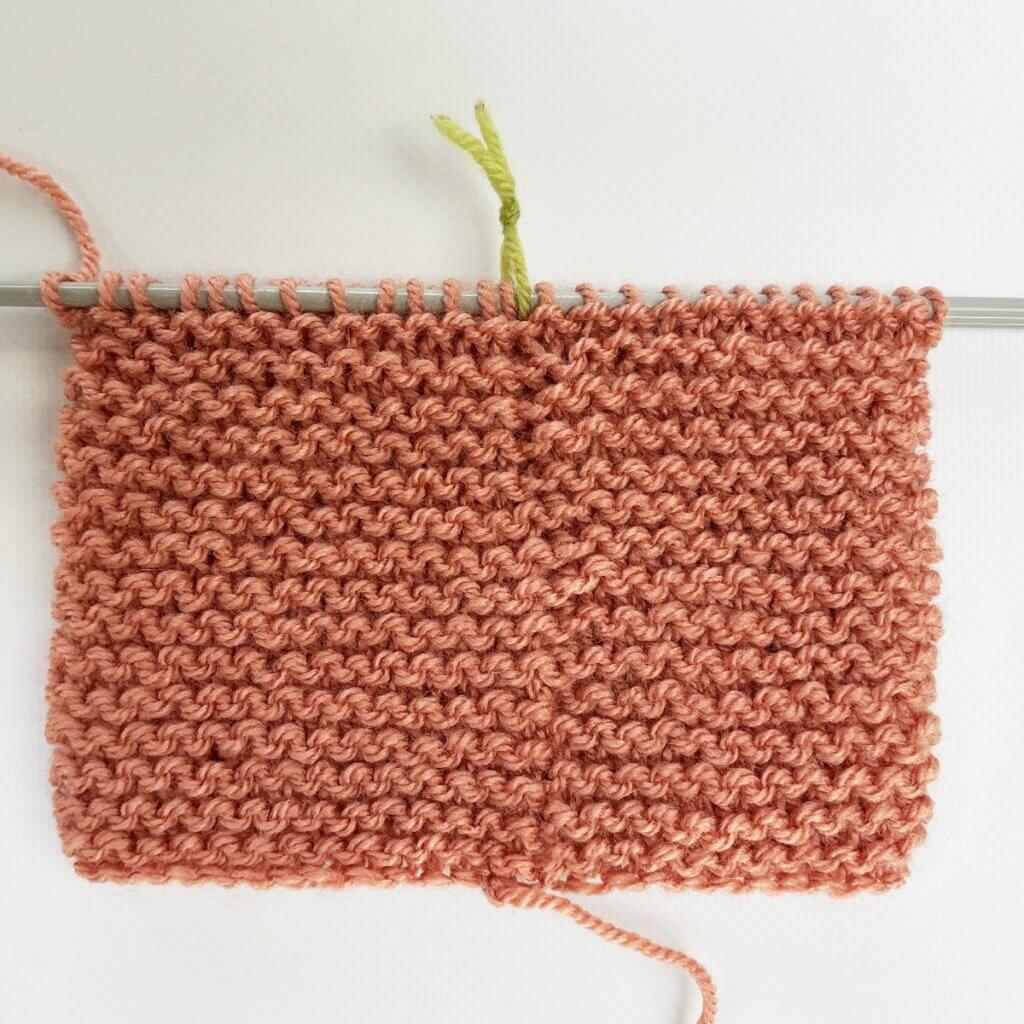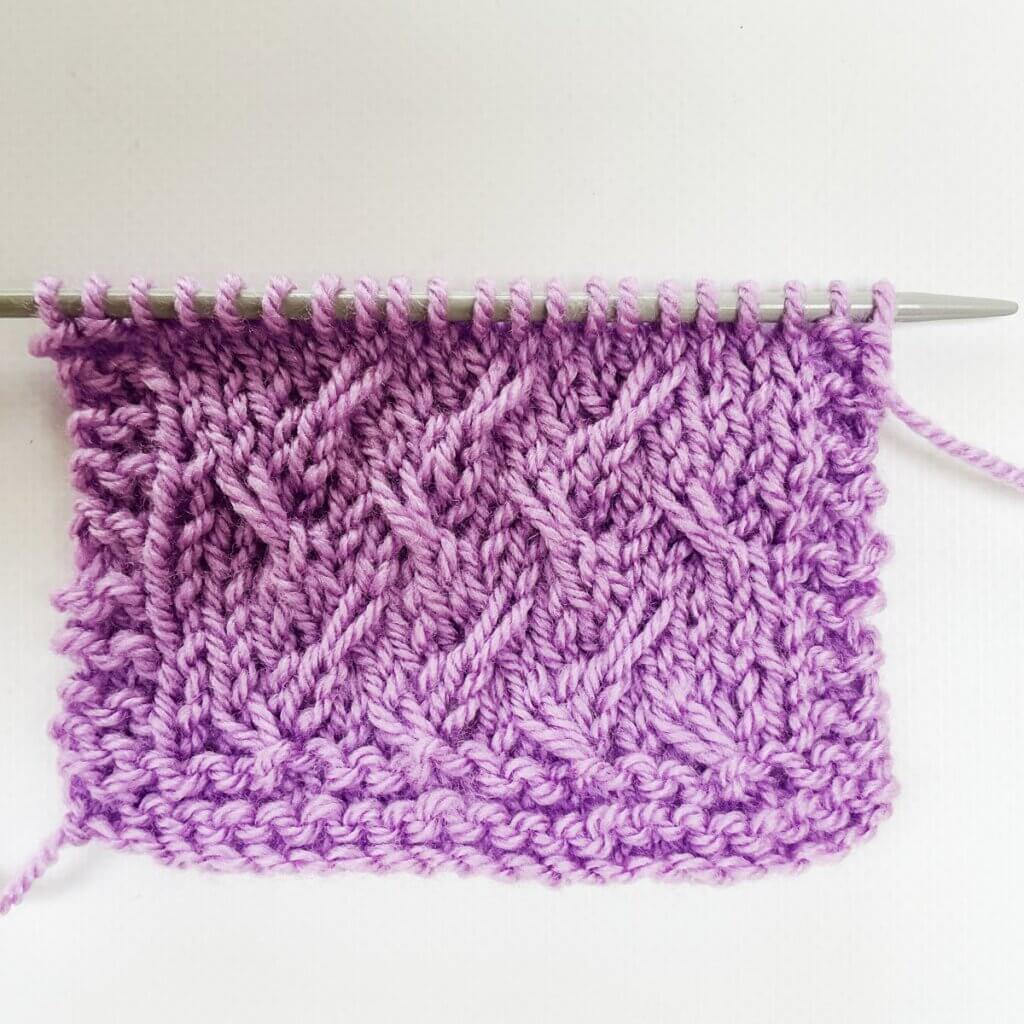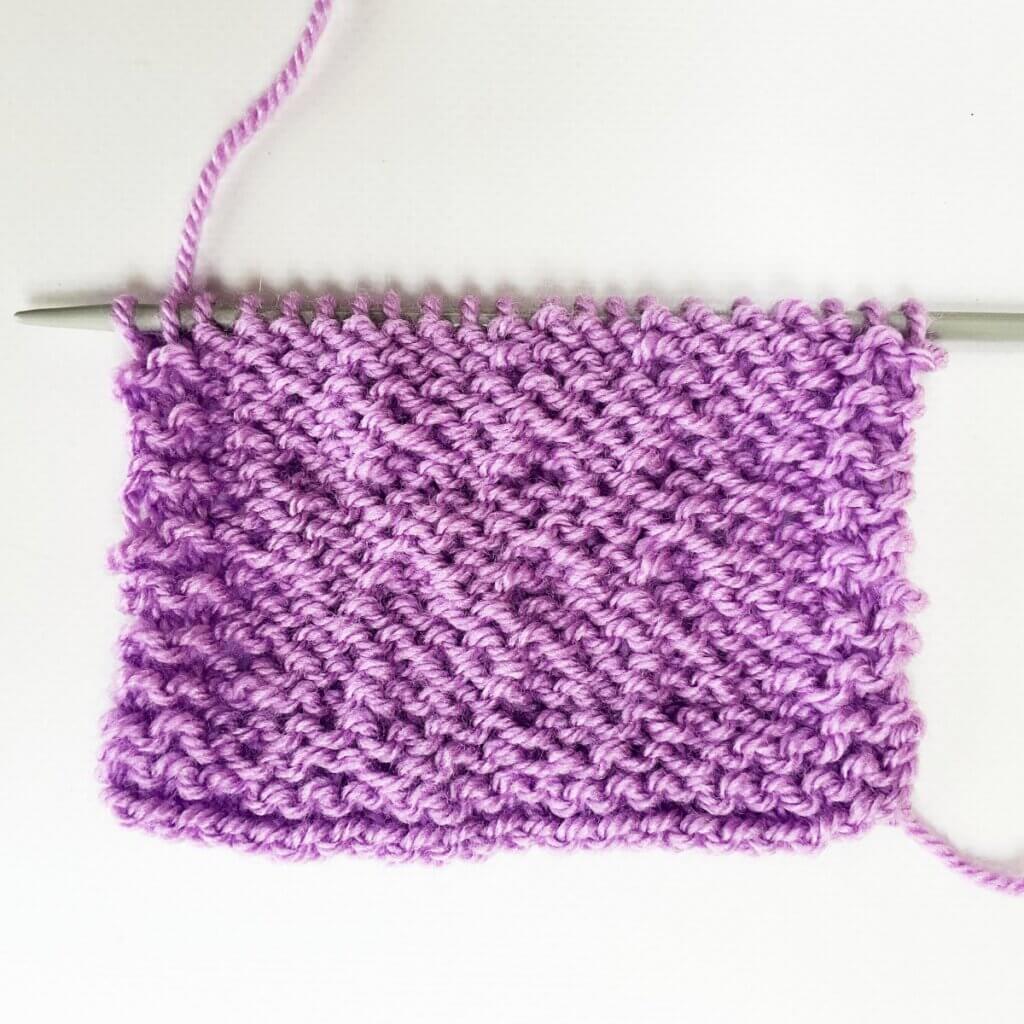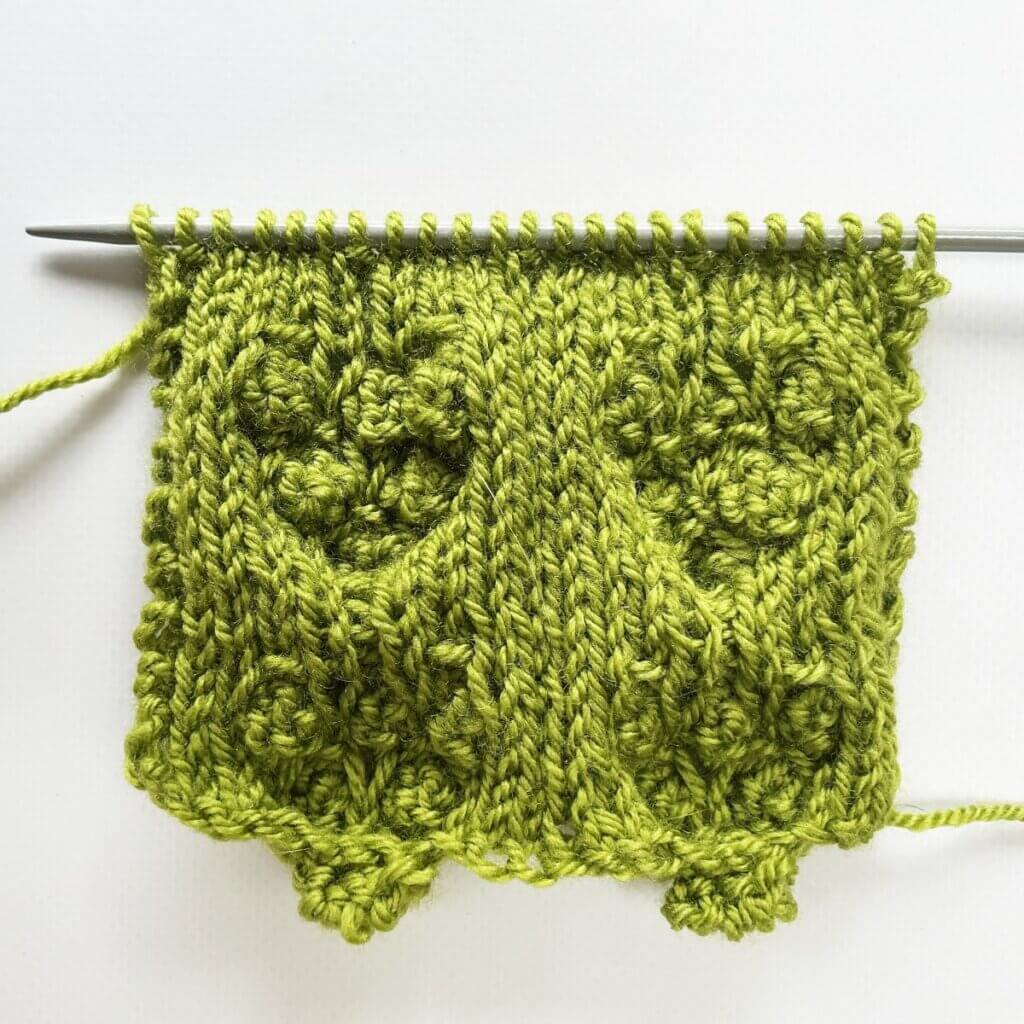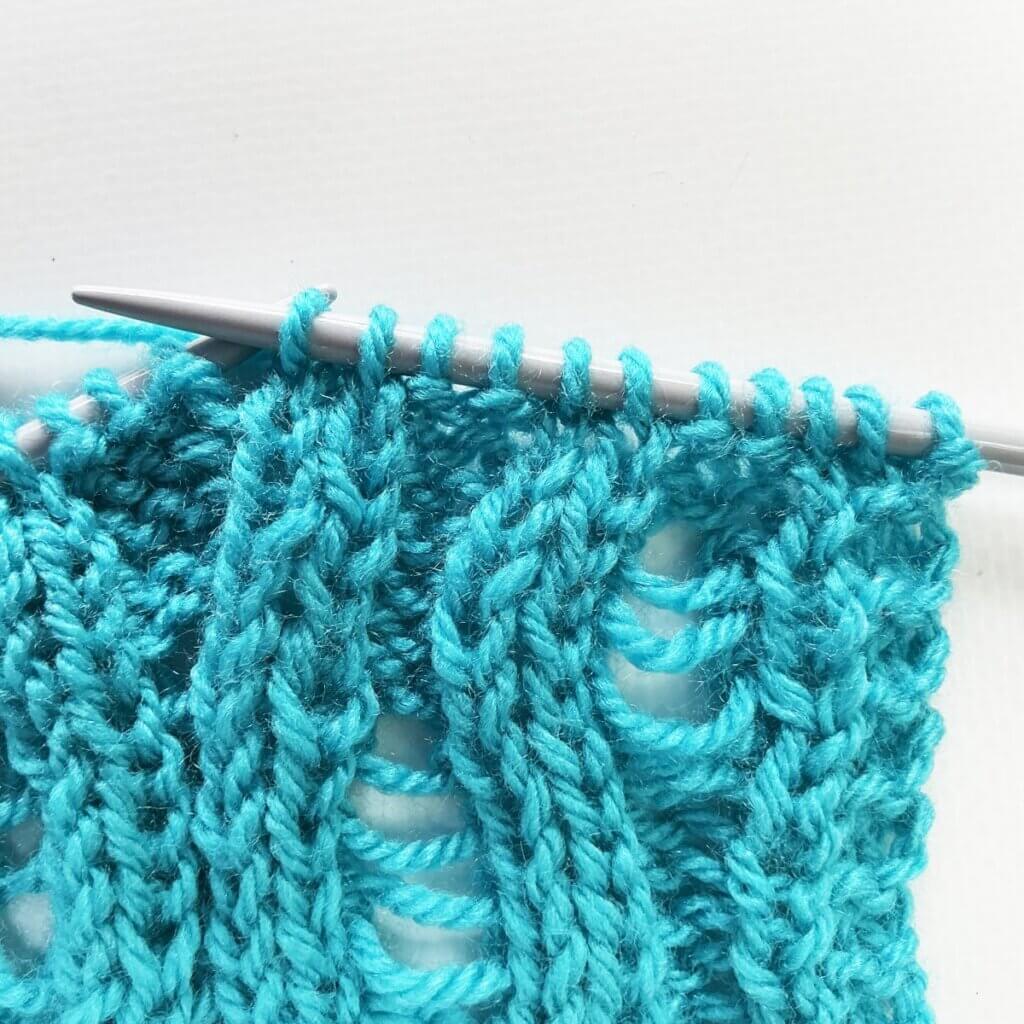
tutorial – making a loop buttonhole

Making a loop buttonhole - a tutorial by La Visch Designs

A loop buttonhole is one of those small finishing details that can completely change how polished your project looks. Instead of working a buttonhole into the fabric itself, you create a simple loop right at the edge. It removes the need to plan out your buttonholes while still knitting or crocheting your project. In other words: It’s perfect for cardigans, cuffs, keyhole openings, or anywhere you want a flexible, decorative closure.

In this step-by-step photo tutorial, I show you how to create a neat, loop buttonhole along the edge of your work using a darning needle. The same effect could however also be achieved by crocheting into the loop. Ok, get your things, and follow along!

Materials used

Yarn: Paintbox Yarns Simply DK, a good value, good quality 100% acrylic yarn, here in the color Lime for the swatch, and Vintage Pink for the buttonhole loop.

Darning needle: Hiya Hiya Darn It Yarn Needle, or any other tapestry needle.

Working the loop buttonhole step by step

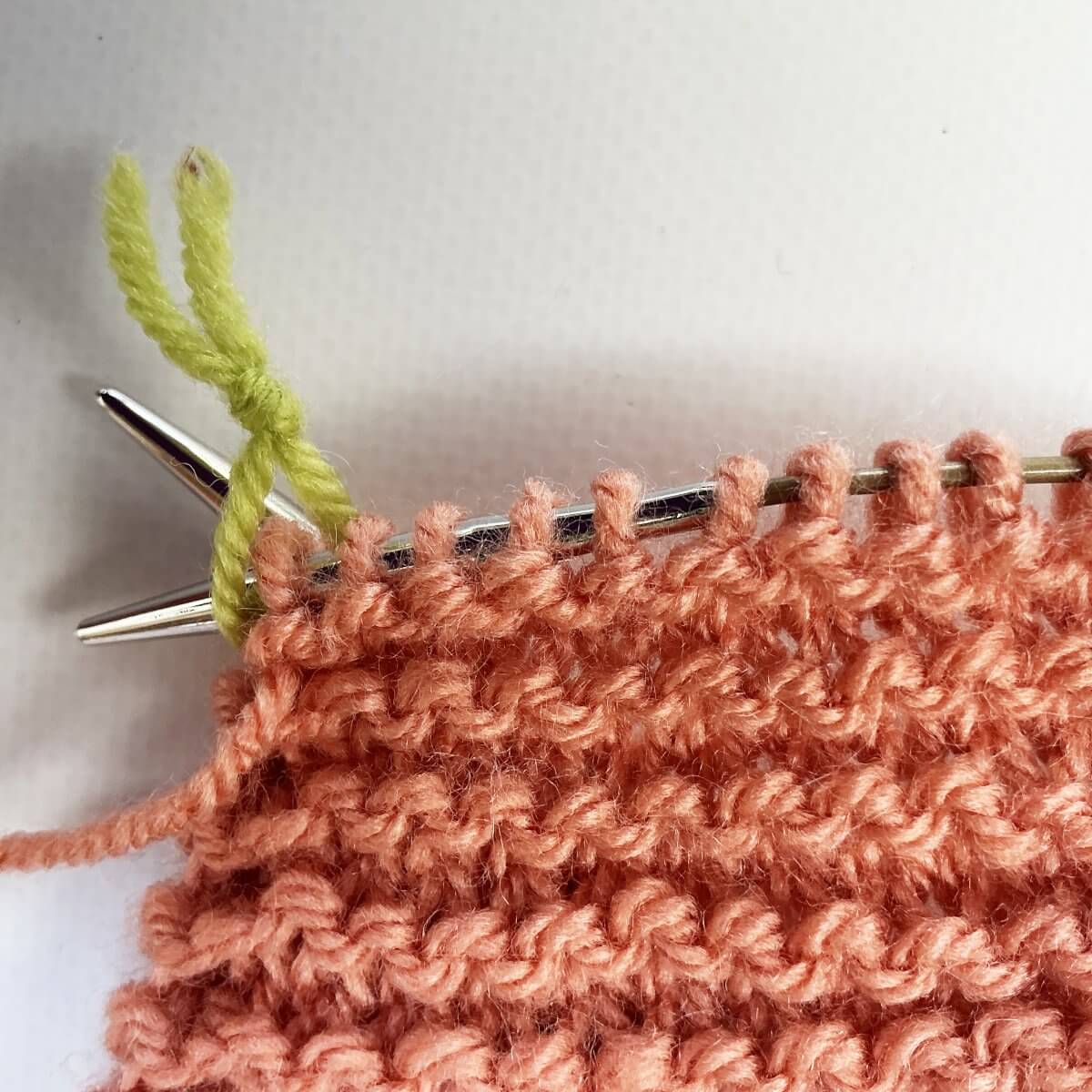
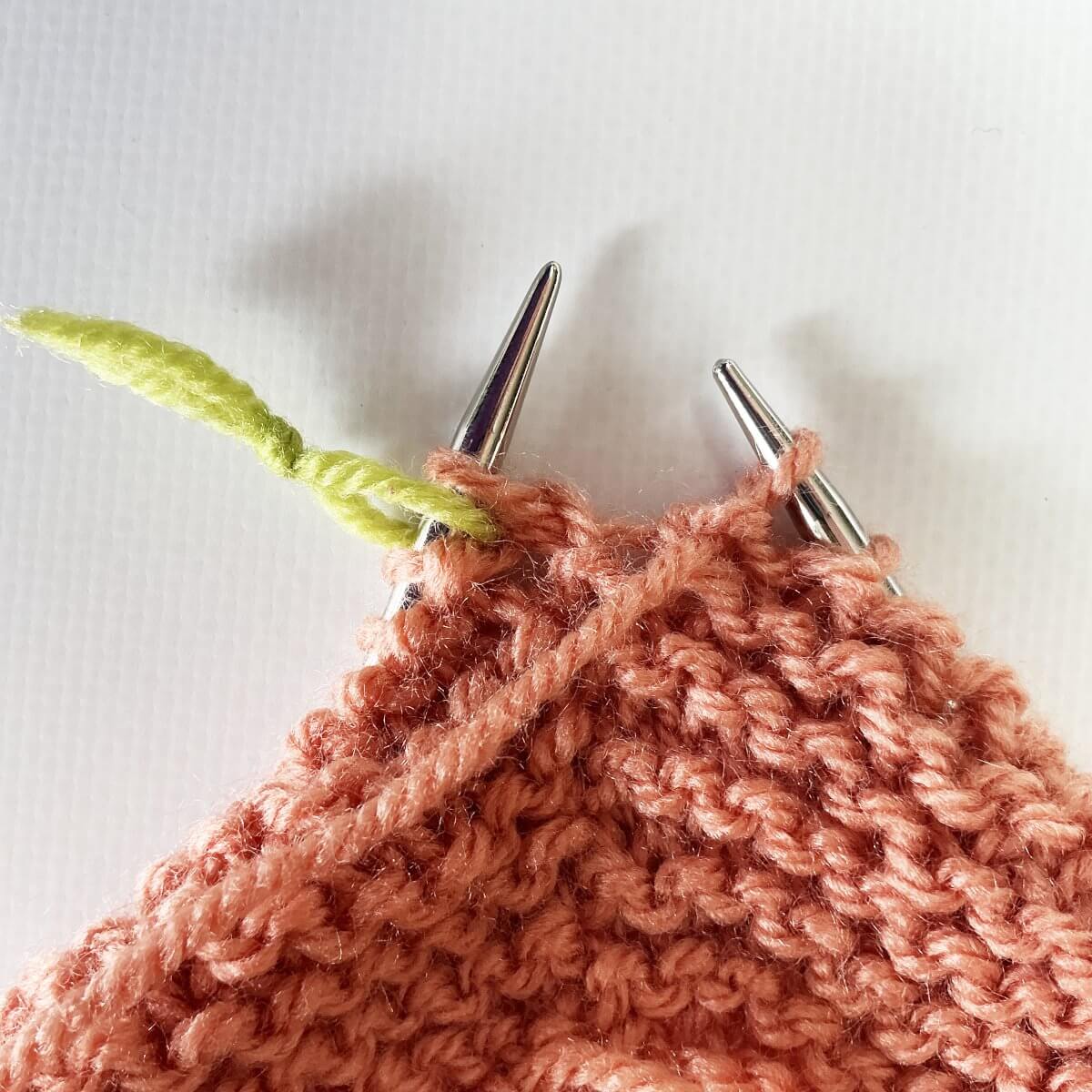
  1. First, make sure you have your darning needle threaded with the yarn you want to use for the buttonhole loop.

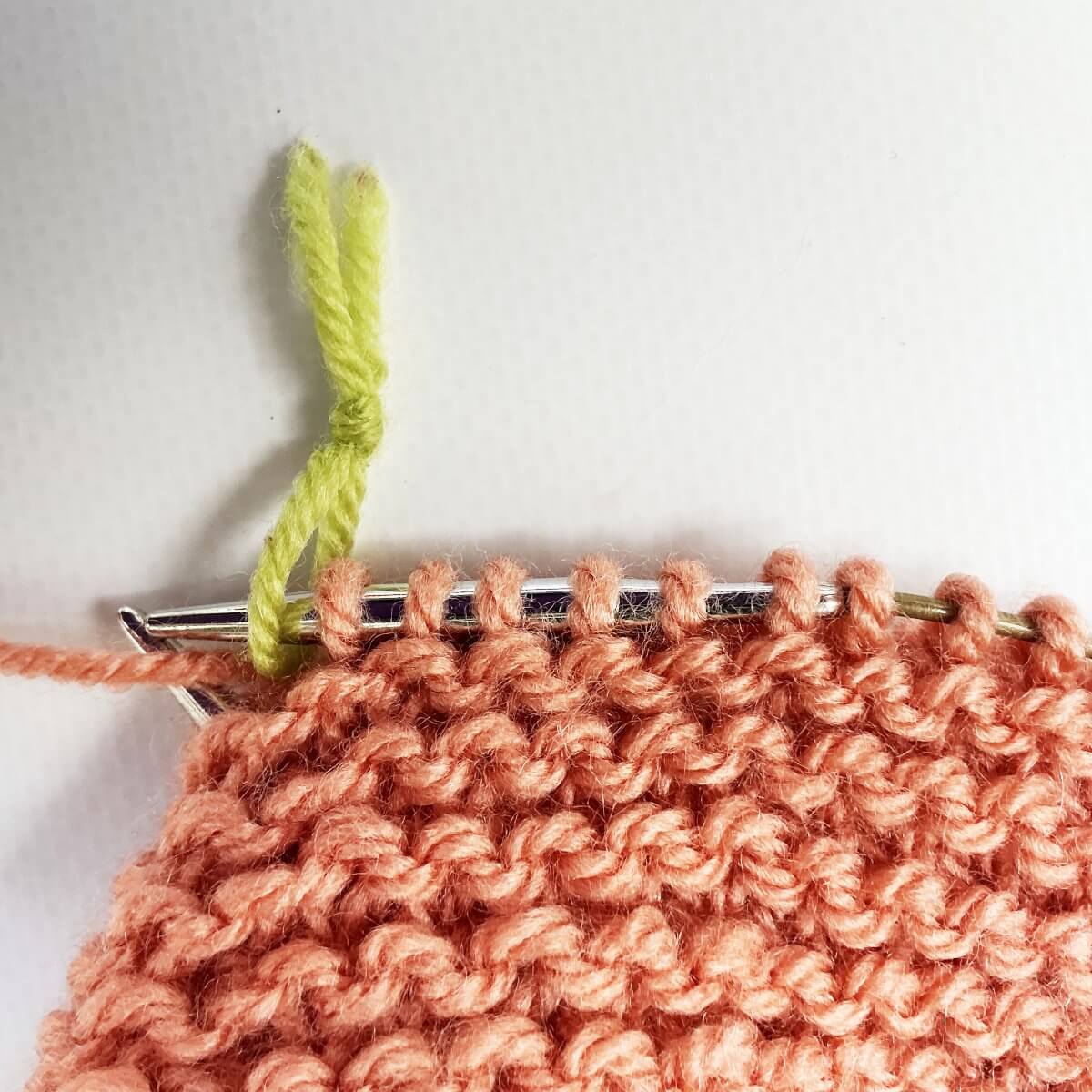
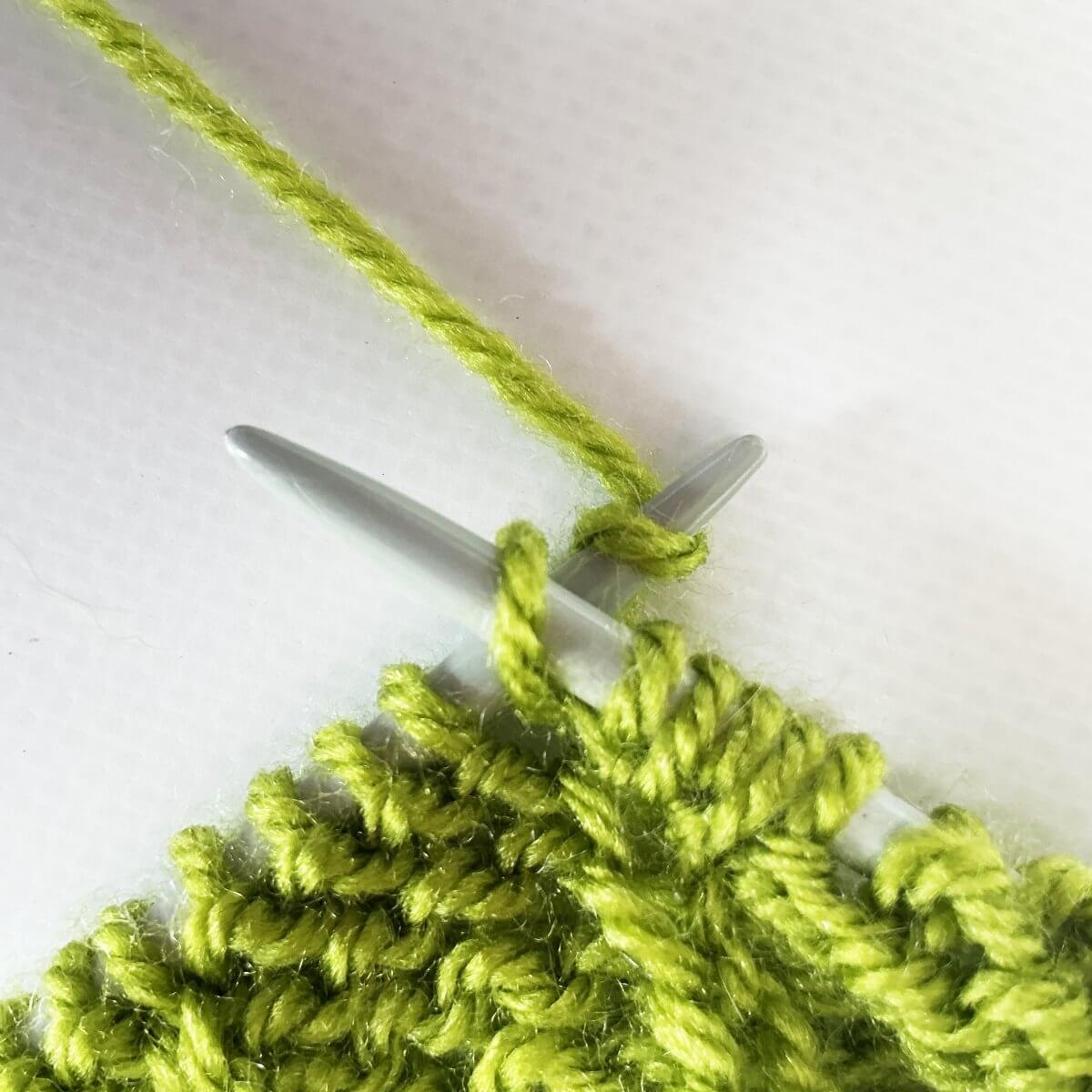
    The buttonhole loop can be attached to any side of a piece of knitting or crochet. In this tutorial, I will be attaching it to the bind-off edge of this swatch.Step 1 of making a loop buttonhole

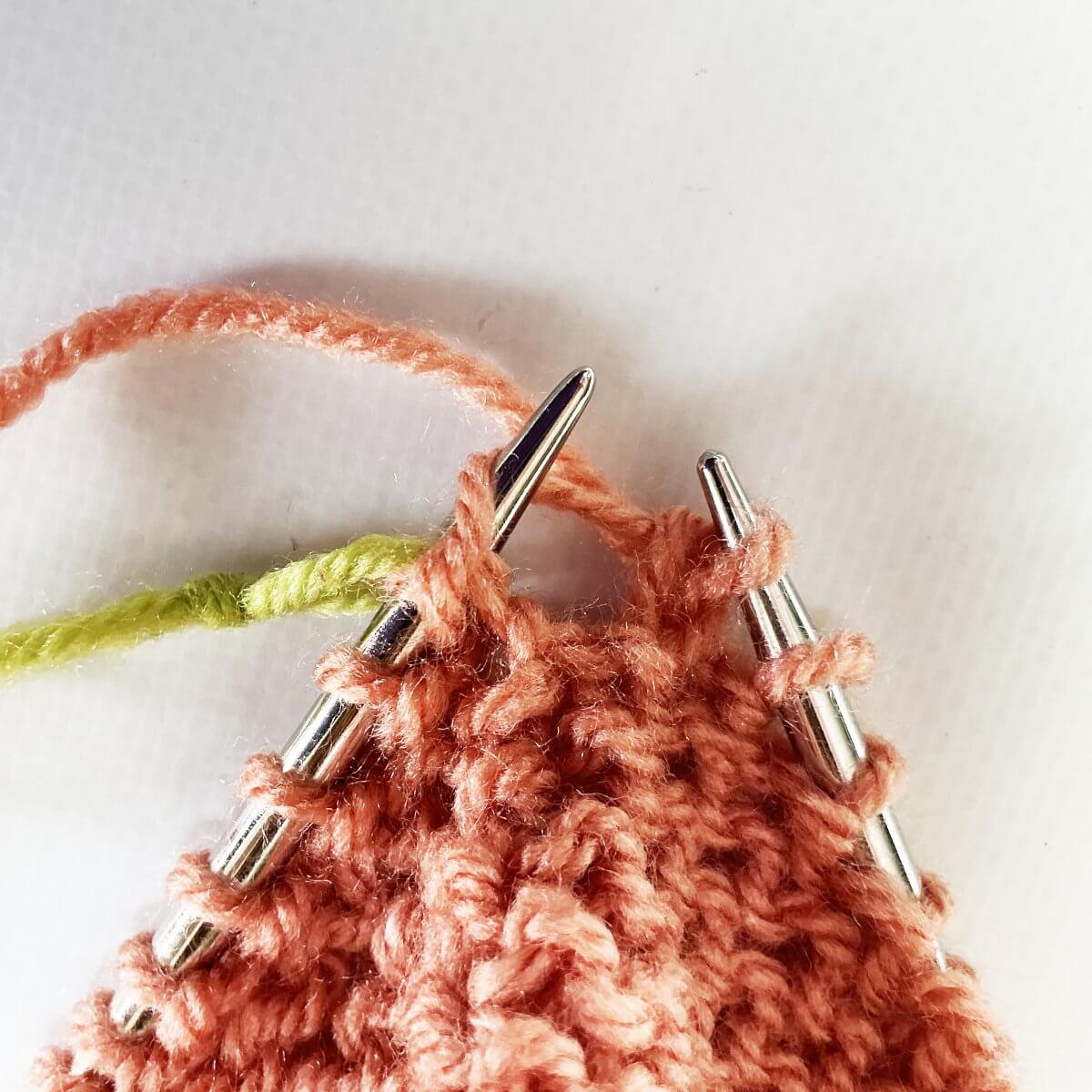
  2. To start, I insert the darning needle from bottom to top through both loops of one of the stitches on the edge. Pull it through for a bit.

    Step 2

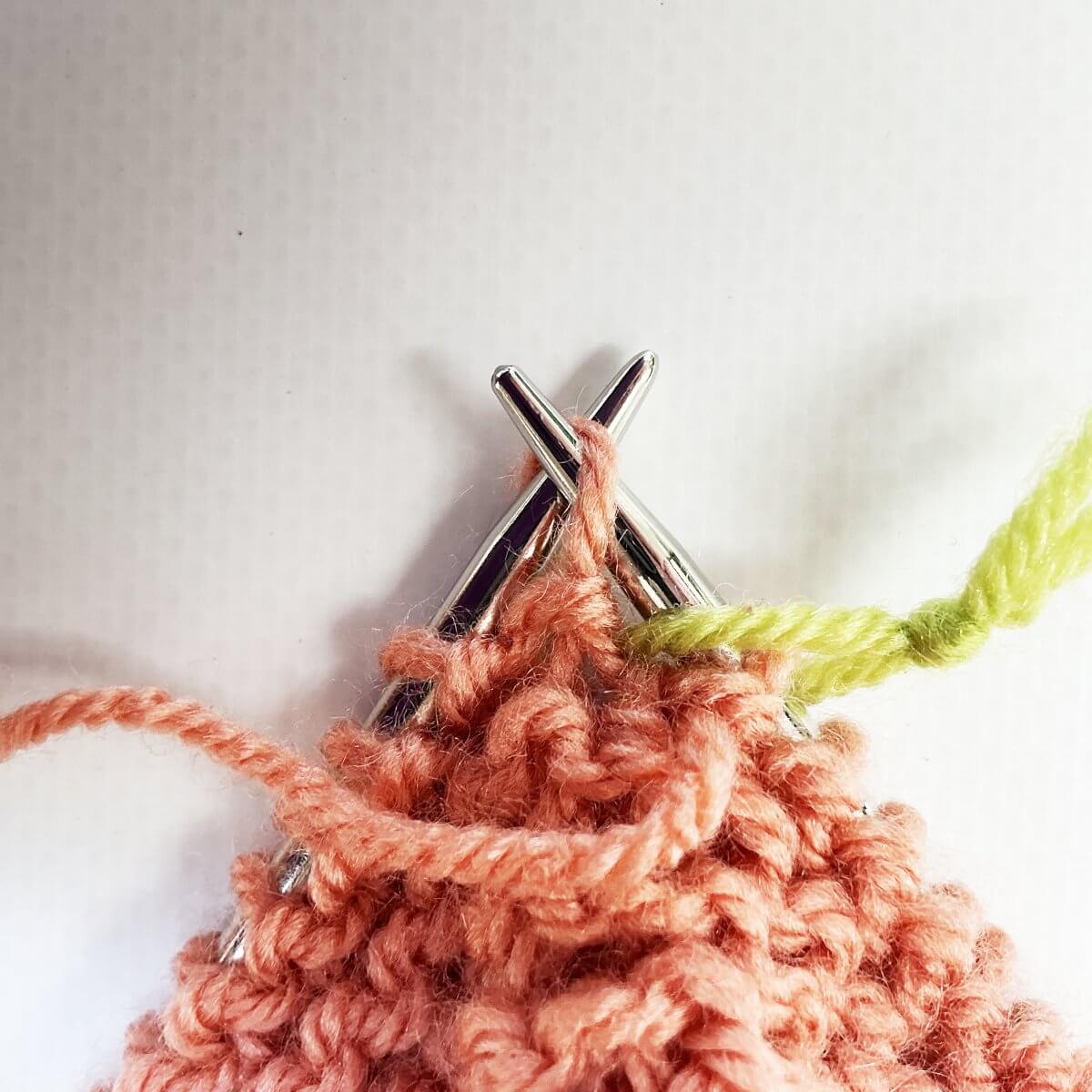
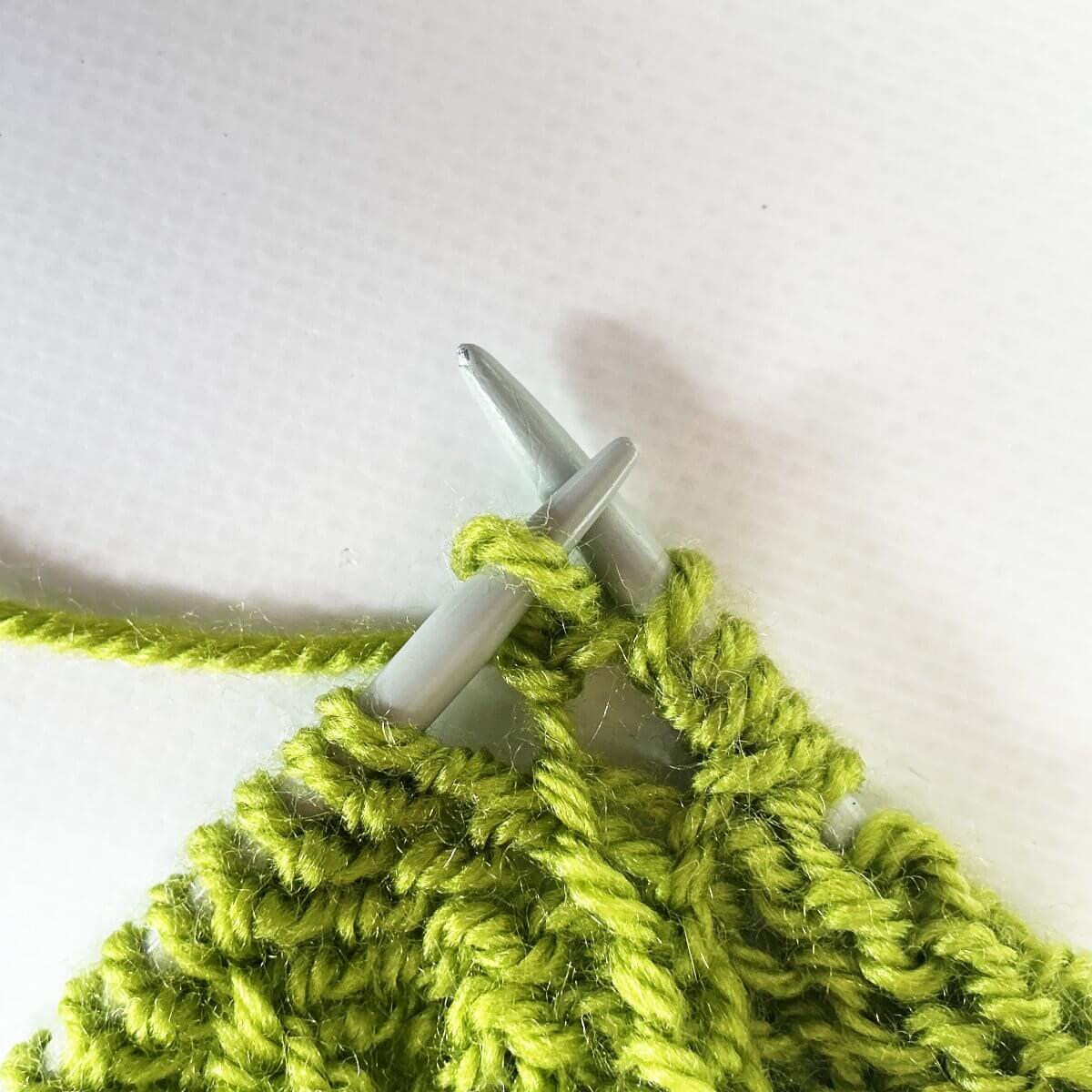
  3. Next, insert the darning needle from top to bottom through both loops of another of the stitches on the edge.

    I skipped 1 stitch, because I though that would give me a nice size for a buttonhole. You can leave less or more room between the 2 points as needed for the size of the buttons you intend to use.Step 3 of making a loop buttonhole

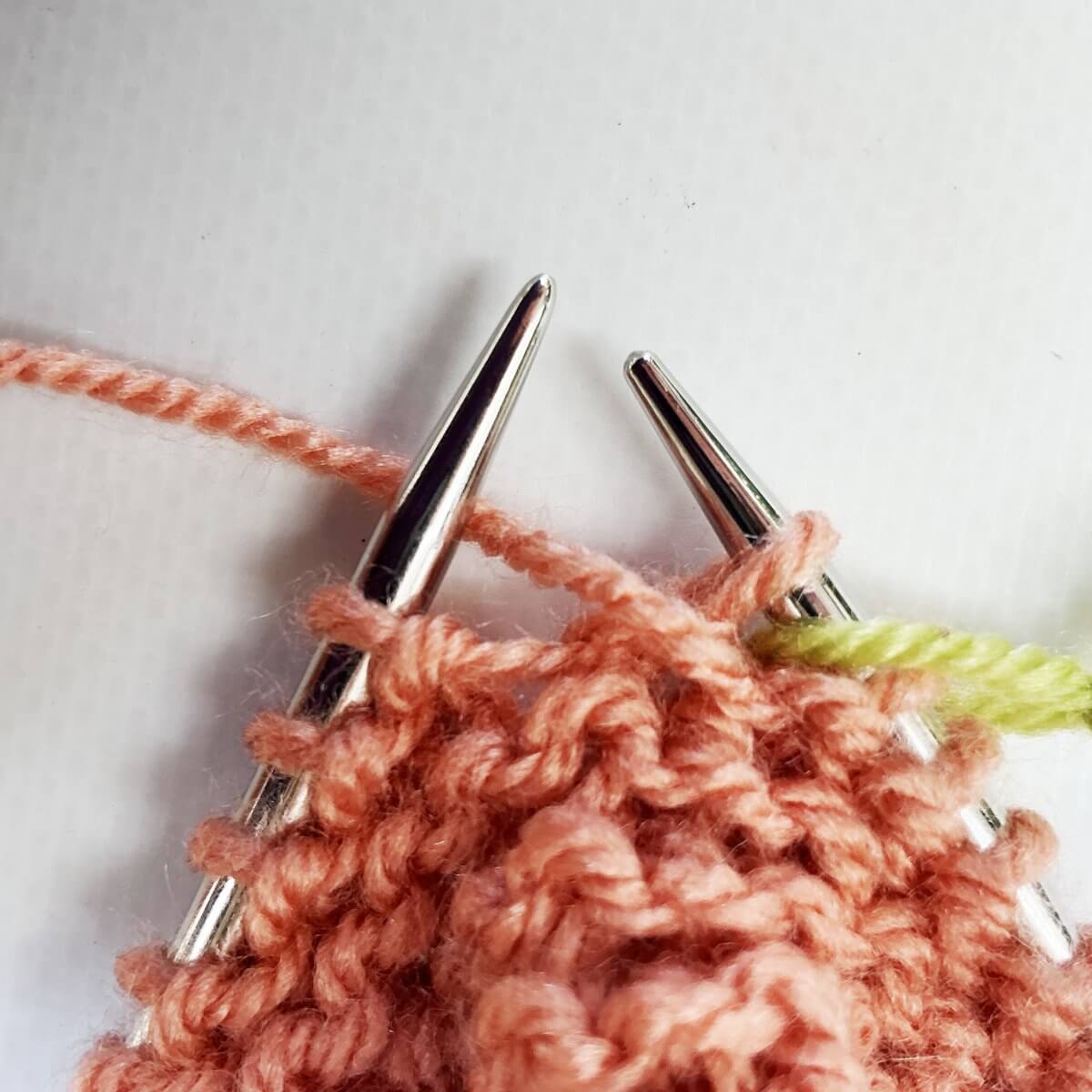
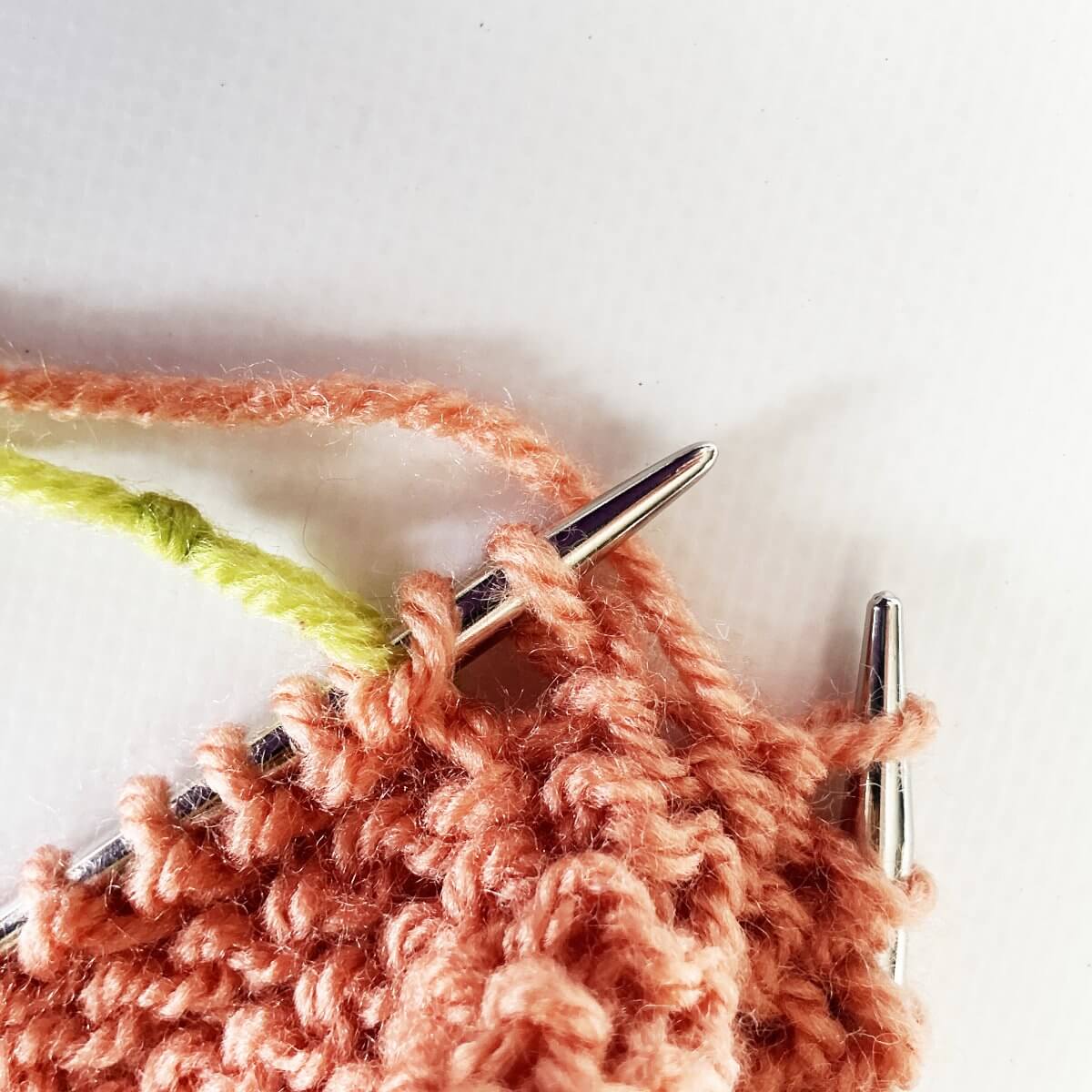
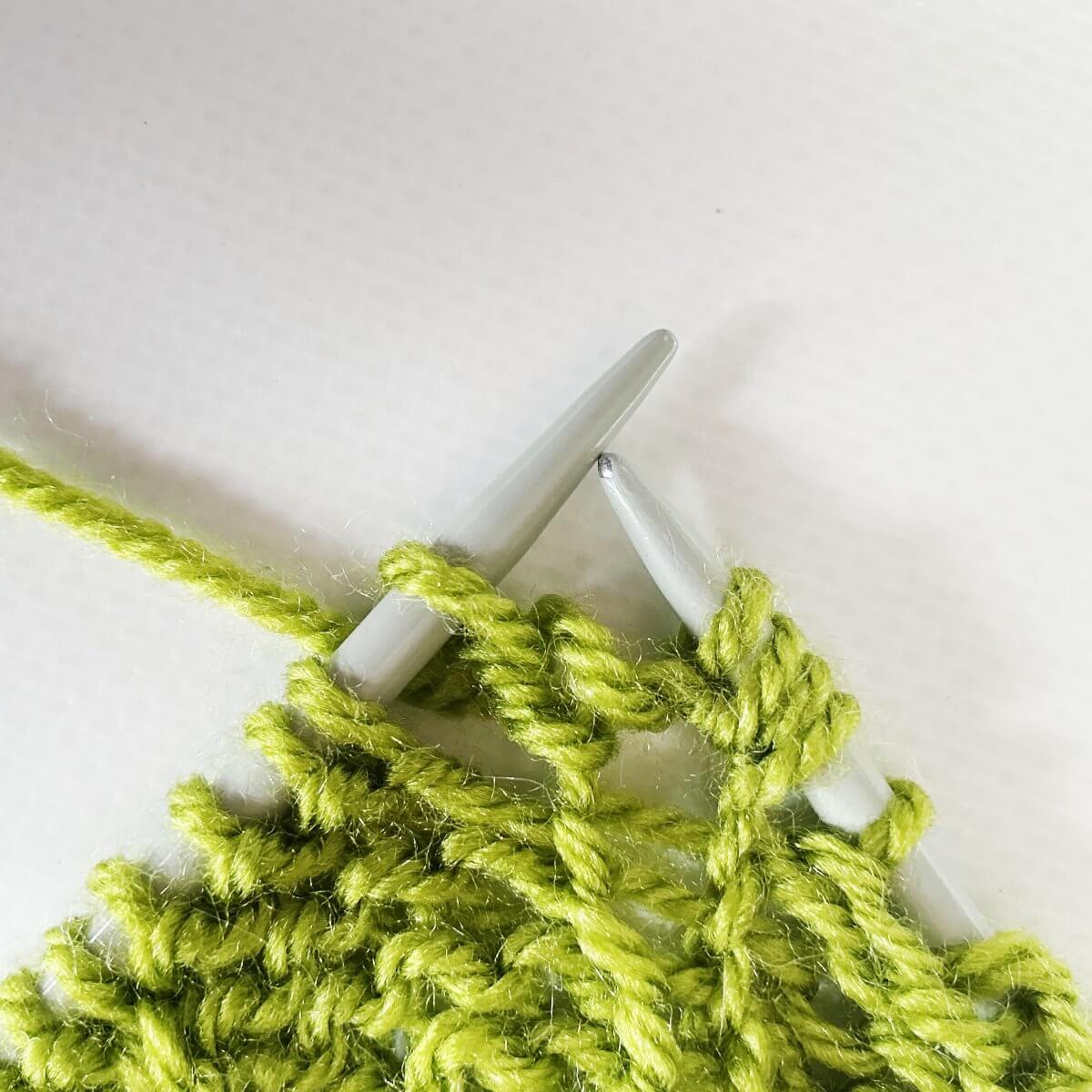
  4. Pull the yarn through until you have a loop of the desired size for your button.

    The loop kept flipping up, so I used the darning needle to hold it down for the picture.Step 4

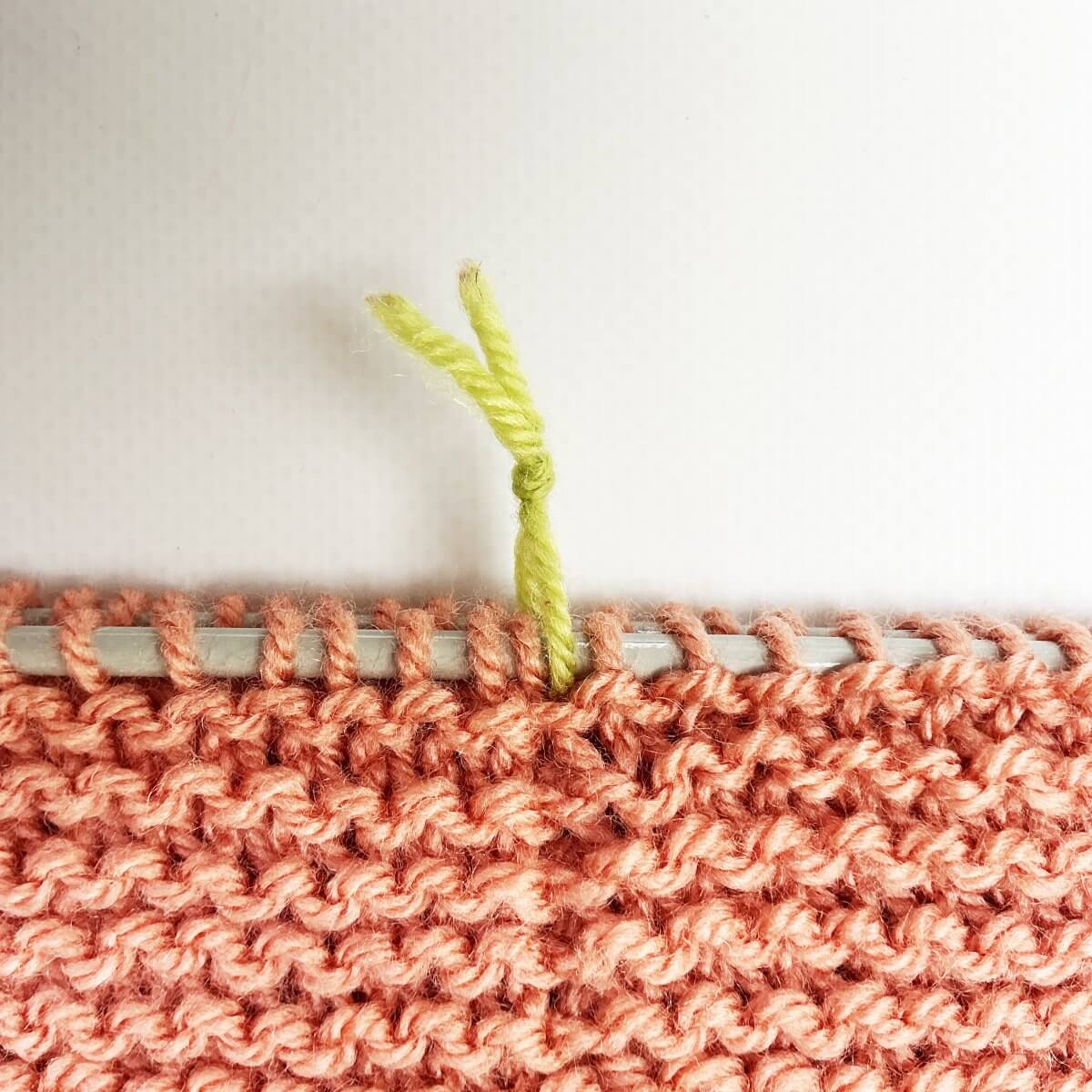
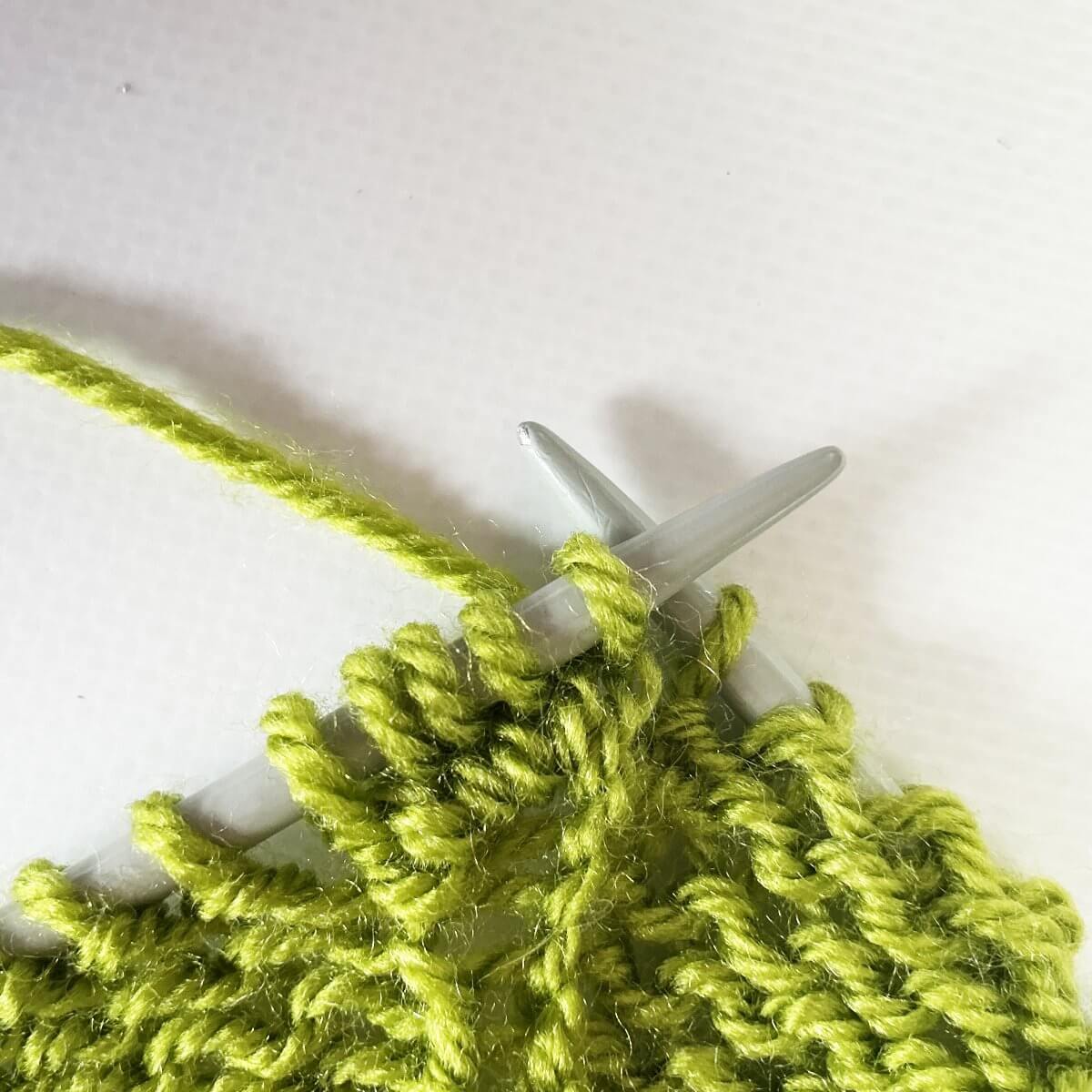
  5. Repeat steps 2-4 a couple of times. This gives a sturdier buttonhole. The number of times, depends on the thickness of your yarn, as well as on the desired size of the loop.

    I changed the orientation of the edge, because this proved to be easier to work.Step 5 of making a loop buttonhole

  6. Next, take your darning needle, and insert it from bottom to top into the loop.

    Step 6

  7. Pull the yarn through almost, but not entirely all the way. Now take the darning needle and insert it top to bottom through the loop that your working yarn has formed.

    Step 7 of making a loop buttonhole

  8. Pull it all through, and tighten the knot you have created. Make sure to push it right next to the fabric of the piece you’re attaching the buttonhole to.

    Step 8

  9. Repeat steps 6-8 as often as needed to completely cover the loops of yarn made in steps 2-5.

    Step 9 of making a loop buttonhole

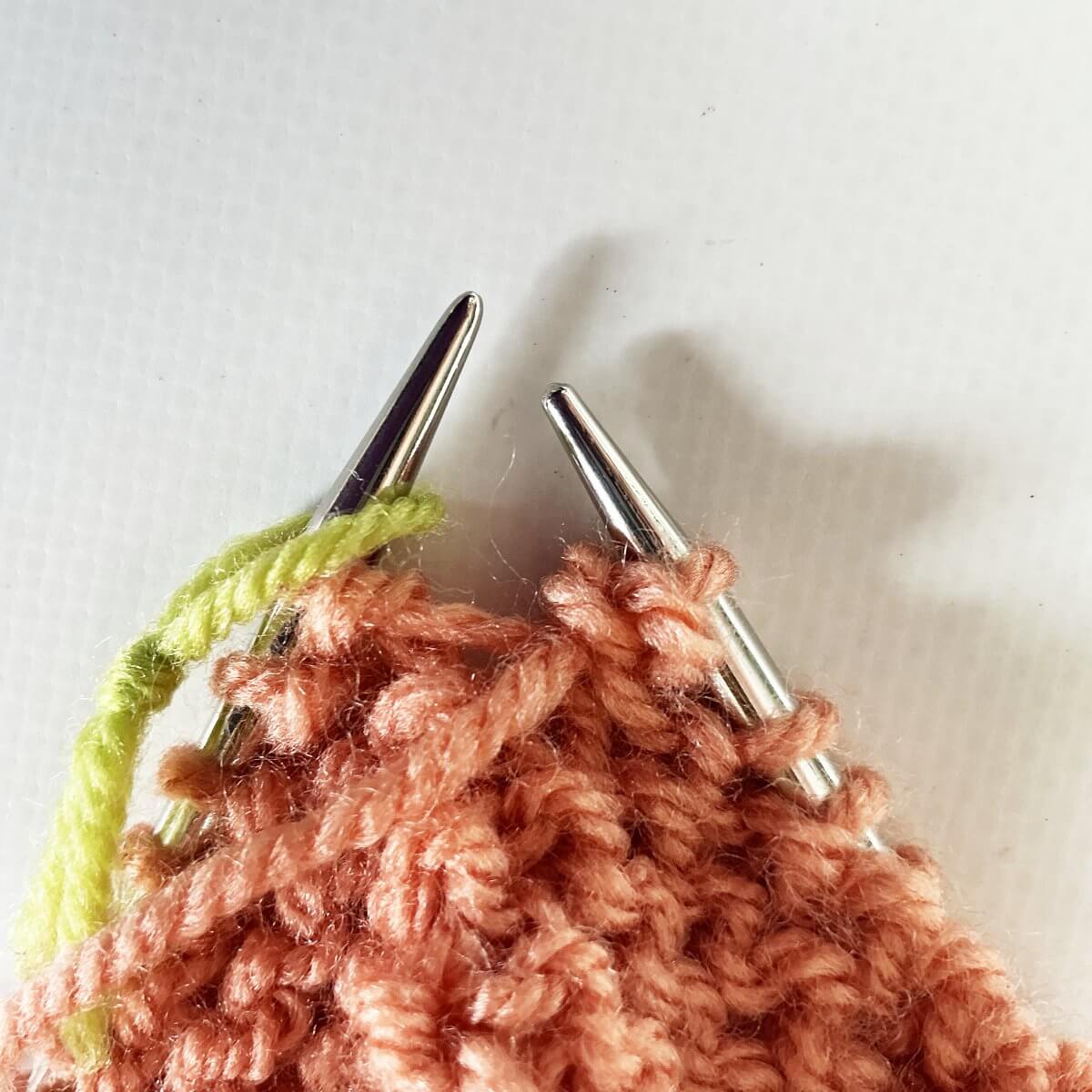
  10. To finish, you can thread the yarn through the buttonhole loop, back to the start. Tie a knot, and weave in the ends.

    The result of making a loop buttonhole


Patreon logo

Thanks to my Patreon supporters for bringing you this freebie! Creating quality patterns and tutorials is a lot of work and resource-intensive. However, I find it important to give you free content like this tutorial. Thanks to the generous support of my Patreon supporters, I can make it happen. Thank you, patrons! Click here to join, or click here to read more about La Visch Designs on Patreon.

tutorial – making a loop buttonhole Read More »

stitch pattern – twisted rib

Twisted rib - a stitch pattern by La Visch Designs

Twisted rib is a ribbing technique that creates a crisp texture by intentionally twisting the knit stitches as you work them. It’s commonly used for cuffs, hems, and necklines where you want strong definition and elasticity without the relaxed look of standard rib. In regular ribbing (like k1, p1), you work the knit stitches through the front loop, allowing the stitch to sit open and relaxed. In twisted rib, however, you work them through the back loop (tbl). This small change crosses the legs of the stitch. This tightens it and makes the column of stitches stand out more sharply. The trade-off is that twisted rib is less elastic and slightly slower to knit than regular rib.

Personally, I use twisted rib quite a lot in garments, because I really like the way it looks.

Materials used

Yarn: Paintbox Yarns Simply DK, a good value, good quality 100% acrylic yarn, here in the color 155 Vintage Pink.

Needles: This is a pair of straights that I picked up at the second-hand store when I started knitting, brand unknown.

Stitches used

k – knit
p – purl
RS / WS – right side / wrong side
tbl – through the back loop

1×1 twisted rib instructions

Row 1 (RS): *K1 tbl, p1; rep from * to end.
Row 2: (WS): *K1, p1 tbl; rep from * to end.

Work these 2 rows for the pattern. When working in the round, you can just repeat row 1 for every round.

Below, you can see how this stitch pattern looks: First as seen from the right side, and then from the wrong side of the fabric.

Twisted rib as seen from the RS
Twisted rib as seen from the WS

Patreon logo

Thanks to my Patreon supporters for bringing you this freebie! Creating quality patterns and tutorials is a lot of work and resource-intensive. However, I find it important to give you free content like this tutorial. Thanks to the generous support of my Patreon supporters, I can make it happen. Thank you, patrons! Click here to join, or click here to read more about La Visch Designs on Patreon.

stitch pattern – twisted rib Read More »

zuurstok

Zuurstok - a knit shawl design with lace by La Visch Designs

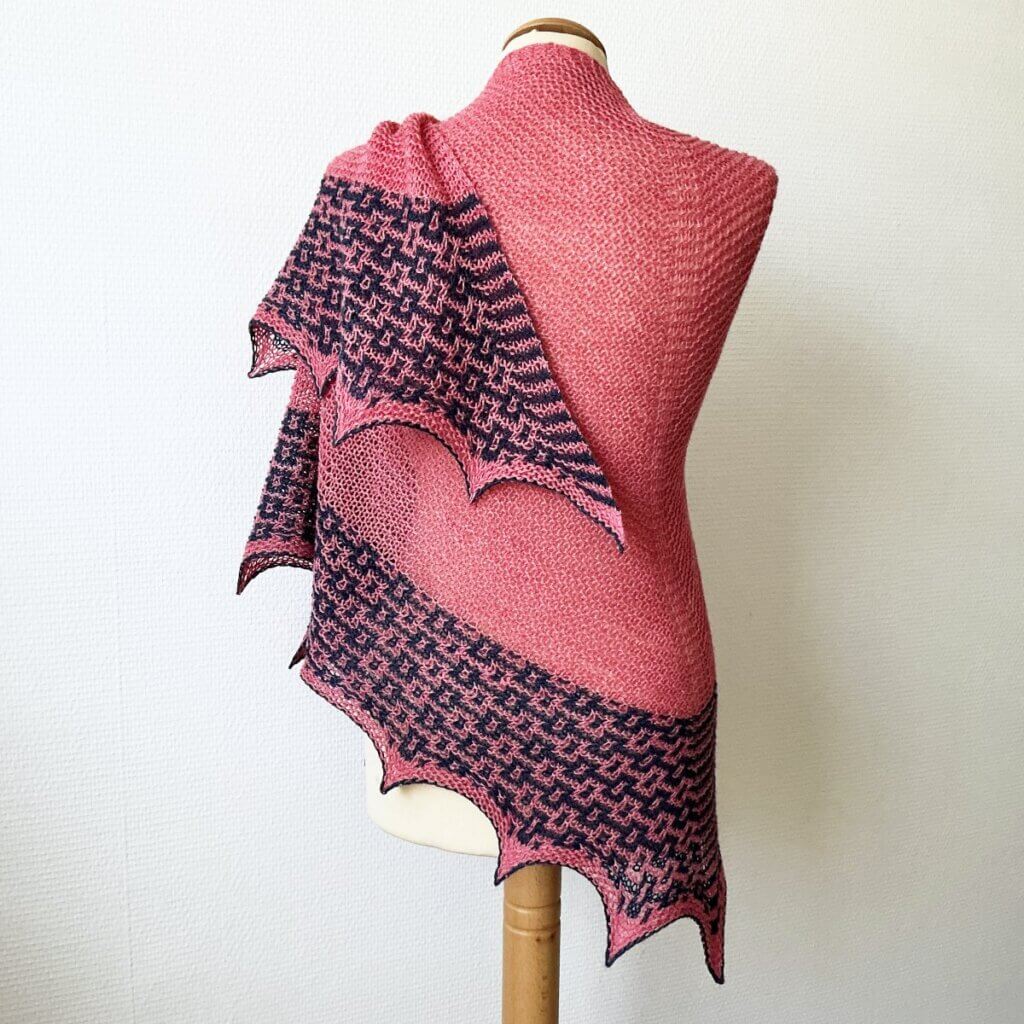
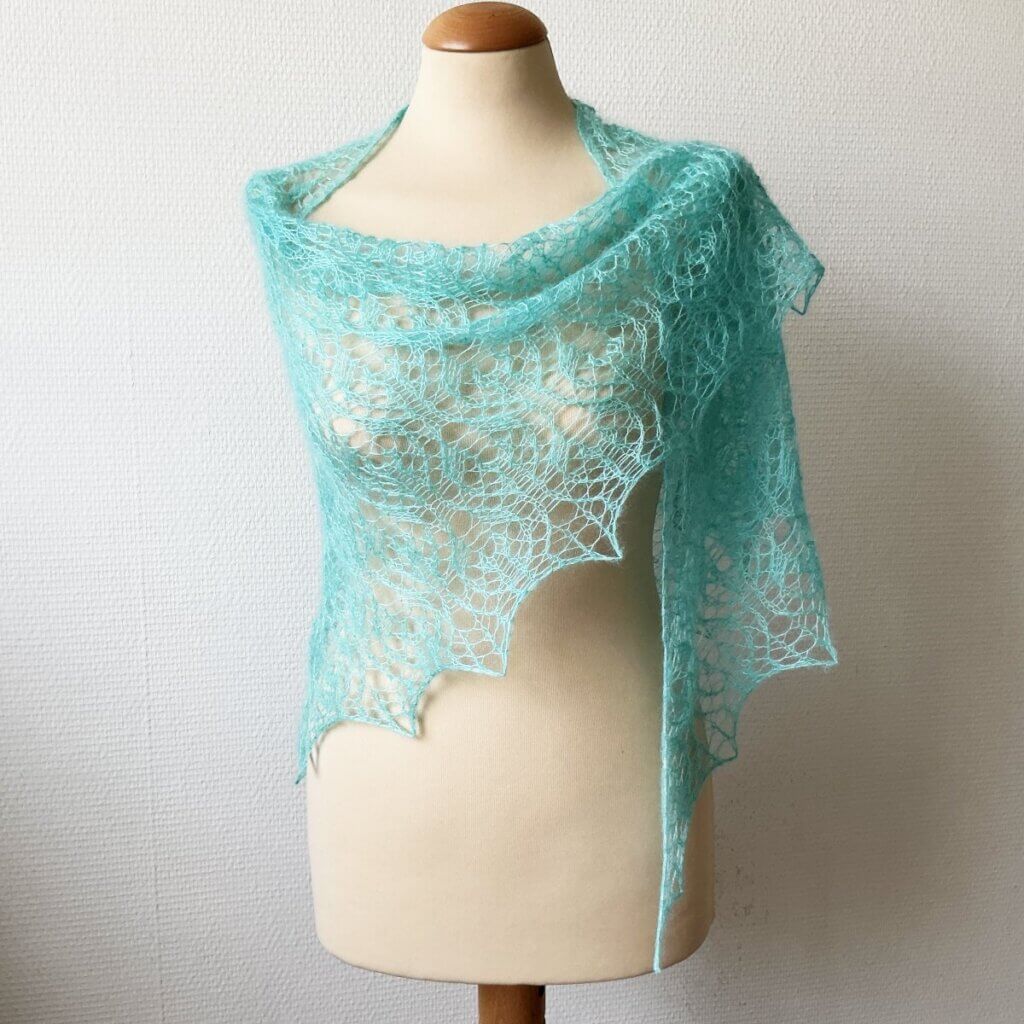
The yarn used for the body of this shawl brings candy canes to mind, or “zuurstokken”, as they’re called in Dutch, the kind you might buy at a fair. Knit sideways on the bias, the shawl forms a shallow, asymmetrical triangle that’s perfect for wearing as an elegant scarf. The pairing of garter stitch in a self-striping yarn with simple lace offers the best of both worlds: Soothing simplicity and delicate detail.

The pattern contains both fully written out and charted instructions for the lace.


Pay what you want: (minimum €7.25)

Add to cart


Difficulty level

The lace in this pattern is worked on both RS and WS rows. Stitches used include knit, purl, yo, kfb, pfb, skp, k2tog, and p2tog.

This pattern is therefore suitable for the intermediate to advanced knitter.

Sizes and finished measurements

One size (easily adjusted) – finished dimensions of the sample shawl: 192 cm (75 ¾ inches) along the upper edge and a depth of 70 cm (27 ½ inches), measured after blocking.

Make the Zuurstok shawl larger by adding more repeats of the garter stitch and/or by working more repeats in the lace section. This will, of course, increase the amount of yarn needed.

Pattern details

  • Gauge: 16 sts / 32 rows = 10 cm (4 inches) over garter stitch, measured after blocking. Gauge is however not critical for this design.
  • Pattern languages included: English.
  • Digital PDF has 5 pages (letter size)

Yarn

Alize Superwash Artisan (75% Merino, 25% Nylon; 420 m (459 yds) / 100 g) in the following colors:

C1: 210 m (230 yds) / 50 g in color 9003
C2: 420 m (459 yds) / 100 g in color 44

Substitute any self-striping fingering weight yarn for C1 and any solid or tonal colored fingering weight yarn for C2 for a similar result.

Materials

  • Size 3.5 mm (US 4) / 80 cm (32 inches) circular needles were used for the sample shawl. Use needles appropriate for the yarn chosen.
  • Removable stitch marker to denote the RS of the shawl (optional)
  • Stitch markers to indicate repeats of the lace patterning (optional)
  • Yarn needle

zuurstok Read More »

tutorial – working the stretchy yo bind-off for 1×1 rib

Working the stretchy YO bind-off for 1x1 rib - a tutorial by La Visch Designs

This bind-off is very similar to regular “binding of in pattern”, take a look at the tutorial for 1×1 rib that shows you the principal of it. The main difference with the stretchy yo bind-off, is that it adds a yarn over for every purl stitch of the ribbing. As such, it’s less stretchy than a bind-off that includes a yo after every stitch, but much more stretchy than a regular ribbing bind-off that doesn’t include one. I really like to use this one for ribbing on sleeve cuffs, the hems of sweaters etc. It really doesn’t matter if your piece is in regular 1×1 rib, are a twisted one using (k tbl, p1). It doesn’t flare out as much as, for example, the Russian bind-off does.

Let’s get started!

Materials used

Yarn: Paintbox Yarns Simply DK, a good value, good quality 100% acrylic yarn, here in the color Vintage Pink

Knitting needles: This is a pair of straights that I picked up at the second-hand store when I started knitting, brand unknown.

The stretchy yo bind-off for 1×1 rib step by step

In patterns, you may see the following instruction for this bind-off:
K1, *yo, p1, then grab the 2nd and 3rd sts, and pass them both over the st just purled, k1, insert tip of the left-hand needle into second stitch on the right-hand needle, pass this stitch over the stitch just knit*; rep ** to end, yo, p1, then grab the 2nd and 3rd sts, and pass them both over the st just purled.
Below, I’ll show you step by step how this looks like in knitting!

  1. To start, take the piece of knitting you want to bind-off.

    In this case, I’m using a swatch in [k1 tbl, p1] rib.Step 1 of working the stretchy YO bind-off for 1x1 rib.

  2. Knit the first stitch on the left-hand needle.

    Step 2

  3. Next, work a yarn over by wrapping the yarn around the needle.

    Step 3 of working the stretchy YO bind-off for 1x1 rib.

  4. Next is working a purl stitch.

    Depending on your knitting style, it may help to secure the yo of the previous step with your right index finger while you work the purl stitch.Step 4

  5. Insert the tip of the left-hand needle into the second and third stitches on the right-hand needle….

    Step 5 of working the stretchy YO bind-off for 1x1 rib.

  6. … and pass them over the purl stitch.

    Step 6

  7. Knit the first stitch on the left-hand needle.

    Step 7 of working the stretchy YO bind-off for 1x1 rib.

  8. Insert the tip of the left-hand needle into the second stitch on the right-hand needle….

    Step 8

  9. …. then pass it over the stitch just knit.

    Step 9 of working the stretchy YO bind-off for 1x1 rib.

  10. Continue working steps 3-8, ending with a repeat of steps 3-6 for the last purl stitch in the rib (assuming you started with an even number of stitches!).

    To bind-off the last stitch you end up with, just break your yarn, and pull it through.Step 10

The result

Do you see how lovely this bind-off follows the shape of the ribbing?

Patreon logo

Thanks to my Patreon supporters for bringing you this freebie! Creating quality patterns and tutorials is a lot of work and resource-intensive. However, I find it important to give you free content like this tutorial. Thanks to the generous support of my Patreon supporters, I can make it happen. Thank you, patrons! Click here to join, or click here to read more about La Visch Designs on Patreon.

tutorial – working the stretchy yo bind-off for 1×1 rib Read More »

stitch pattern – the spring bobble stitch pattern

The spring bobble stitch pattern - by La Visch Designs

The spring bobble stitch pattern consists of alternating spring stitches on a stockinette background. It’s a stitch pattern, that gives loads of texture to your project. Use it as an accent on scarves, sweaters or cowls. Or perhaps all-over in a dish cloth! This stitch pattern is worked as a multiple of 4 stitches, and in a four-row repeat. Please note that I’ve added 2 edge stitches in garter stitch on both sides of the swatch. These are not included in the stitch pattern description.

Materials used

Yarn: Paintbox Yarns Simply DK, a good value, good quality 100% acrylic yarn, in the color Marine Blue.

Needles: This is a pair of straights that I picked up at the second-hand store when I started knitting, brand unknown.

Stitches used

  • k – knit
  • p – purl
  • RS / WS – right side / wrong side
  • rep – repeat
  • spring stitch – bring the yarn to the back of the work, and insert the right-hand needle into the next stitch on the left-hand needle as if to knit. Wrap the yarn around both needles for a total of 10 times. Then wrap the yarn around the needle, and pull it through all 10 loops plus the original stitch. Gently pull on the working yarn to cinch the yarn into a coil close to the needle.
  • st(s) – stitch(es)
  • yo – yarn over

Spring bobble stitch pattern

Set-up row 1 (RS): Knit.
Set-up row 2 (WS): Purl.
Row 1: Knit.
Row 2: P1, *spring stitch, k1, p2; rep from * to 3 sts before end, spring stitch, k1, p1.
Row 3: Knit.
Row 4: P3, *spring stitch, k1, p2; rep from * to 1 st before end, p1.

Repeat rows 1-4 for pattern until desired length.
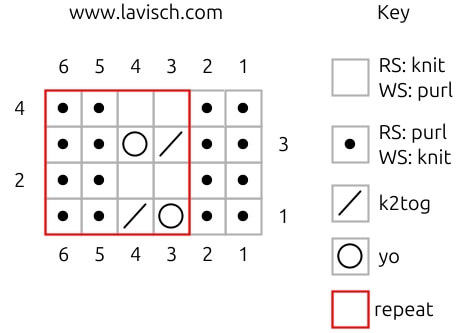
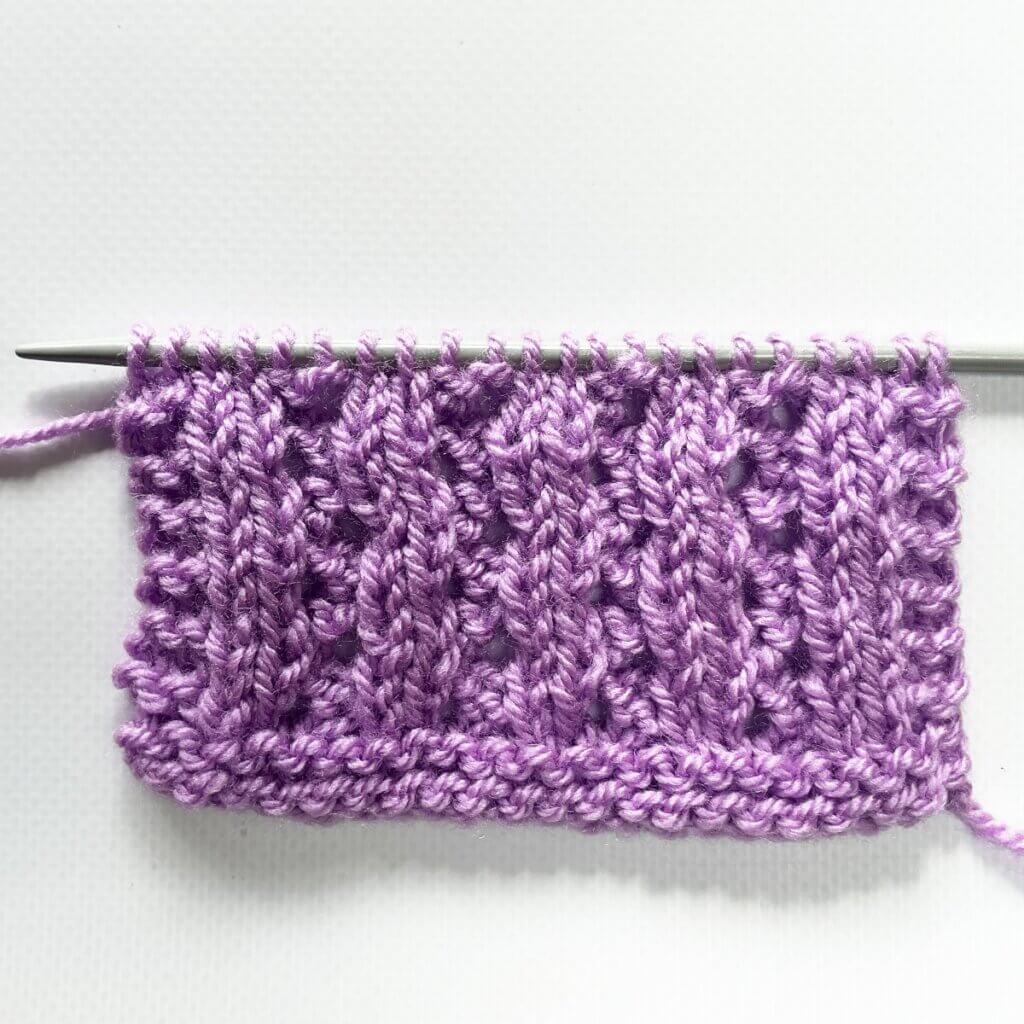
In the below pictures, you see the patterning first from the right, and then also from the wrong side of the fabric:
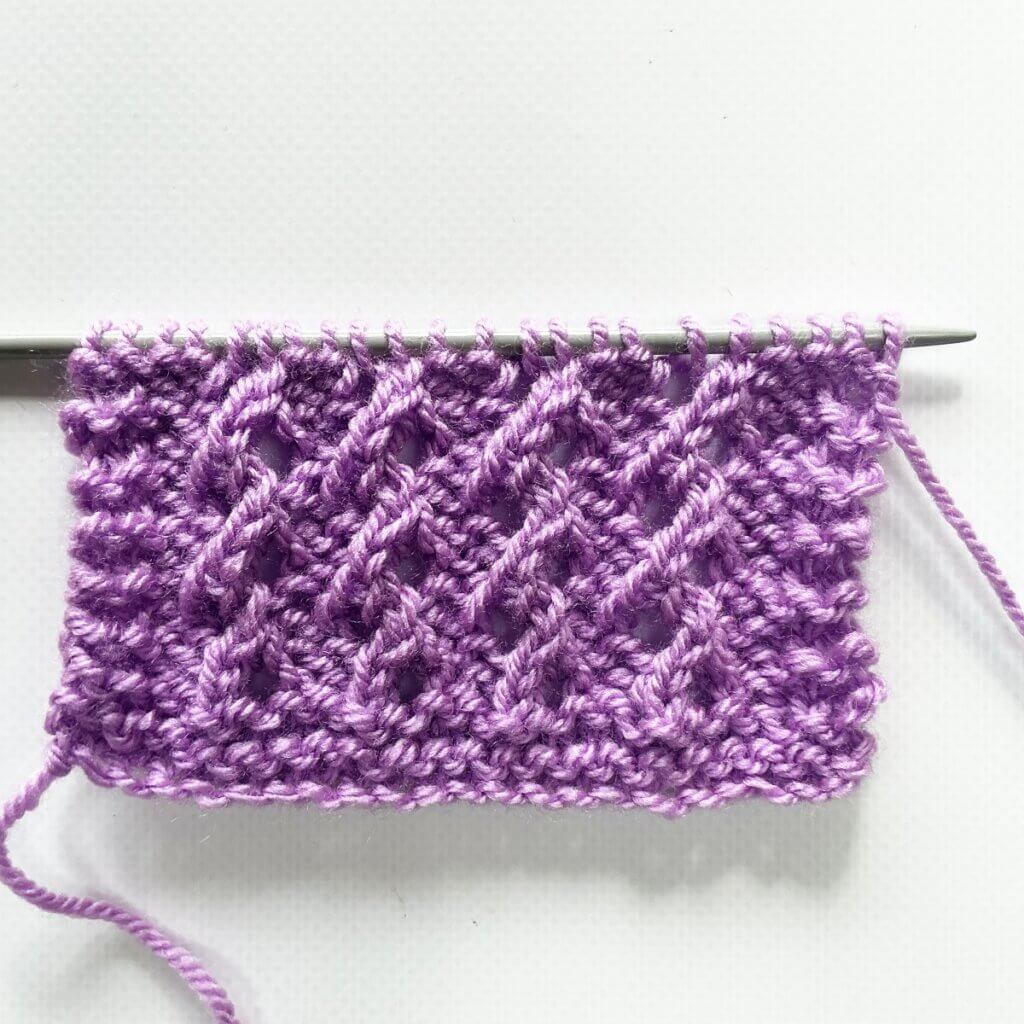
The spring bobble stitch pattern from the RS
The stitch as seen from the RS.
The spring bobble stitch pattern from the WS
The stitch as seen from the WS.
Patreon logo

Thanks to my Patreon supporters for bringing you this freebie! Creating quality patterns and tutorials is a lot of work and resource-intensive. However, I find it important to give you free content like this tutorial. Thanks to the generous support of my Patreon supporters, I can make it happen. Thank you, patrons! Click here to join, or click here to read more about La Visch Designs on Patreon.

stitch pattern – the spring bobble stitch pattern Read More »

tutorial – knitting the yarn over bind-off (version 2)

Knitting the YO bind-off (version 2) - a tutorial by La Visch Designs

In this tutorial I show you how to work a second version of the yarn over bind-off for stockinette. Remember, the thing that all yarn over bind-off have in common, is that they all use an extra yo somewhere in the bind-off sequence to give the edge some extra stretch. Where they differ, is how that yo is treated within the bind-off repeat. The one I’m showing in this tutorial is one I really like, because it gives decent stretch without a lot of flare at the edge. Ok, grab your things!

Materials used

Yarn: Paintbox Yarns Simply DK, a good value, good quality 100% acrylic yarn, here in the color Lime

Knitting needles: This is a pair of straights that I picked up at the second-hand store when I started knitting, brand unknown.

The yarn over bind-off step by step

In patterns, you may see the following instruction for this bind-off:

*K1, yo, k1, insert tip of the left-hand needle into the first and second stitches on the right-hand needle, pass them over the third stitch*; repeat *-* to end.

Please note, that when I mentioned “first” or “second”, I mean the stitch that was knit first or second, not the location relative to the tip of the right-hand needle. Below, I’ll show you step by step how this looks like in knitting!

  1. To start, take the piece of knitting you want to bind-off, and knit the first stitch on the left-hand needle.

    In this case, I’m using a swatch in stockinette stitch.Step 1 of knitting the yarn over bind-off - version 2

  2. Next, work a yarn over by wrapping the yarn around the needle.

    Step 2

  3. Next, knit the new stitch nearest to the tip of the left-hand needle.

    Step 3 of knitting the yarn over bind-off - version 2

  4. Insert the tip of the left-hand needle into the first and second stitches on the right-hand needle, and pass them over the third (last knit) one.

    Step 4

  5. Continue working steps 1-4 to the end.

    To bind-off the last stitch you end up with, just break your yarn, and pull it through.The result from the RS of knitting the yarn over bind-off - version 2

As you can see in the last picture above, this bind-off has barely any flare to it. When seen from the wrong side, the result looks like this:

The result from the WS of knitting the yarn over bind-off - version 2
Patreon logo

Thanks to my Patreon supporters for bringing you this freebie! Creating quality patterns and tutorials is a lot of work and resource-intensive. However, I find it important to give you free content like this tutorial. Thanks to the generous support of my Patreon supporters, I can make it happen. Thank you, patrons! Click here to join, or click here to read more about La Visch Designs on Patreon.

tutorial – knitting the yarn over bind-off (version 2) Read More »

stitch pattern – how to work the spring stitch

How to work the spring stitch - by La Visch Designs

The spring stitch is sometimes referred to as the helical spring stitch, a name inspired by the way the yarn coils into a bobble-like shape. In the photo above, you can already catch a glimpse of the spring bobble stitch pattern in which it’s used. In this post, however, I’ll focus solely on how to work the spring stitch itself. Instructions for the full spring bobble stitch pattern will be available soon.

The spring stitch is worked on the wrong side of the fabric and is created over two stitches. The first stitch forms the base, while the second anchors the coiled yarn in place. Although it may look intricate, it’s actually much easier to work than it appears. Let’s get started!

Materials used

Yarn: Paintbox Yarns Simply DK, a good value, good quality 100% acrylic yarn, here in the color Marine Blue.

Needles: This is a pair of straights that I picked up at the second-hand store when I started knitting, brand unknown.

Working the spring stitch step by step

  1. First, work to the point where you want to insert the spring stitch. Remember: Work this stitch from the wrong side of the fabric, with the wrong side facing.

    Step 1 of how to work the spring stitch

  2. Move the yarn to the back of the work, and insert the right-hand needle into the next stitch on the left-hand needle as if to knit.

    Make sure there is a bit of length visible to both needle tips. The reason will become clear in a moment!Step 2

  3. Now wrap the yarn counter-clockwise around both needles for a total of 10 times.

    Make sure all loops are stacked, and do not overlap each other, because that would make later steps more difficult.Step 3 of how to work the spring stitch

  4. Wrap the yarn around the right-hand needle….

    Step 4

  5. …. and pull it through all 10 loops plus the original stitch you inserted the needle in.

    Step 5 of how to work the spring stitch

  6. Next, slip it all of the needle and move the working yarn to right.

    Step 6

  7. Unravel the spring coil along the yarn tail, make sure it’s unraveled all the way from the base to the end-loop.

    Step 7 of how to work the spring stitch

  8. Now gently pull on the working yarn to cinch the loops up into a coil.

    Step 8

  9. Pull some more, until you have a neat little coil with the tension you like.

    When pulling very tight, the coil also gets tighter and smaller. Especially when working the spring bobble stitch pattern with multiple coils, you want to make sure the tension is roughly the same for all coils.Step 9 of how to work the spring stitch

  10. To anchor the coil to the fabric, knit the next stitch.

    Step 10

The result

When you turn the piece around, you see the spring stitch just worked! Neat, right?

The result of how to work the spring stitch
Patreon logo

Thanks to my Patreon supporters for bringing you this freebie! Creating quality patterns and tutorials is a lot of work and resource-intensive. However, I find it important to give you free content like this tutorial. Thanks to the generous support of my Patreon supporters, I can make it happen. Thank you, patrons! Click here to join, or click here to read more about La Visch Designs on Patreon.

stitch pattern – how to work the spring stitch Read More »

tutorial – knitting the yarn over bind-off (version 1)

Knitting the YO bind-off (version 1) - a tutorial by La Visch Designs

The thing that all yarn over bind-off have in common, is that they all use an extra yo somewhere in the bind-off sequence to give the edge some extra stretch. Where they differ, is how that yo is treated within the bind-off repeat. The one I’m showing in this tutorial is not really the one I prefer, because it has significant flare at the edge. That said, it’s a good one to know. In a couple of weeks, I’ll share a different yarn over bind-off for stockinette with you. Let’s get started!

Materials used

Yarn: Paintbox Yarns Simply DK, a good value, good quality 100% acrylic yarn, here in the color Lime

Knitting needles: This is a pair of straights that I picked up at the second-hand store when I started knitting, brand unknown.

The yarn over bind-off step by step

In patterns, you may see the following instruction for this bind-off:

K1, *k1, insert tip of the left-hand needle into the first stitch on the right-hand needle, pass this stitch over the second stitch, yo, grab the first st, and pass it over the yo*; repeat *-* to end.

Please note, that when I mentioned “first” or “second”, I mean the stitch that was knit first or second, not the location relative to the tip of the right-hand needle. Below, I’ll show you step by step how this looks like in knitting!

  1. To start, take the piece of knitting you want to bind-off, and knit the first stitch on the left-hand needle.

    In this case, I’m using a swatch in stockinette stitch.Step 1 of knitting the yarn over bind-off - version 1

  2. Next, knit the new stitch nearest to the tip of the left-hand needle.

    Step 2

  3. Insert the tip of the left-hand needle into the first stitch on the right-hand needle, and pass this stitch over the second one.

    Step 3 of knitting the yarn over bind-off - version 1

  4. Next, work a yarn over by wrapping the yarn around the needle.

    Step 4

  5. Insert the tip of the left-hand needle into the first stitch on the right-hand needle, and pass it over the yarn over.

    Step 5 of knitting the yarn over bind-off - version 1

  6. Continue working steps 2-5 for every stitch you encounter.

    To bind-off the last stitch you end up with, just break your yarn, and pull it through.The result from the RS of knitting the yarn over bind-off - version 1

As you can see in the last picture above, this bind-off has quite some flare to it. Reduce the amount of flare by repeating steps 1-5 instead of 2-5. However, this would also reduce the stretchiness. When seen from the wrong side, the result looks like this:

The result from the WS of knitting the yarn over bind-off - version 1
Patreon logo

Thanks to my Patreon supporters for bringing you this freebie! Creating quality patterns and tutorials is a lot of work and resource-intensive. However, I find it important to give you free content like this tutorial. Thanks to the generous support of my Patreon supporters, I can make it happen. Thank you, patrons! Click here to join, or click here to read more about La Visch Designs on Patreon.

tutorial – knitting the yarn over bind-off (version 1) Read More »

stitch pattern – Byzantine stitch

The Byzantine stitch - by La Visch Designs

The Byzantine stitch pattern is a textured knitting pattern against a background of reverse stockinette stitch. Basically, it’s a variation op 2×2 rib stitch. It may look complicated to work, but it’s really not that hard. You create the effect by pulling up loops between stitches around the column of knit stitches, a couple of rows below the one that you’re working. Next, these loops are slipped one row. Finally, they’re anchored and decreased away by working the k4tog bf decrease. It’s a versatile stitch pattern that can be used in any place you’d used regular ribbing. However, because it’s so pretty, it’s lovely as all-over patterning for blankets, for example.

This stitch pattern is worked as a multiple of 4 stitches + 2, and in a six-row repeat. Please note that in this swatch, I’ve not used any edge stitches.

Materials used

Yarn: Paintbox Yarns Simply DK, a good value, good quality 100% acrylic yarn, here in the color Marine Blue.

Needles: This is a pair of straights that I picked up at the second-hand store when I started knitting, brand unknown.

Stitches used

  • k – knit
  • k4tog bf – knit 4 stitches together through the back loop, then knit the same 4 stitches together through the front loop.
  • p – purl
  • pulling up a loop – in this stitch pattern this means that you insert your knitting needle underneath the bar between the last and next stitch, 3 rows down. Next, wrap the yarn around the needle, and pull it through. Take a look at the photographs below to see how this looks.
  • sl – slip 1 stitch purl-wise with the yarn in front
  • st(s) – stitch(es)

Byzantine stitch instructions

Set-up row 1 (RS): P2, *k2, p2*; rep *-* to end.
Set-up row 2 (WS): K2, *p2, k2*; rep *-* to end.
Set-up rows 3-6: Rep set-up rows 1 and 2 twice.

Row 1 (RS): P2, *pull up a loop underneath the bar between the last and next stitch, 3 rows down, k2, pull up another loop underneath the bar between the last and next stitch, 3 rows down, p2*; rep *-* to end.
Row 2 (WS): K2, *move the working yarn to the front of the work and sl1, p2, sl1, k2*; rep *-* to end.
Row 3: P2, *k4tog bf, p2*; rep *-* to end.
Row 4: K2, *p2, k2*; rep *-* to end.
Row 5: P2, *k2, p2*; rep *-* to end.
Row 6: K2, *p2, k2*; rep *-* to end.

Repeat rows 1-6 for pattern until desired length.

Below, you can see how this stitch pattern looks: First as seen from the right side, and then from the wrong side of the fabric.

Byzantine stitch from the RS
Byzantine stitch from the WS
Patreon logo

Thanks to my Patreon supporters for bringing you this freebie! Creating quality patterns and tutorials is a lot of work and resource-intensive. However, I find it important to give you free content like this tutorial. Thanks to the generous support of my Patreon supporters, I can make it happen. Thank you, patrons! Click here to join, or click here to read more about La Visch Designs on Patreon.

stitch pattern – Byzantine stitch Read More »
tutorial – the sl3-k1-p3sso right-leaning centered decrease

The sl3-k1-p3sso right-leaning centered decrease - a tutorial by La Visch Designs

Recently, I shared with you how to work the slightly left-leaning sl2-k2tog-p2sso decrease. Of course, there is also a centered triple decrease that’s slightly right-leaning: The sl3-k1-p3sso decrease! This abbreviation is short for slip 3, knit 1, pass 3 slipped stitches over. The result is a tidy, symmetrical-looking line that subtly favors one side. In this tutorial, we’ll walk step-by-step through how to work the sl3-k1-p3sso decrease. Let’s pick up our needles and see how to work this decrease!

Materials

Yarn: Paintbox Yarns Simply DK, a good value, good quality 100% acrylic yarn, here in the color Tea Rose.

Knitting needles: This is a pair of straights that I picked up at the second-hand store when I started knitting, brand unknown.

Working a sl3-k1-p3sso step by step

  1. First, work your way across the row until you’ve reached the point where you want to make the decrease. In this case, I want to work the triple decrease 5 stitches in after the garter stitch edge.

    Step 1 of working the sl3-k1-p3sso decrease

  2. Next, insert the tip of the right-hand needle into the first 3 stitches at the same time as if to knit.

    Step 2

  3. Pass these stitches to the right-hand needle.

    This step changes the orientation of the stitches, influencing how they appear when the decrease has been finished.Step 3 of working the sl3-k1-p3sso decrease

  4. Now knit the next stitch.

    Step 4

  5. To finish the triple decrease, we will be passing the initially slipped stitches over the knit stitch. First, insert the left-hand needle into those 3 stitches….

    Step 5 of working the sl3-k1-p3sso decrease

  6. …. then pass them over the other stitch.

    The result of working the sl3-k1-p3sso decrease

The result

The below pictures show how it looks after 2 more decrease rows have been worked. First from the right side, then from the wrong side of the fabric. Please note that in order to have any subsequent decreases line up correctly, any new decrease has to be started 2 stitches before the stitch on top of the resulting one from the previous decrease. And that’s all there is to it!

Multiple sl3-k1-p3sso decreases as seen from the RS
Multiple sl3-k1-p3sso decreases as seen from the WS
Patreon logo

Thanks to my Patreon supporters for bringing you this freebie! Creating quality patterns and tutorials is a lot of work and resource-intensive. However, I find it important to give you free content like this tutorial. Thanks to the generous support of my Patreon supporters, I can make it happen. Thank you, patrons! Click here to join, or click here to read more about La Visch Designs on Patreon.

tutorial – the sl3-k1-p3sso right-leaning centered decrease Read More »