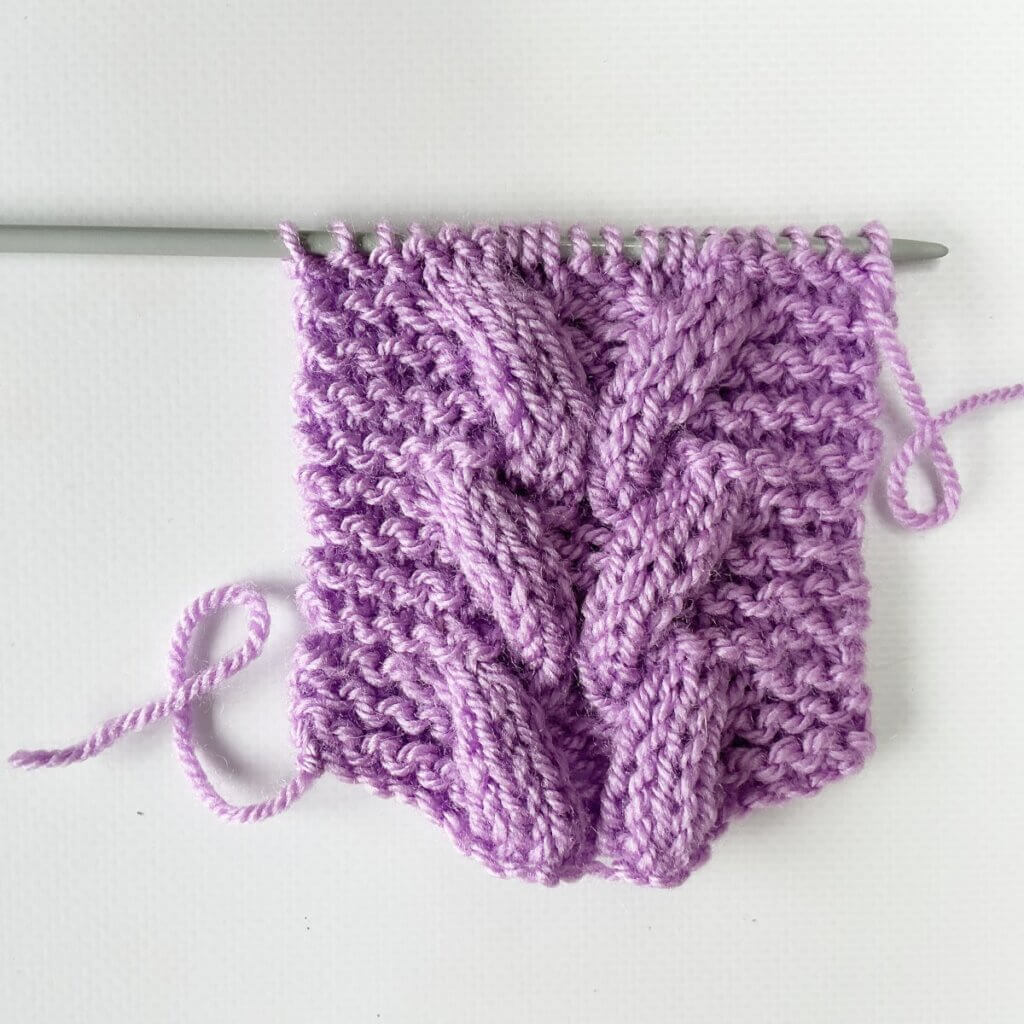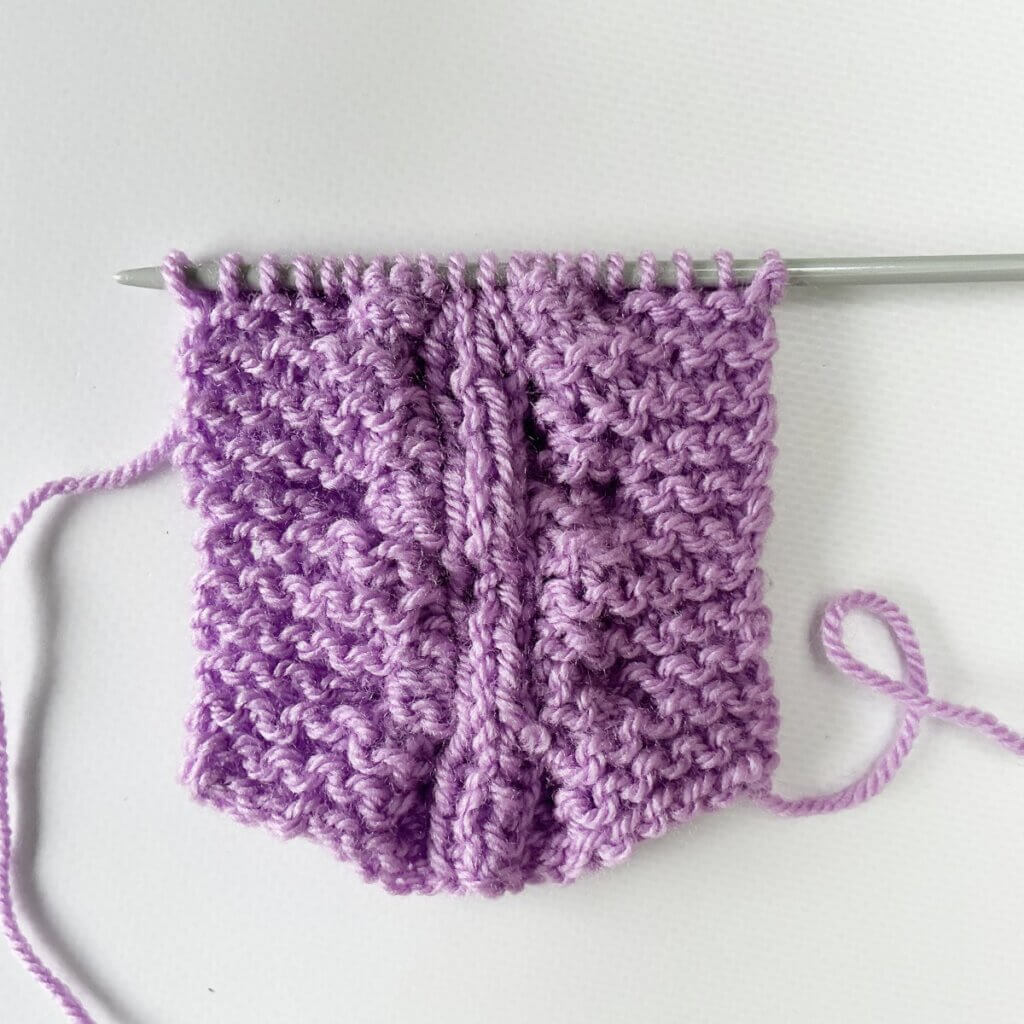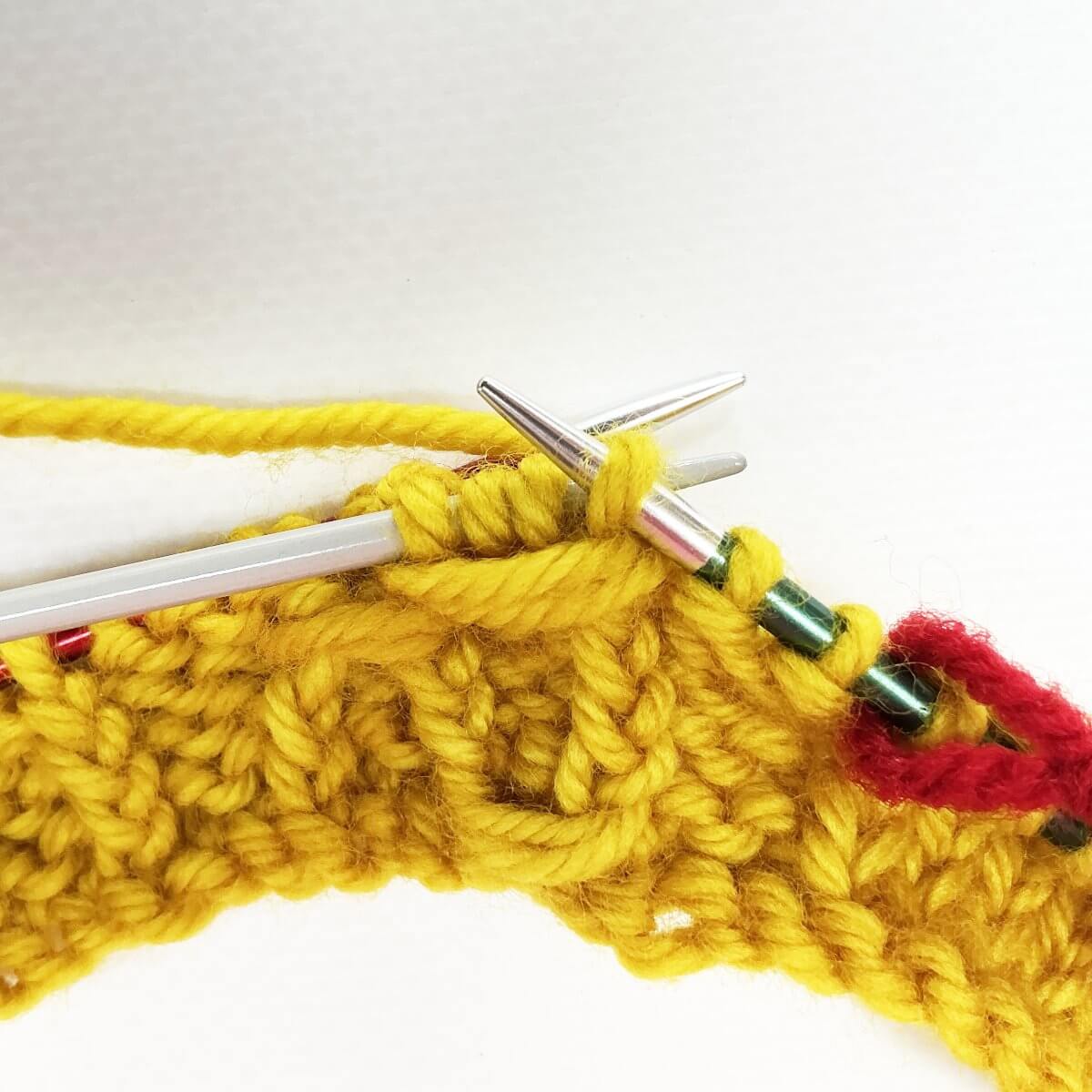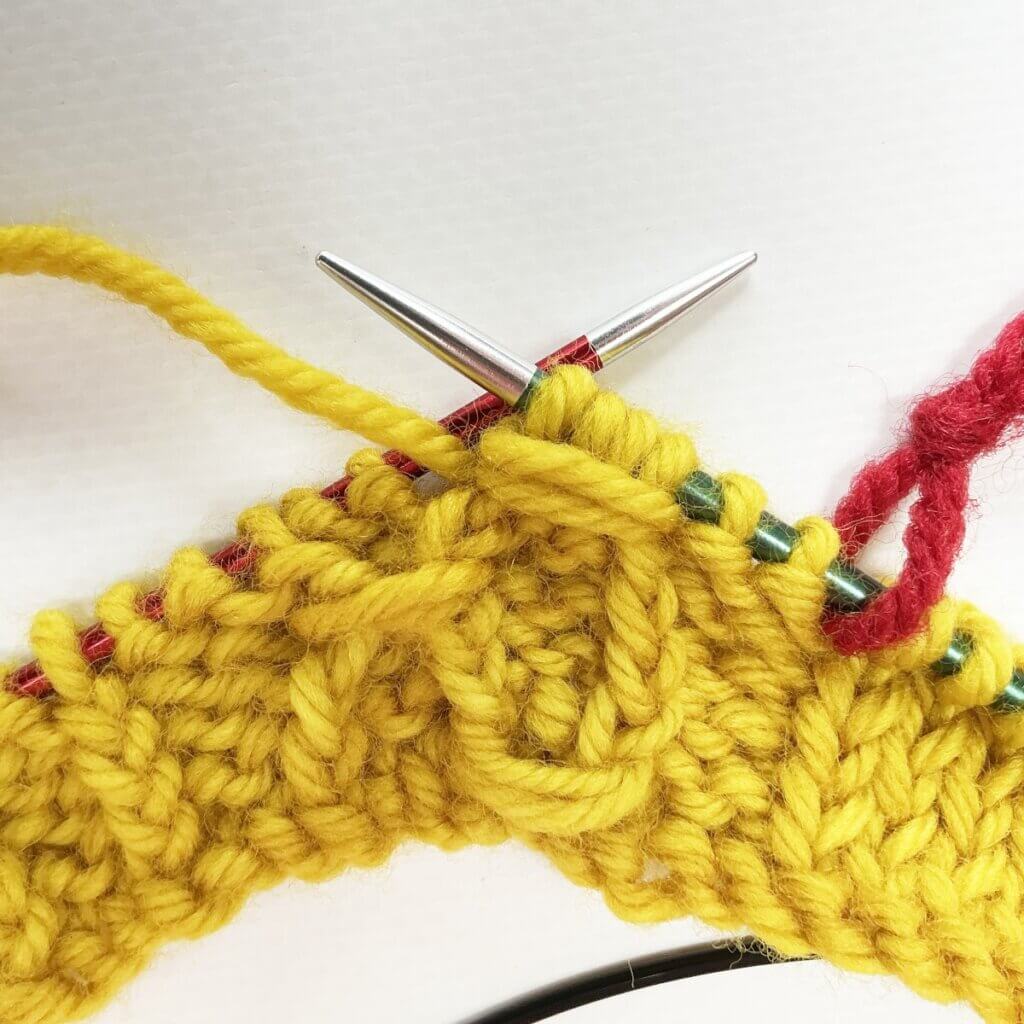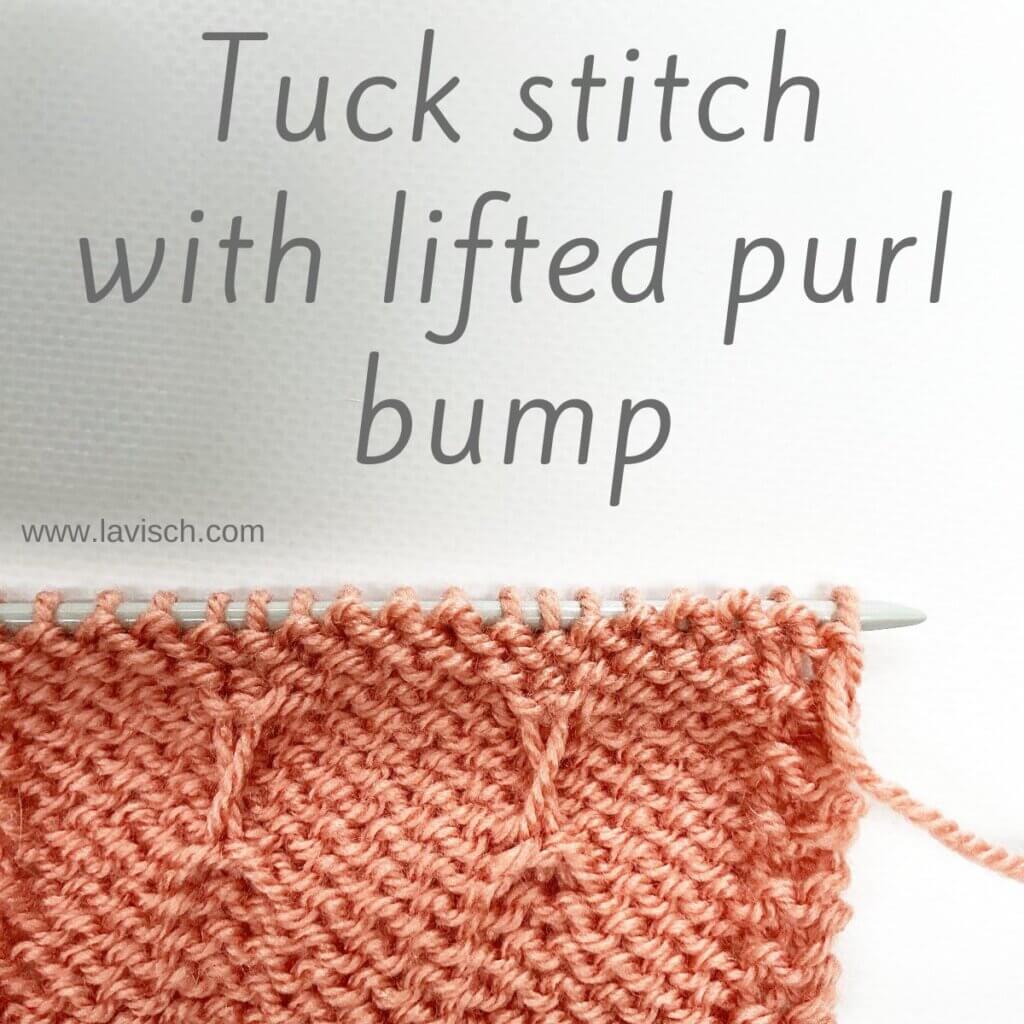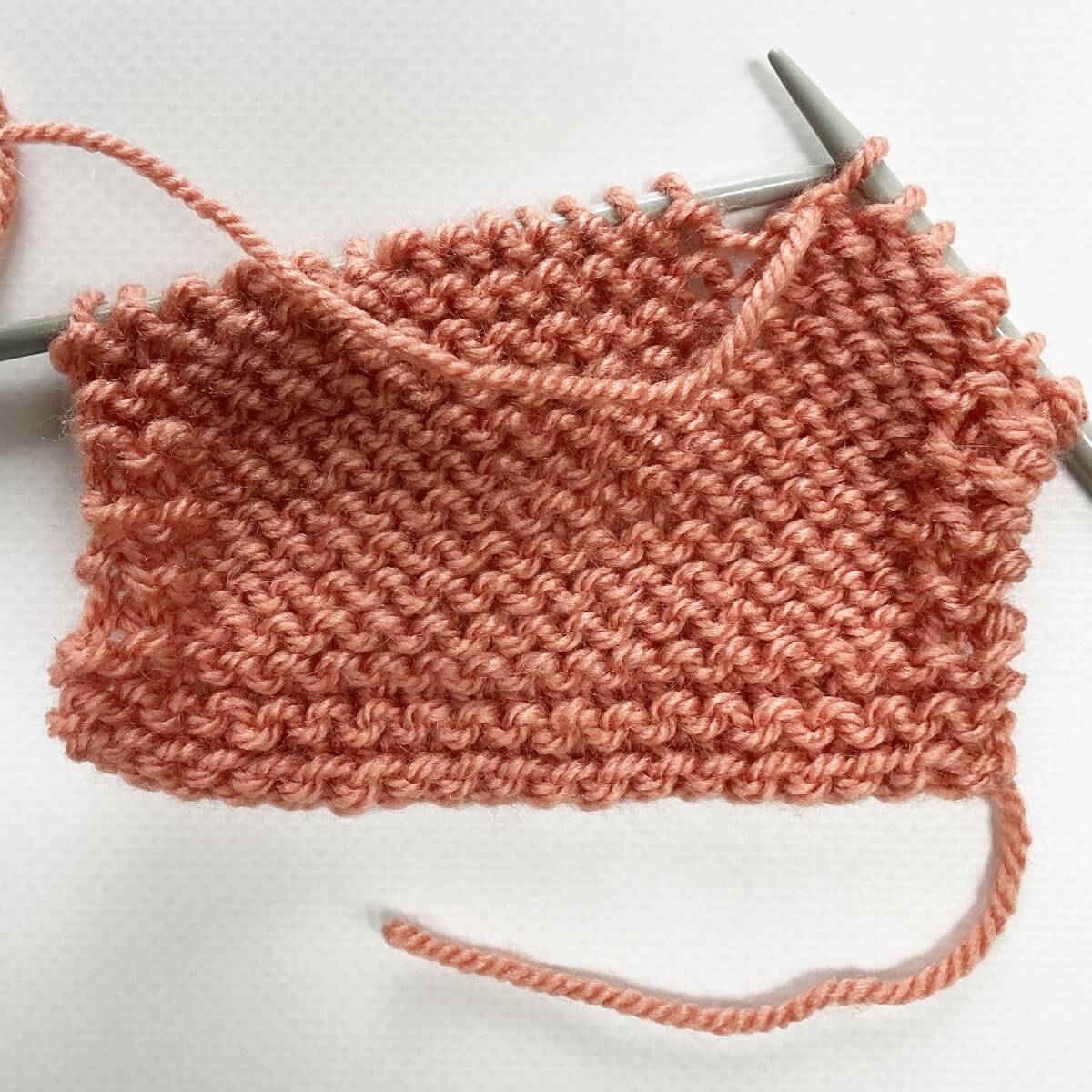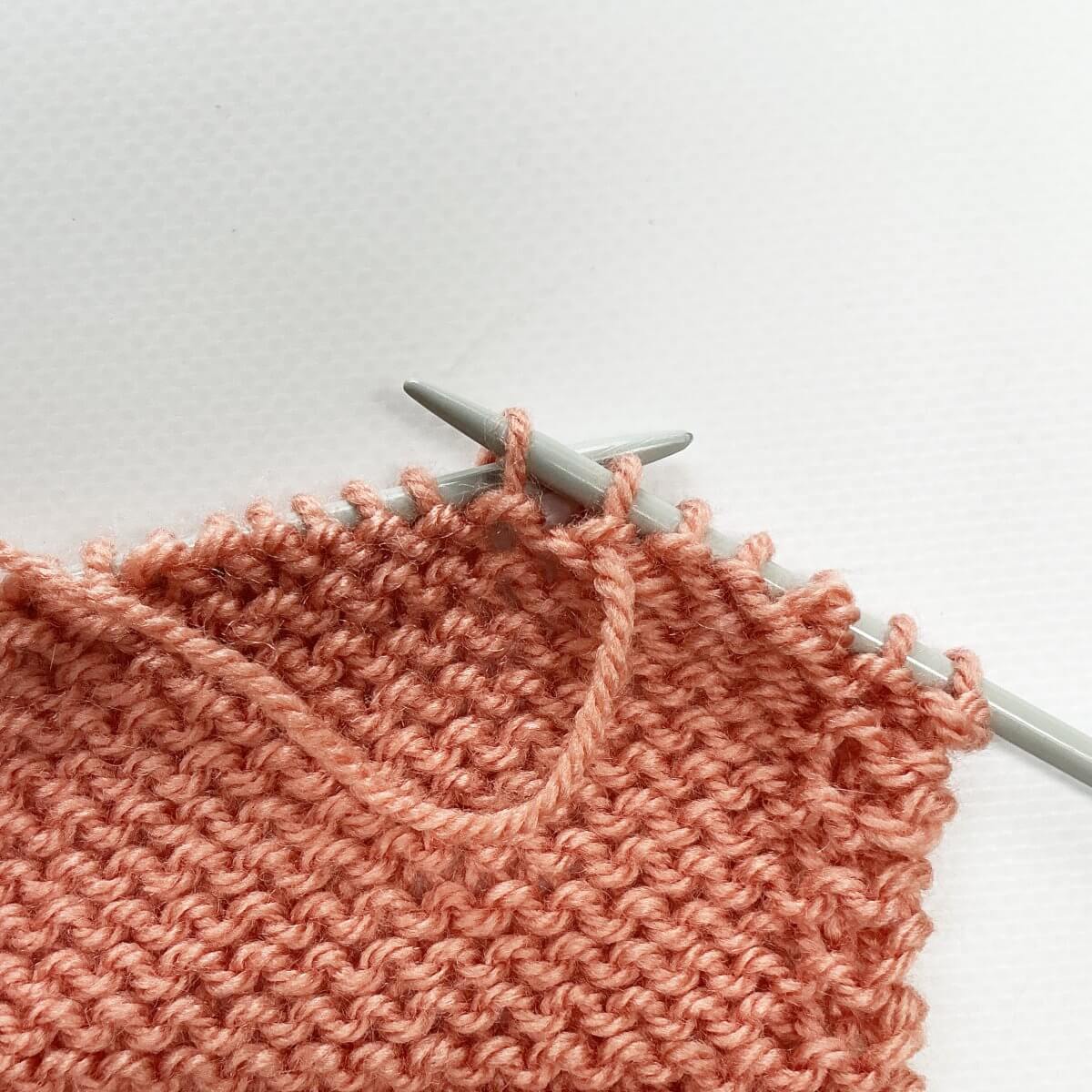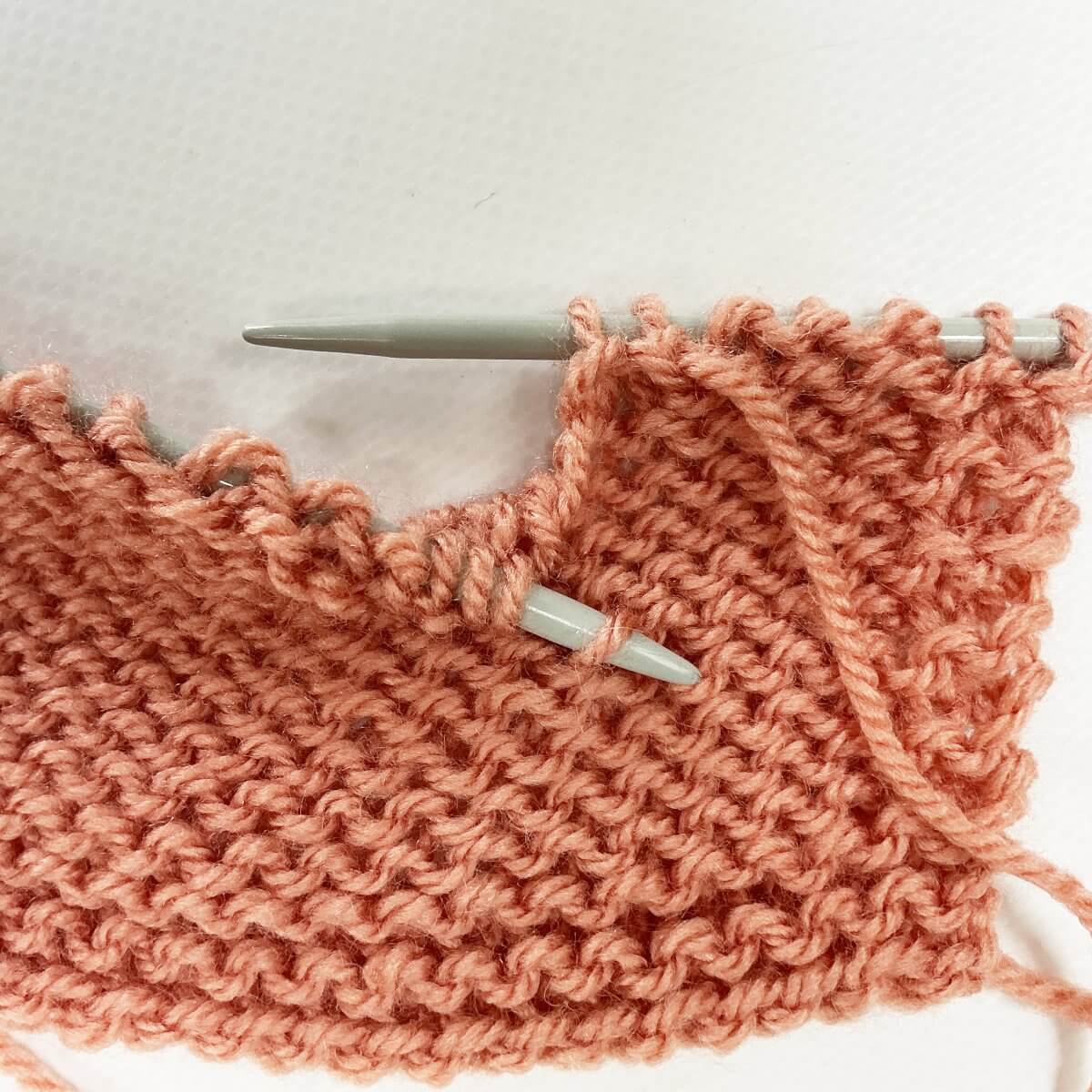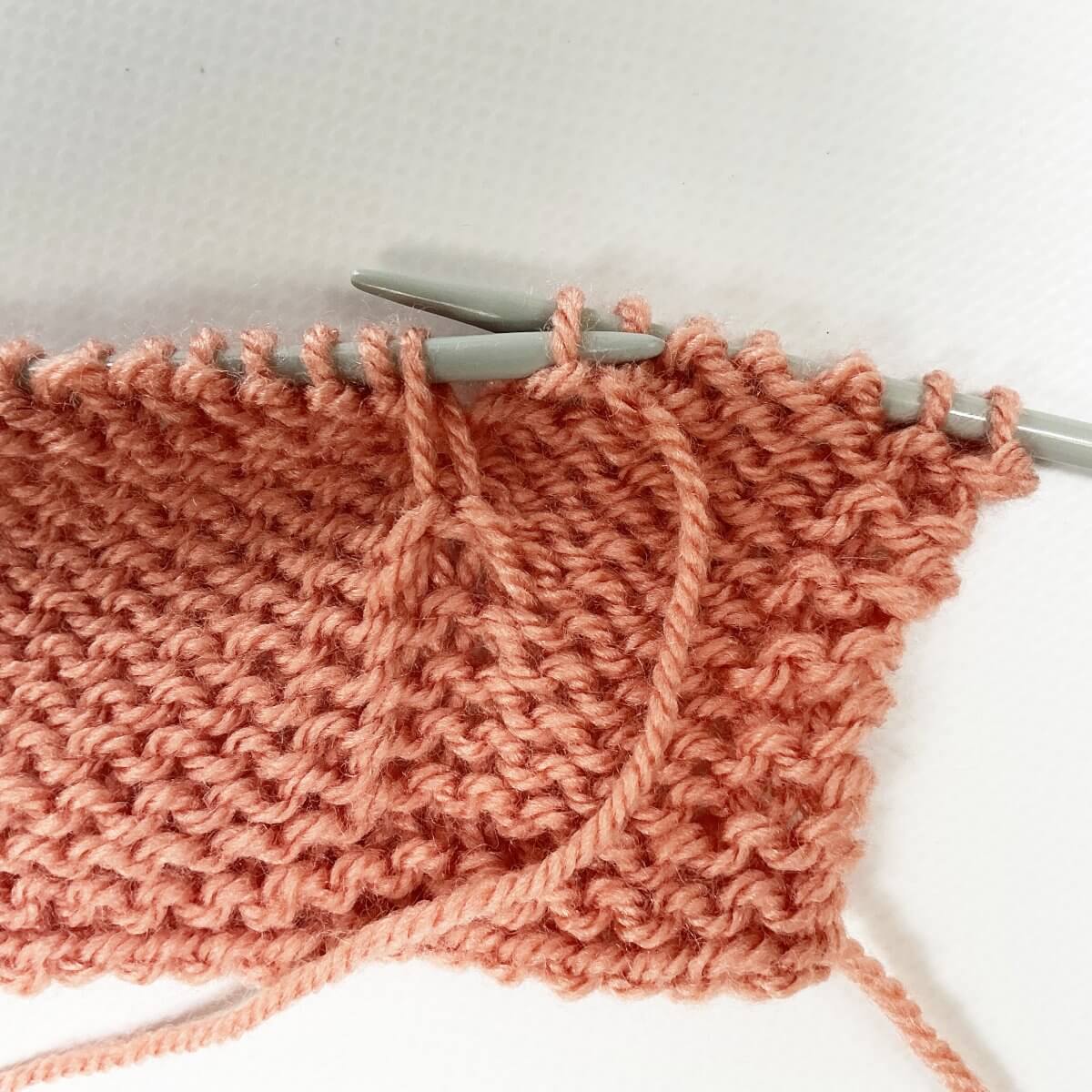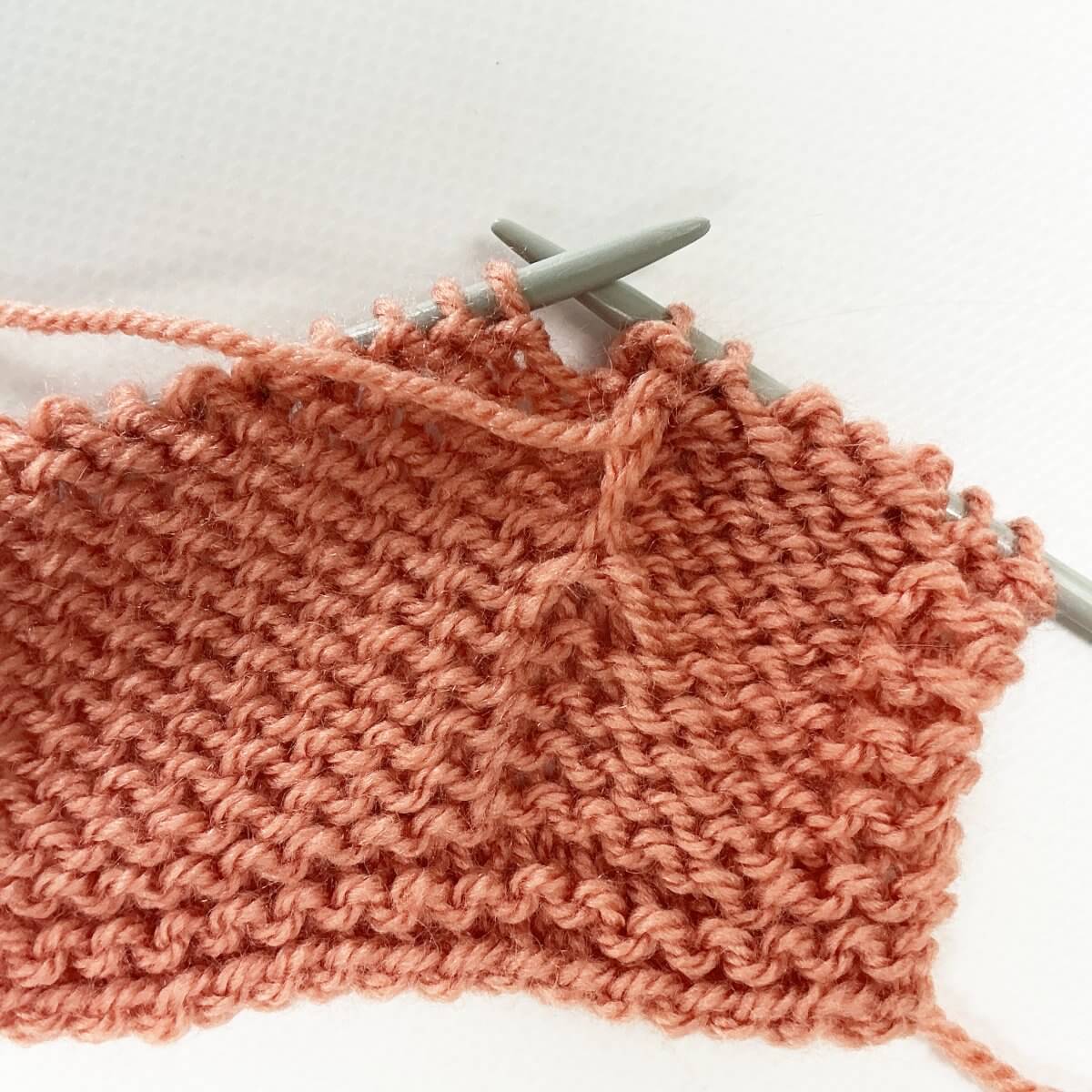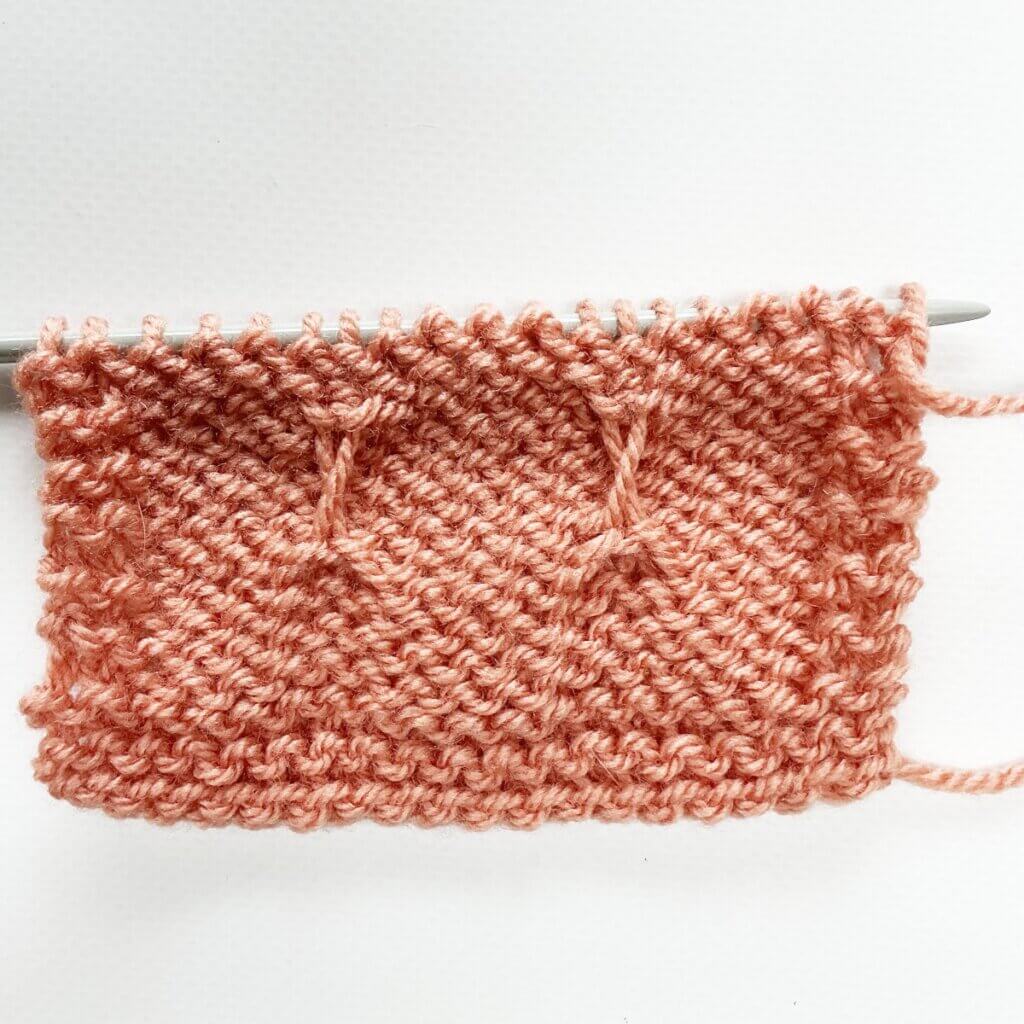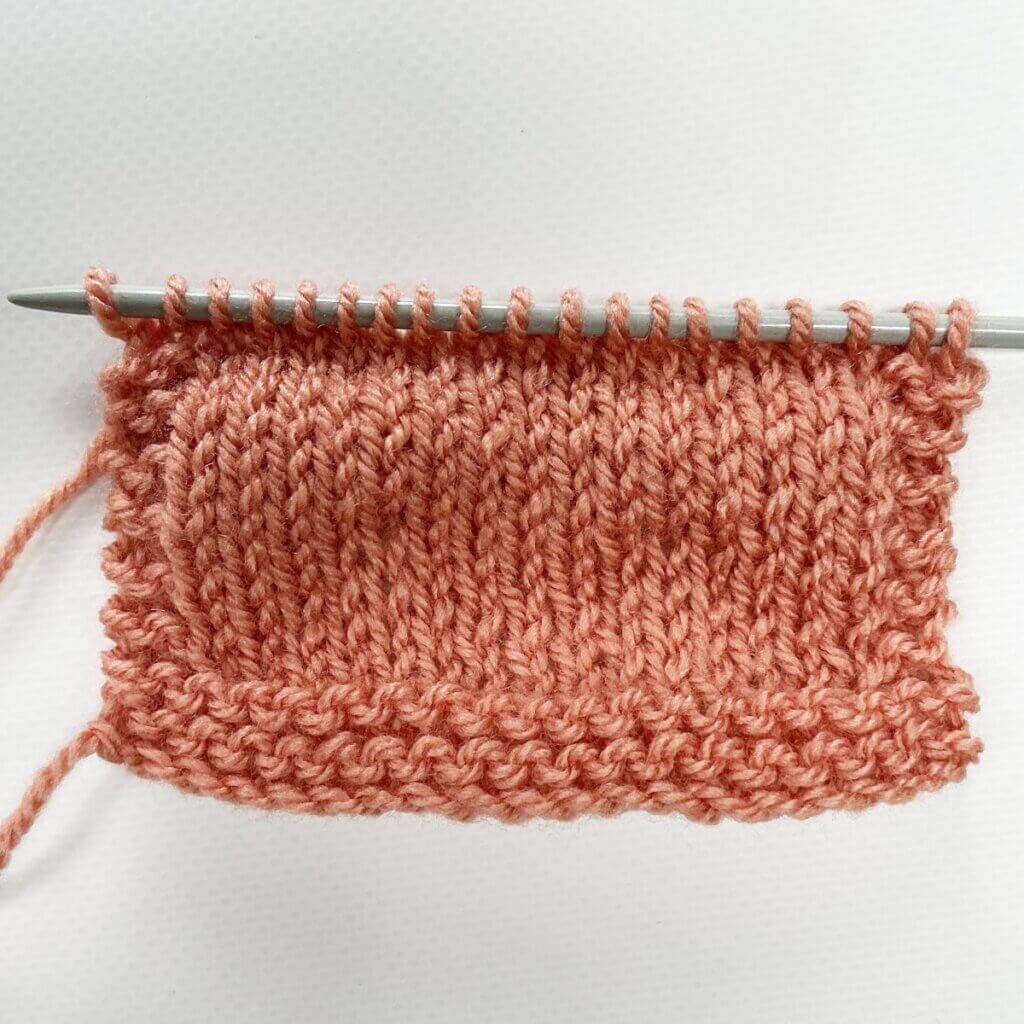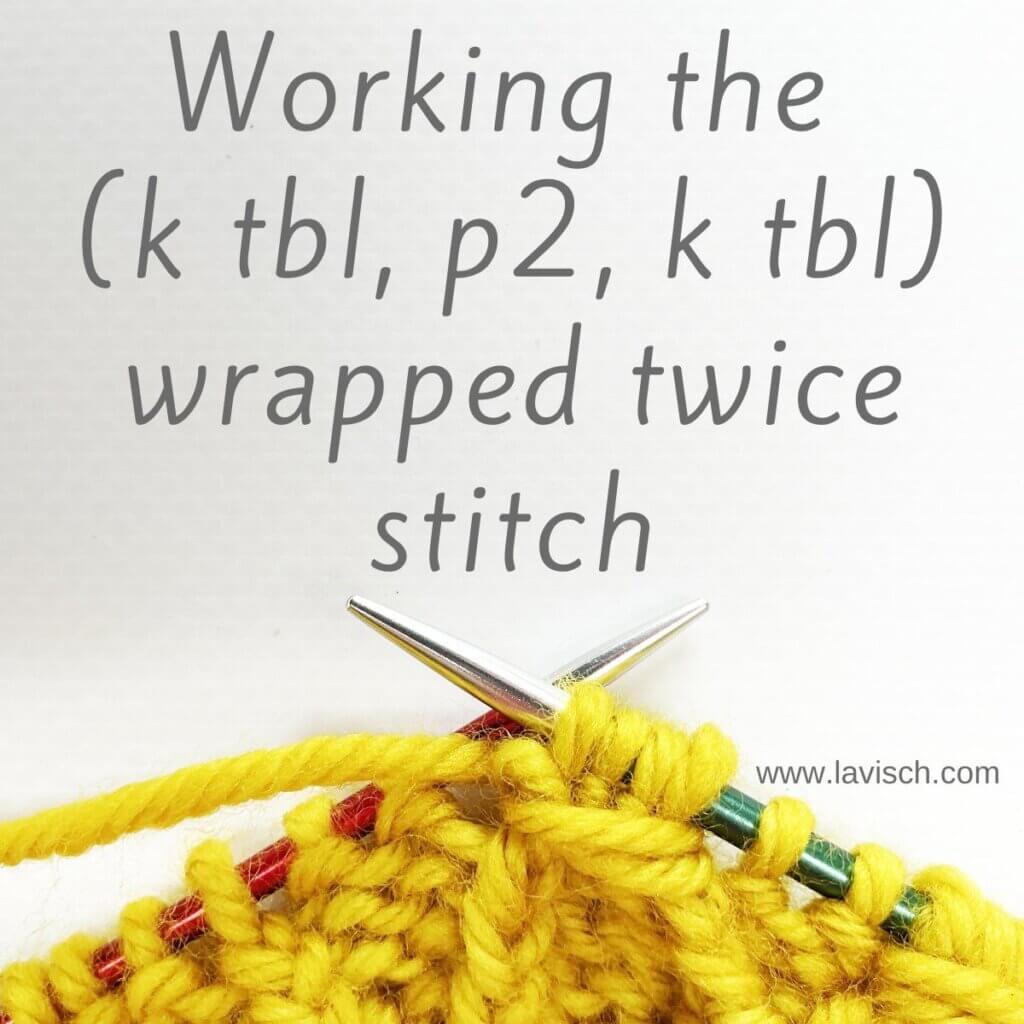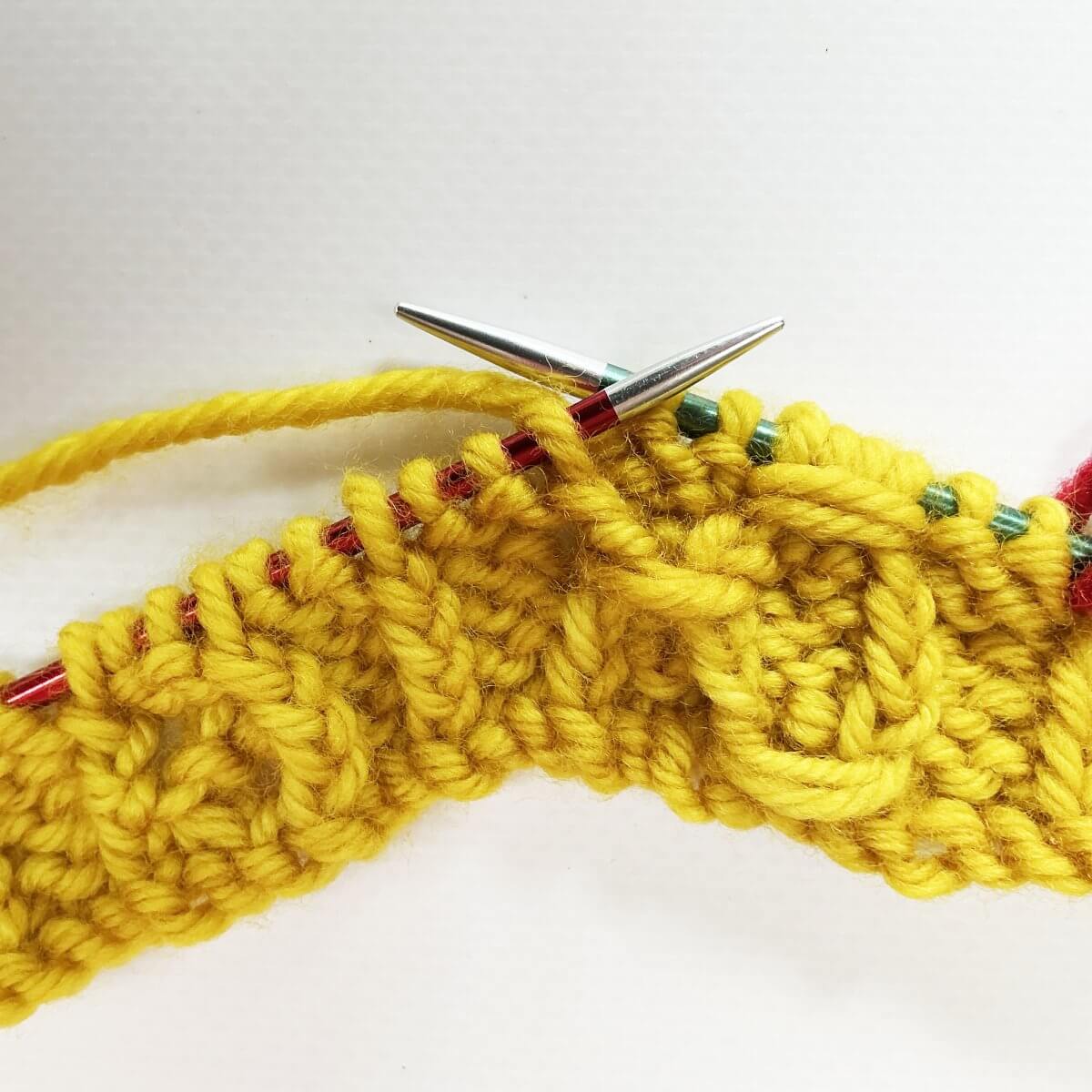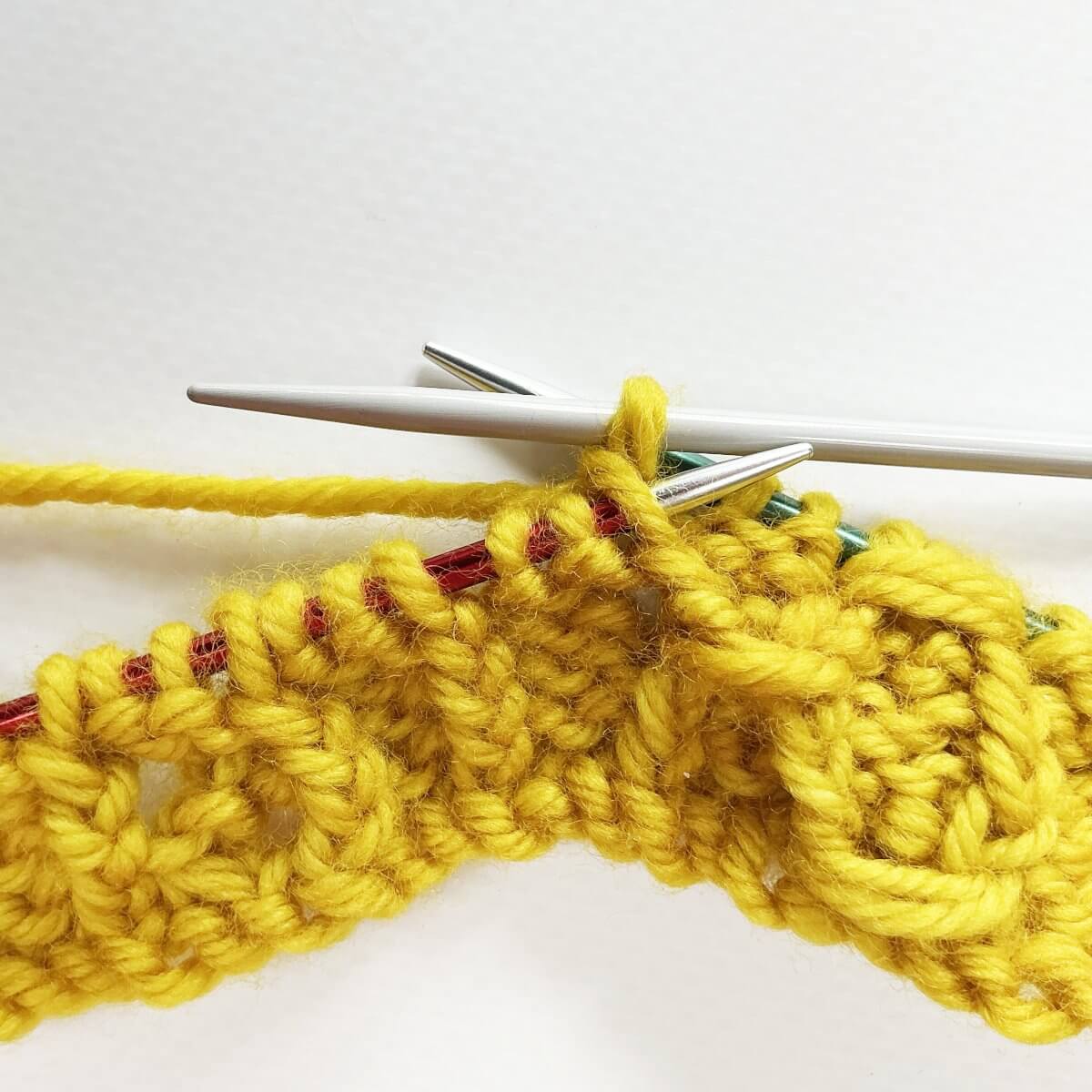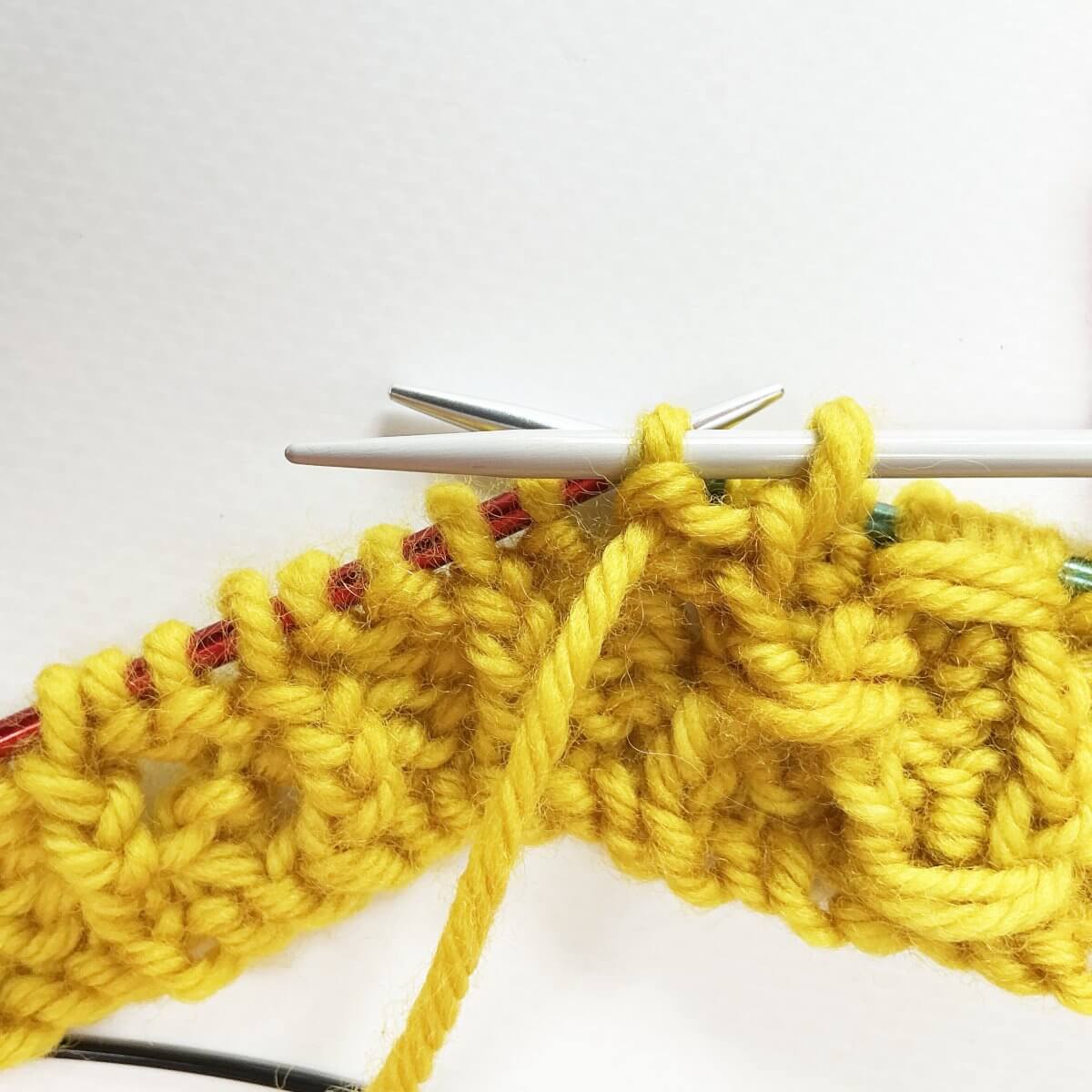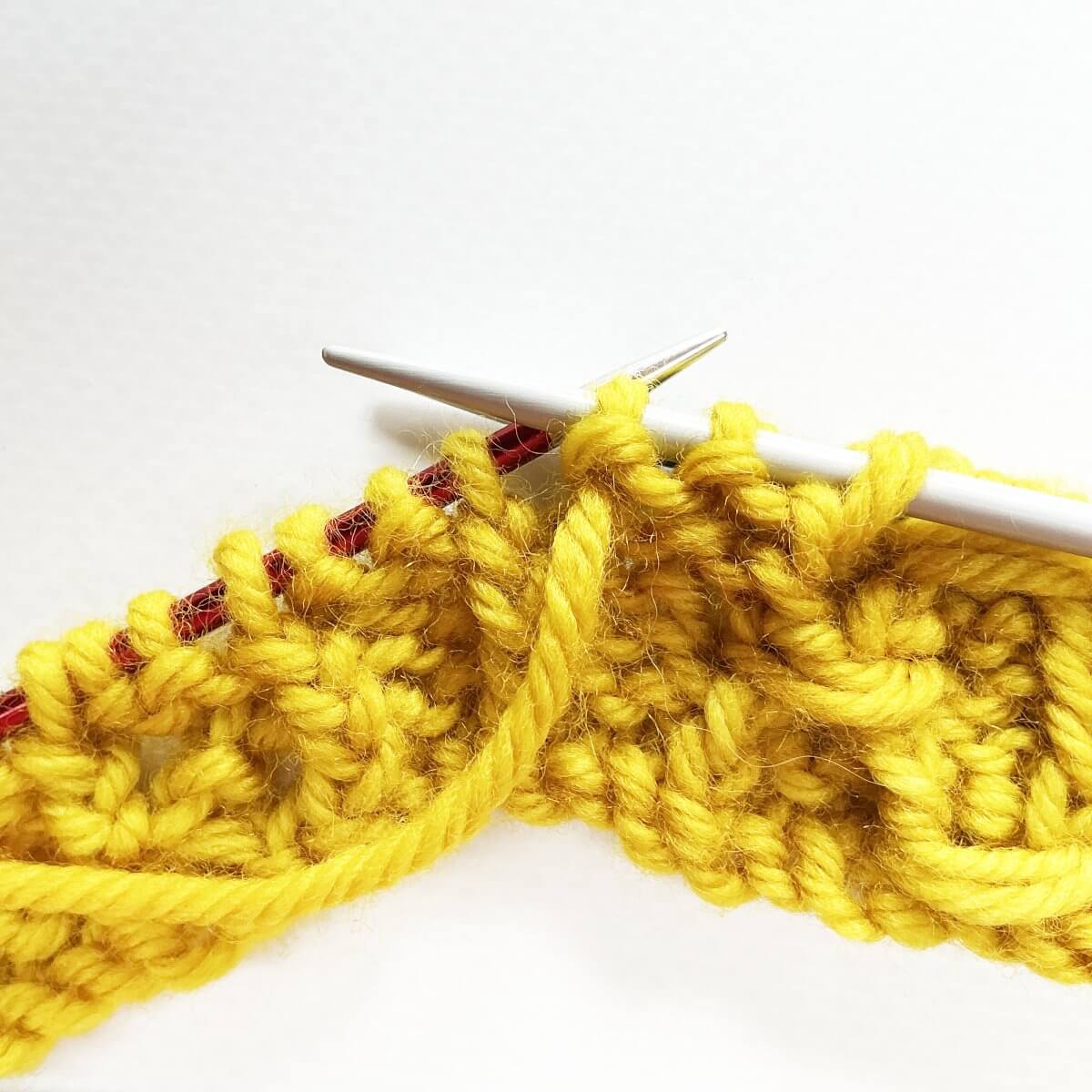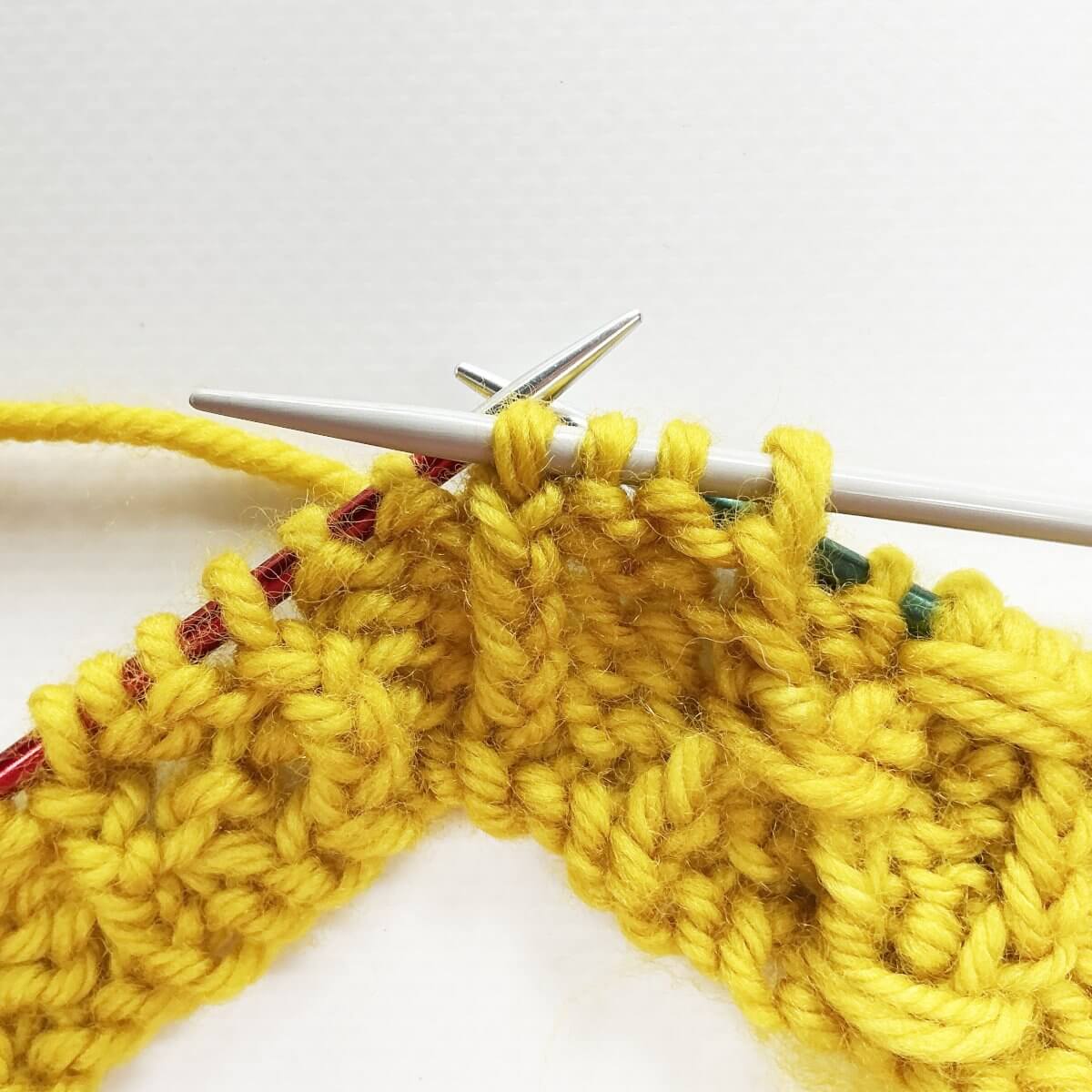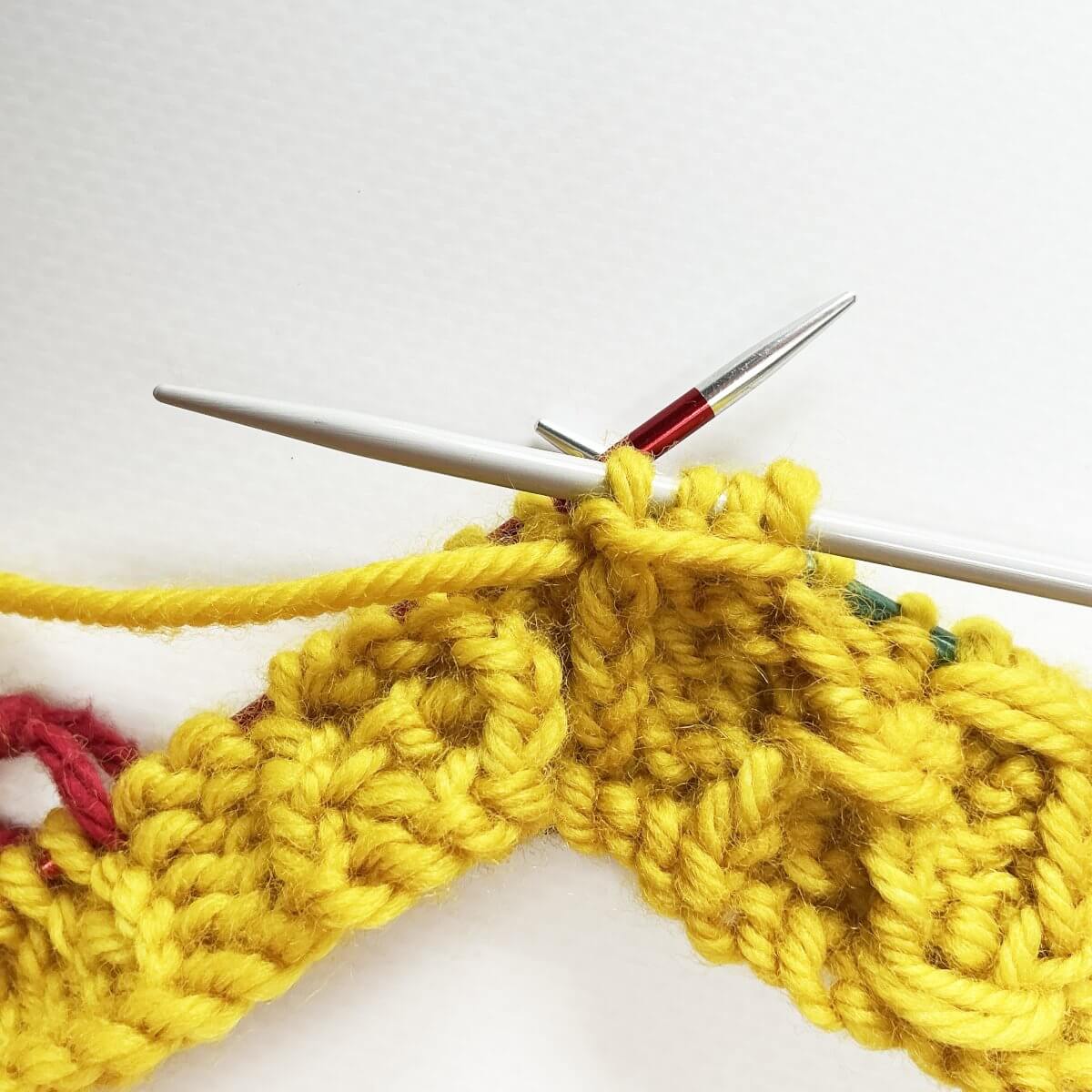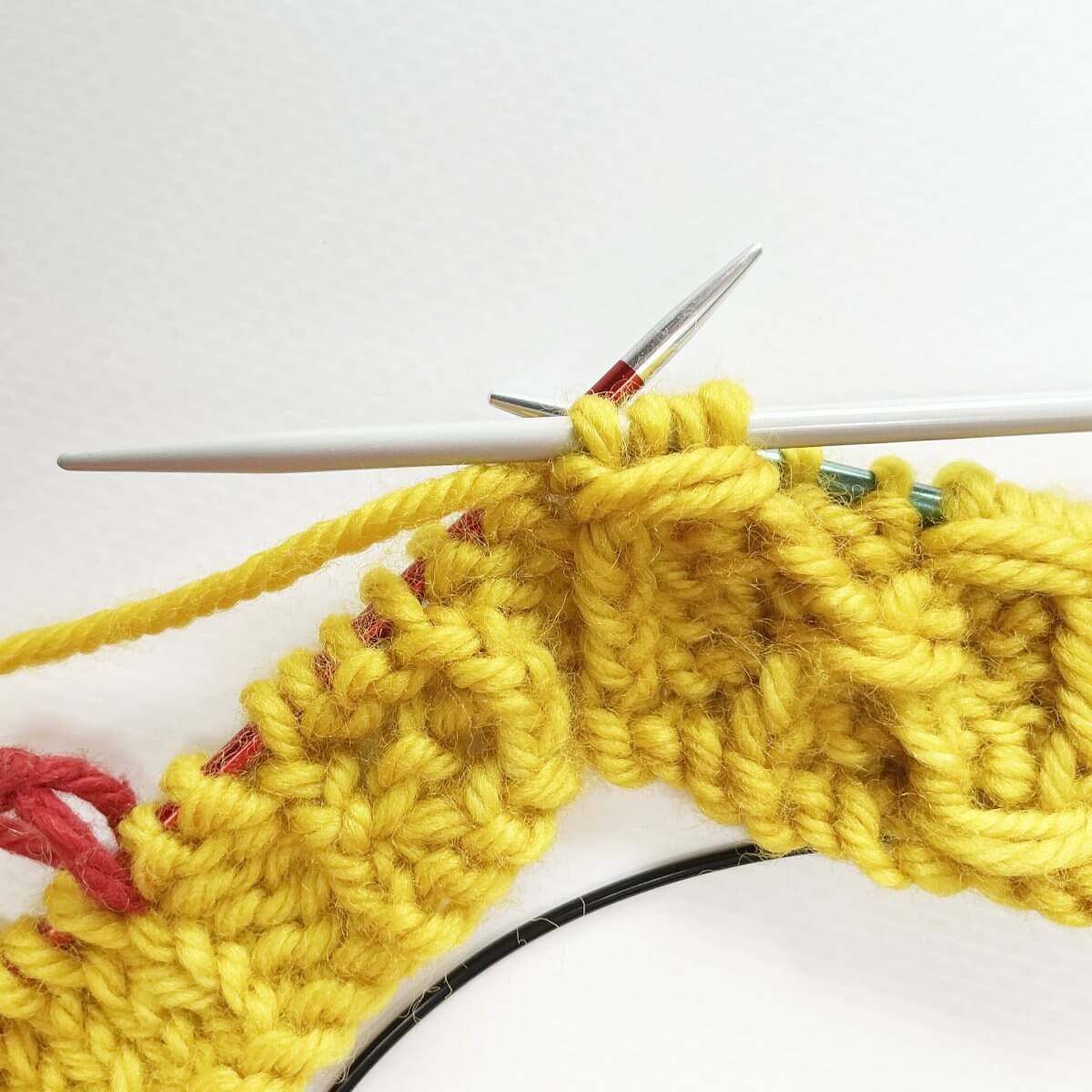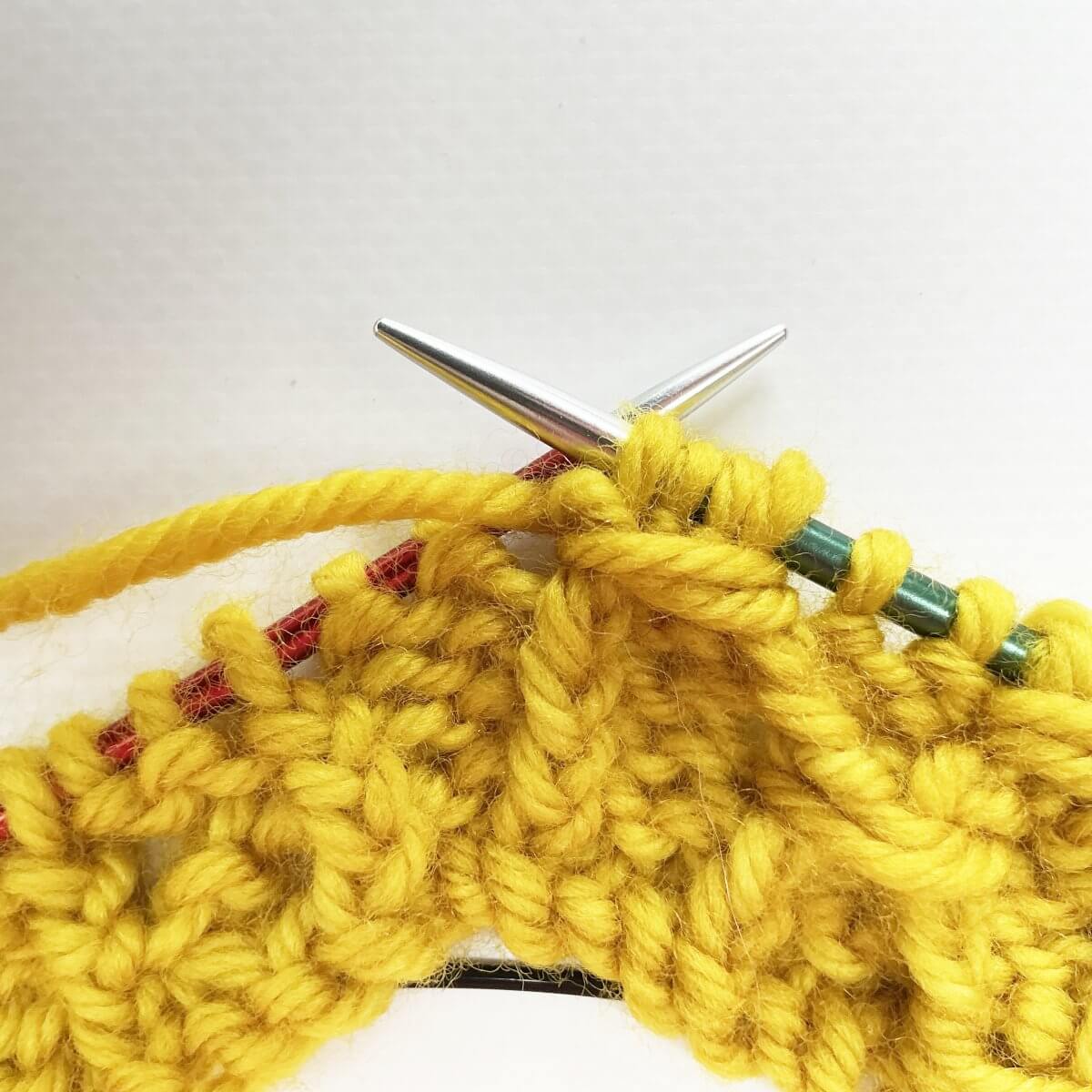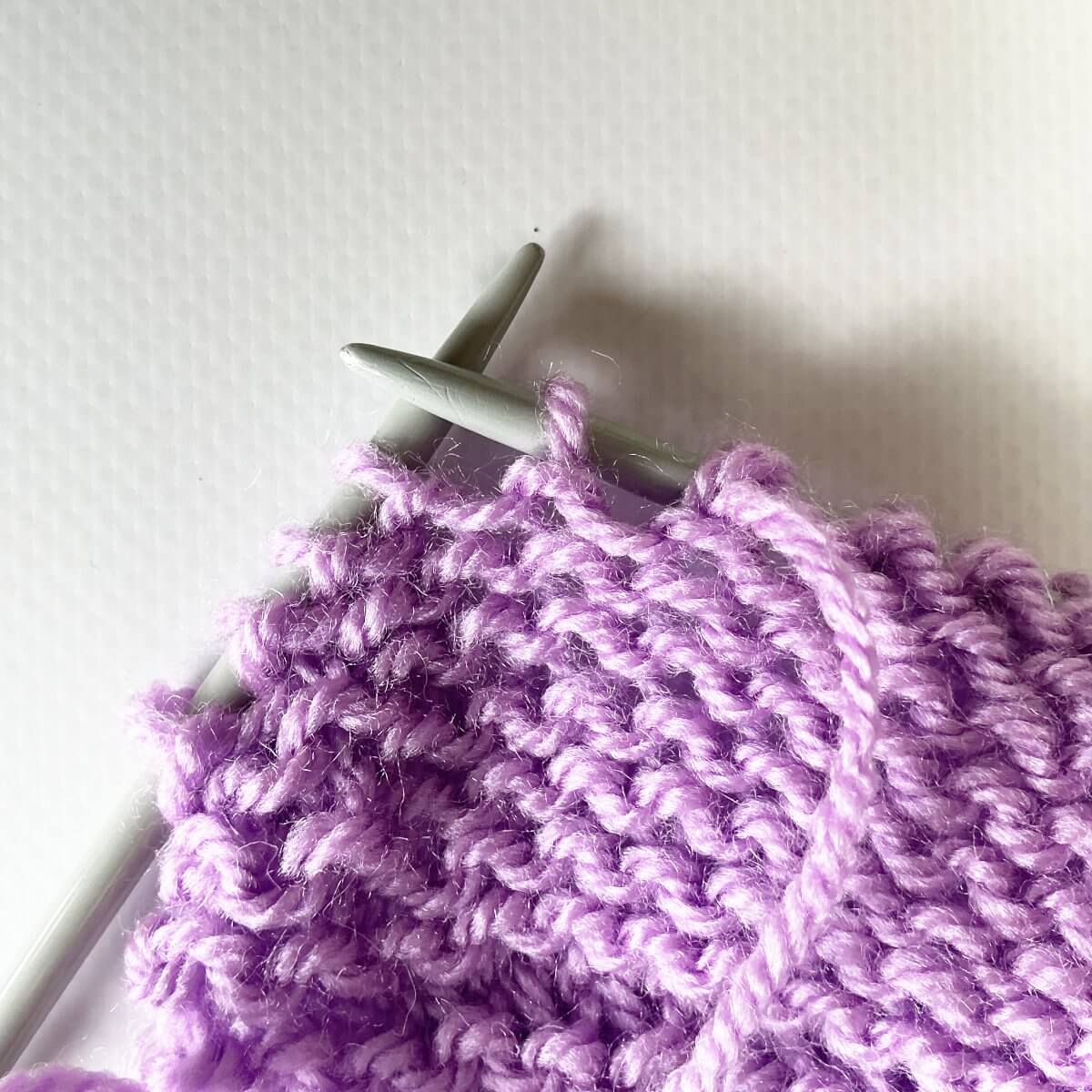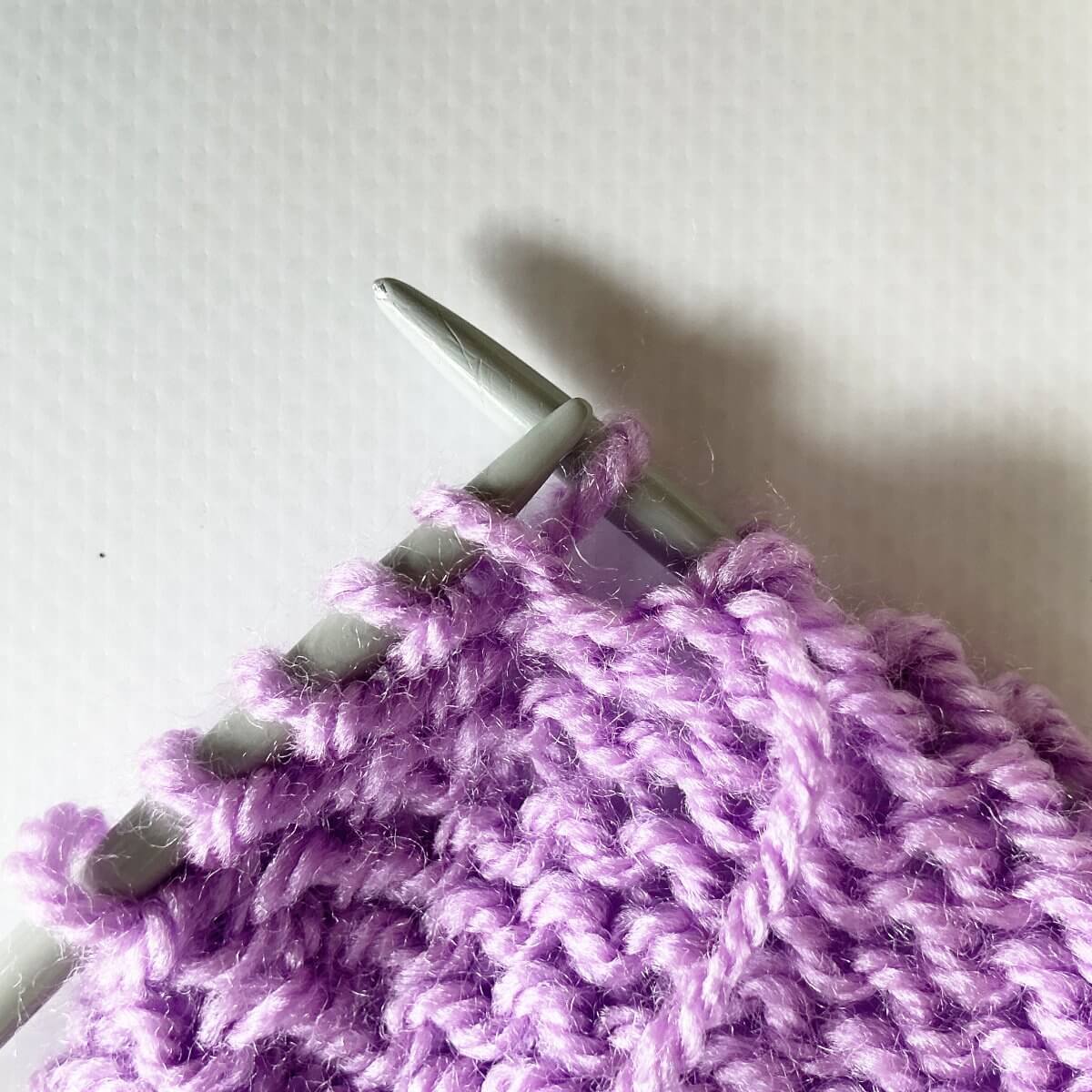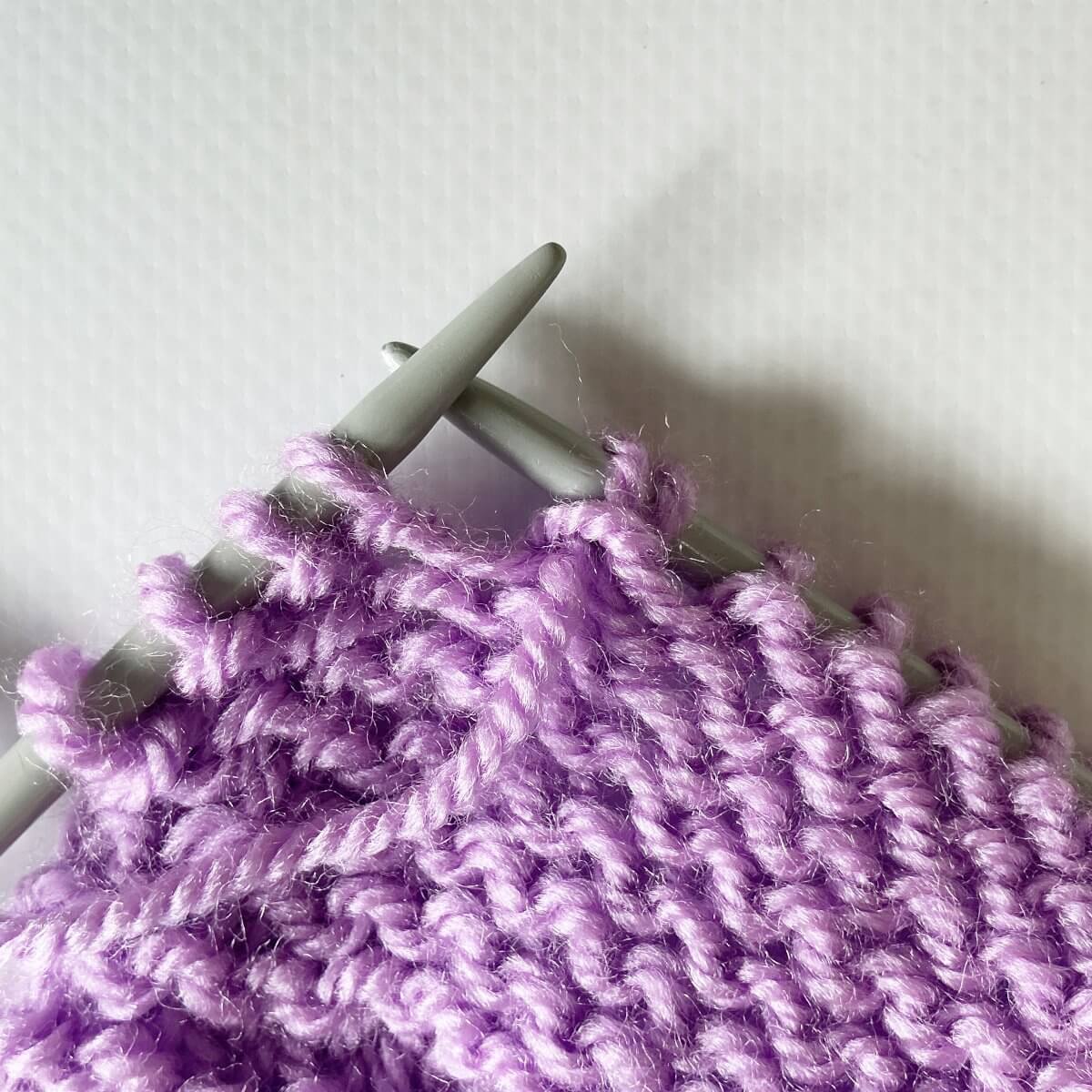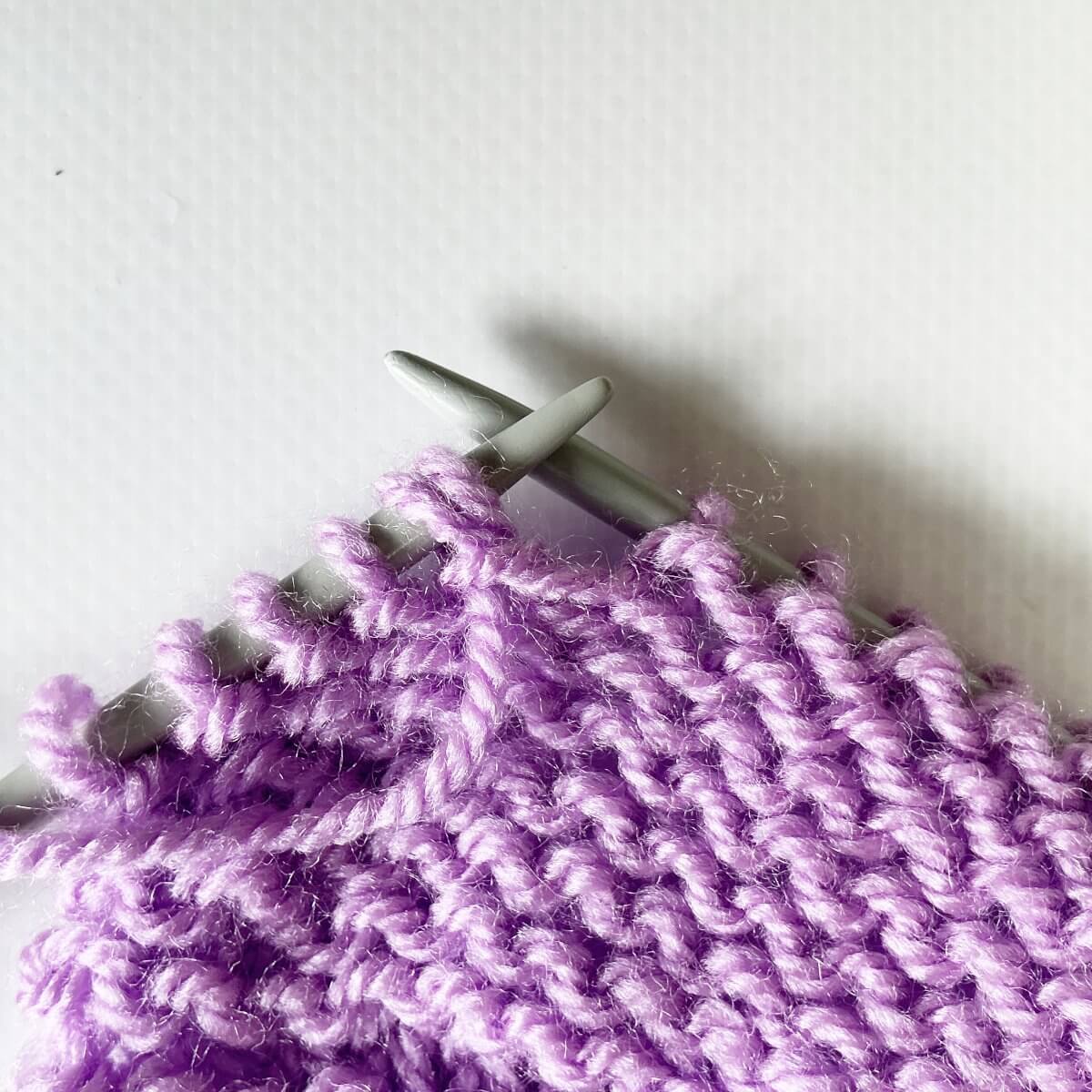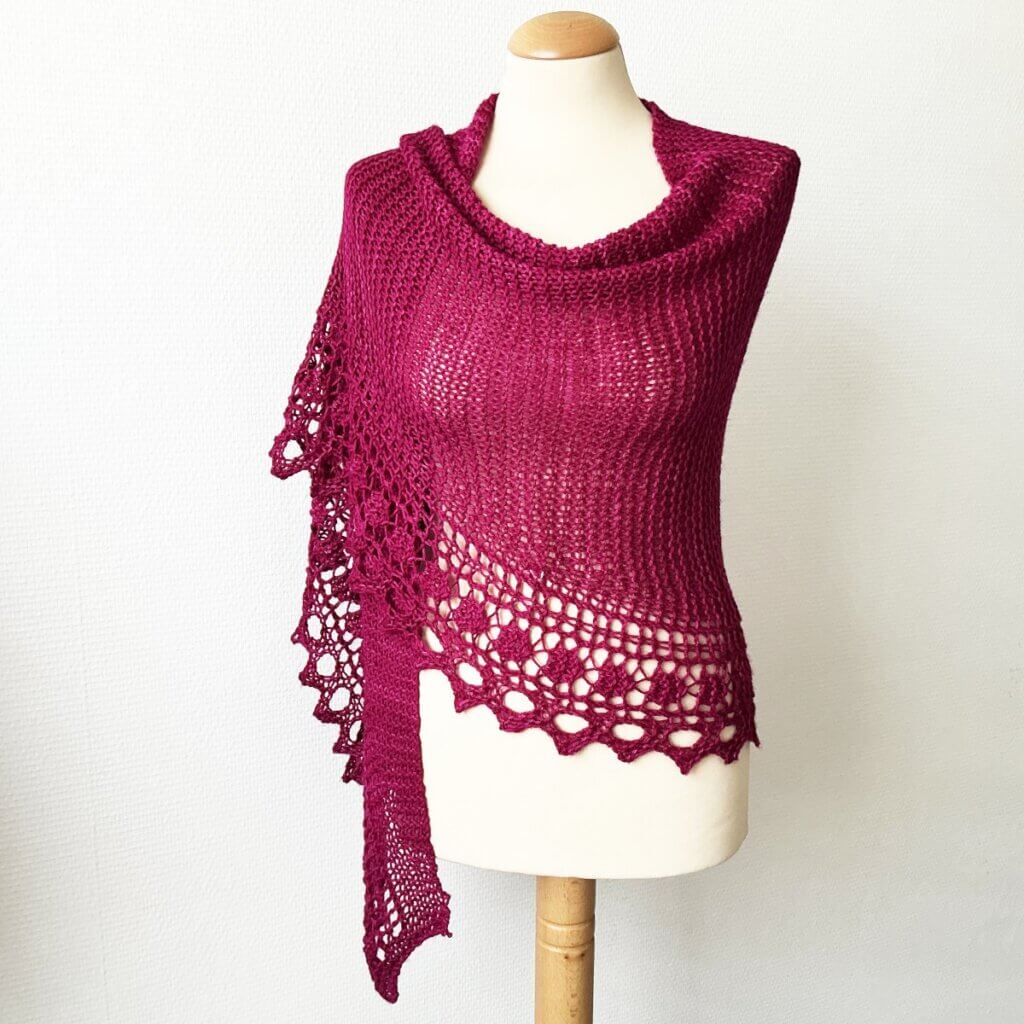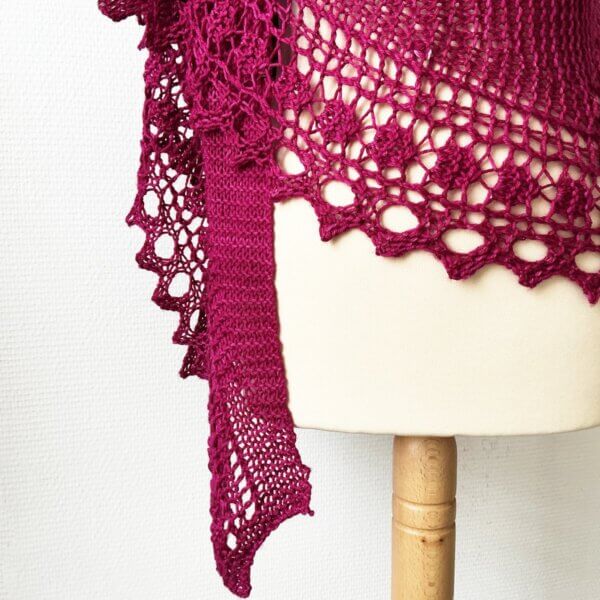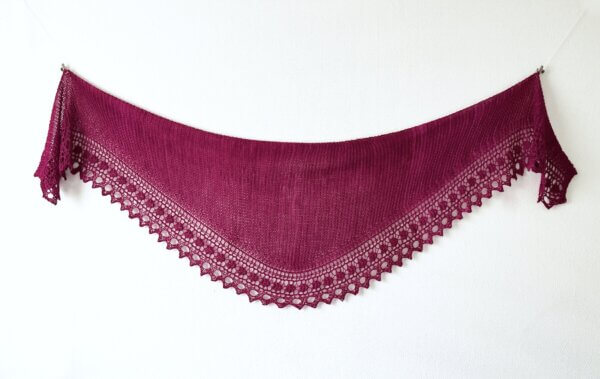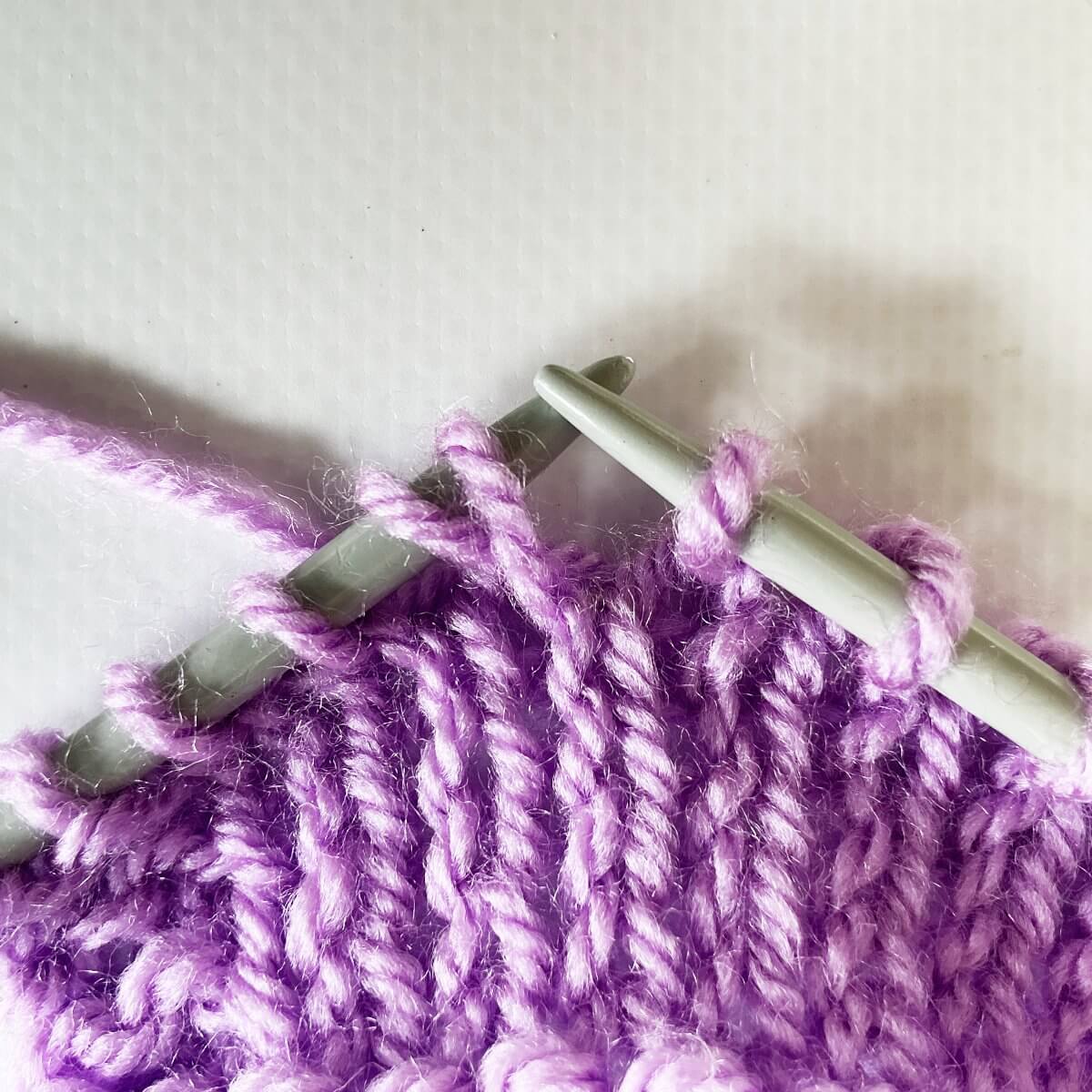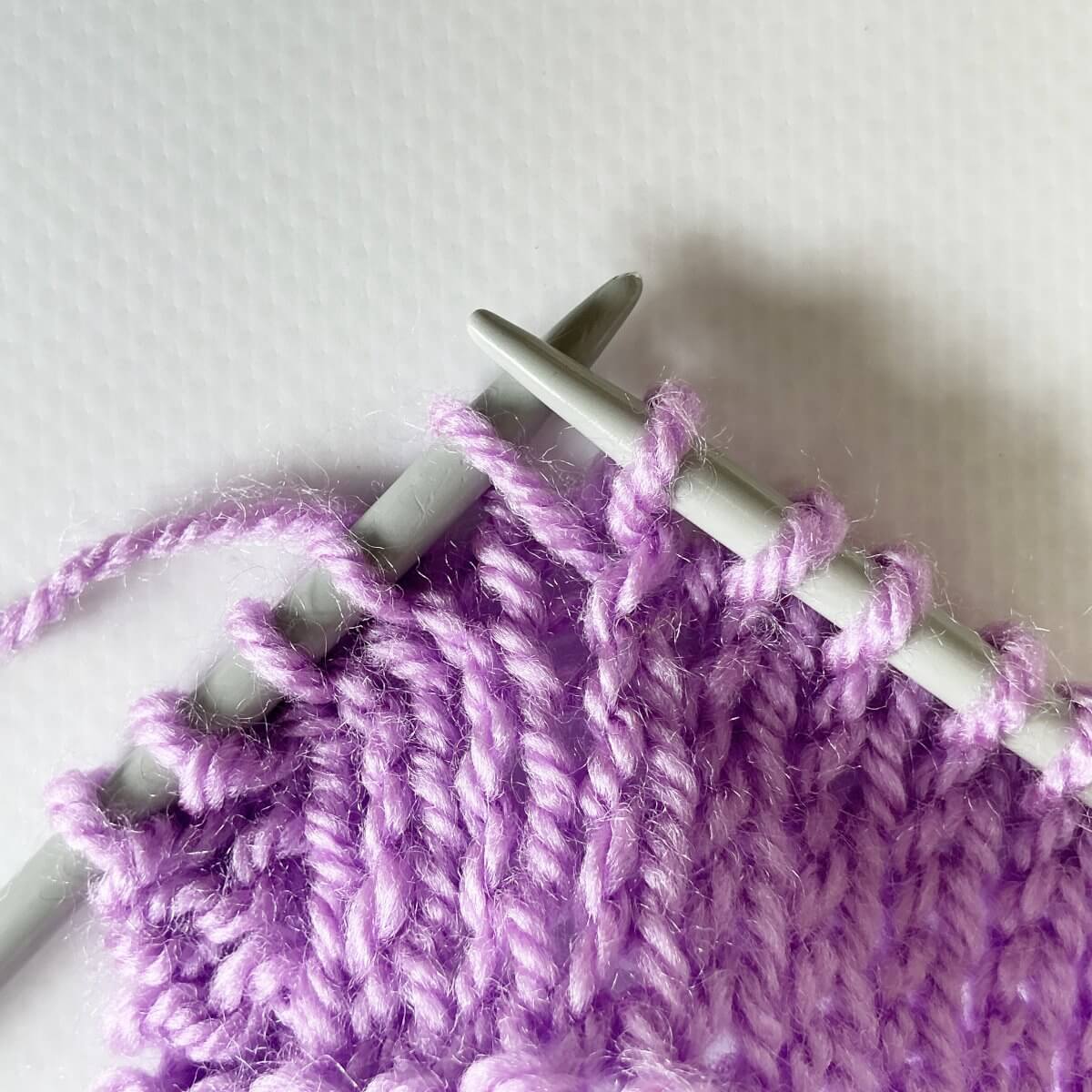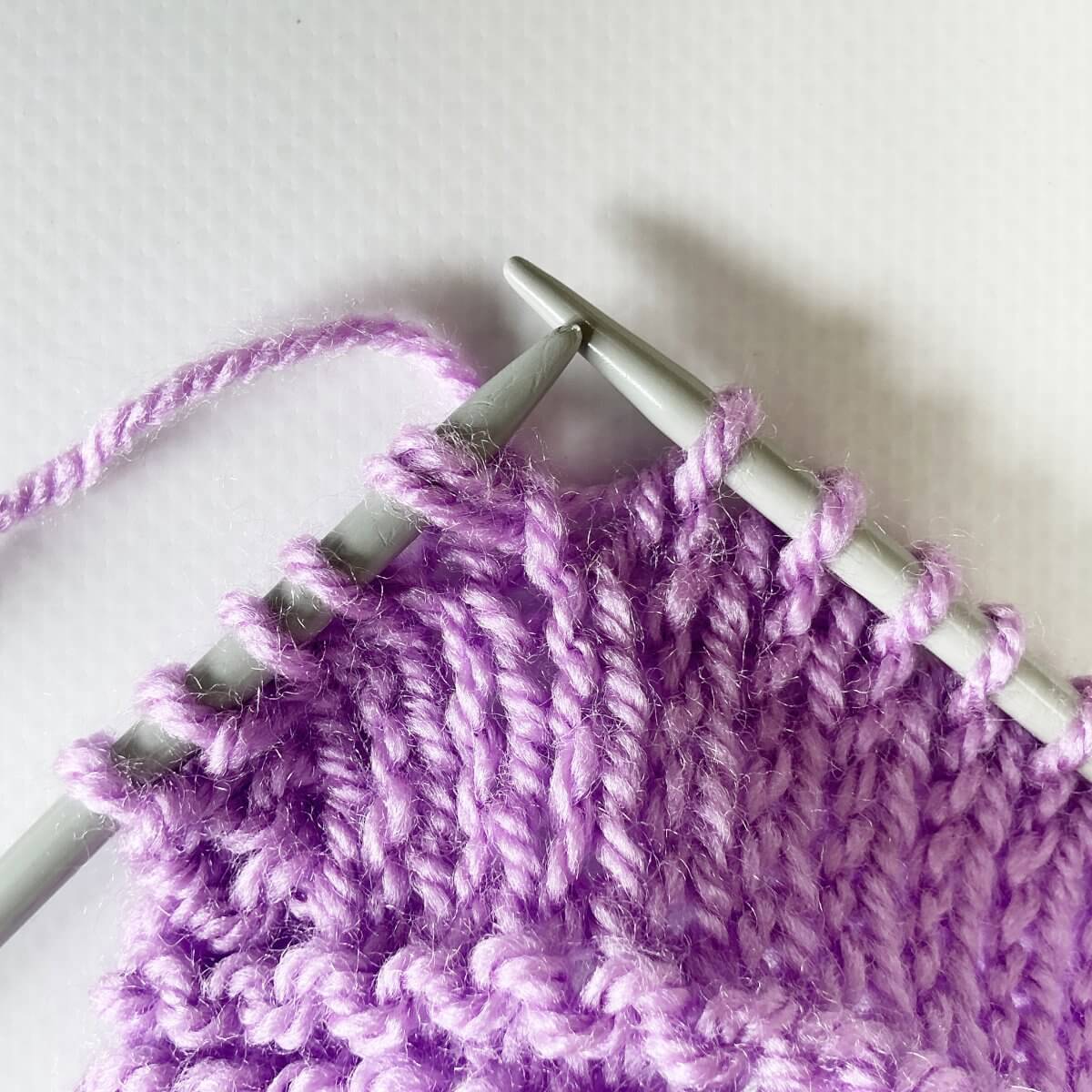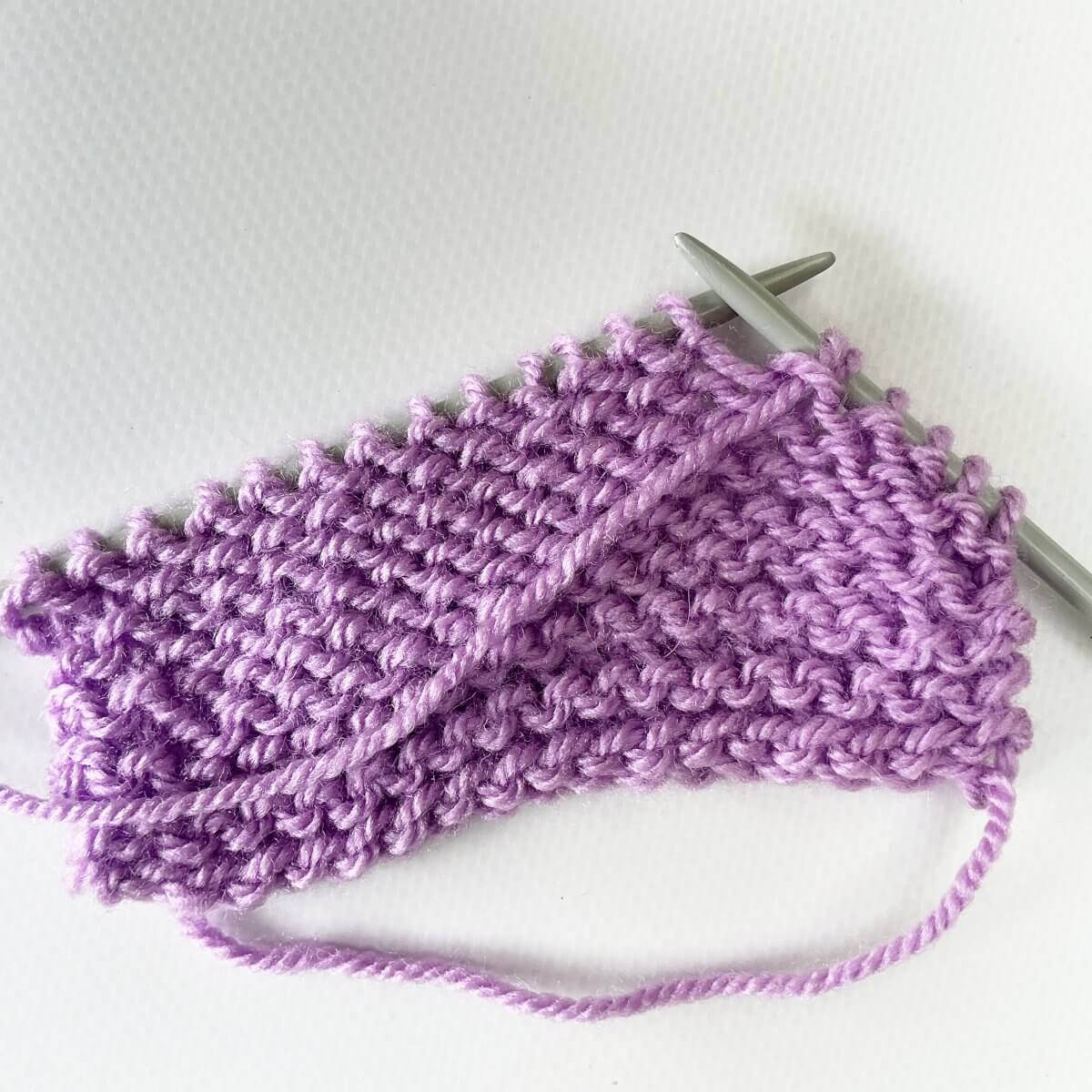
Gothic Flamingo is a shallow, triangle scarf, knit sideways. This design features lace patterning, worked at the same time as the body of the shawl. While the sample shown is worked in an aran weight yarn, the design is wonderfully suited to be worked in other yarn weights.
The pattern contains both fully written out and charted instructions for the lace. The lace in the body of the shawl is worked on both wrong and right side rows.
This pattern is therefore suitable for the intermediate to advanced knitter.
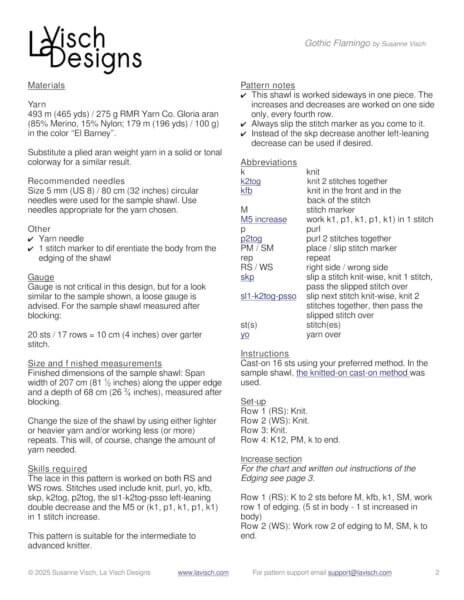
Sizes and finished measurements
One size (easily adjusted) – finished dimensions: Span width of 207 cm (81 ½ inches) along the upper edge and a depth of 68 cm (26 ¾ inches), measured after blocking.
Change the size of the Gothic Flamingo shawl by using either lighter or heavier yarn and/or working less (or more) repeats. This will, of course, change the amount of yarn needed.
Pattern details
Gauge: 20 sts / 17 rows = 10 cm (4 inches) over garter stitch, measured after blocking. Gauge is however not critical for this design.
Pattern languages included: English.
Digital PDF has 4 pages (letter size)
Yarn
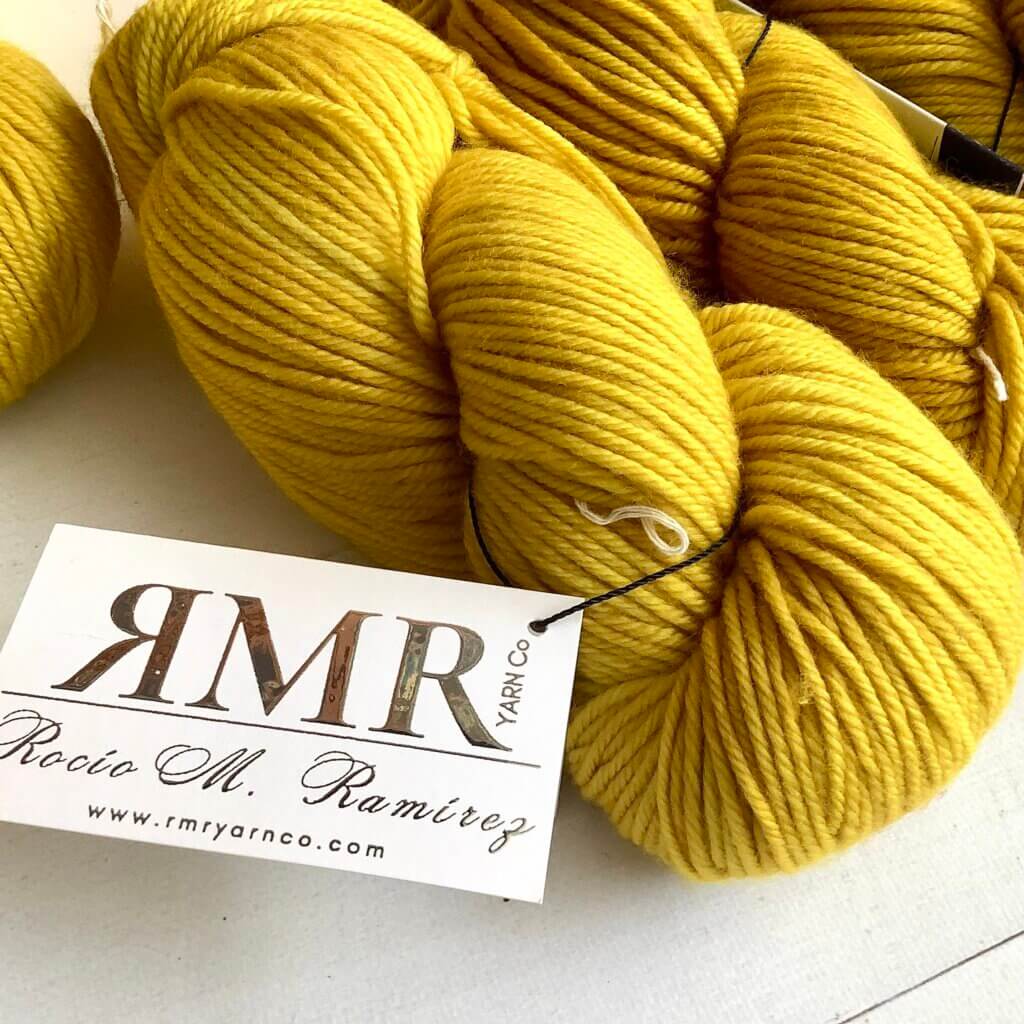
493 m (465 yds) / 275 g RMR Yarn Co. Gloria aran (85% Merino, 15% Nylon; 179 m (196 yds) / 100 g) in the color “El Barney”.
Substitute a plied aran weight yarn in a solid or tonal colorway for a similar result.
Materials
Size 5 mm (US 8) / 80 cm (32 inches) circular needles were used for the sample shawl. Use needles appropriate for the yarn chosen.
1 stitch marker to differentiate the body from the edging of the shawl
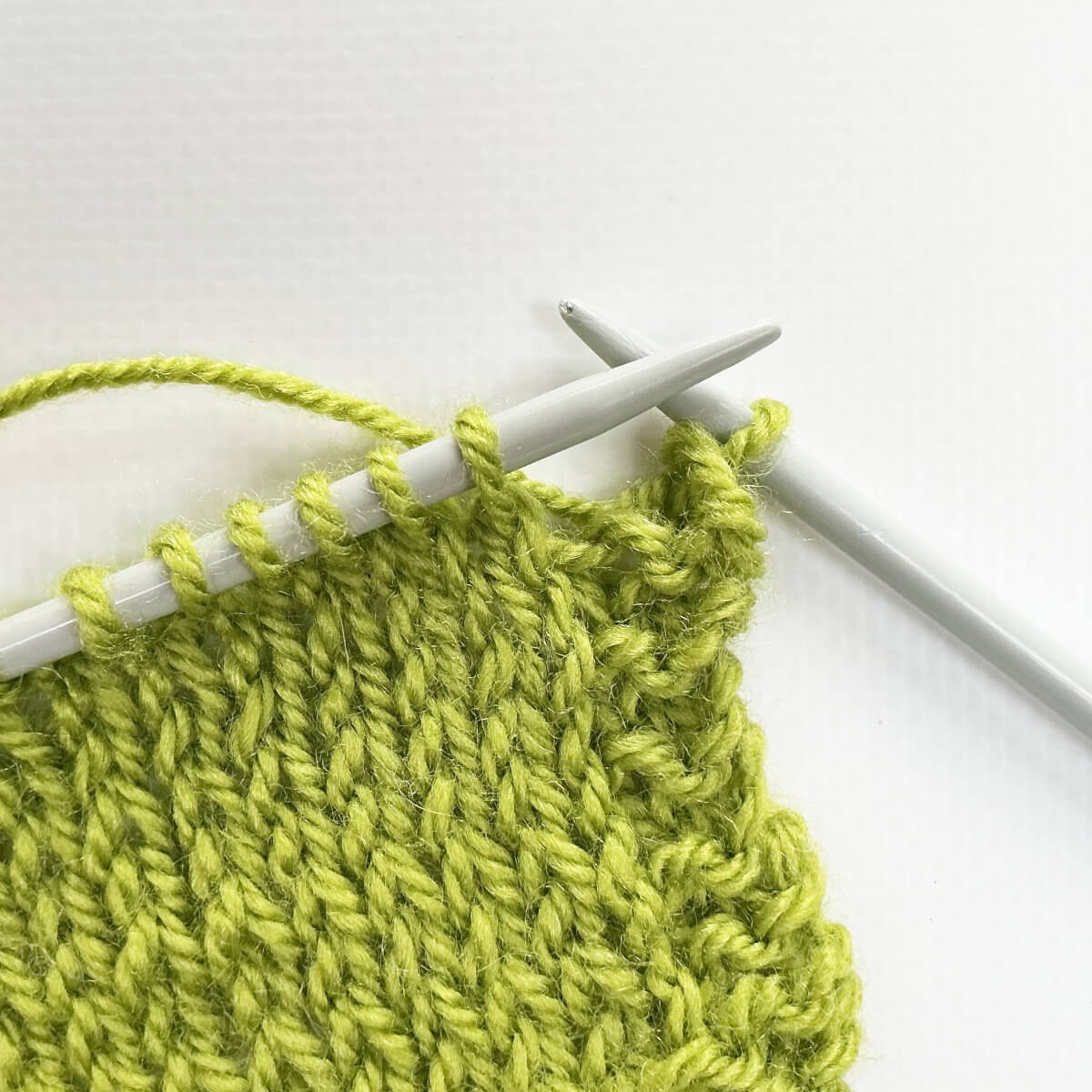
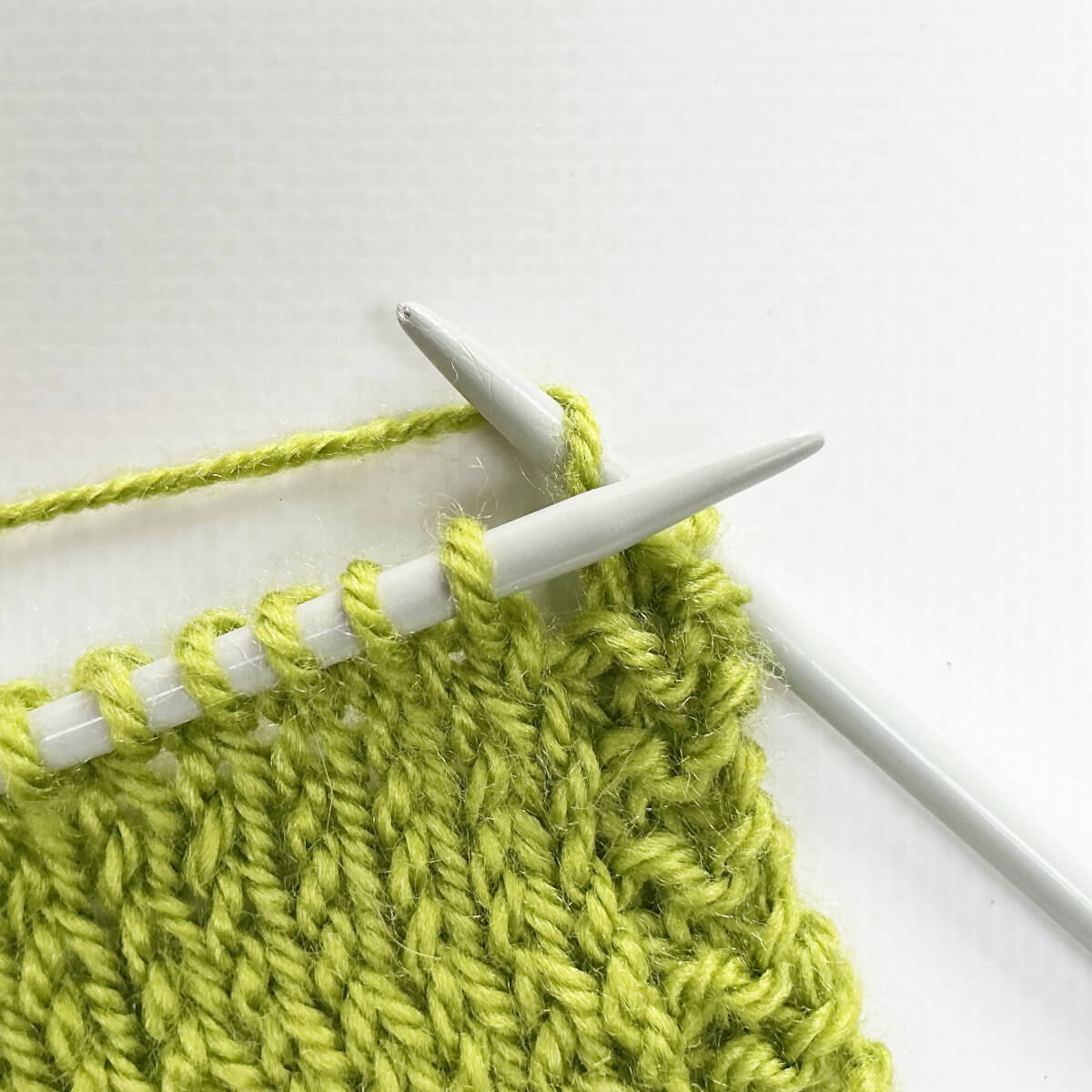
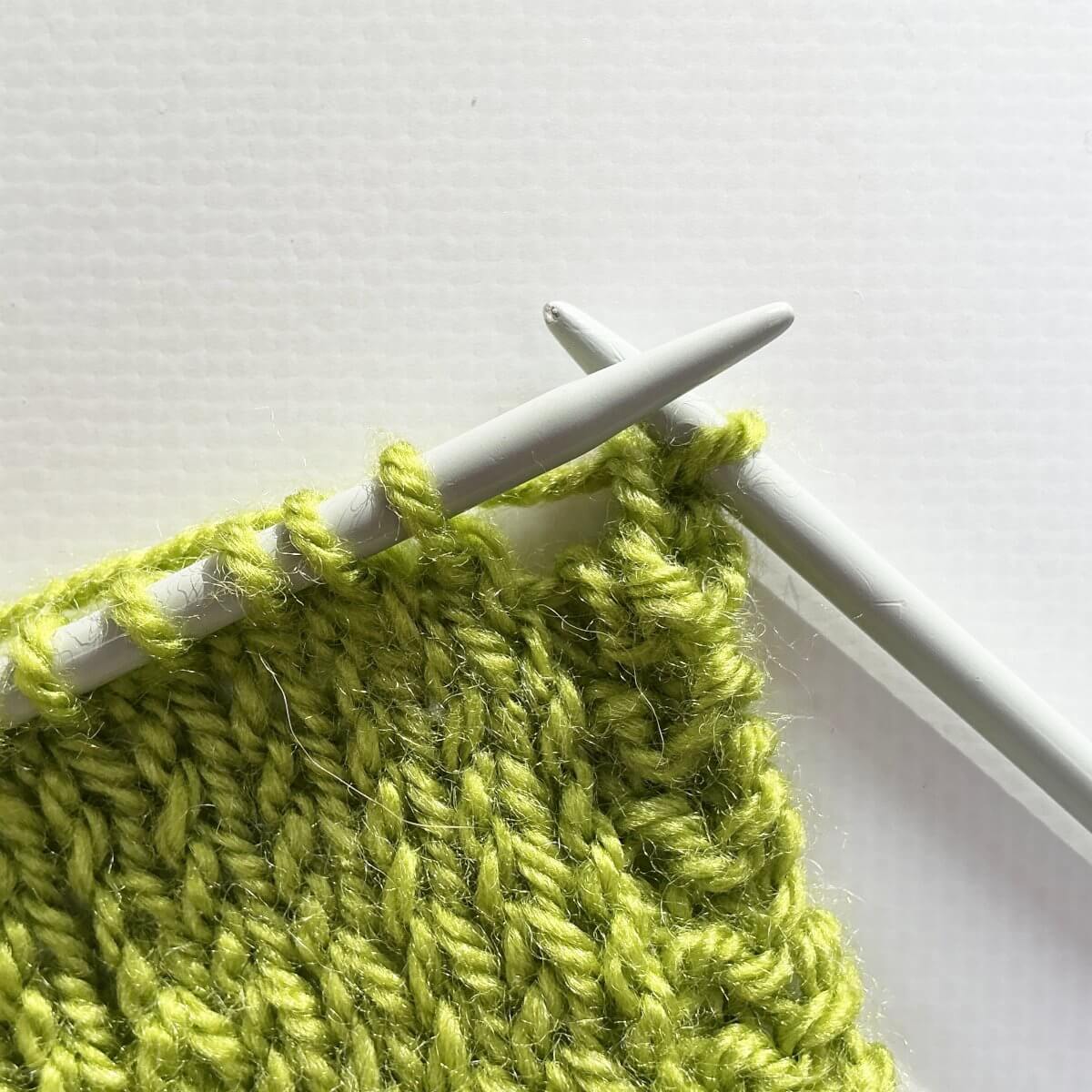
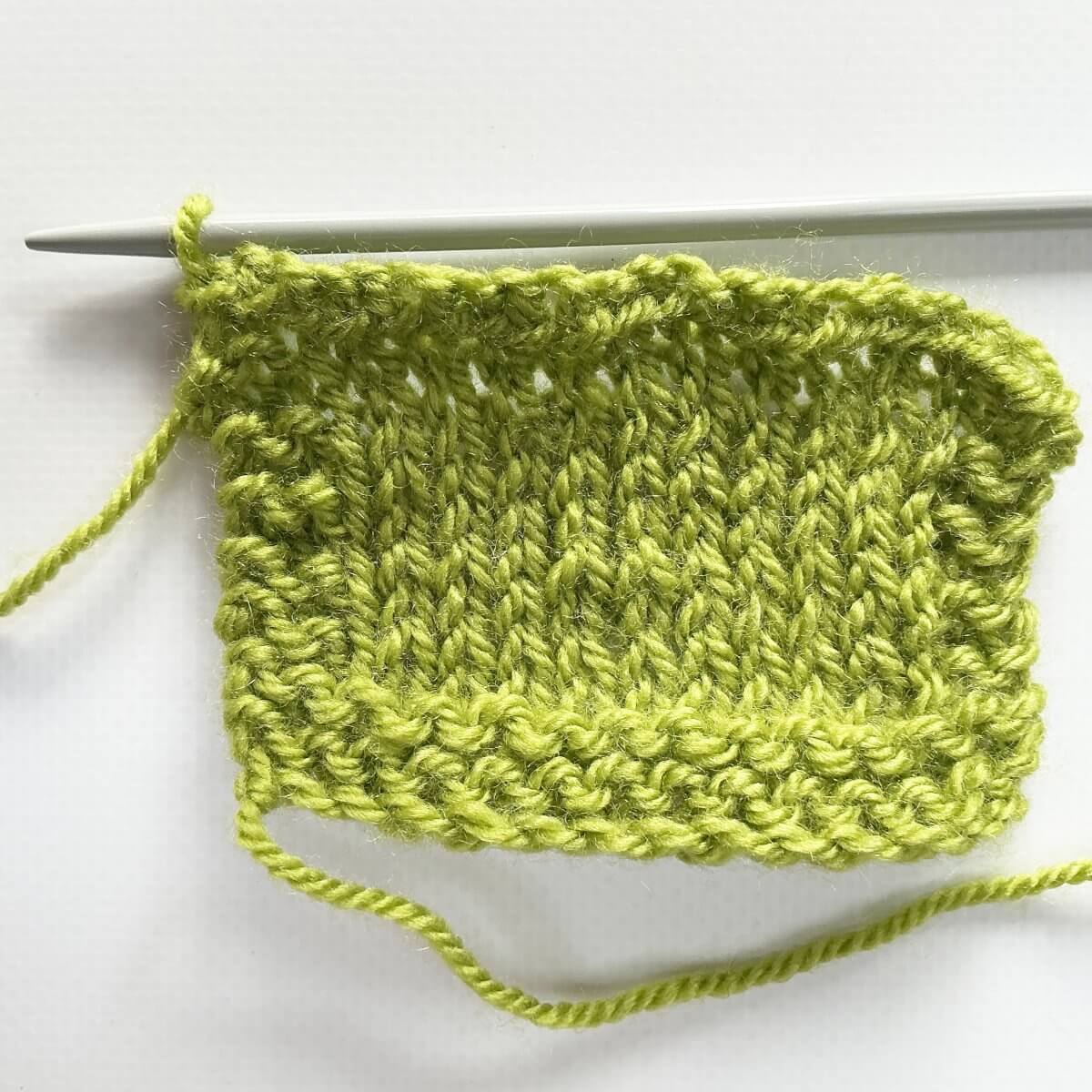
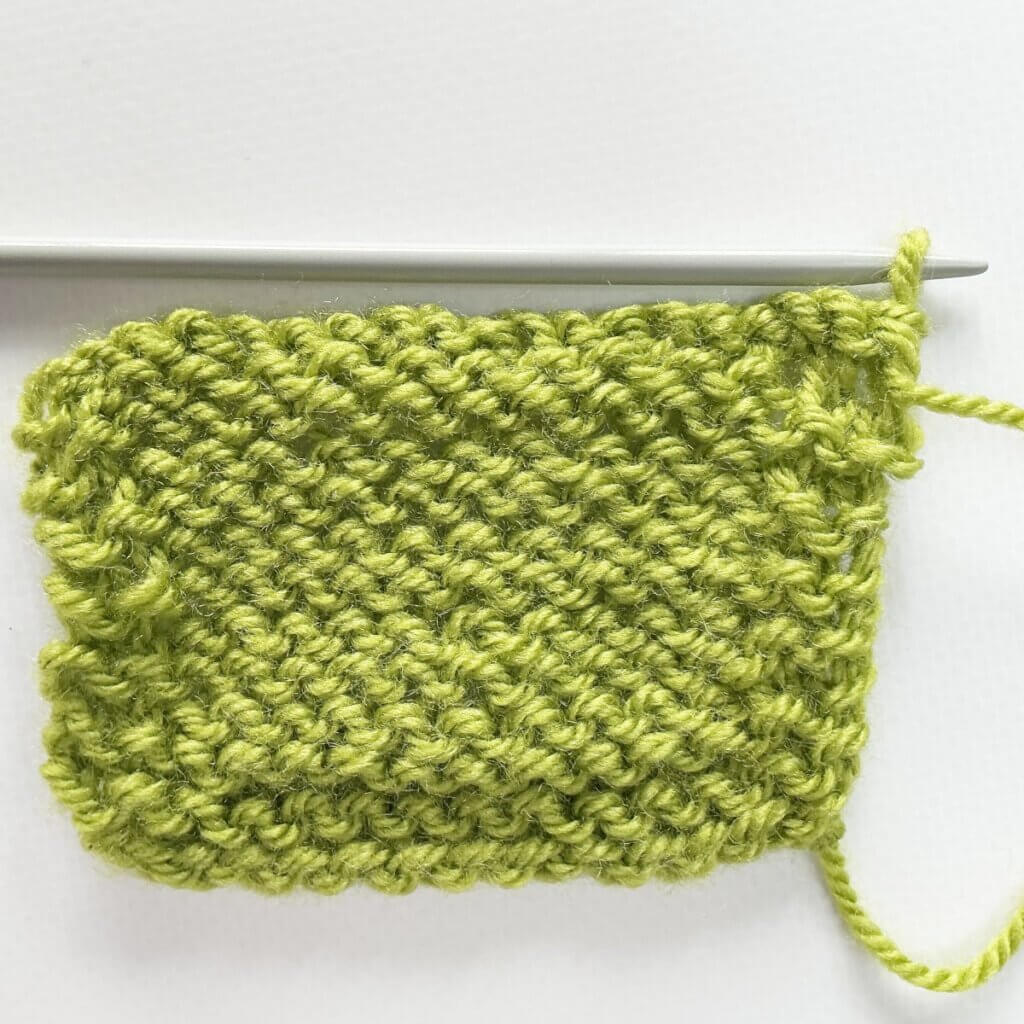
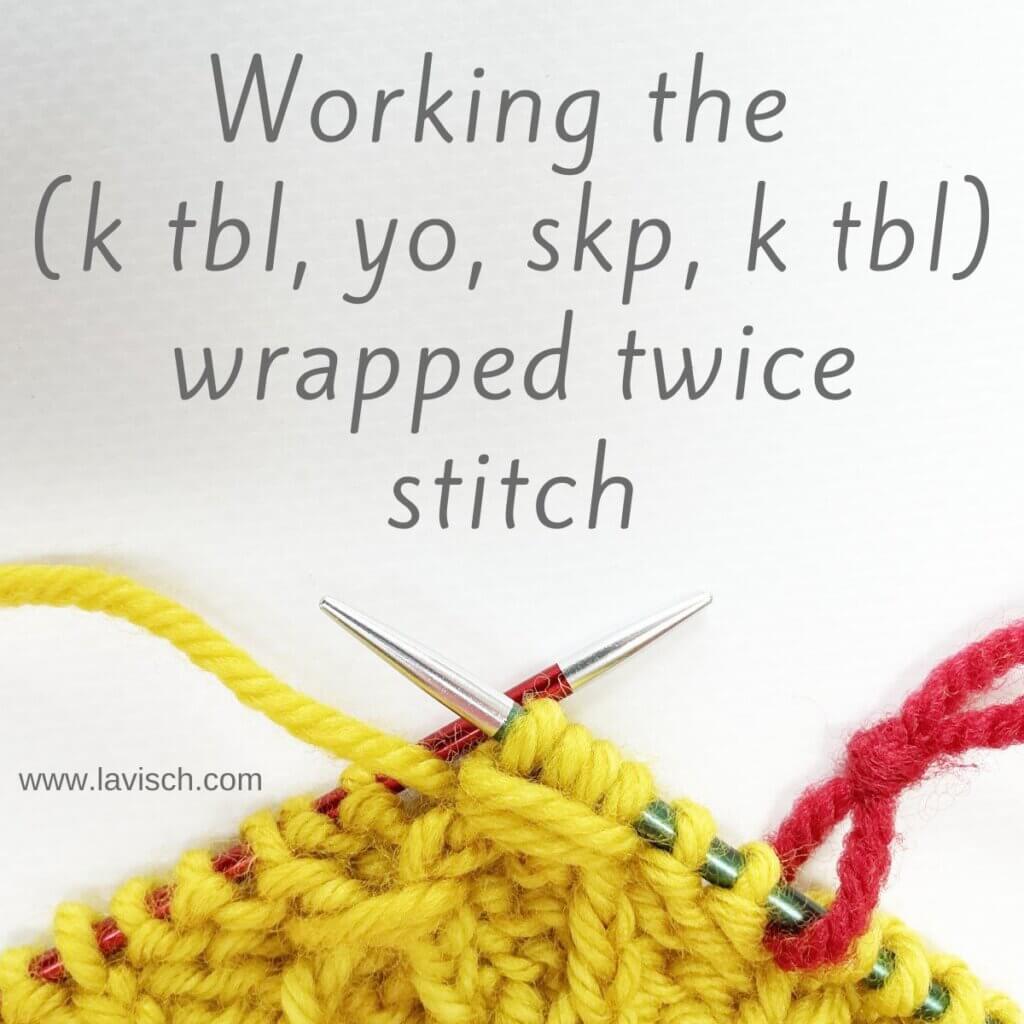
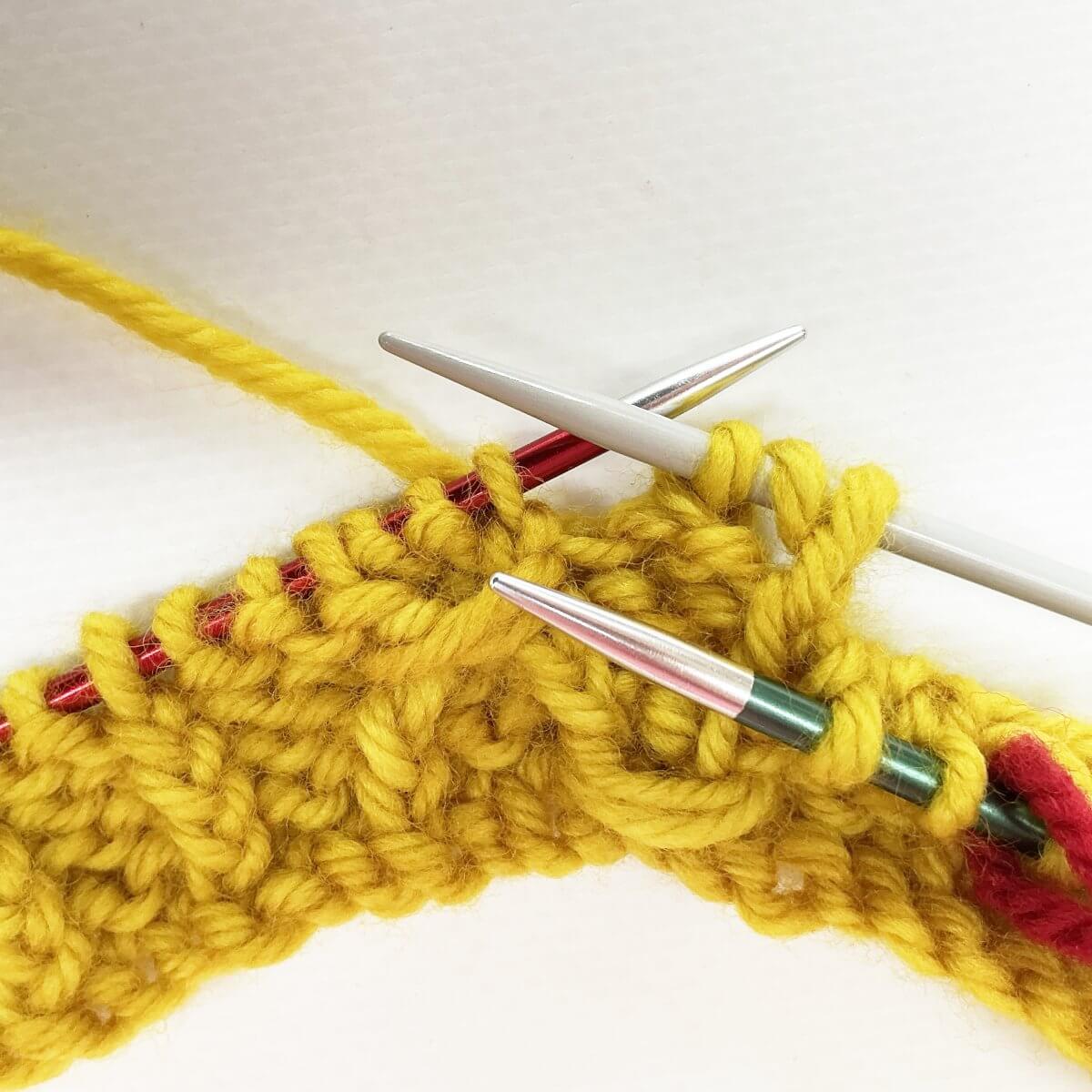
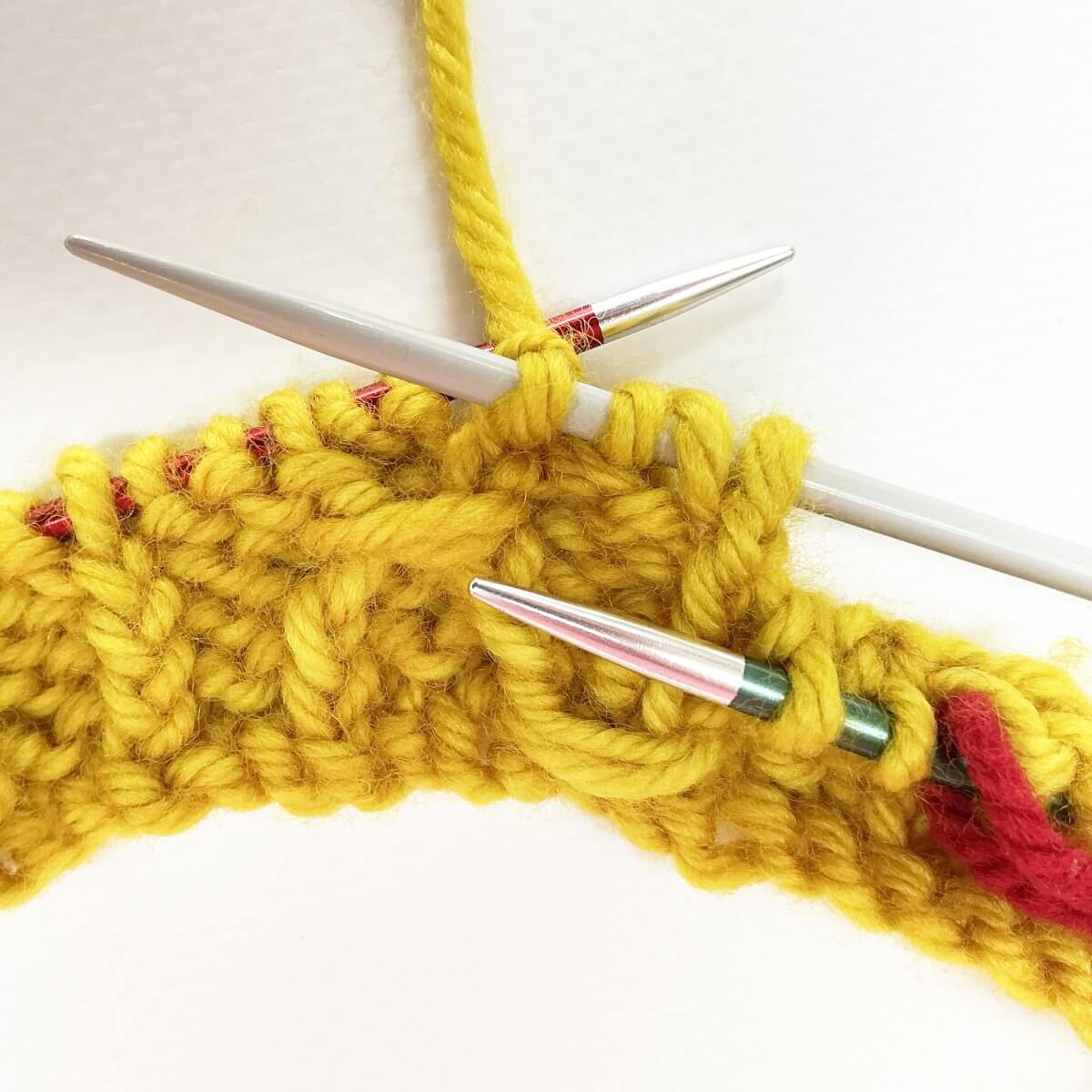
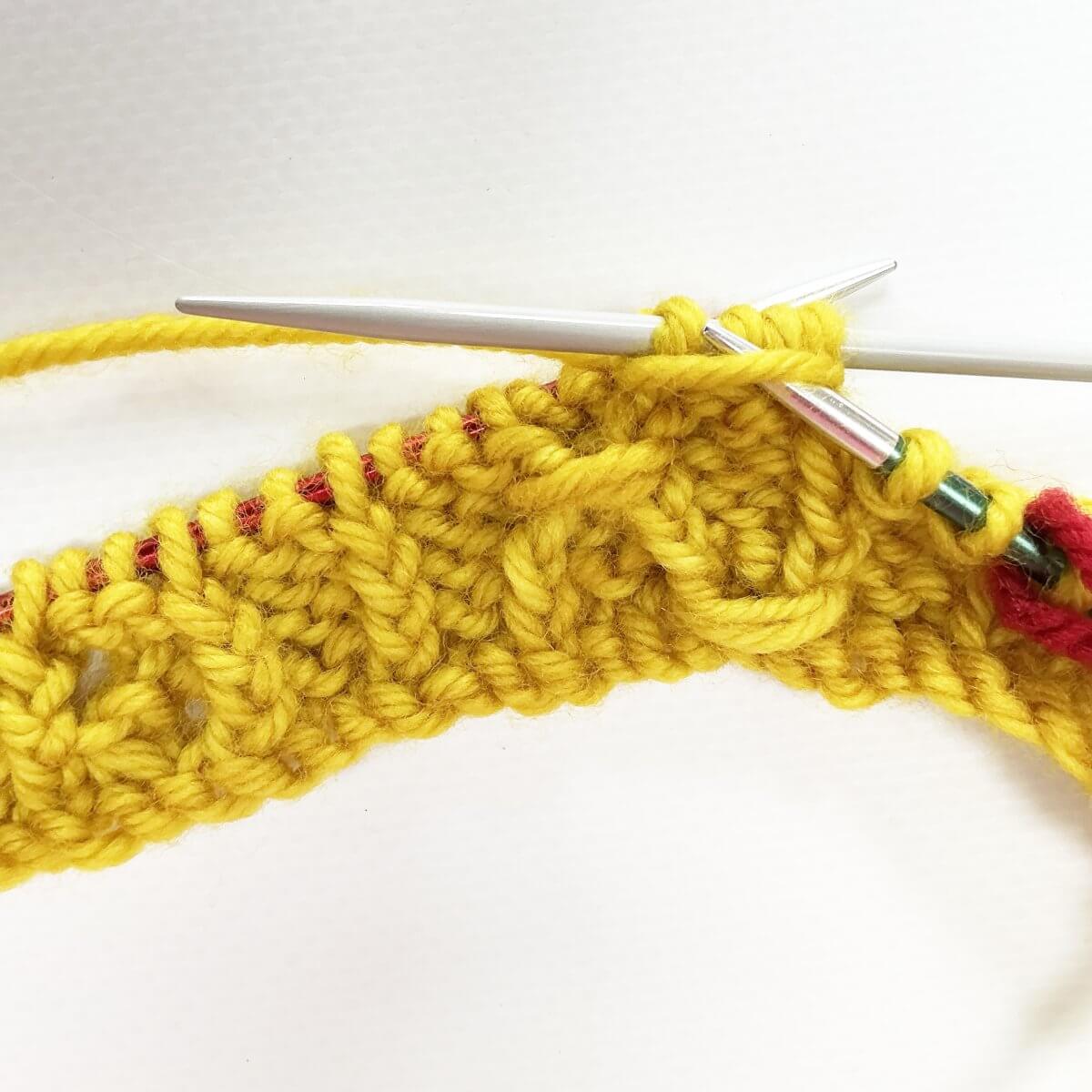
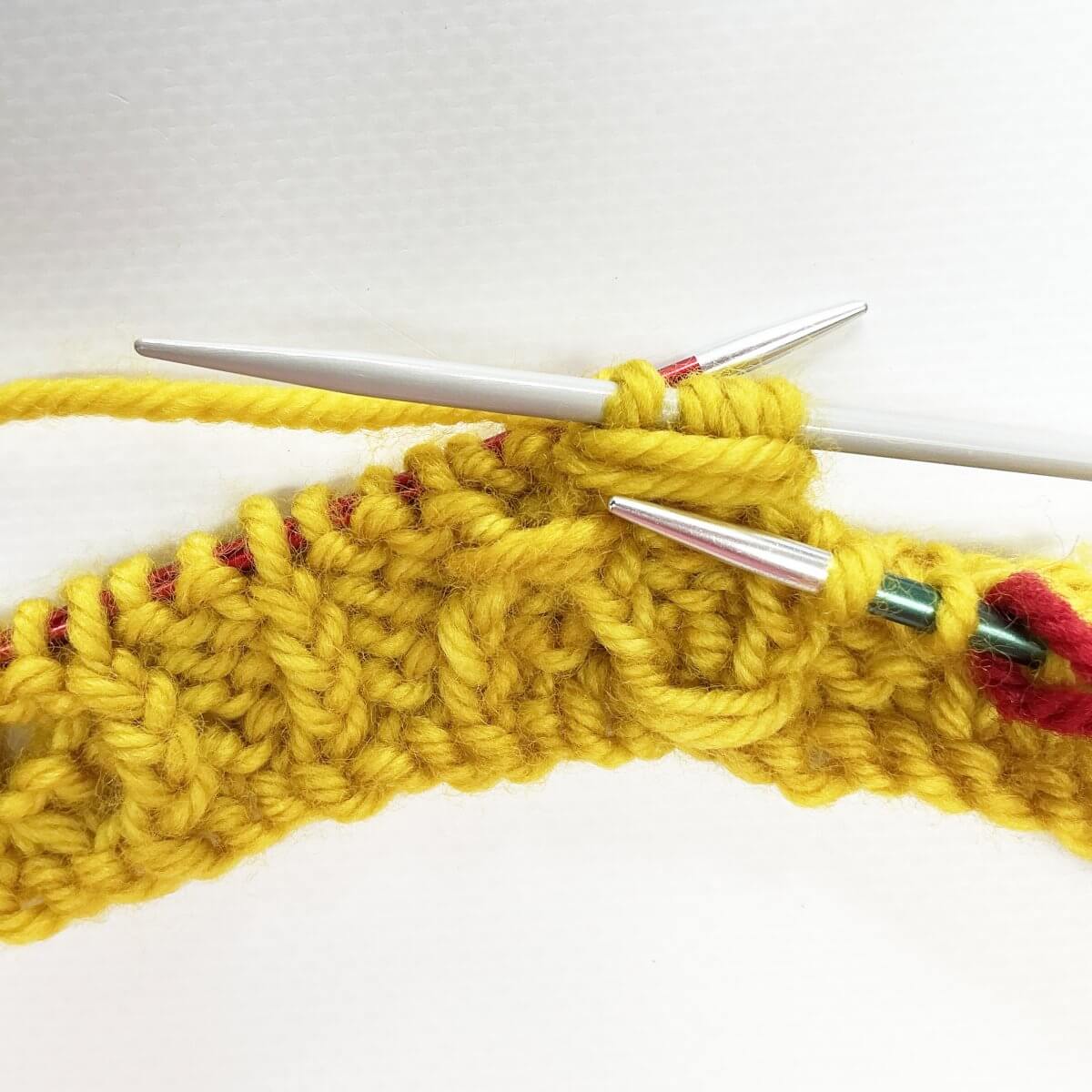
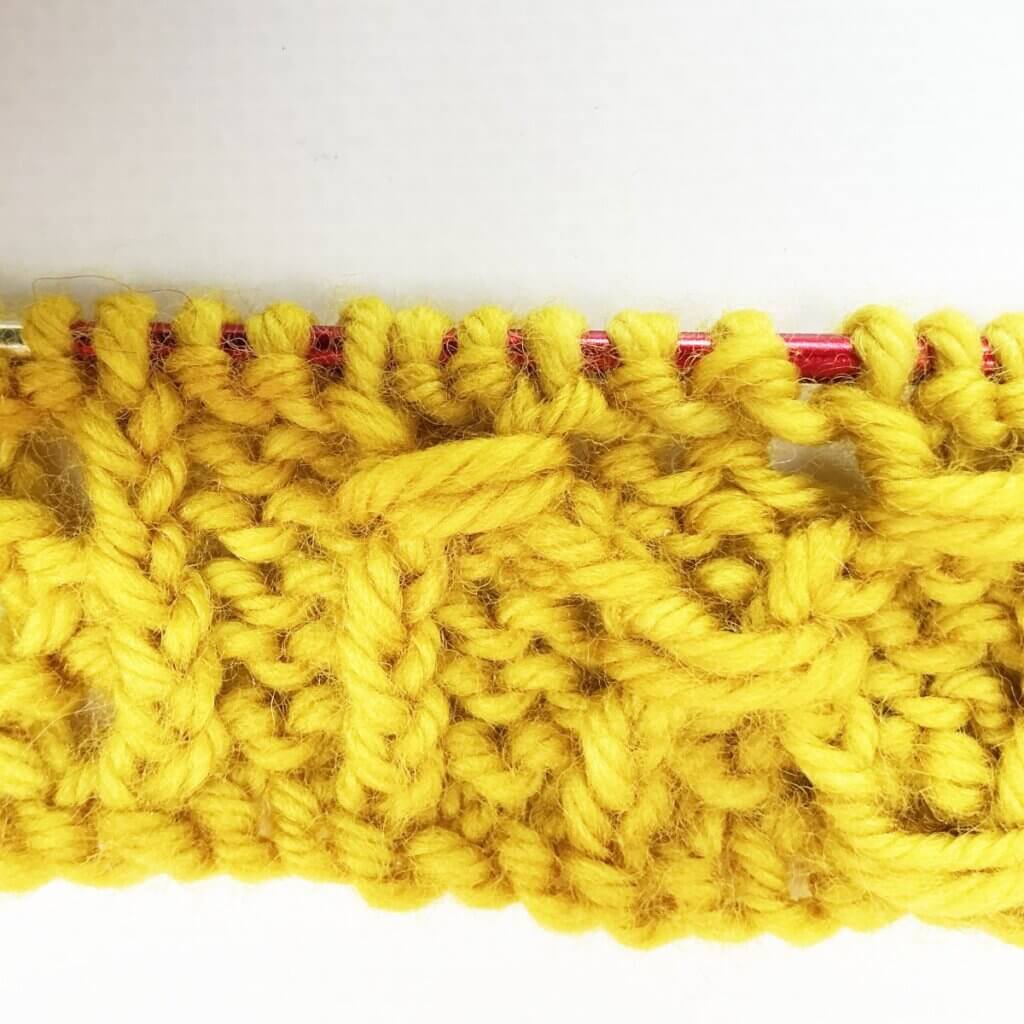
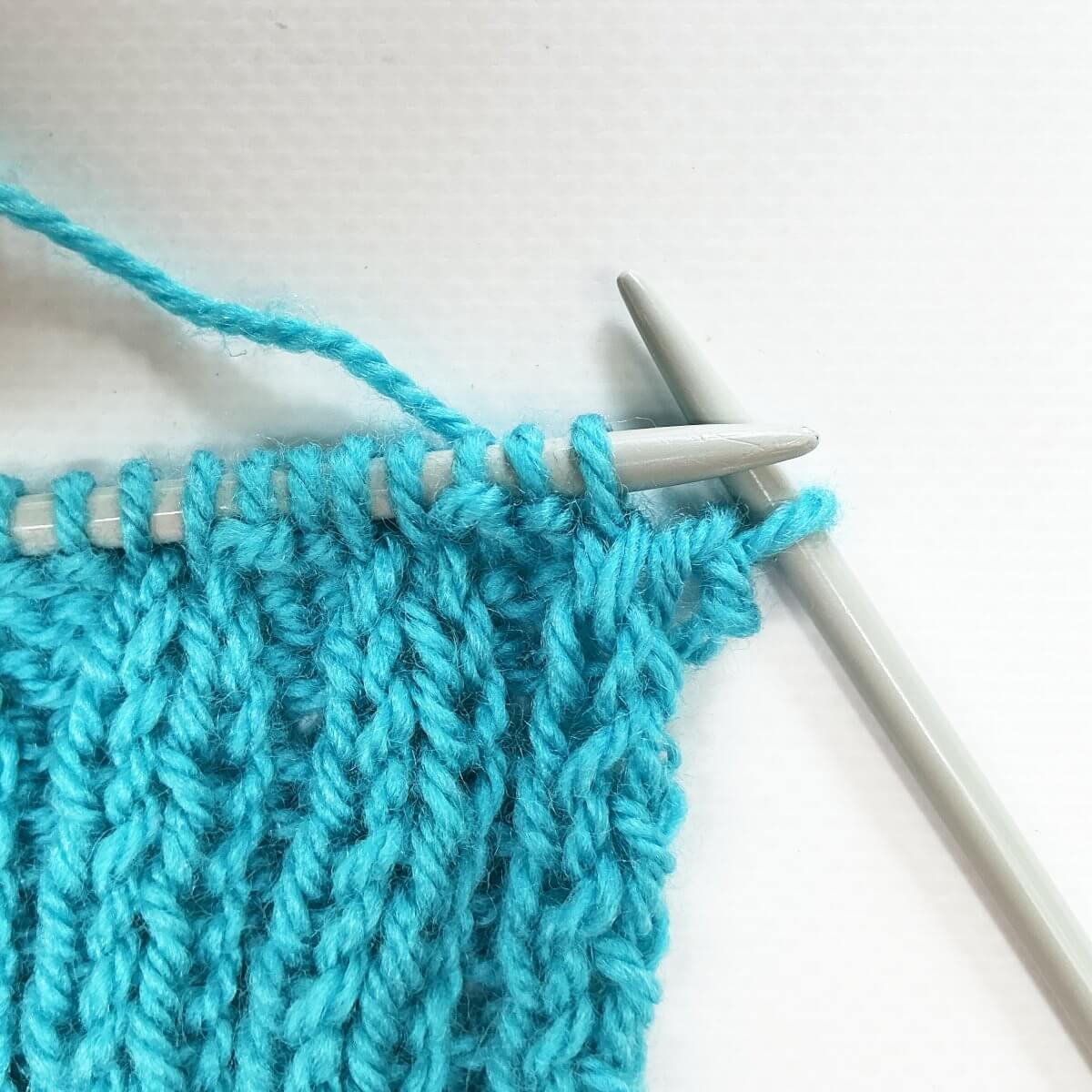
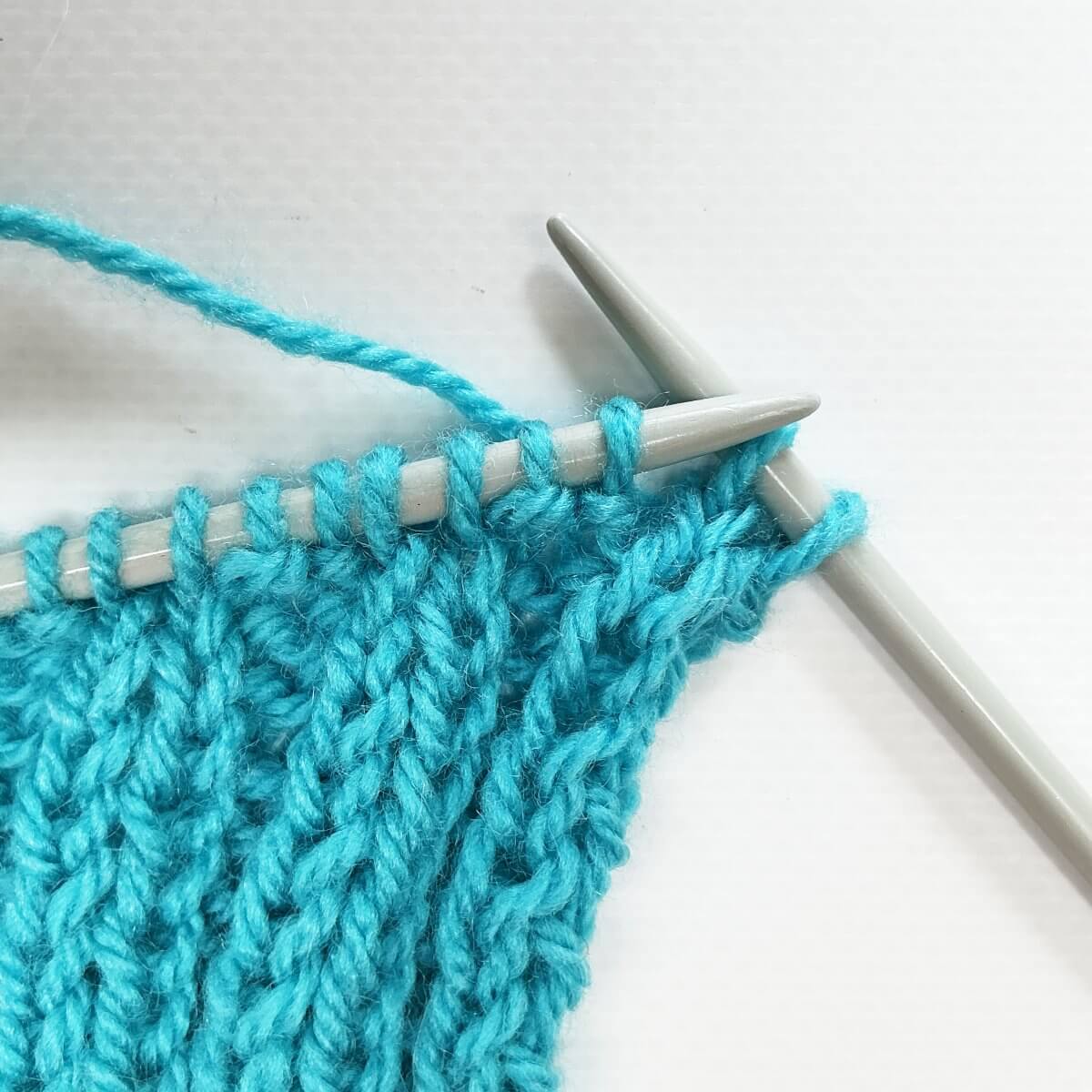
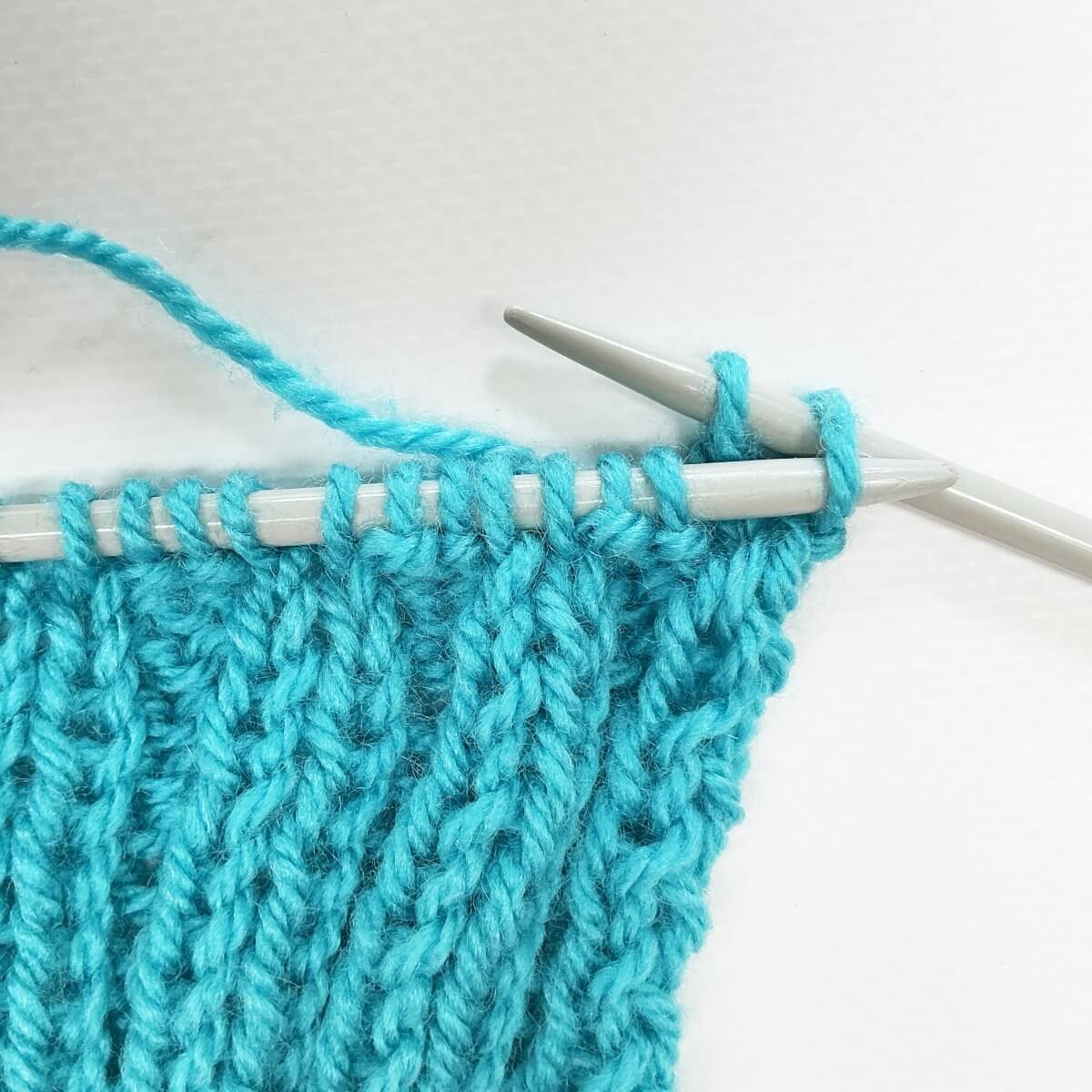
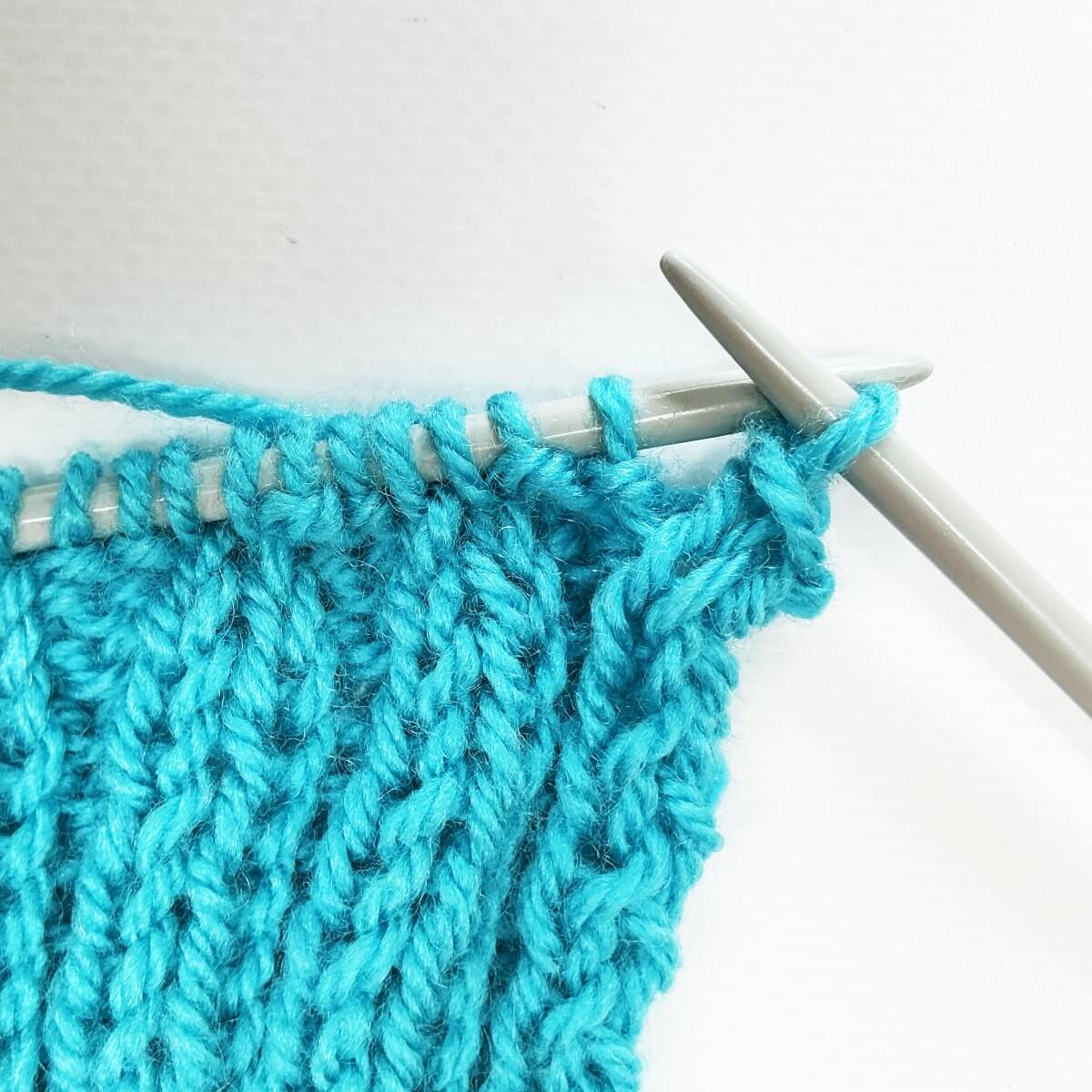
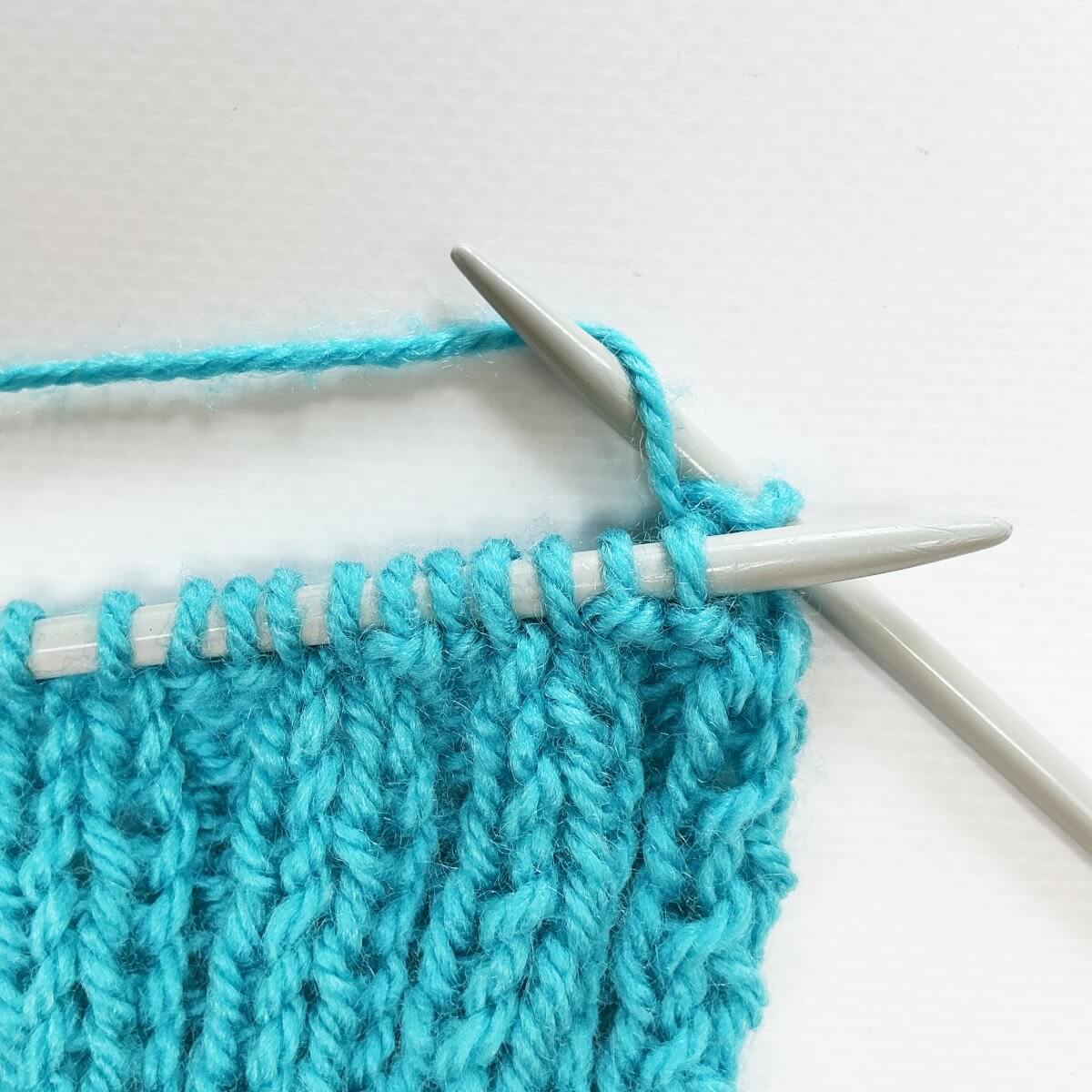
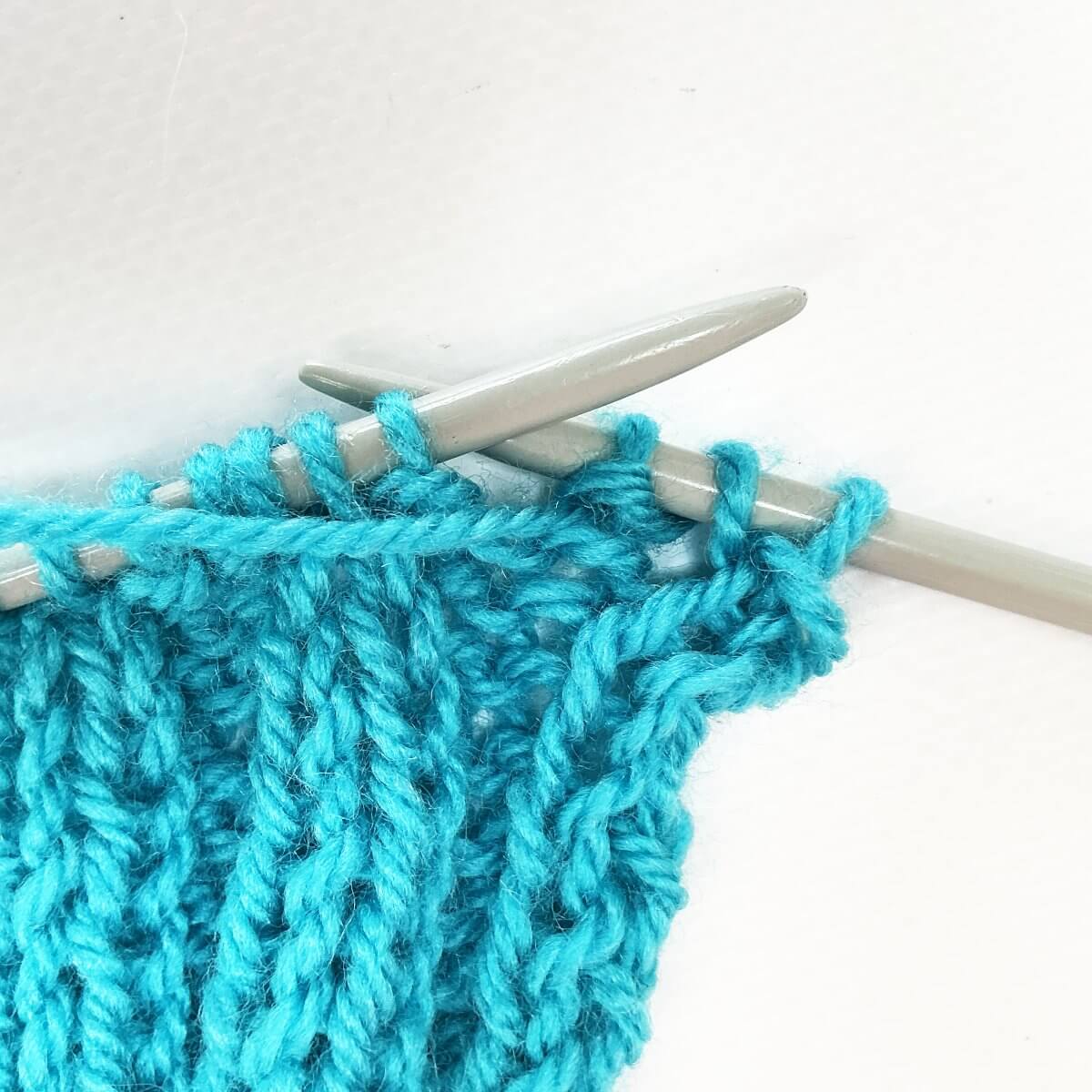
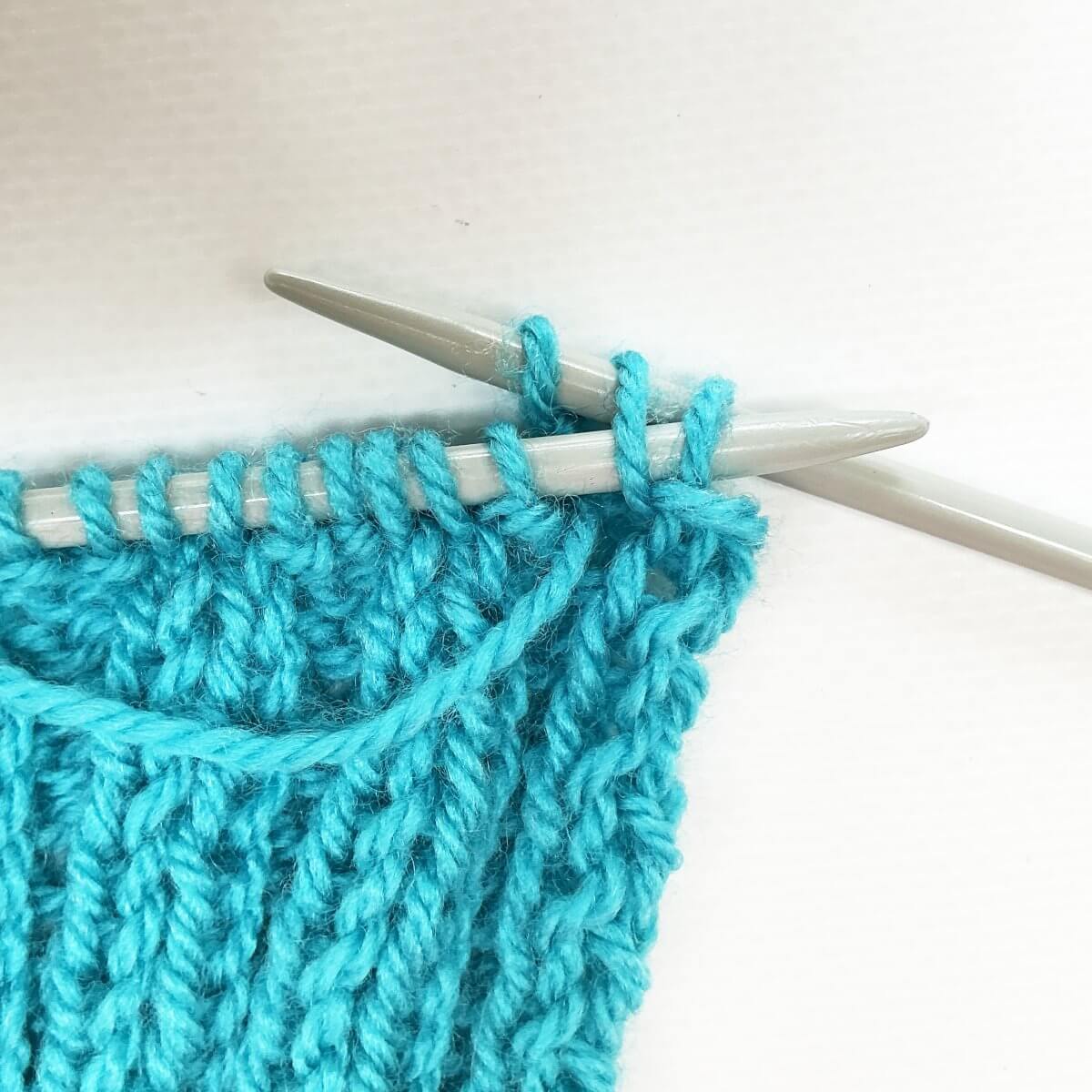
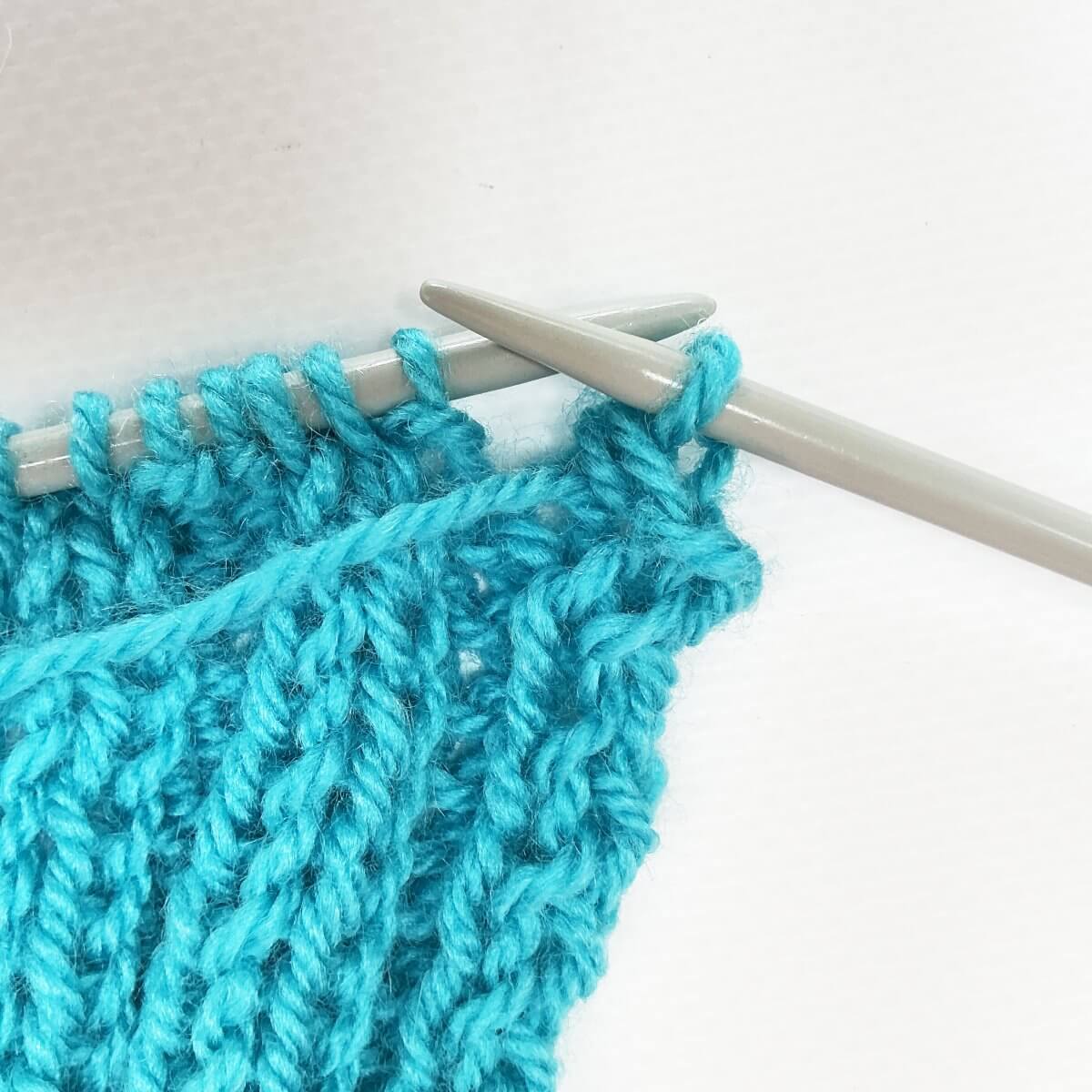
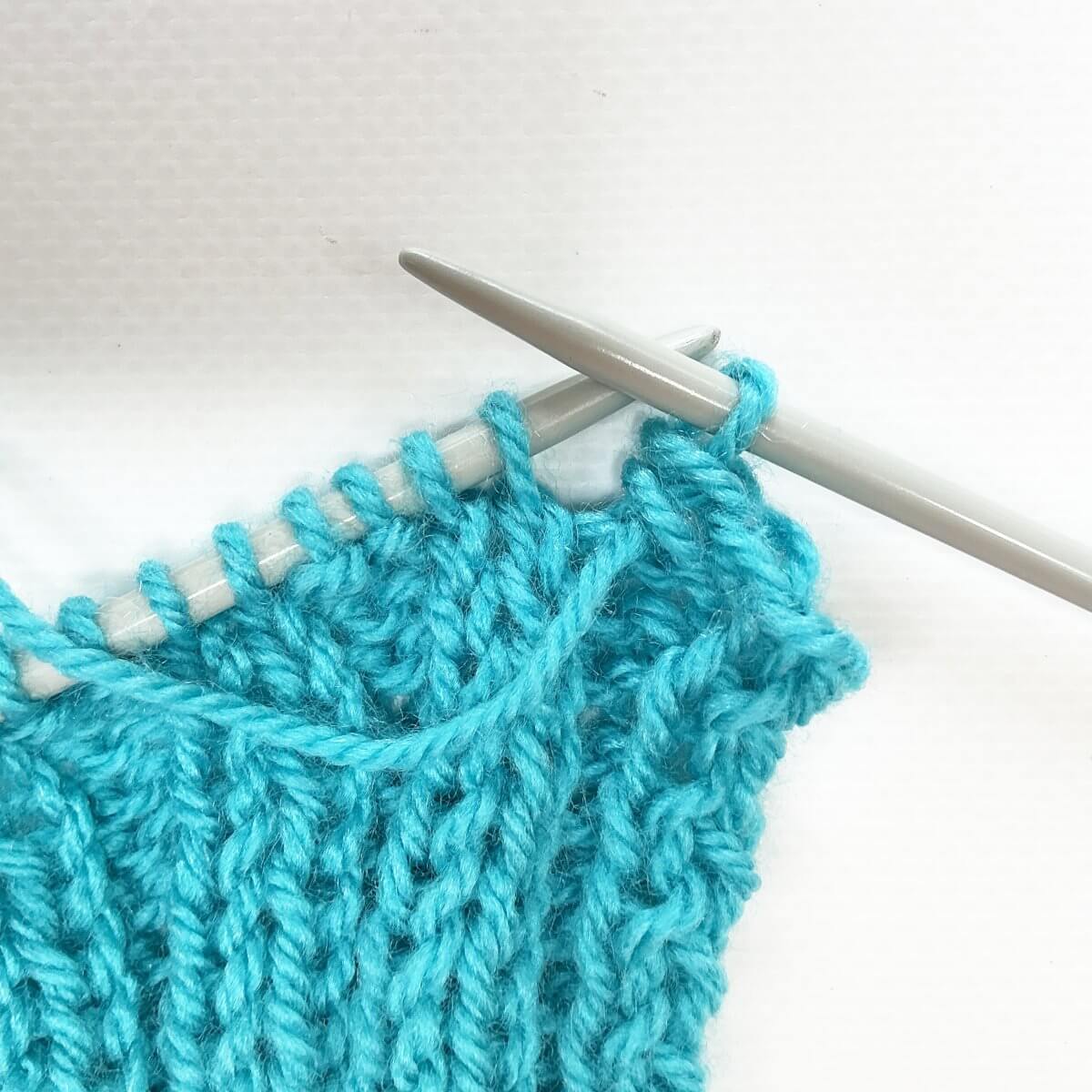
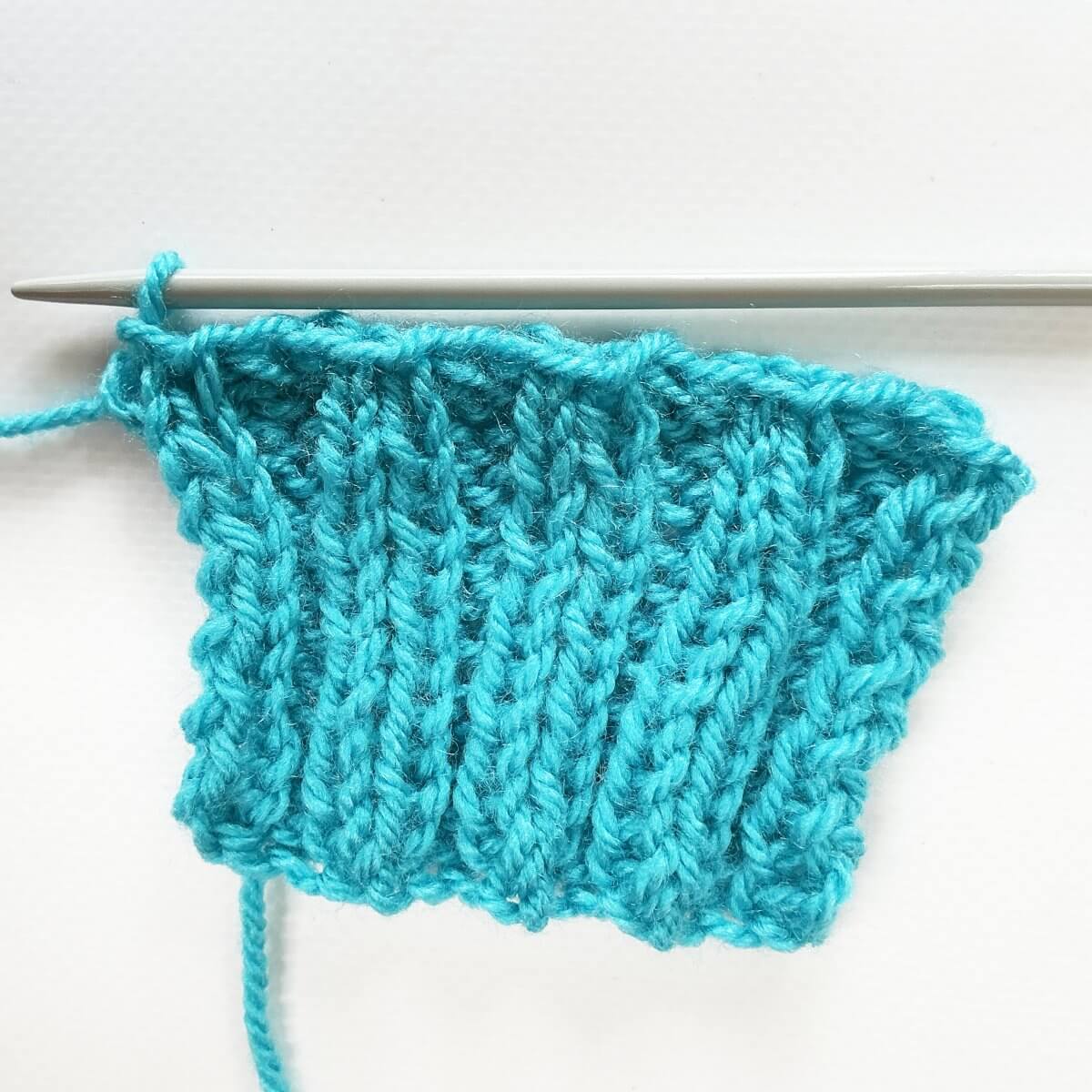
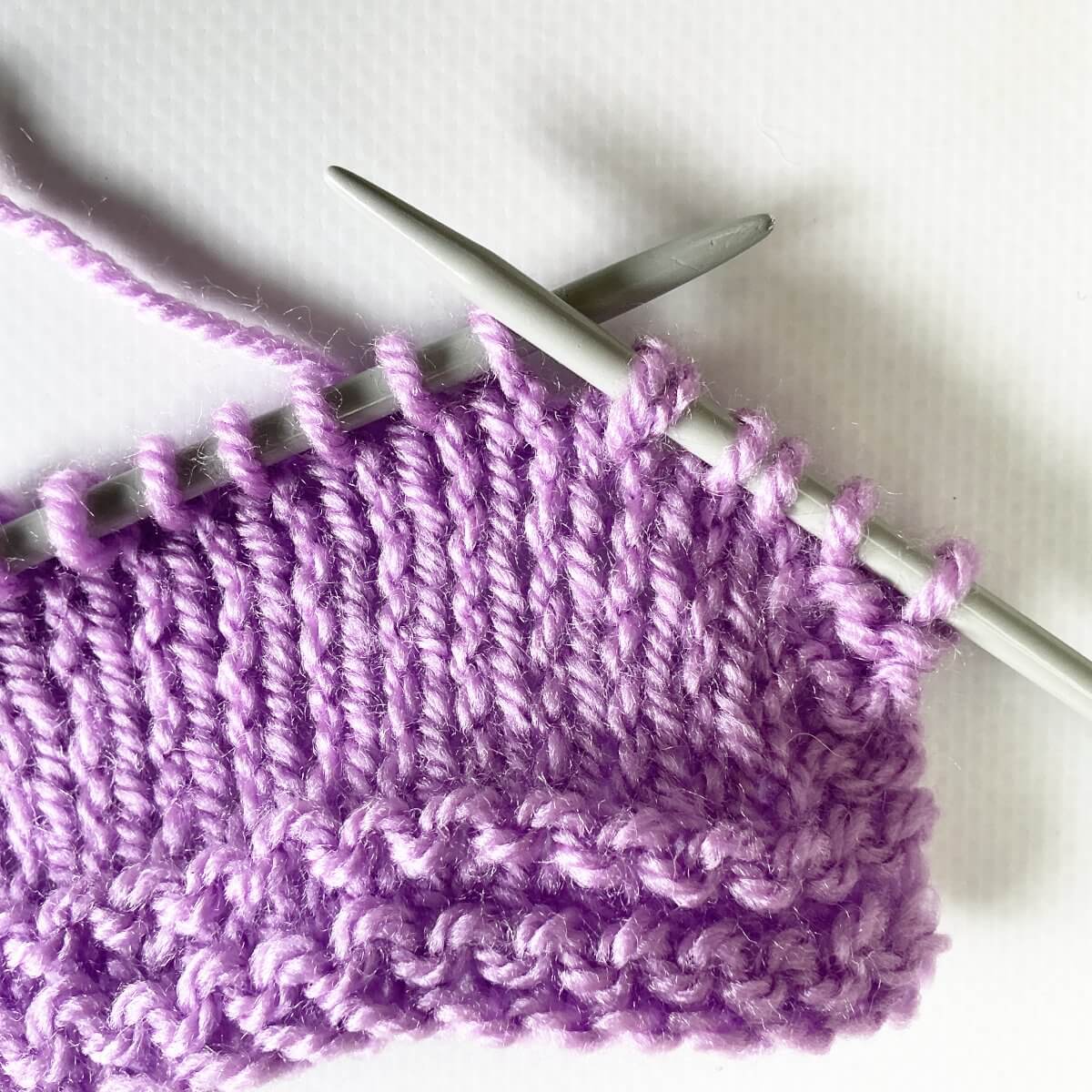
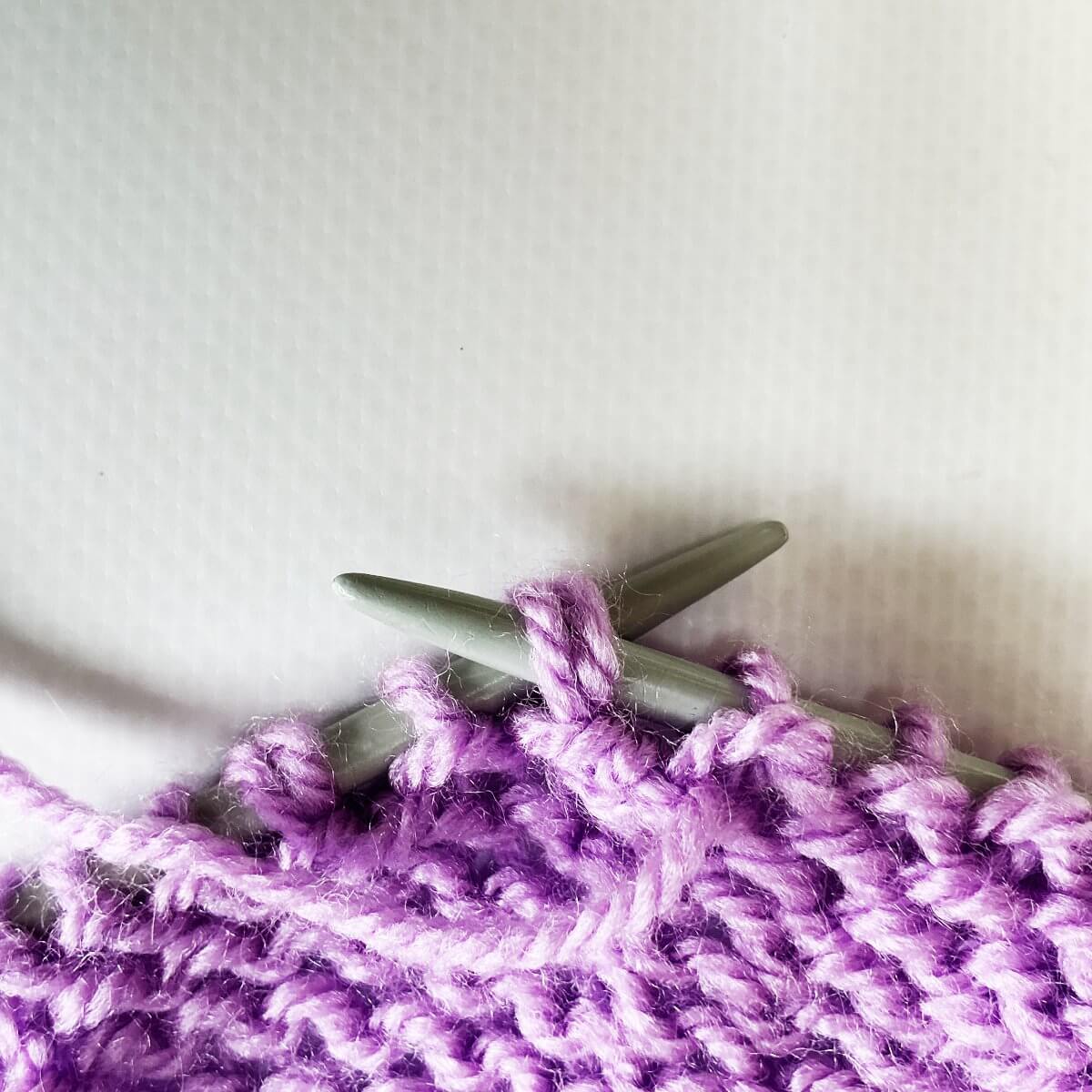
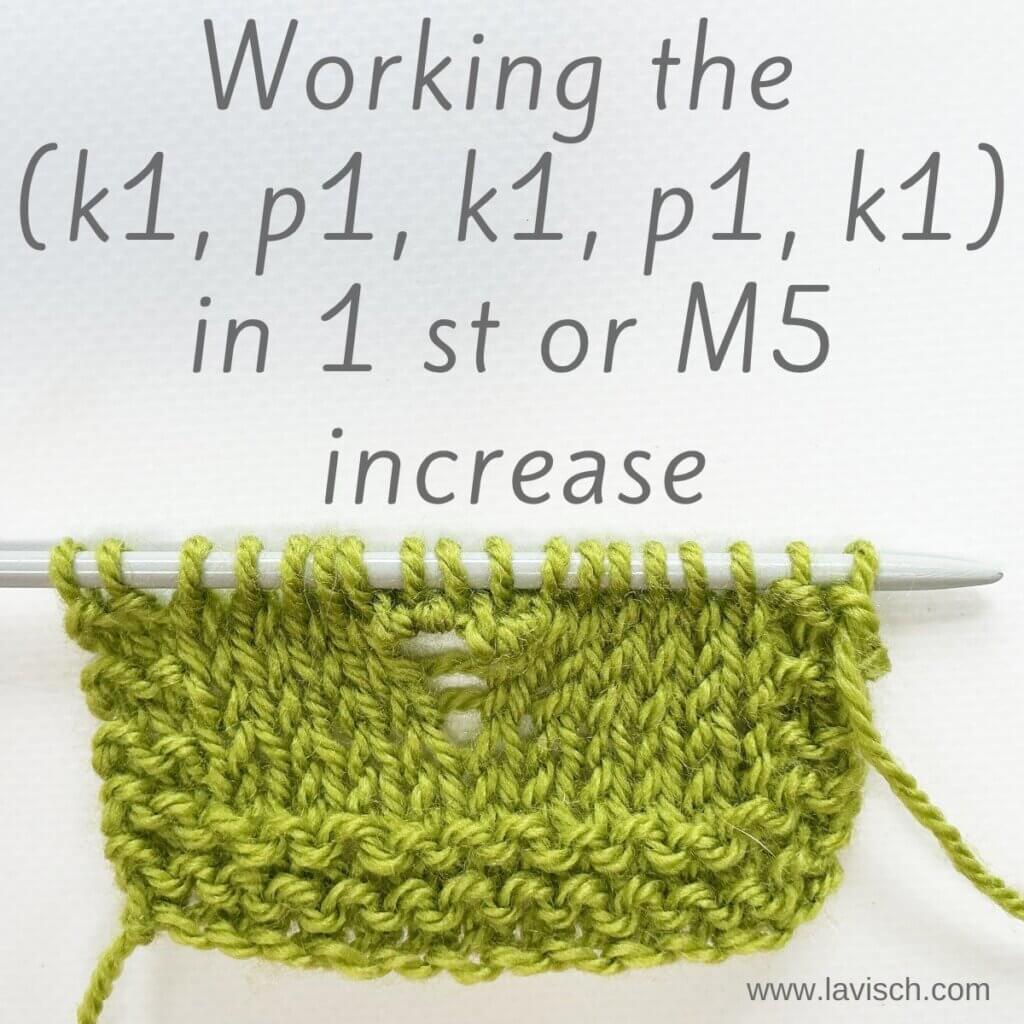
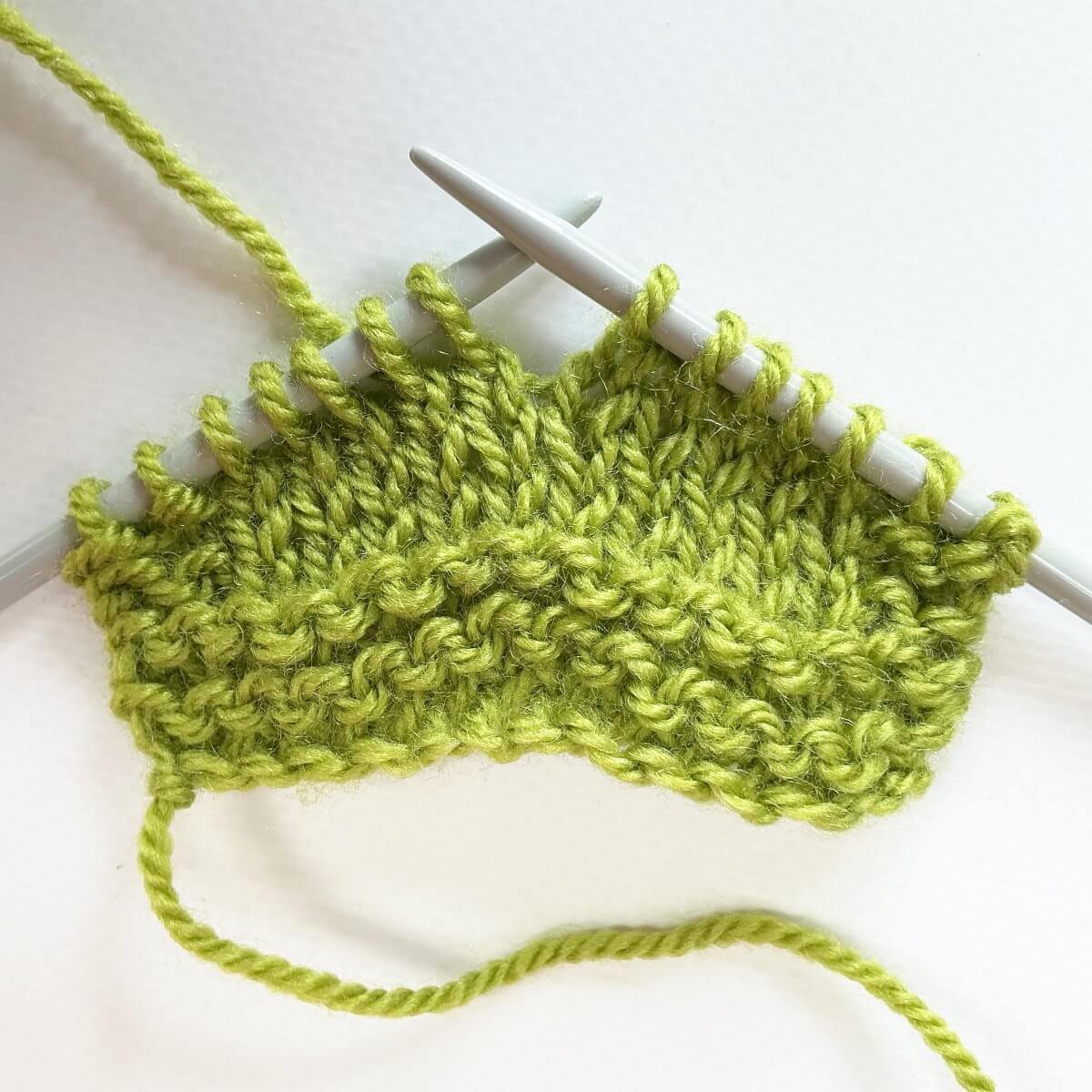
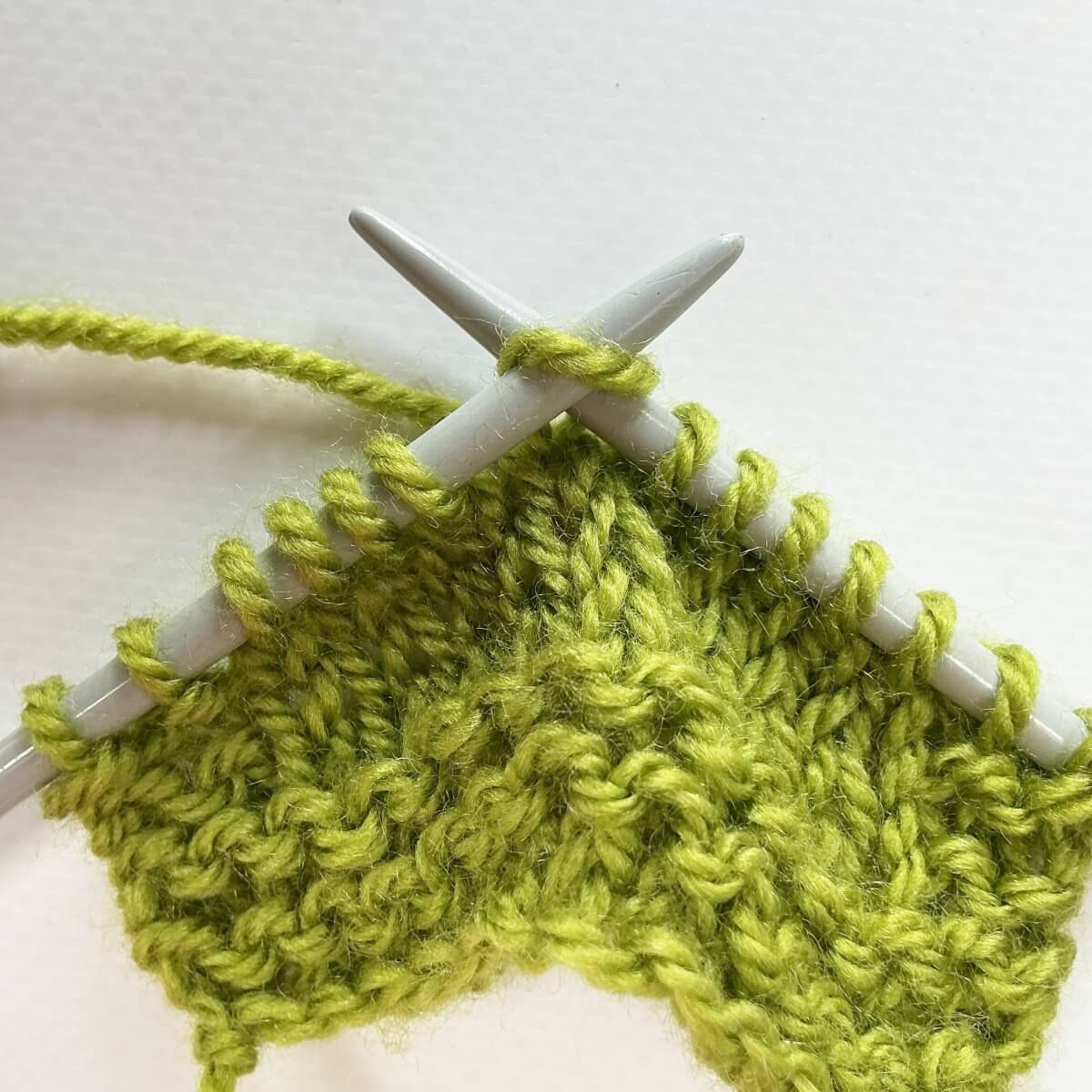
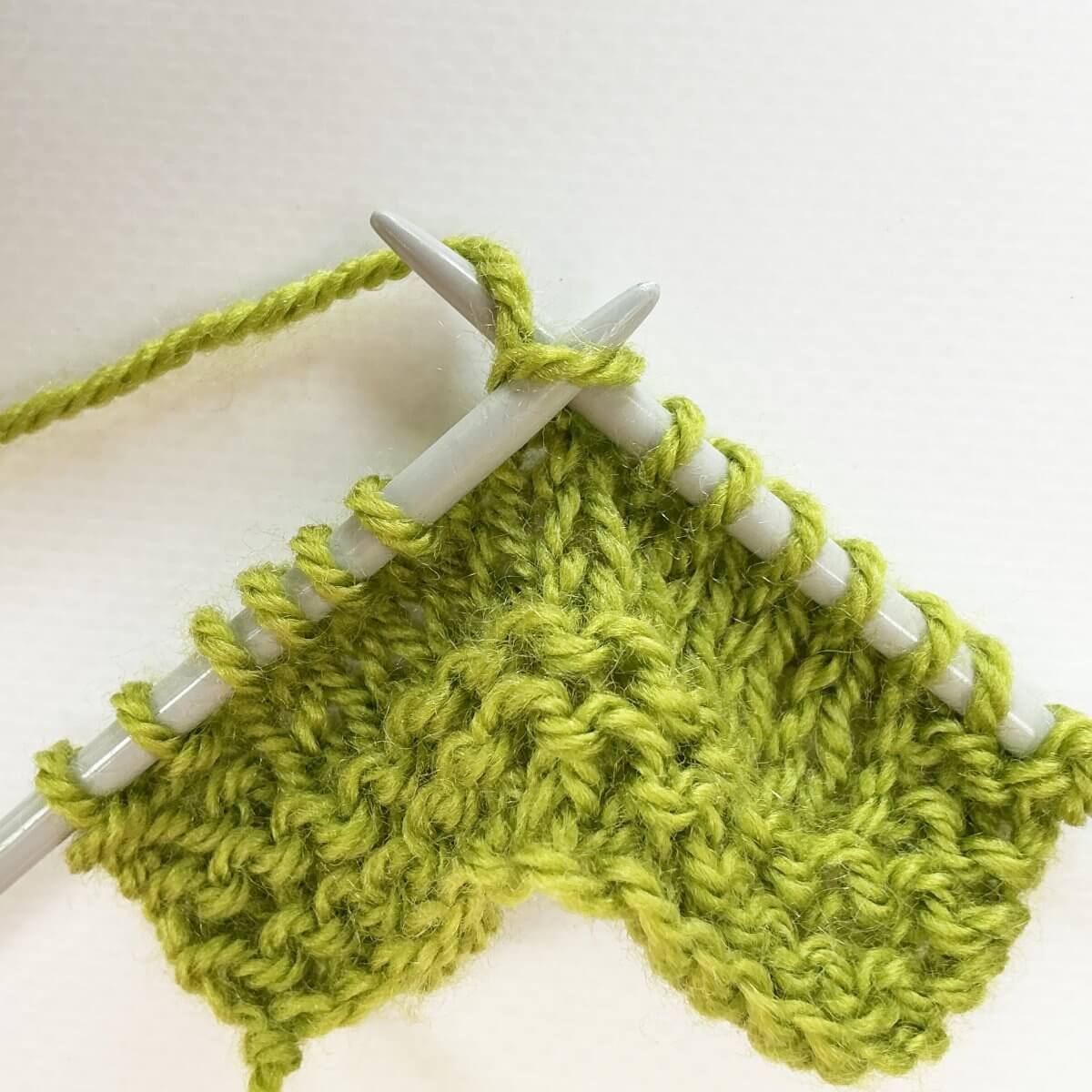
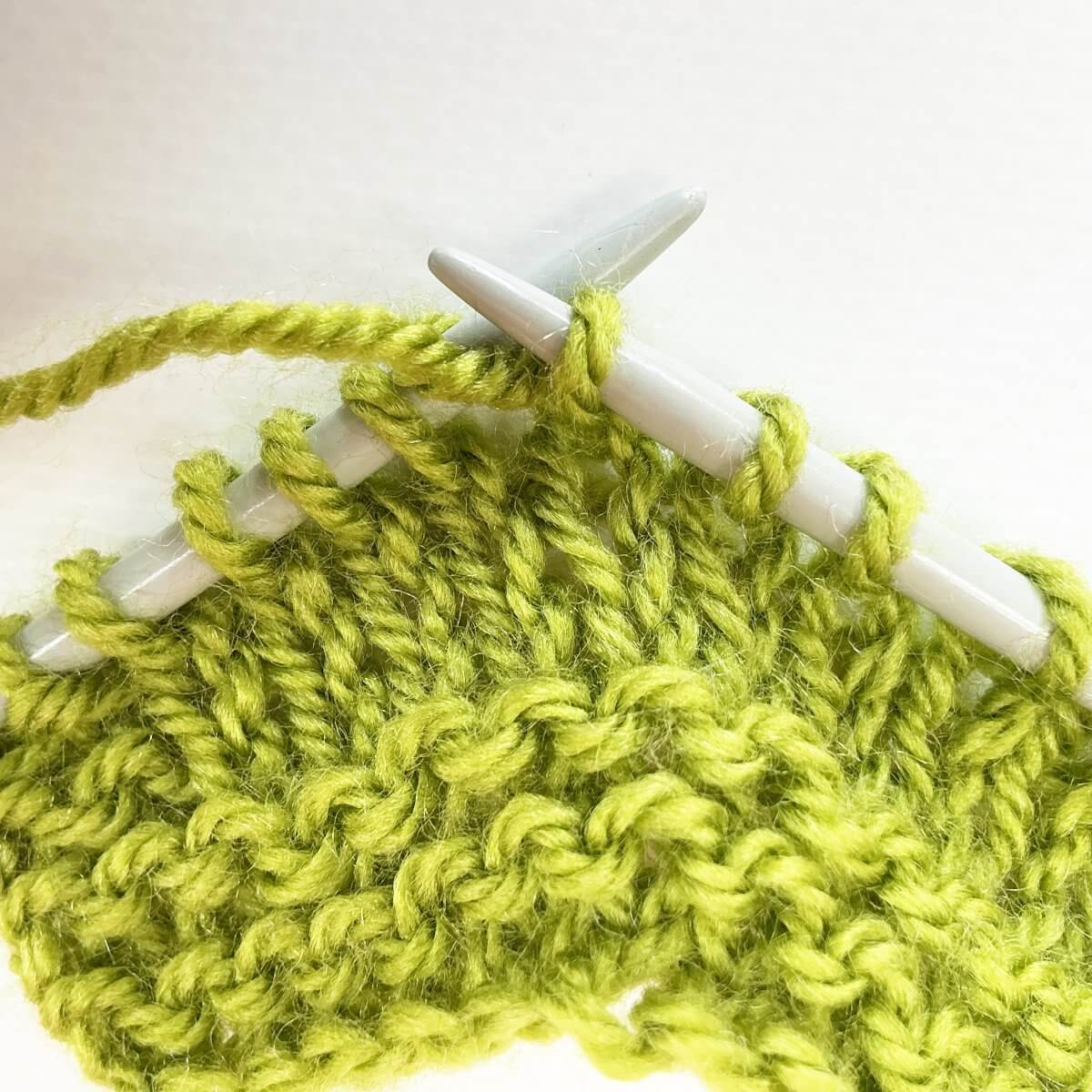
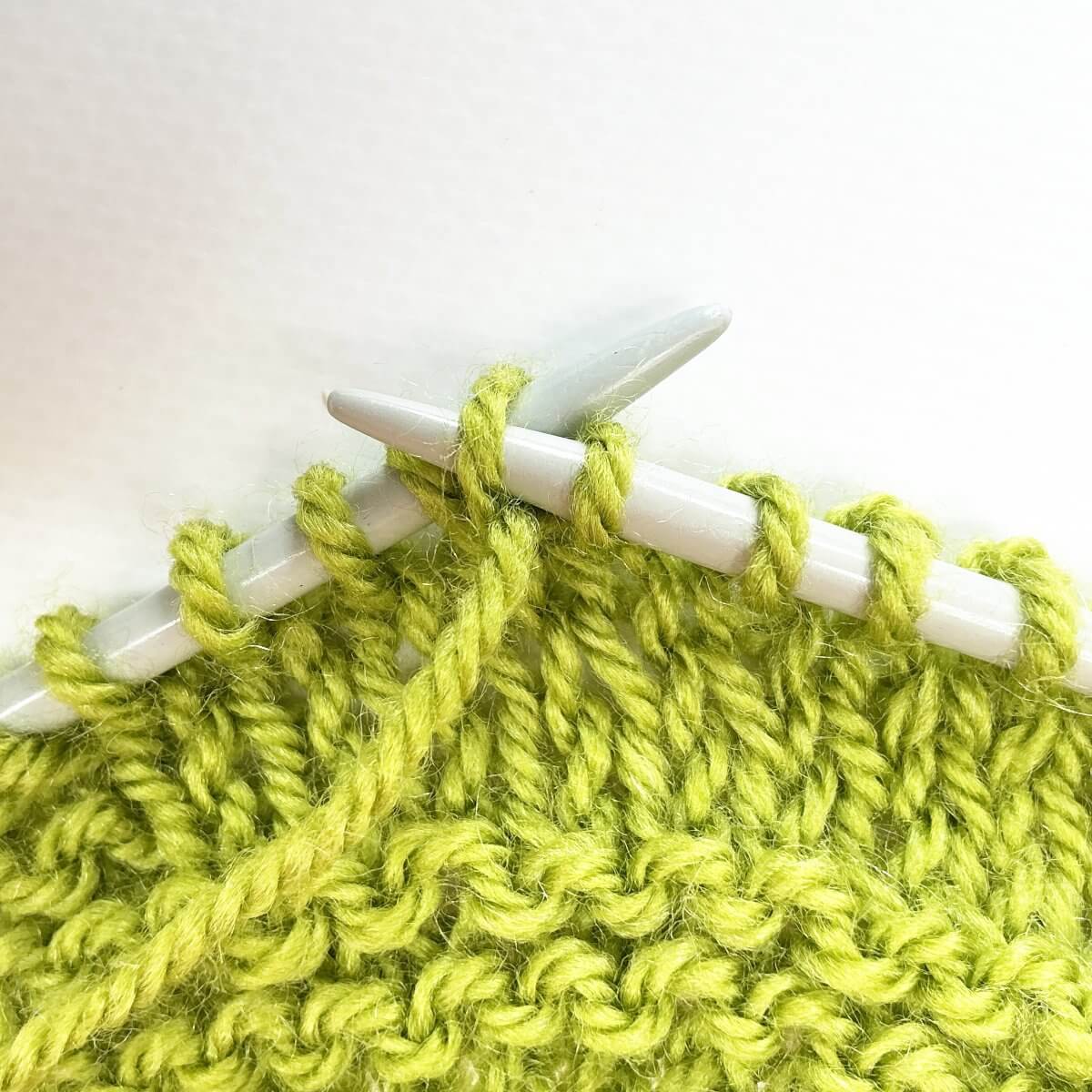
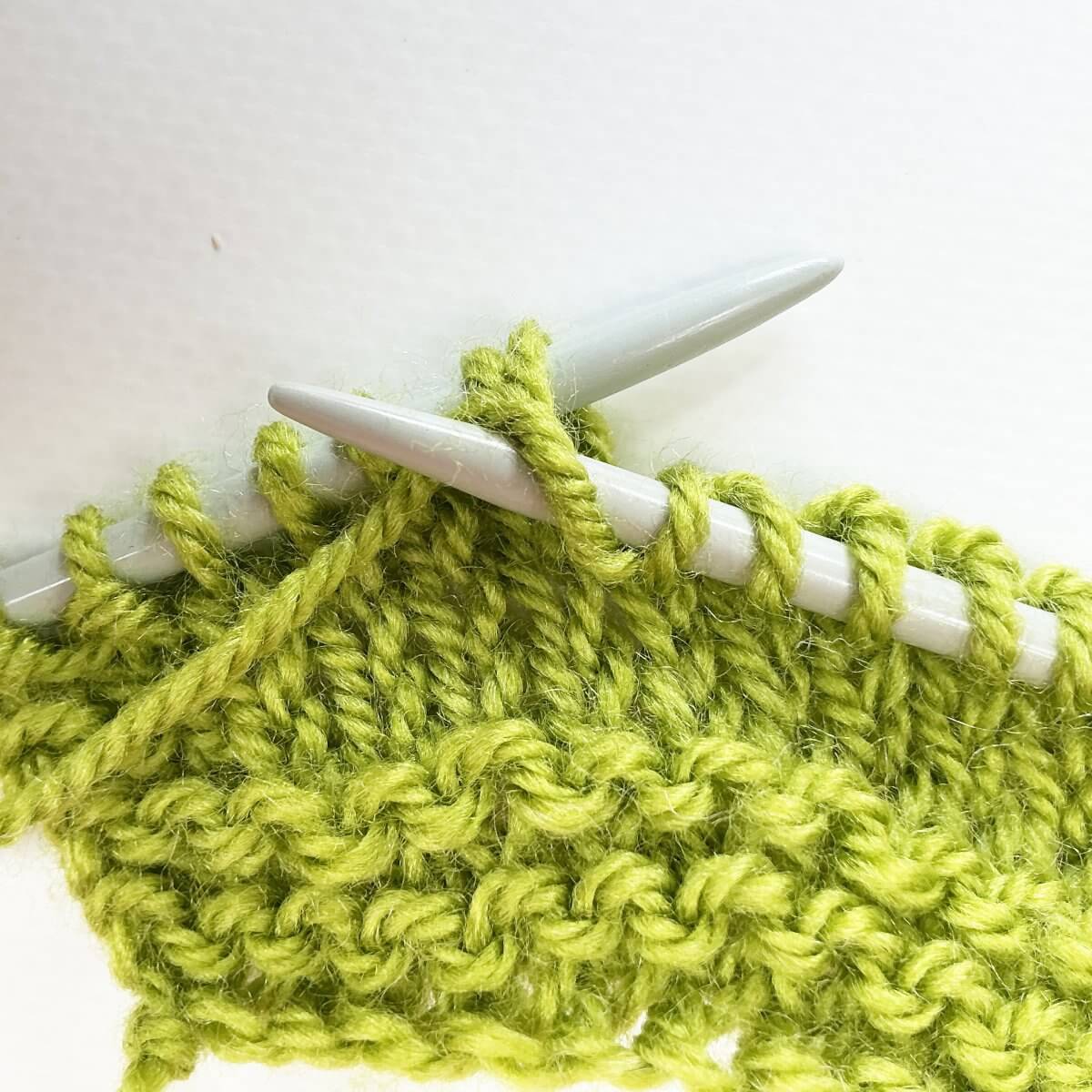
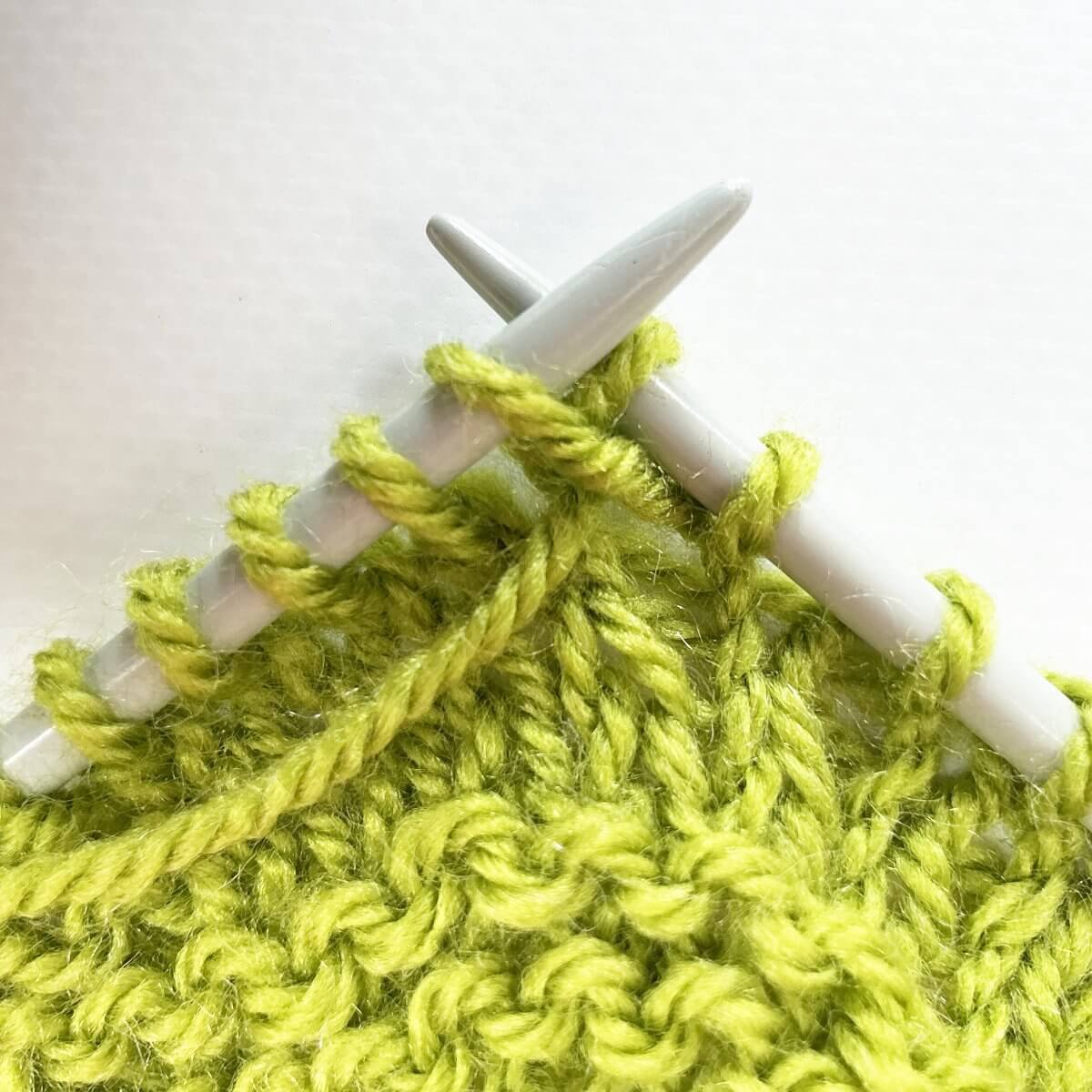
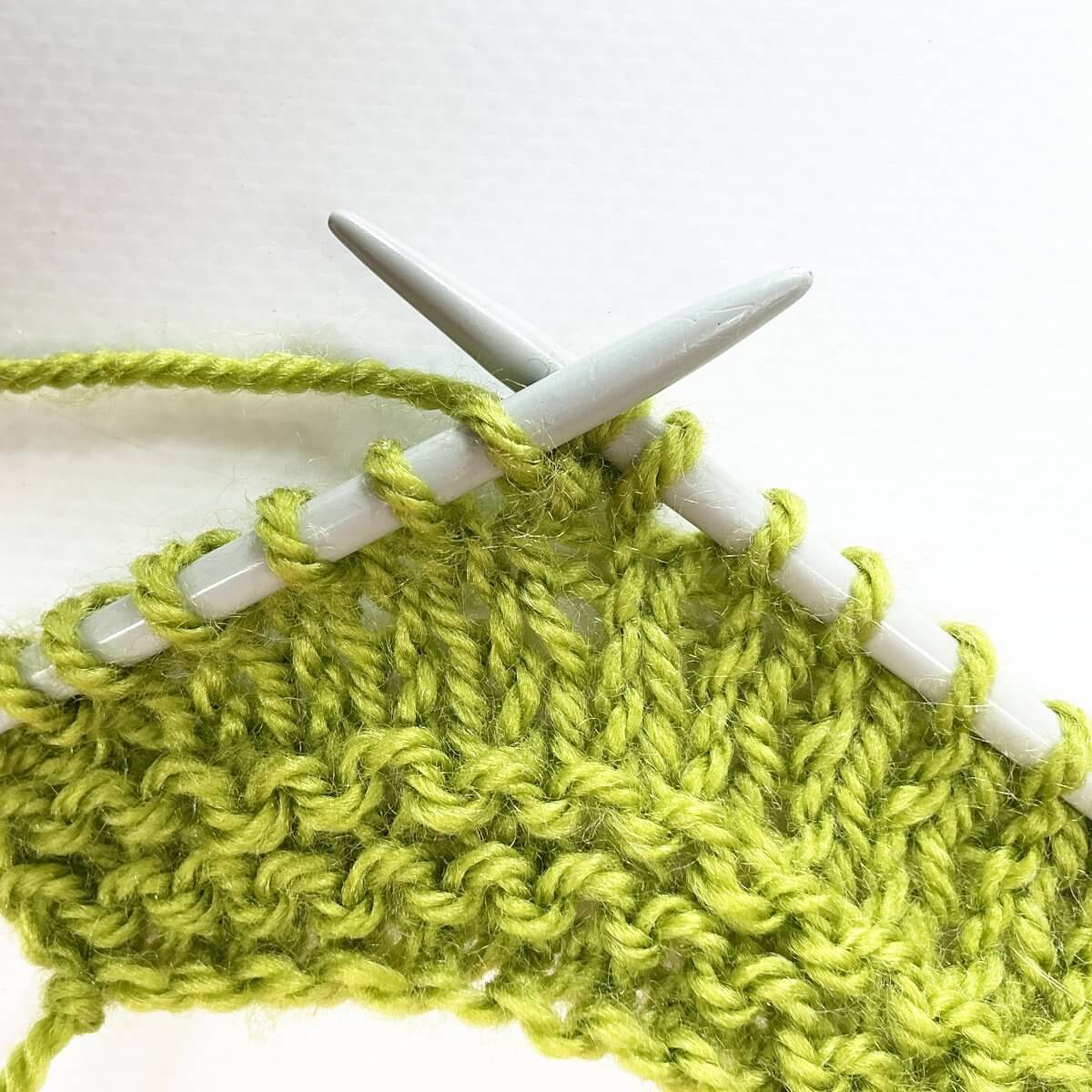
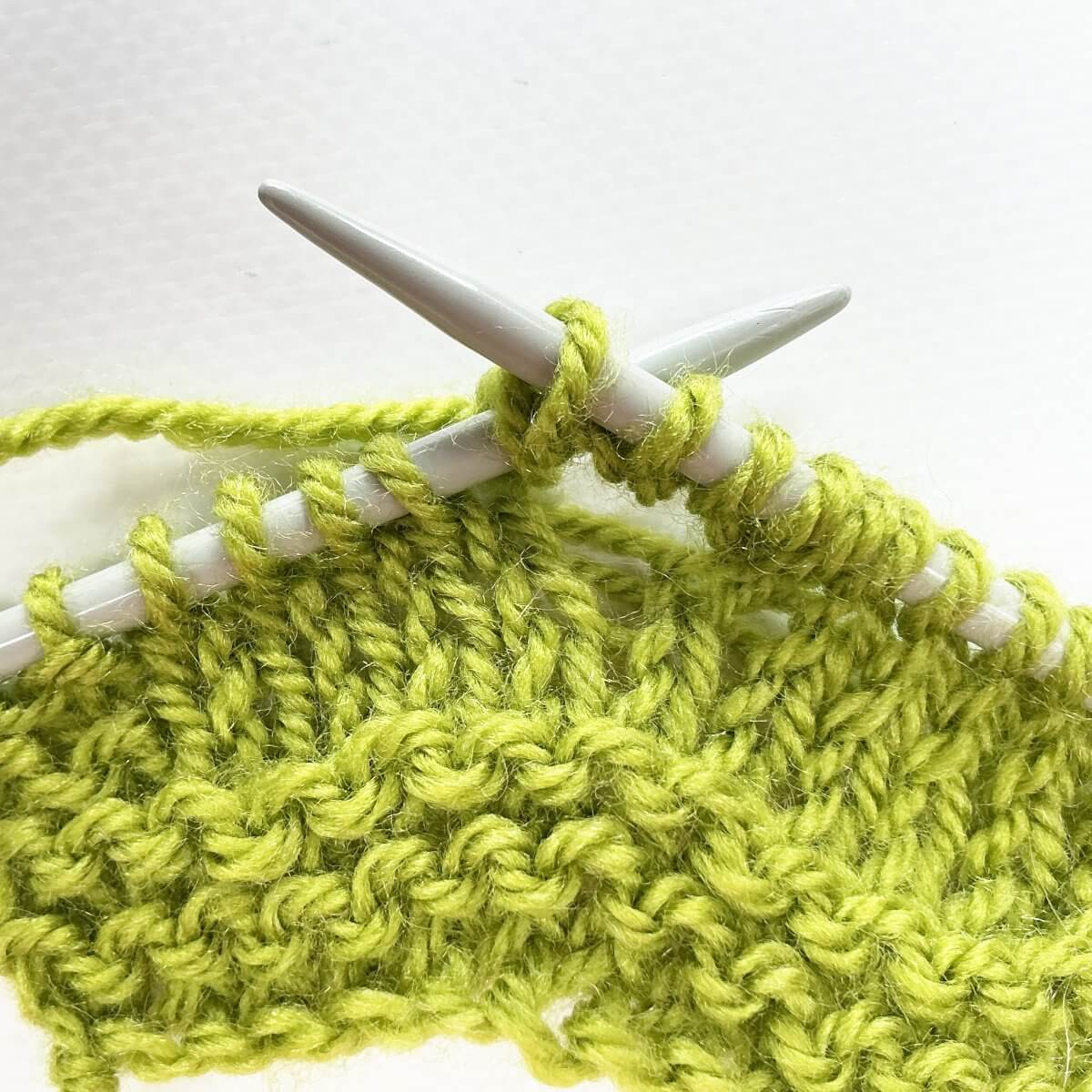
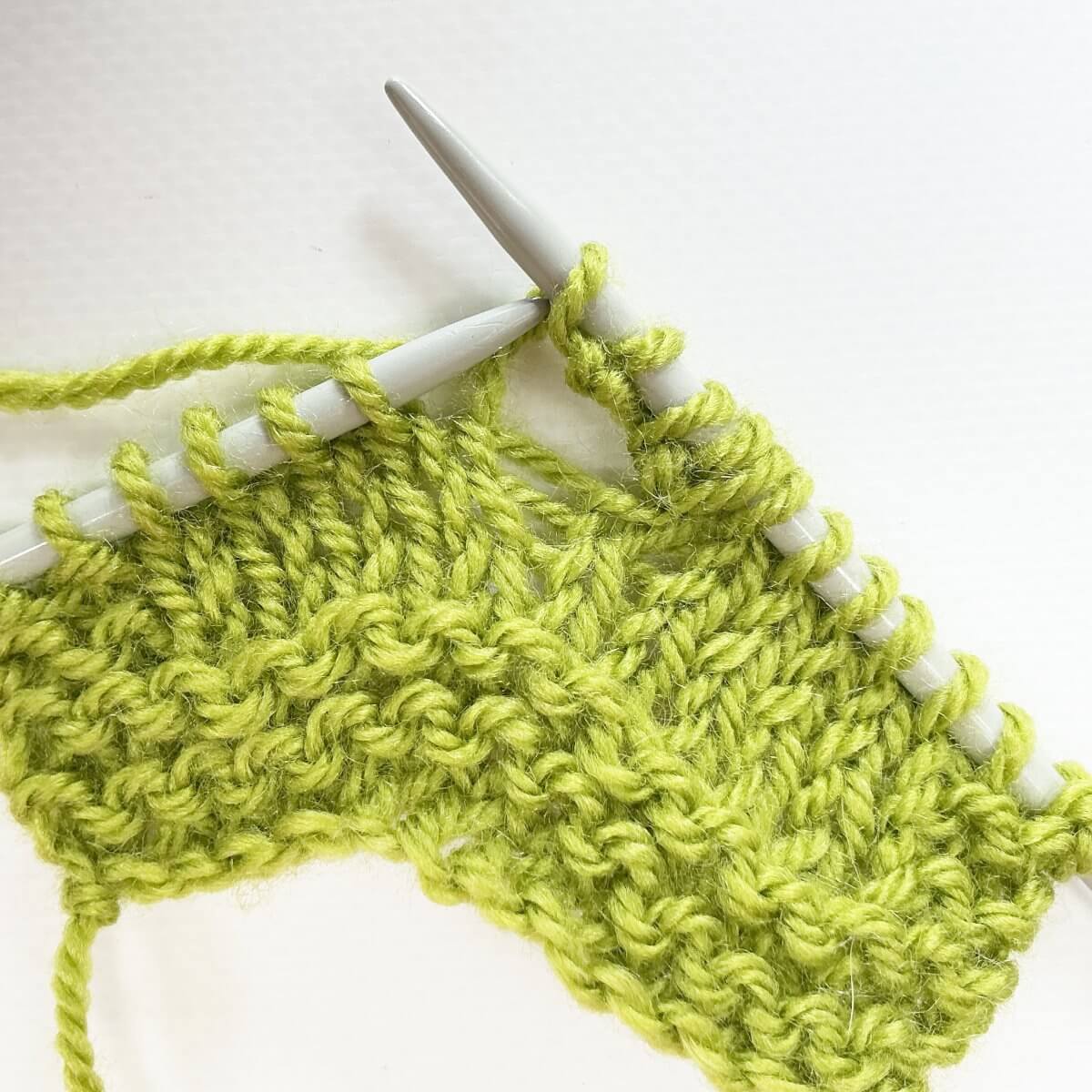
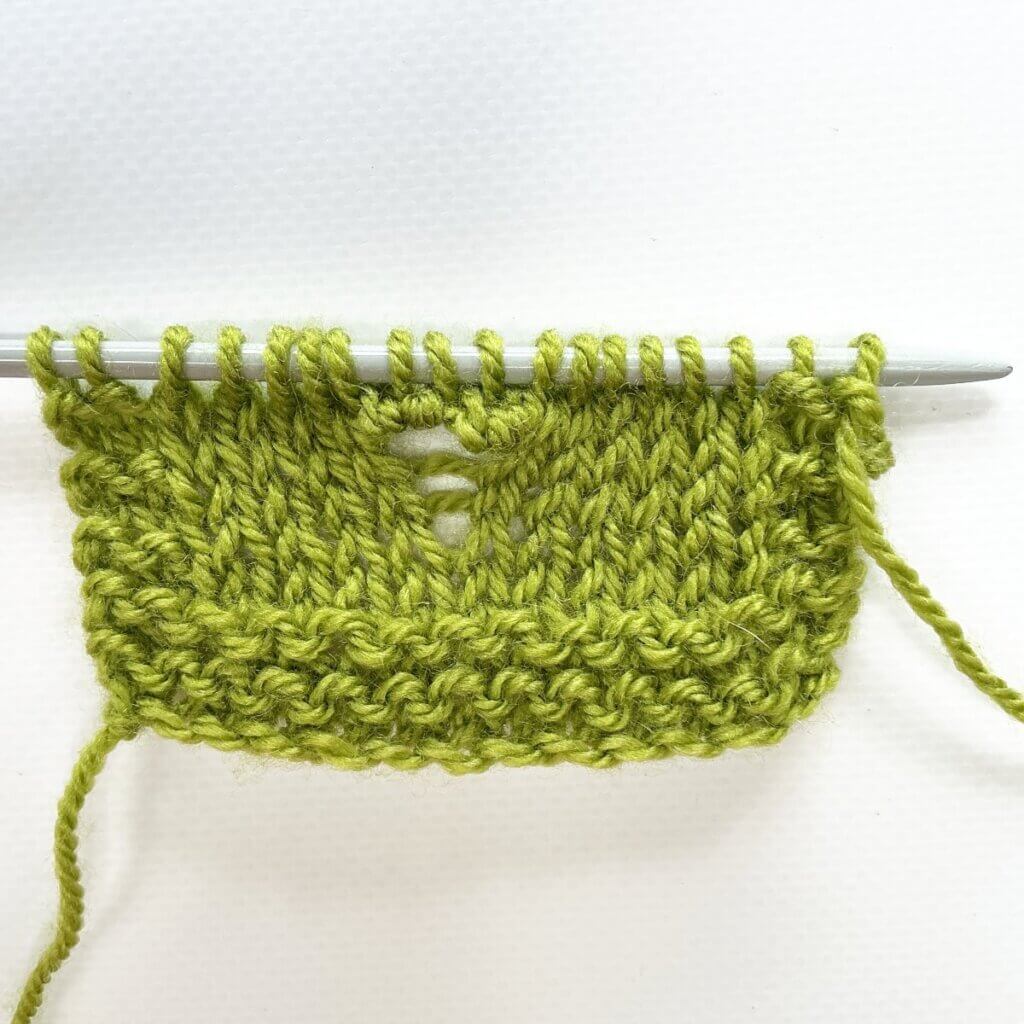
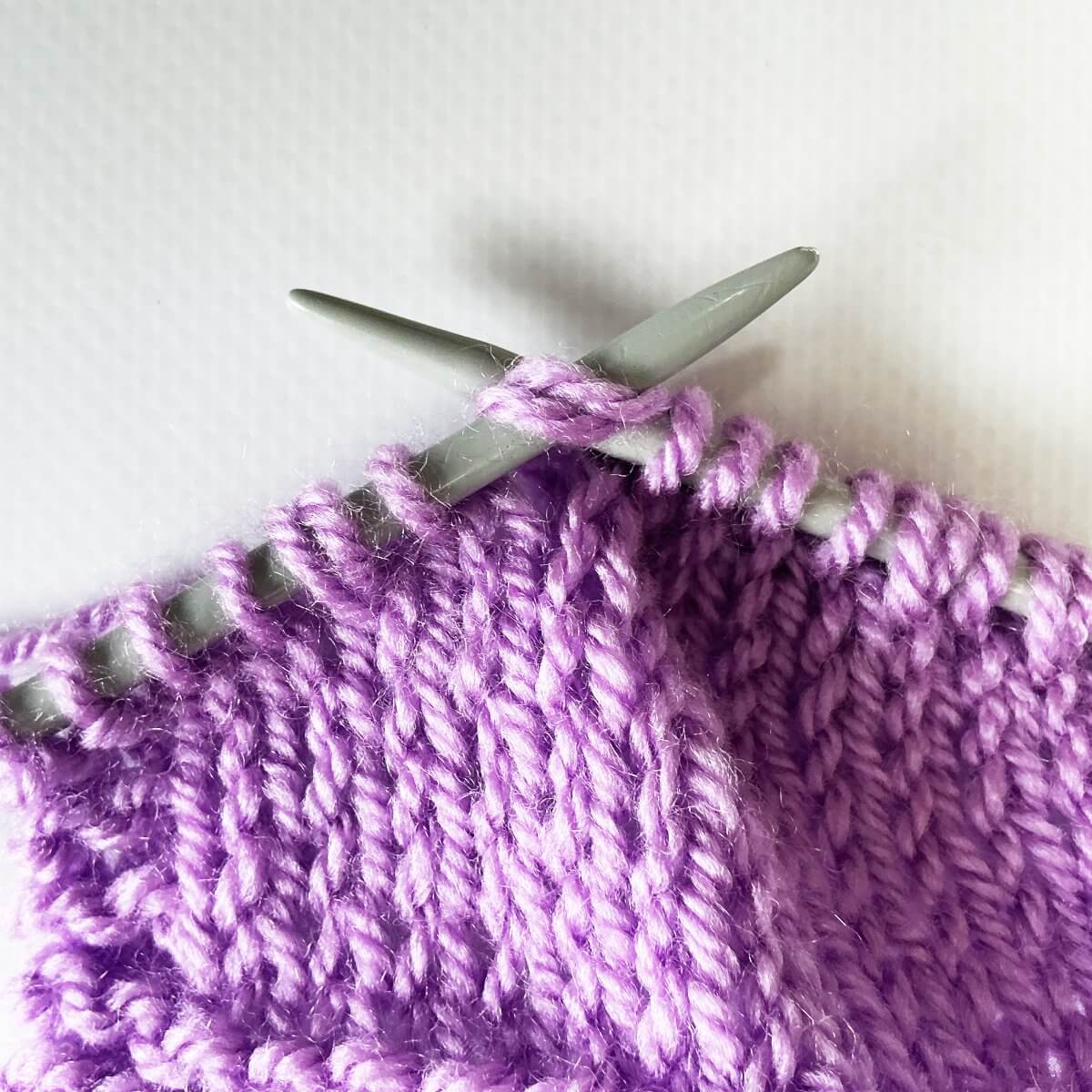
In one of my new shawl patterns, I used the (k1, p1, k1, p1, k1) in 1 stitch or M5 increase. So, time for a new tutorial! With this increase, 1 stitch is increased to 5 by working [k1, p1] twice in the same loop, followed by another k1. That said, if you’d like to increase 7 or even 9 stitches instead of 5, just work more repeats of [k1, p1] into the original stitch.
Let’s get our materials and get started!
Materials used
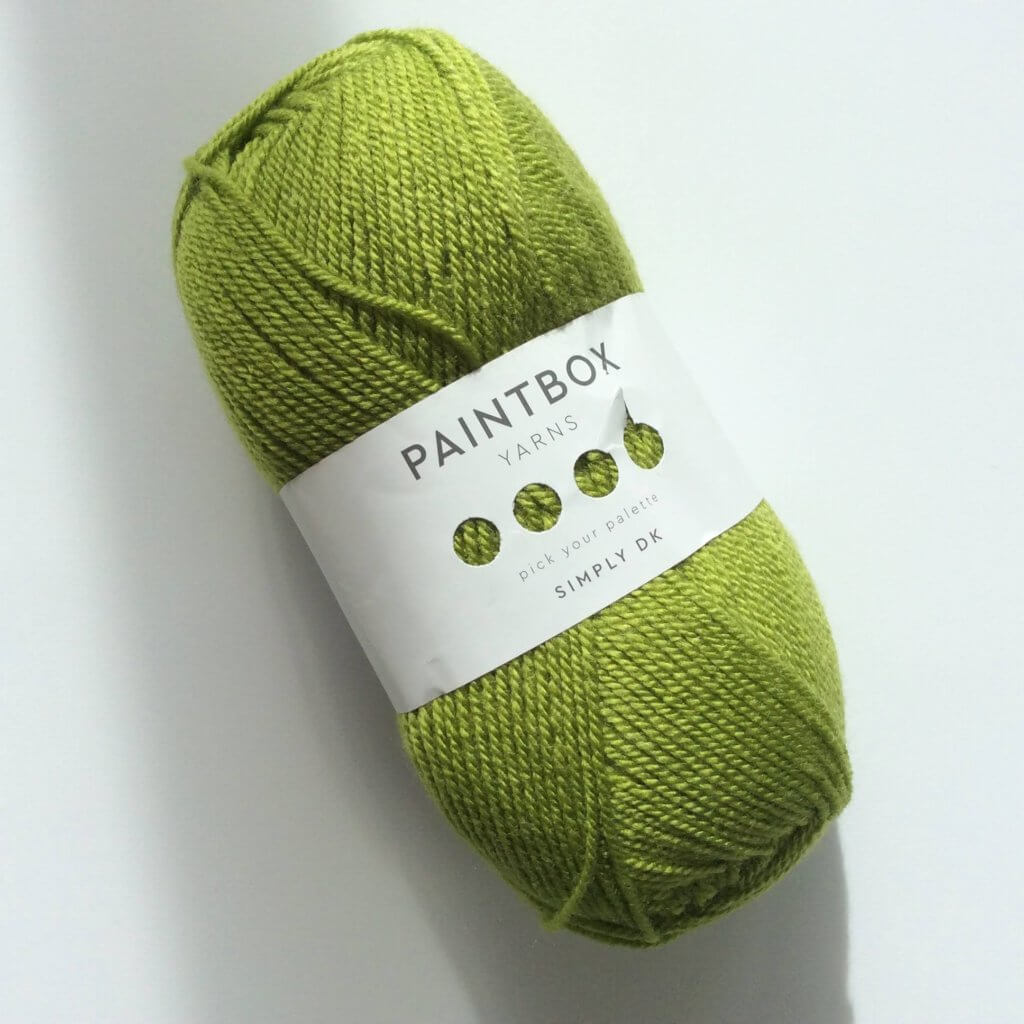
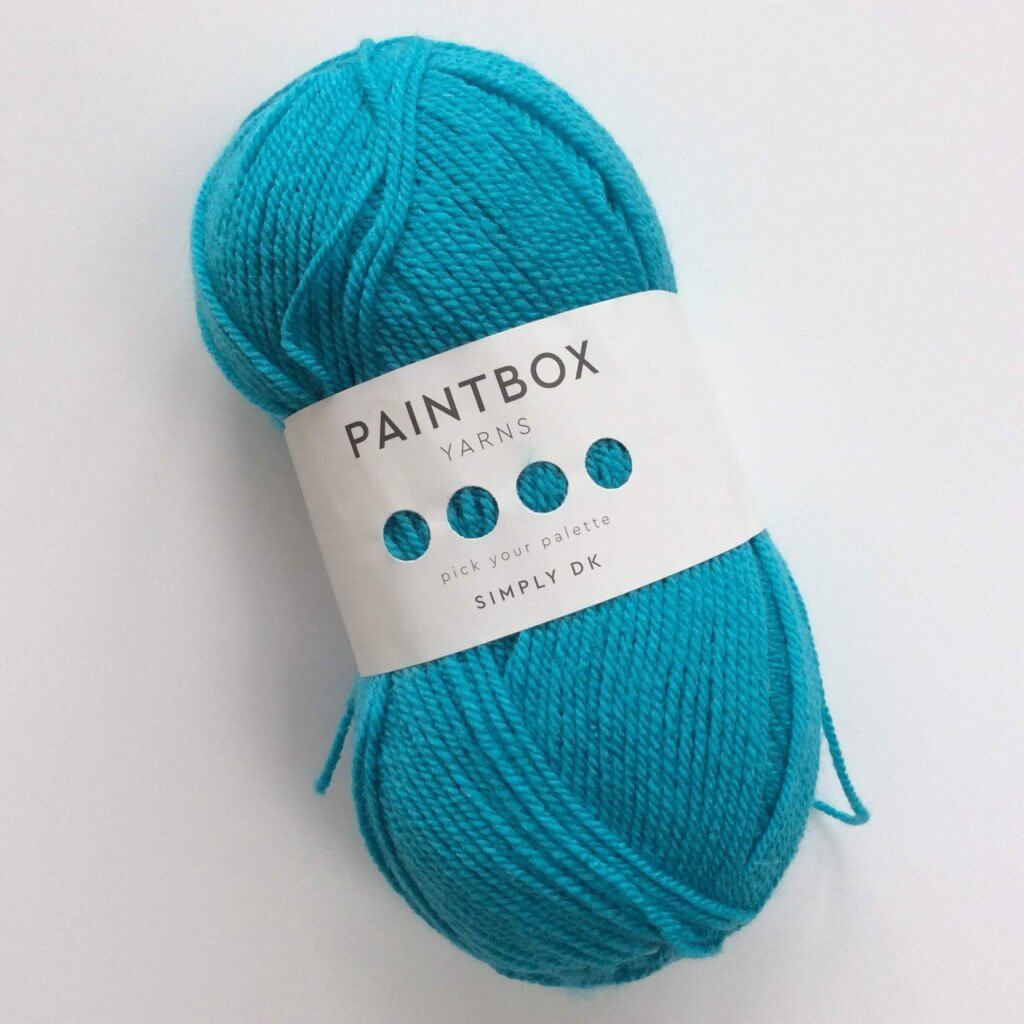
Yarn: Paintbox Yarns Simply DK, a good value, good quality 100% acrylic yarn, here in the color Lime.
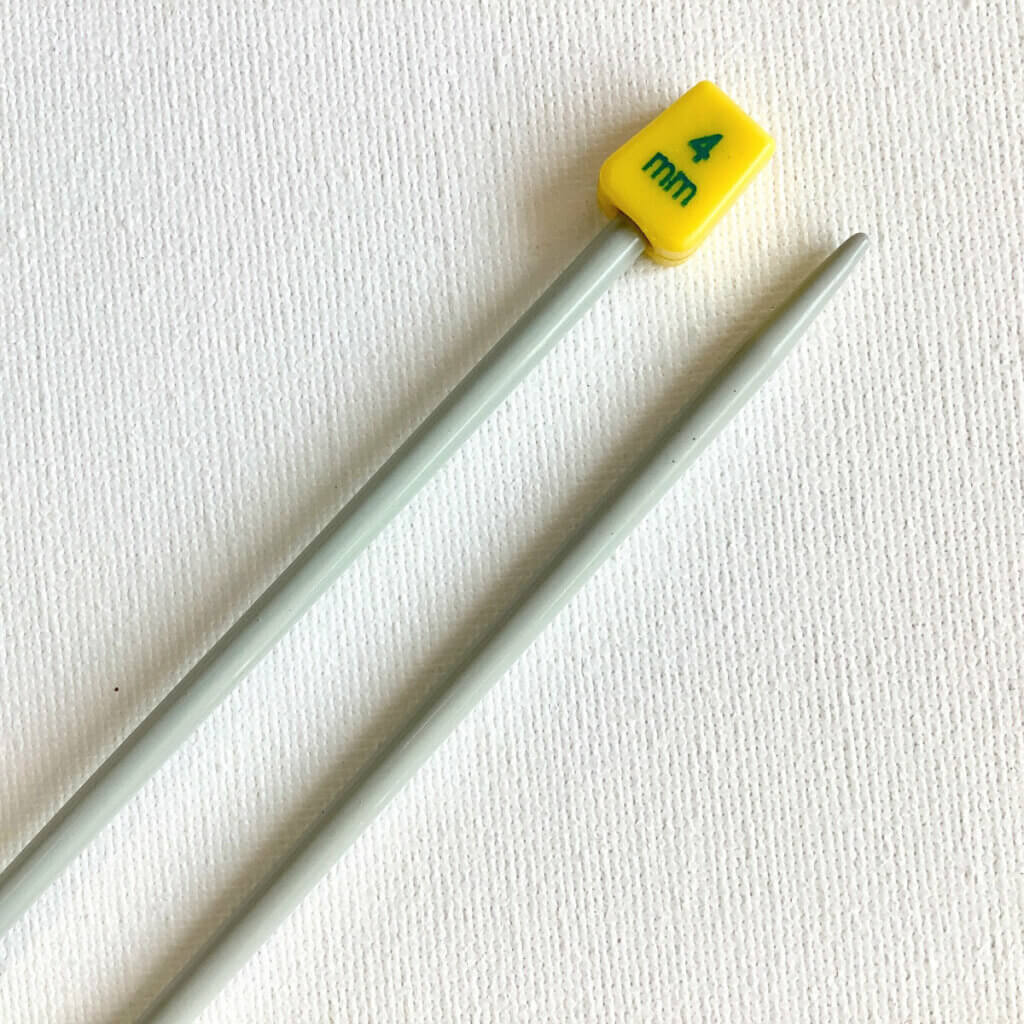
Knitting needles: This is a pair of straights that I picked up at the second-hand store when I started knitting, brand unknown.
Working the (k1, p1, k1, p1, k1) increase step by step
To start, work as instructed by your pattern until the point where you want to make the increase.
First, insert your right-hand needle into the first stitch on the left-hand needle as if to knit.
Next, wrap the yarn around the needle …
… and pull it through to work a k1. Do not slip the loop off the needle yet!
Next, move the yarn to the front of the work.
Insert the needle into the stitch as if to purl…
….wrap the yarn around the needle.
.. and pull it through to work a k1. Do not slip the loop off the needle yet!
Next, move the yarn back to the back of the work.
Repeat steps 2 to 9 once more, followed by steps 2 to 4 once more to create all the extra stitches needed.
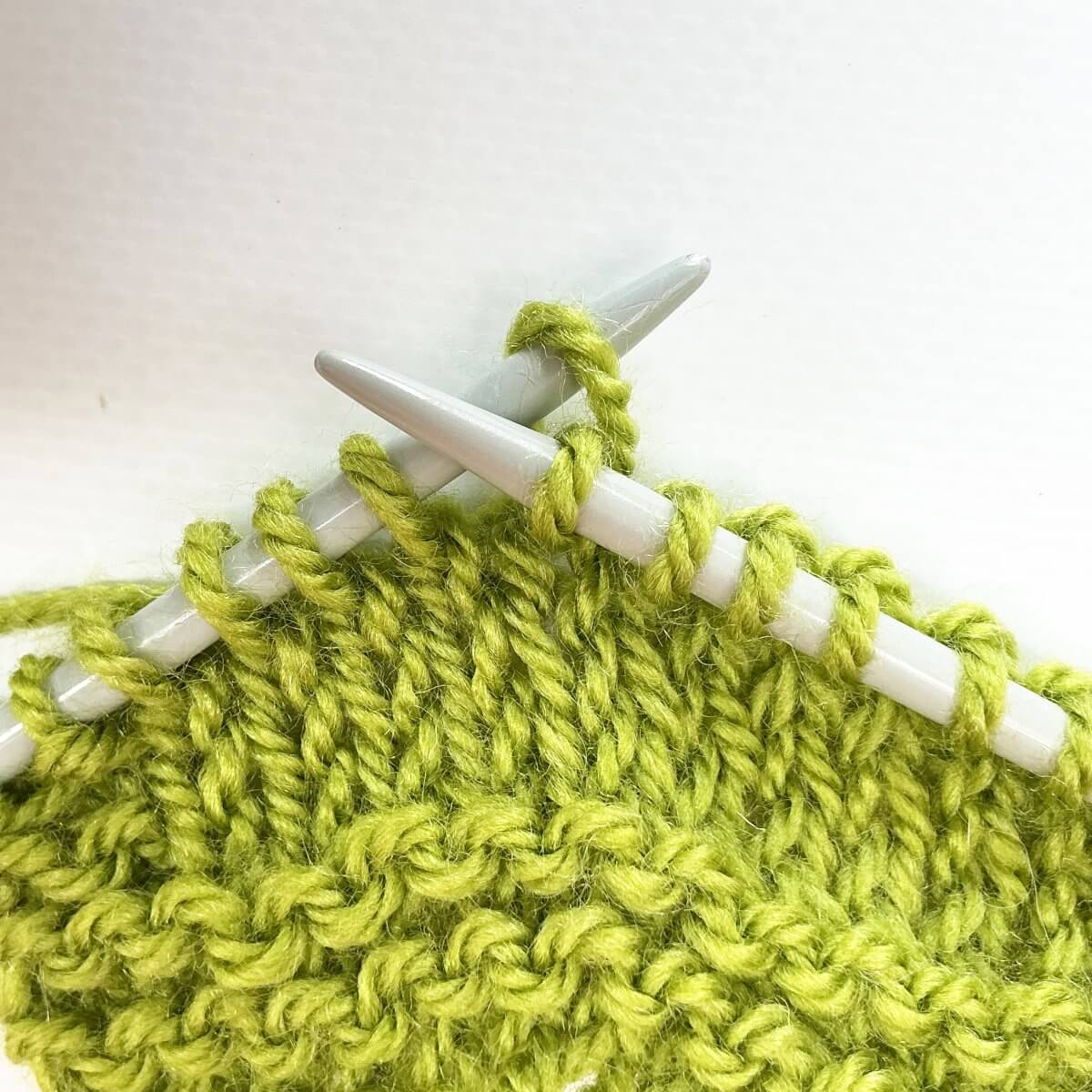
After this, you can slide the original stitch off the left-hand needle to conclude the increase.
The result
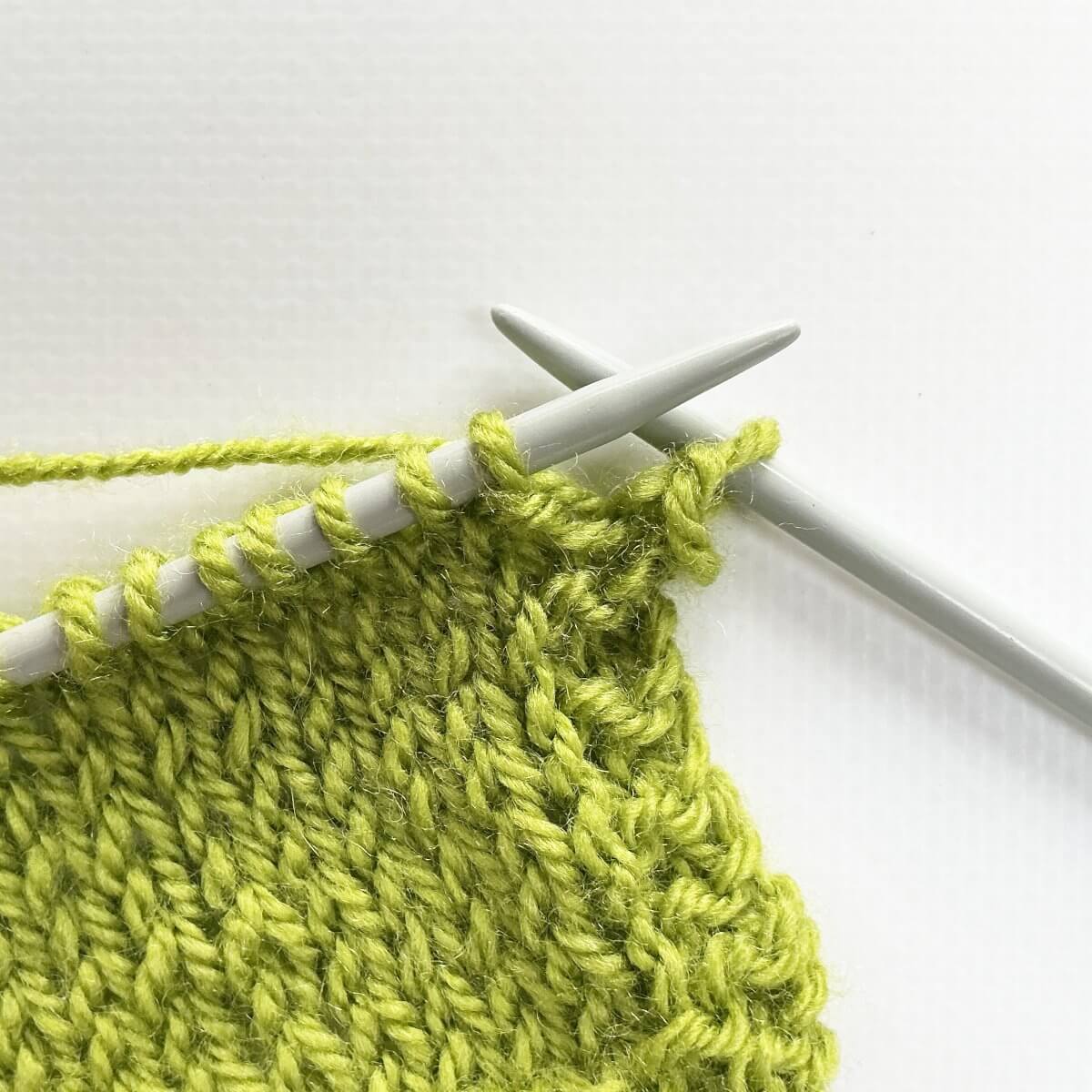
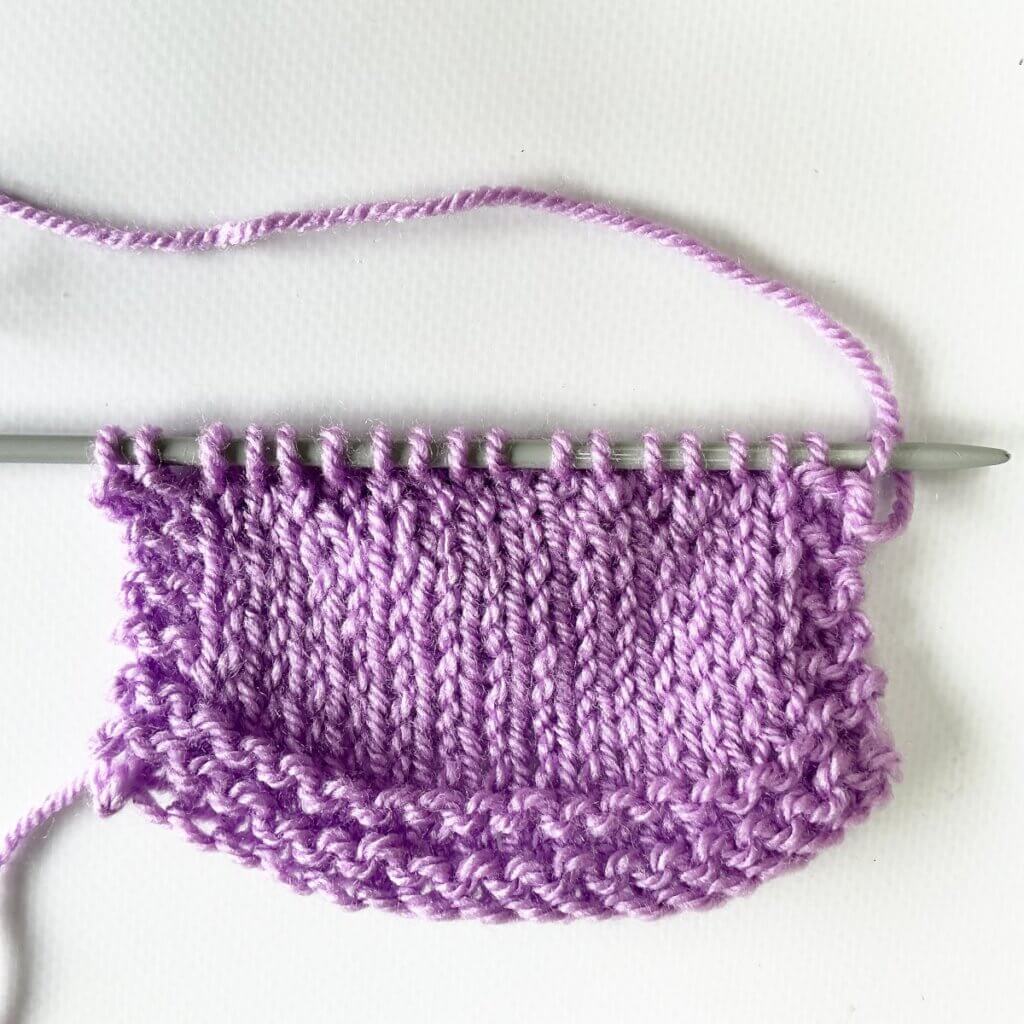
In the picture below, I’ve also worked a wrong-side row after the row with the (k1, p1, k1, p1, k1) in 1 stitch increase. Please also keep in mind that here, I made the increase in a stockinette fabric. Usually, It would be used somewhere in lace patterning.
Thanks to my Patreon supporters for bringing you this freebie! Creating quality patterns and tutorials is a lot of work and resource-intensive. However, I find it important to give you free content like this tutorial. Thanks to the generous support of my Patreon supporters, I can make it happen. Thank you, patrons! Click here to join, or click here to read more about La Visch Designs on Patreon.
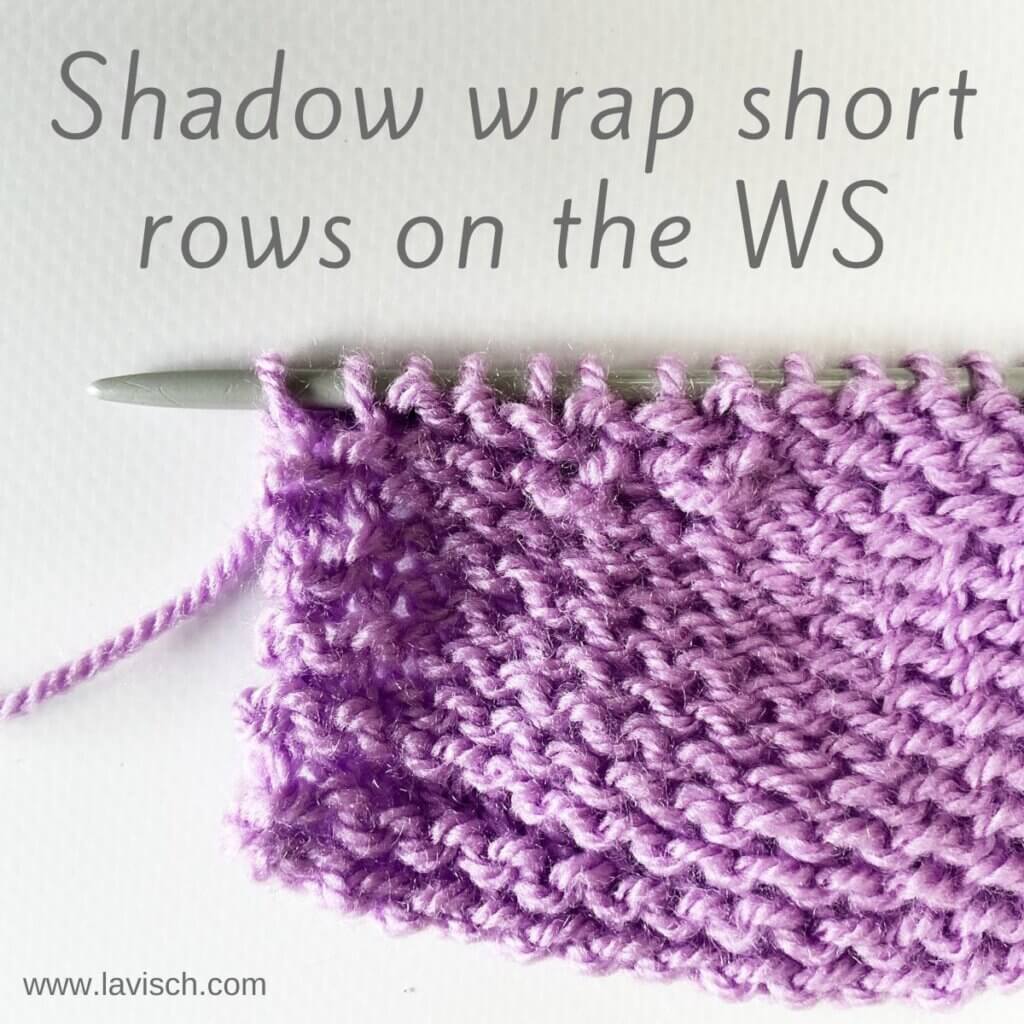
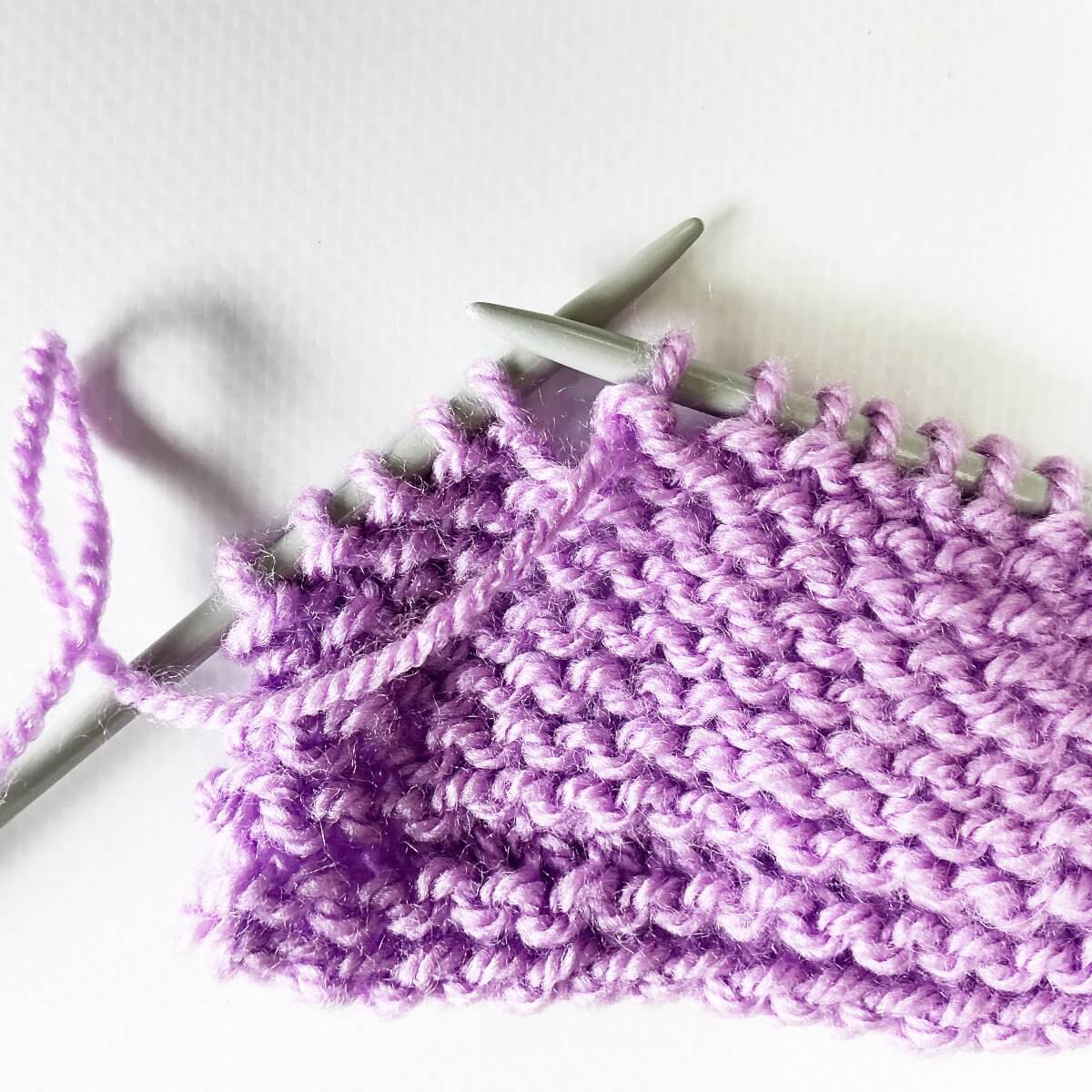
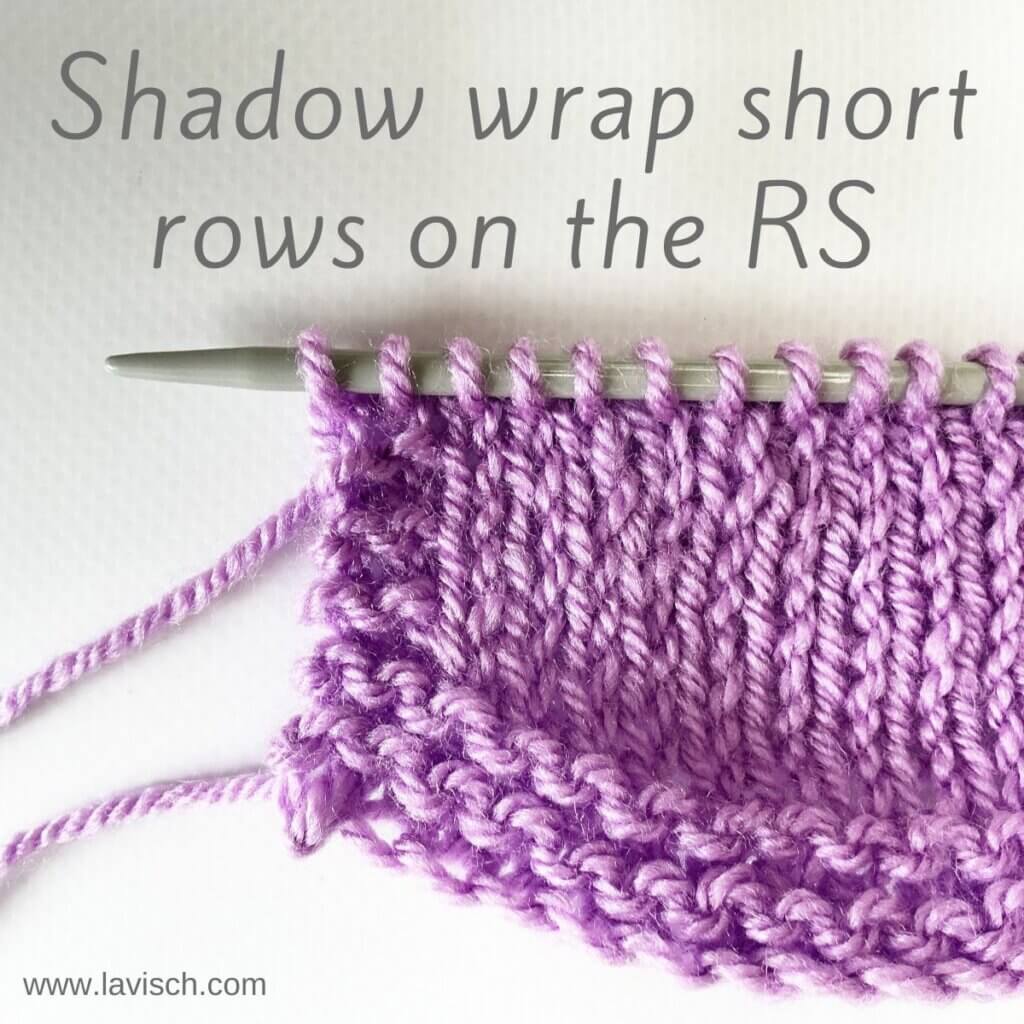
Short rows are a very handy way to create shaping in knitted fabric. Use it, for example, to raise the back of the neck in sweaters, or turn the heel in socks. As a matter of fact, I first encountered these shadow wrap short rows in this sock project I was knitting. I really like them, because just like German short rows, you end up with some sort of “double stitch” that is pretty invisible in the resulting fabric. The way to go about making that double stitch is quite different, though.
Grab your materials and let’s get started! As with all short rows, they can be worked on both right side and wrong side rows. In this tutorial, I’ll focus on the working the shadow wrap short rows on the right side of the fabric.
Materials used
Yarn: Paintbox Yarns Simply DK, a good value, good quality 100% acrylic yarn, here in the color Tea Rose.
Knitting needles: This is a pair of straights that I picked up at the second-hand store when I started knitting. Brand unknown.
Working shadow wrap short rows on the RS step by step
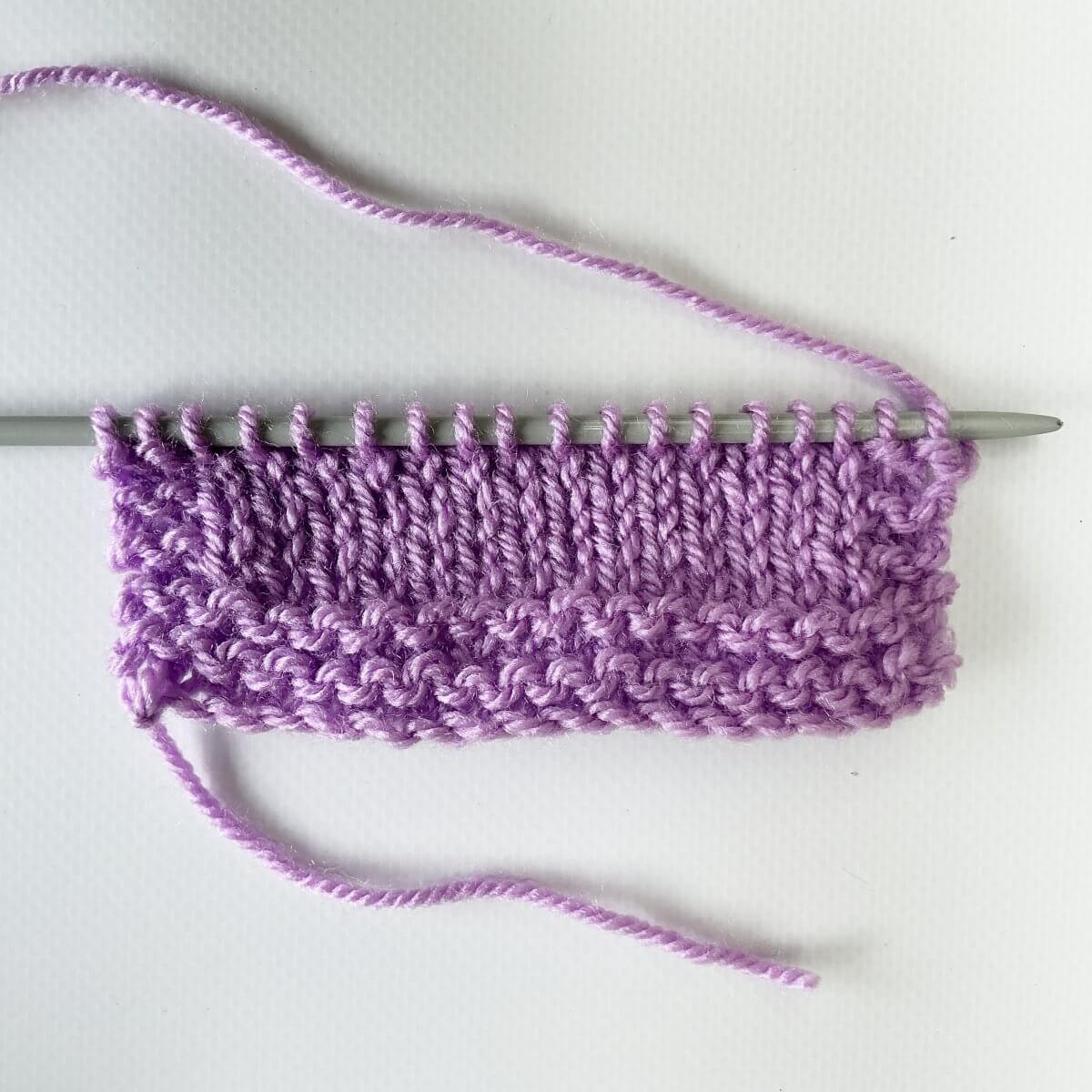
I will show you how to work the shadow wrap short row, using this little swatch.
Work as instructed by your pattern on the RS of the fabric, until the point where you are to turn for the short row.
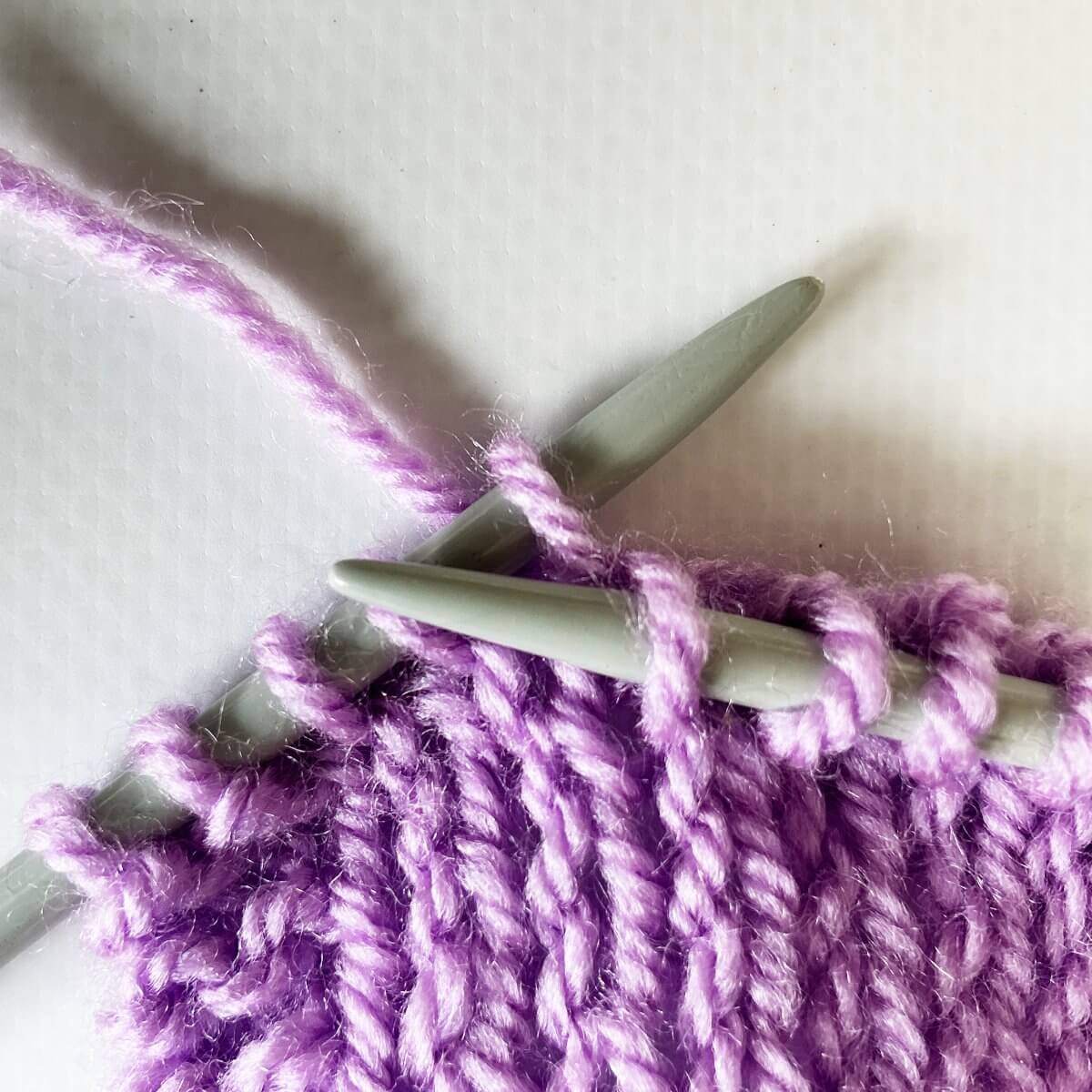
To do so, insert your right-hand needle from back to front into the right leg of the stitch that is directly below the next stitch on the needle…
… and place it on the left-hand needle.
Next, knit this new loop…
… and place it back on the left-hand needle.
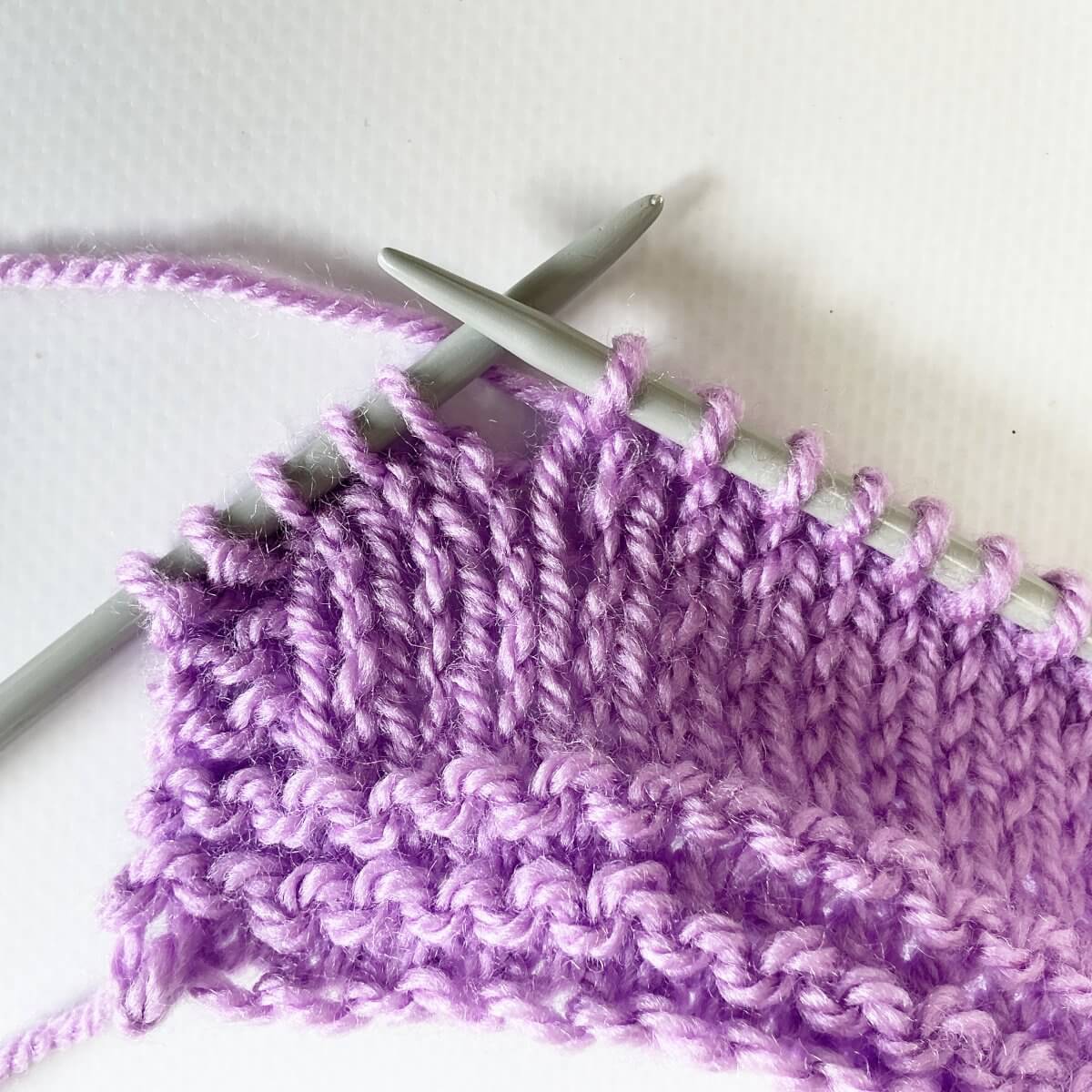
Do you see how it sits next to its “shadow stitch”?
Next, turn your work and purl back to where your pattern says.
Your pattern may also tell you to work another short row on the WS of the fabric.
When you work back to the shadow wrap on the right side, just knit the 2 shadow stitches together as if they are a single stitch, to close the short row without any gaps in your fabric.
Do you also see the other stitch with a shadow stitch on the left-hand needle?
The result
This is how to work shadow wrap short rows on the RS! Please note that in the below picture, I’ve worked 2 sets of shadow wrap short rows on the right, as well as 2 on the wrong side. The tutorial on how to work shadow wrap short rows on the WS will be published soon.
Thanks to my Patreon supporters for bringing you this freebie! Creating quality patterns and tutorials is a lot of work and resource-intensive. However, I find it important to give you free content like this tutorial. Thanks to the generous support of my Patreon supporters, I can make it happen. Thank you, patrons! Click here to join, or click here to read more about La Visch Designs on Patreon.
“Blauwe Branding” is Dutch for “Blue surf”, which is exactly what the waves in this stole remind me off! While I made my version in one main color, and four contrast colors, I expect it will be equally gorgeous in a long gradient yarn.
The pattern contains both fully written out and charted instructions for the lace. The lace in the body of the shawl is worked on both wrong and right side rows. The border is worked in garter stitch in the round.
This pattern is therefore suitable for the intermediate to advanced knitter.
Sizes and finished measurements
One size (easily adjusted) – finished dimensions: 85 cm (33 ½ inches) wide and 160 cm (63 inches) long, measured after blocking.
Adjust the width of the Blauwe Branding stole by changing the number of cast on stitches. Change the length by working more or fewer repeats of the body pattern. This will, of course, change the amount of yarn needed.
Pattern details
Gauge: 17.8 sts / 17.7 rows = 10 cm (4 inches) over lace pattern, measured after blocking. Gauge is however not critical for this design.
Pattern languages included: English.
Digital PDF has 5 pages (letter size)
Yarn
Finull by Rauma (100% wool; 175 m (191 yds) / 50 g) in the following colors:
C1: 350 m (382 yds) / 100 g in color 4025 C2: 88 m (96 yds) / 25 g in color 4136 C3: 158 m (172 yds) / 45 g in color 4887 C4: 158 m (172 yds) / 45 g in color 4023 C5: 70 m (76 yds) / 20 g in color 0484
Substitute fingering or sport weight 2-ply wool yarn in 5 colors for a similar result. Alternatively, replace C2 to C5 with 474 m (516 yds) / 135 g) of a gradient yarn with long color runs.
Materials
Size 3.5 mm (US 4) / 80 cm (32 inches) and 150 cm (60 inches) circular needles were used for the sample shawl. Use needles appropriate for the yarn chosen.
Waste yarn for provisional cast-on
Crochet hook for provisional cast-on, in a size similar to the knitting needles used.
Stitch markers to use in between lace repeats (optional)
When you have a limited amount of yarn, it’s pretty common to want to make the most of it. I often have a limited amount of a specific fingering weight yarn available, with which I want to knit a shawl. Especially when working with a shawl shape and construction that leads to ever-growing rows, that can be a challenge. Take, for example, a top-down triangle, or crescent shawl. But also with side-ways knit projects, it can be very useful to know whether another repeat before the mid-way point of the project is possible.
For this, I usually weigh my yarn. You can, of course, use a kitchen scale. Most kitchen scales have an accuracy of 1 g. This means that the scale will provide a reading for up to 1 gram above or below the object’s true weight. Especially when working with thinner yarns, this may mean that the reading is just not accurate enough to go on. In those cases, it can be advisable to use a precision scale, that measures with an accuracy of 0.1 g. The benefit of precision scales is, usually also, that they are smaller and therefor easier to take along when knitting on the go.
Once you use a specific scale for a project, it’s best to stick to that one for the duration of the project. Calibration may differ between scales, potentially causing issues when you have less yarn remaining than expected based on previous measurements with the other scale. Below, I’ll give you more information about the scales I use, and how I go about how to make the most of remaining yarn in a project.
Scales: These are the scales I use for my knitting. The larger one was picked up at a local store, it has an accuracy of 0.1 g, and can weigh up to 200 g. The smaller one is a Christen Swiss OR-10 pocket scale. The latter is accurate to 0.1 g, and has a weighing capacity up to 150 g. The pencil and row counter are in the picture for scale. As you can see, the small one, is really very, very small.
How to make the most of remaining yarn in a project, an example
Usually I don’t bother weighing my yarn, until I see that I’m down to somewhere into the last ball of yarn. At that time, I start weighing after every 2 rows, and write down how much yarn was left. When doing this a couple of times, you can calculate how much yarn was used for every 2 rows. Even more, you can also see how much the yarn usage increases when the rows get longer. In the below pictures, I’m using my tiny scale, using the cover to increase the platform size to rest the ball of yarn on.
In the below picture, you can see the notes I scribbled on the back of the draft pattern of my Atomic Tangerine shawl. The middle column contains the weights, and with the arcs on the right you see what the weight differences were between the various rows. The example below shows, that I had 85 g left after row 50, which means I could get at most 8 other rows out of the remaining yarn. But given the rate at which the yarn usage went up, probably 6 rows at most. When binding off my shawl projects, I usually use the Russian bind-off, which, in my experience, uses almost as much yarn as 2 rows. So, taking this into account, there is only enough yarn left for another 4 rows before starting the bind-off.
And that’s exactly how it worked out for this pattern!
Weighing notes on Atomic Tangerine
Projects with multiple colors
You may wonder how this looks when working on a project that uses multiple colors. In that case, depending on the patterning, you may want to weigh either after every 2 rows, or after each pattern repeat. In this example, I’m working on a mosaic color-work project. With mosaic knitting, you alternate colors every 2 rows. So, in this case, weighing after every pattern repeat makes the most sense. And yes, in this example, I’m using my kitchen scale.
Weighing on a kitchen scaleWeighing notes
As you can see, these notes look a tad more complex, because the yarn usage arcs for the various colors cross each other. At this moment, I’m still working on this design. But, given the amount of yarn remaining, it’s time to start the final section of this shawl. To be continued!
Thanks to my Patreon supporters for bringing you this freebie! Creating quality patterns and tutorials is a lot of work and resource-intensive. However, I find it important to give you free content like this tutorial. Thanks to the generous support of my Patreon supporters, I can make it happen. Thank you, patrons! Click here to join, or click here to read more about La Visch Designs on Patreon.
The cabled bind-off may look complex, but it’s really nothing more than a twist of a fat i-cord bind-off. Usually, an i-cord bind-off is made with 3 to 4 stitches. However, to make it a cabled bind-off, once every few rows the order of the stitches on your knitting needle is changed. These crossings are what gives cables their characteristic look. To give each half of the cable a bit of heft, they need to have enough stitches. Also, with cable knitting, you usually work stitches in stockinette. So, to make the cables pop against the body of the piece you’re binding off, a contrasting stitch in reverse stockinette is used.
In this example, I’ll be showing you a cabled bind-off with a 3/3 RC (3/3 right-cross cable). For this we will need 6 stitches, plus 1 purl stitch to make them pop. This bind-off is worked over a multiple of 6 stitches in the piece to bind-off, plus 1 extra stitches to bind-off the cable itself.
Materials used
Yarn: Paintbox Yarns Simply DK, a good value, good quality 100% acrylic yarn, in the colors Vintage Pink, and Lime Green.
Needles: This is a pair of straights that I picked up at the second-hand store when I started knitting, brand unknown. You will also need a cable needle in a similar or slightly smaller size as your knitting needles.
The cabled bind-off step by step
In short, the instructions for this bind-off would look something like this:
Cabled bind off: Cast-on 7 sts, *k6, p2tog, sl 7 sts just worked back to left-hand needle, pull yarn tight across back of sts; rep from * until 1 st remains. Next: Bind-off 6 sts by knitting 1 st, *then knitting the next st and passing the one already on the right-hand needle over the newly worked stitch*, work *-* 5 times, p2tog, and fasten off.
You can start casting off as soon as the last row or round of your work has been knit, and after your work has been turned when working flat back and forth.
With the right side facing, cast-on 7 stitches. I used the knitted-on method.
Knit 6 stitches.
Purl 2 stitches together, 1 from the bind-off, and the other one from the body of the work.
Move yarn to the back of the work, then slip the 7 stitches on the right-needle back to the left hand-needle one by one.
Repeat steps 3 to 5 once.
Next, we’re going tot work the cable twist row with a 3/3 RC (3/3 right-cross cable). First, slip the next 3 stitches to the cable needle, and place at the back of the work.
Knit 3 stitches….
…. finish the cable by knitting 3 stitches from the cable needle.
Next, purl 2 stitches together. Again, one from the bind-off, and the other one from the body of the work.
Move yarn to the back of the work, then slip the 7 stitches on the right-needle back to the left hand-needle one by one.
Repeat steps 3 to 5 another 3 times. You have now bound-off 6 stitches.
Repeat steps 3 to 12 until only 1 stitch is left over.
Please note that in my swatch, I hadn’t accounted for this last stitch. So in this example, I had no stitches left over at this point.
To finish, bind-off 6 stitches by knitting 1 stitch, *then knitting the next stitch and passing the one already on the right-hand needle over the newly worked stitch*, work *-* 5 times, purl the last 2 stitches together, and fasten off.
In my example, I did not have any stitch left to do the p2tog with, so I just fastened off.
Pretty, right?!
A few notes
In this example, I worked the cabled bind-off in a contrasting color. You can, of course, also work the bind-off in the same color as the project itself.
All i-cord based bind-off edge on pieces worked in stockinette stitch are very pretty. As you know, however, stockinette tends to curl…. A lot. An i-cord bind-off is usually not sufficient to prevent curling. For this, you will have to look at other methods, such as garter stitch or rib.
Depending on the difference between your stitch, and row gauge, the bind-off may be tighter than the body of the work. If this is not desired in your piece, you could consider going up a needle size. Working an extra row, without connecting it to the body once every few repeats, may also be sufficient to get enough length at the edge.
Thanks to my Patreon supporters for bringing you this freebie! Creating quality patterns and tutorials is a lot of work and resource-intensive. However, I find it important to give you free content like this tutorial. Thanks to the generous support of my Patreon supporters, I can make it happen. Thank you, patrons! Click here to join, or click here to read more about La Visch Designs on Patreon.
Atomic Tangerine was inspired by the lovely, vibrant yarn I bought on vacation in Sweden. While the version pictured is knit in a bulky-weight yarn, the patterning is very flexible and can easily be knit in other yarn weights. Just repeat the body pattern until your shawl is the desired size!
This shawl is knit from the top-down in one piece, starting at the neck edge with a garter tab. The instructions for the body patterning are both charted and written out.
Pay what you want: (minimum €7.25)
€
Difficulty level
This shawl is worked from the top down, starting with a garter stitch tab. Stitches used include knit, purl, skp, sl1-k2tog-psso, k2tog tbl and yo. This pattern is therefor suitable for the advanced beginner to intermediate knitter.
Sizes and finished measurements
One size: Span width of 178 cm (70 inches) measured along the upper edge, and a depth of 75 cm (29 ½ inches), measured after blocking.
Change the size of the Atomic Tangerine shawl by using lighter or heavier yarn and/or working fewer (or more) repeats of the various sections of the shawl. This will, of course, change the amount of yarn needed.
Pattern details
Gauge: Approx. 7 sts / 22 rows = 10 cm (4 inches) over body pattern, measured after blocking. Gauge is not critical in this design, but for a look similar to the sample shown, a loose gauge is advised
Pattern languages included: English.
Digital PDF has 6 pages (letter size)
Yarn
256 m (280 yds) / 400 g Ullcentrum Lovikka (100% wool; 64 m (70 yds) / 100 g) in the color Lo-2122 Orange ljus.
Substitute a single ply type wool bulky weight yarn in a solid or tonal colorway for a similar result.
Materials
Size 8 mm (US 11) / 80 cm (32 inches) circular needles were used for the sample shawl. Use needles appropriate for the yarn chosen.
4 stitch markers to indicate the center stitch and the edge stitches
Stitch markers to indicate repeats of the lace patterning (optional)
With cable knitting, you usually work stitches in stockinette against a background of either garter stitch or reverse stockinette. The cables themselves are worked in stockinette, and once every few rows the order of those stitches on your knitting needle is changed. However, unlike most cable stitch patterns, the honeycomb cable does not use any background stitches. The pattern is purely cable crossings every few rows to create the all-over honeycomb effect.
Stitch patterns with cables can be very complex. In this stitch pattern, however, I show you a simple 2/2 RC, and a 2/2 LC cable. This stitch pattern is worked in a multiple of 8 stitches. Please note that in the above picture, I did not add any edge stitches to the swatch.
Materials used
Yarn: Paintbox Yarns Simply DK, a good value, good quality 100% acrylic yarn, here in the color Marine Blue.
Knitting needles: This is a pair of straights that I picked up at the second-hand store when I started knitting, brand unknown.
You will also need a cable needle in a similar or slightly smaller size as your knitting needles. Unless, of course, you’re going to work the cables without a cable needle. The cables made in this stitch pattern are small enough to make that doable.
2/2 LC (2/2 left-cross cable): Slip next 2 stitches to cable needle and place at front of work, k2, then k2 from cable needle.
2/2 RC (2/2 right-cross cable): Slip next 2 stitches to cable needle and place at back of work, k2, then k2 from cable needle.
Honeycomb cable stitch instructions
Row 1 (right side): Knit. (8 sts) Row 2 and all following wrong side rows: Purl. Row 3: *2/2 RC, 2/2 LC*; rep *-* to end. Row 5: Knit. Row 7: *2/2 LC, 2/2 RC*; rep *-* to end. Row 8: Purl.
Repeat rows 1-8 for pattern. To adjust this stitch pattern for working in the round, simply replace all purl instructions with knit!
The honeycomb cable stitch from the right side.The honeycomb cable stitch from the wrong side.
Thanks to my Patreon supporters for bringing you this freebie! Creating quality patterns and tutorials is a lot of work and resource-intensive. However, I find it important to give you free content like this tutorial. Thanks to the generous support of my Patreon supporters, I can make it happen. Thank you, patrons! Click here to join, or click here to read more about La Visch Designs on Patreon.
The buttonhole loop bind-off is very similar to the standard knitted bind-off, but with a twist! There are loops of yarn worked right at the edge of the work, which can be utilized as buttonholes. Of course, you can also just use this bind-off because it’s decorative. And yes, in this tutorial I’m using the swatch of the slip stitch rib stitch pattern, I showed you two weeks ago. Let’s get started!
Materials used
Yarn: Paintbox Yarns Simply DK, a good value, good quality 100% acrylic yarn, here in the color Vintage Pink.
Knitting needles: This is a pair of straights that I picked up at the second-hand store when I started knitting, brand unknown.
The buttonhole loop bind-off step by step
To start, take the piece of knitting you want to bind-off, and knit the first stitch.
Next, knit the new stitch nearest to the tip of the left-hand needle.
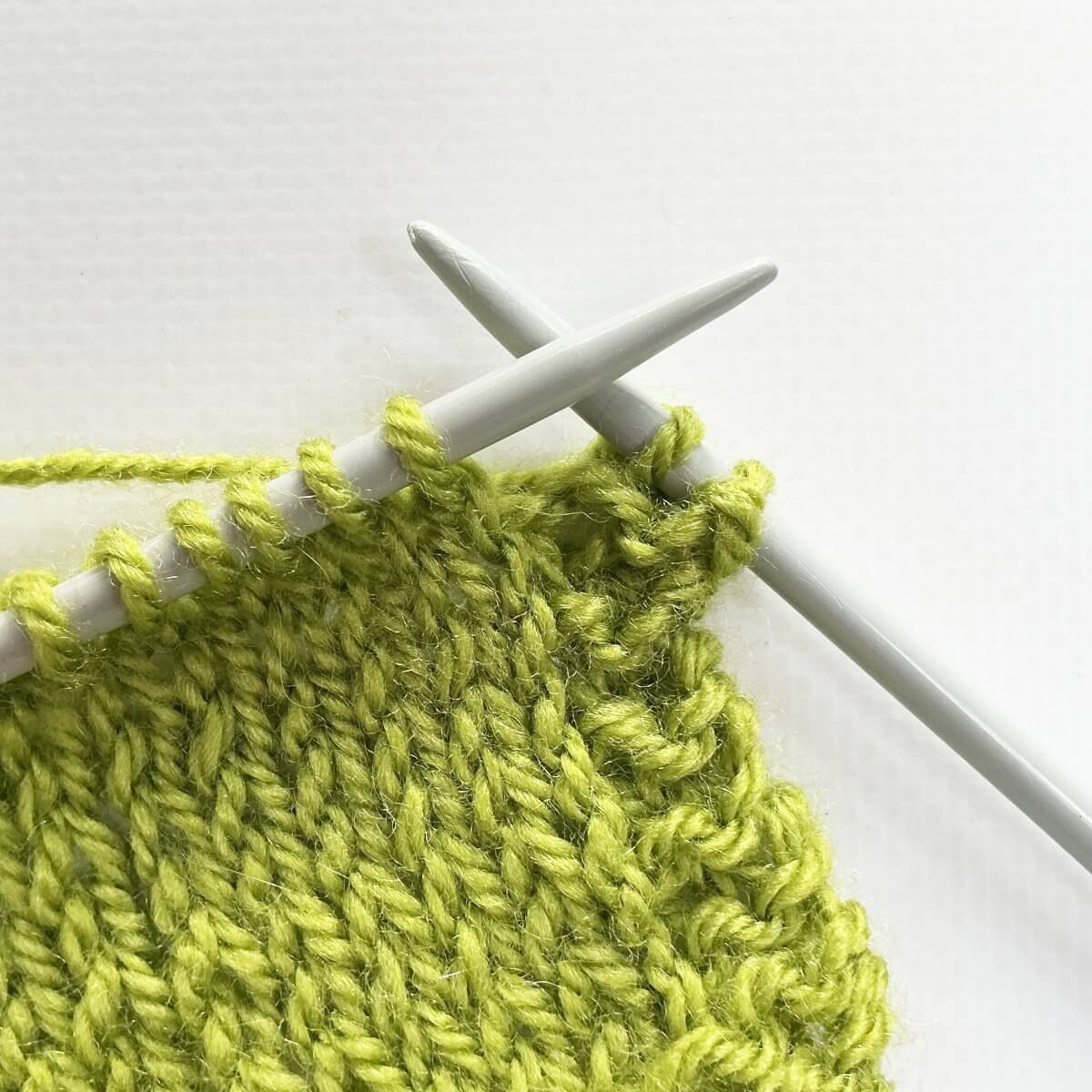
Insert the tip of the left-hand needle into the second stitch on the right-hand needle….
…., and pass this second stitch over the first one.
You have now bound-off a stitch!
Repeat steps 2-4 until you have reached the spot where you want to have the buttonhole.
In my case, I want the buttonhole right between the 2 purl stitches in the rib. So I continued binding stitches off, until I had worked the first of the 2 purl stitches.
Next, we want to make a series of loops to accommodate the buttons you’ve chosen. Depending on the size of the buttons, You may want to work longer loops than I’m doing in this example.
To start the first loop, place the stitch from the right-hand needle back to the left-hand needle.
Next, insert your right-hand needle into the first stitch on the left-hand needle as if to knit.
Wrap the yarn around the needle…
… and pull it through. You have now made 1 “chain”.
This is very similar to working a chain with a crochet hook, hence the name I’m giving it.
I want a loop consisting of 3 “chains”, so I have repeated steps 6-9 another two times.
To close the loop, I then worked steps 2-4 once more.
The result
In the below picture, I worked another 2 buttonholes, again centered in the purl part of the rib patterning. I really like this result!
Thanks to my Patreon supporters for bringing you this freebie! Creating quality patterns and tutorials is a lot of work and resource-intensive. However, I find it important to give you free content like this tutorial. Thanks to the generous support of my Patreon supporters, I can make it happen. Thank you, patrons! Click here to join, or click here to read more about La Visch Designs on Patreon.
Recently, I read about someone wondering why and how to work a yarn over at the beginning of a row. Since this is a technique I regularly use, I thought to write a tutorial about it. So, first: why would you want to work a yarn over at the beginning of a row?
When I do this, I usually do that at the beginning of a wrong side (inwards going) row on a knitted-on or applied border. This can be in a project where a border is actually applied. Take for example my Sunglow Forest shawl. This however also applies to designs that are knit sideways, and in which the border is worked at the same time as the body of the shawl. My Kurkuma shawl is an example of this type of project. In both examples, I work “yo, k2tog” at the beginning of every wrong side (inwards going) row. It creates a nice loopy edge that can be used to place your blocking pins in. I also feel this yarn over gives a bit of extra stretch, right at the edge of the project.
Read on to see how to work a yarn over at the beginning of a row!
Materials used
Yarn: Ice Yarns Merino Silk (95% Merino, 5% Silk; 225 m (246 yds) / 50 g) that I overdyed with the exhaust from an onion skin dye bath. This yarn is unfortunately discontinued.
Needles: Some Addi circular needles.
Working a yo at the beginning of a row step by step
First, make sure, you’re right at the beginning of the row where you want to make the yarn over.
It’s a bit hard to see because the first 2 stitches on the needle overlap each other a bit, but the first 3 stitches are to be worked as knit stitches to make stockinette.
To make a yarn over, I usually just wrap it around the right-hand needle. So that’s what I also do here. Just ignore that it’s at the beginning of the row.
You may want to hold the yarn on the right-hand needle to make sure it doesn’t slip off, until you’ve worked the next stitch. Once the next stitch is worked, the yo will be fixed in place on the knitting needle.
Below, you can see the result after I’ve worked a k2tog over the first 2 stitches on the left-hand needle.
As you can see, that yarn over isn’t going anywhere now!
And that is all there is to it! Just work further as your pattern describes, and treat the yarn over like the regular stitch on the needle it really is. Below, you can see how that edge looks like, when viewed from the right side of the fabric. Pretty, right?!
Thanks to my Patreon supporters for bringing you this freebie! Creating quality patterns and tutorials is a lot of work and resource-intensive. However, I find it important to give you free content like this tutorial. Thanks to the generous support of my Patreon supporters, I can make it happen. Thank you, patrons! Click here to join, or click here to read more about La Visch Designs on Patreon.