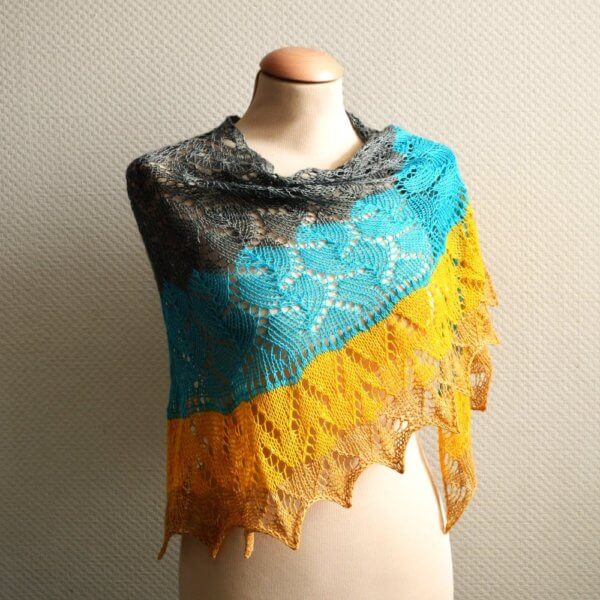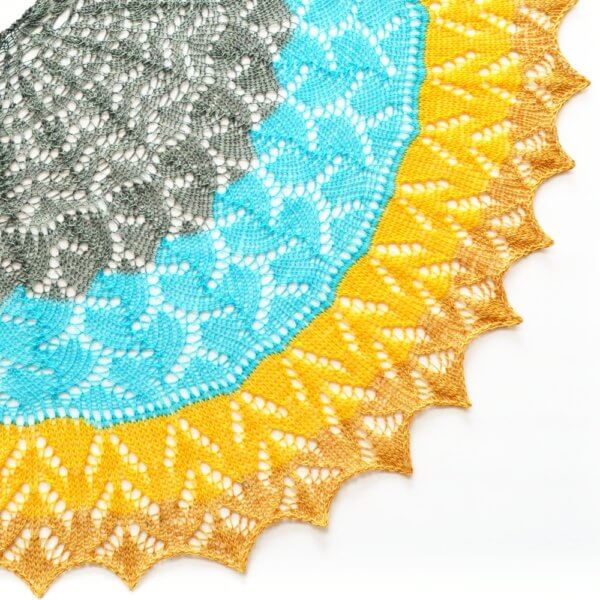
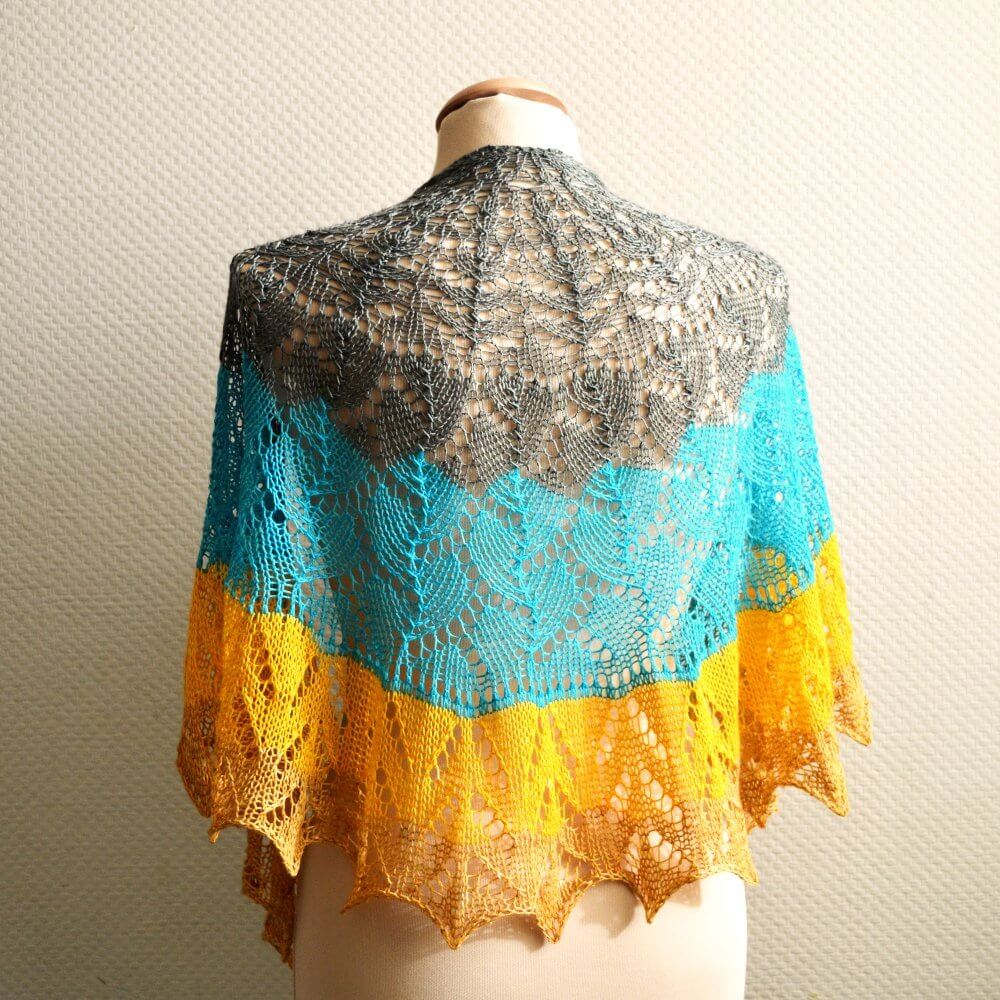
Zeezicht: a semi-circle Pi shawl, filled with sea and beach lace patterns. Inspired by the colors in the lovely Eternity Ranch sock yarn used, this design is truly eye-catching. This design will also make solid colored yarns shine!
The Zeezicht shawl is worked from the top-down and is started with a garter stitch tab. The lace is patterned on the right side only. The instructions are both charted and written out.
Pay what you want: (minimum €6.50)

€
Difficulty level
This half-circle shawl is knit from the top down, starting with a garter tab cast-on. Stitches used include knit, purl, yo, m1, skp, k2tog, as well as a double decrease. This pattern is therefor suitable for the intermediate to advanced knitter.
Size and finished measurements
One size (easily adjusted): span width of 146 cm (57 ½ inches) and a depth of 54 cm (21 ¼ inches), measured after blocking.
Pattern details
Gauge is not critical in this design. In the sample shawl: 22 sts / 25 rows = 10 cm (4 inches) over Sand Dune Lace, knitted on smaller needles and measured after blocking.
Pattern languages included: English and Dutch (Dit patroon omvat zowel een Nederlandse als een Engelse versie).
Digital PDF has 4 pages in the English version and 5 in the Dutch version (letter size).
Materials
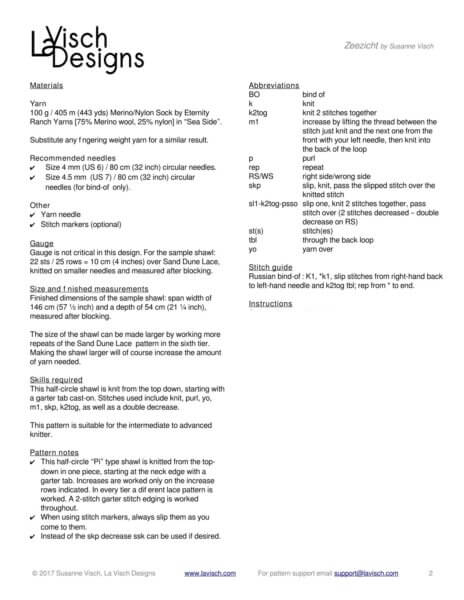
100 g / 405 m (443 yds) Merino/Nylon Sock by Eternity Ranch Yarns [75% Merino wool, 25% nylon] in “Sea Side”. Substitute any fingering weight yarn for a similar result.
Size 4 mm (US 6) / 80 cm (32 inches) circular needles.
Size 4.5 mm (US 7) / 80 cm (32 inches) circular needles (for bind-off only).
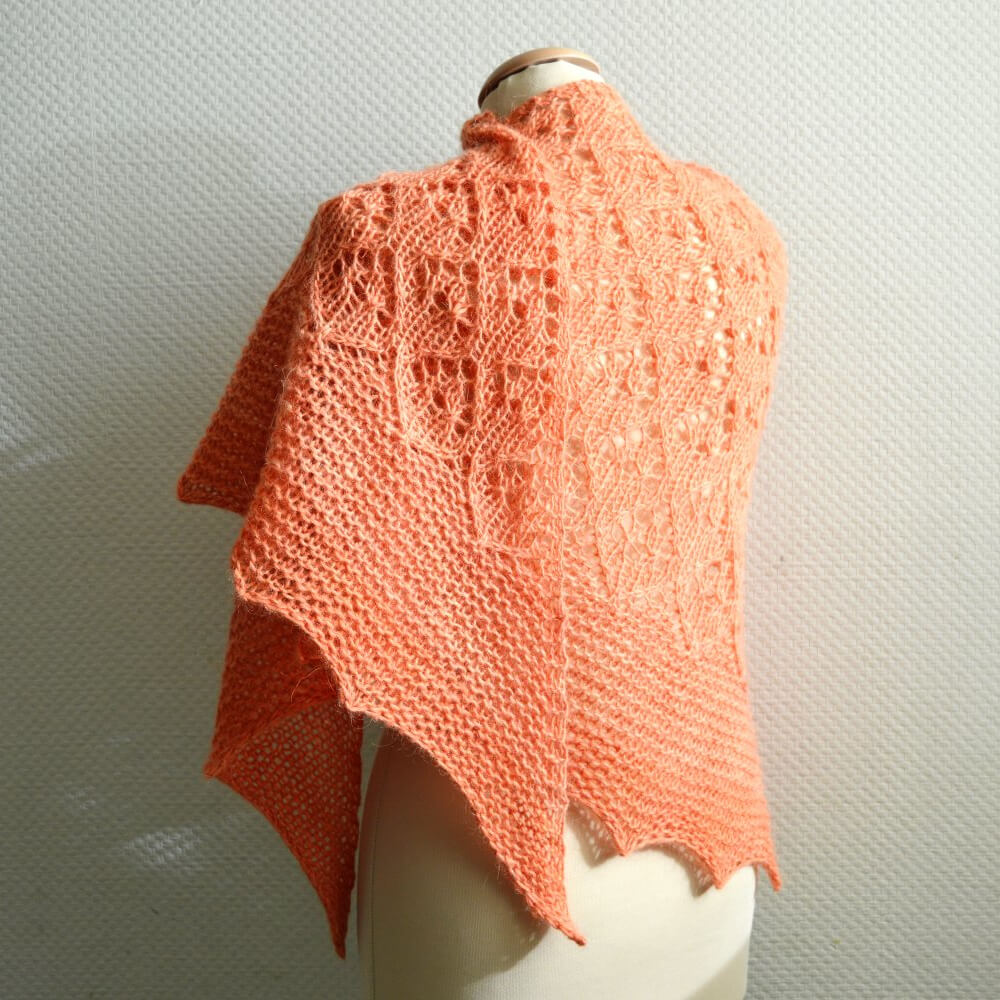
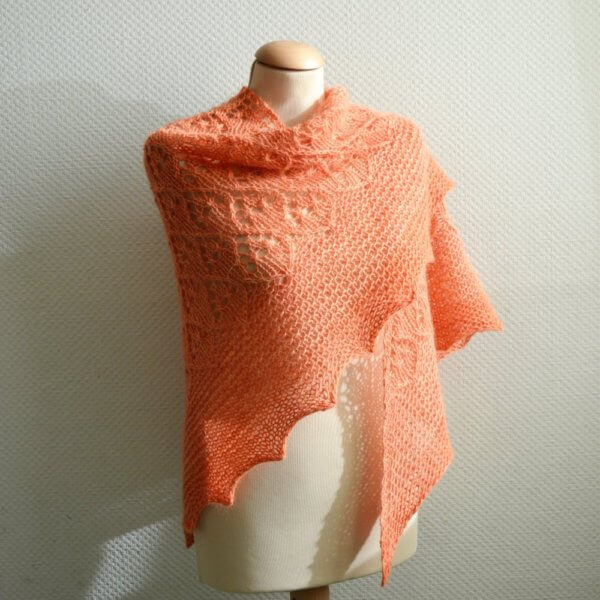
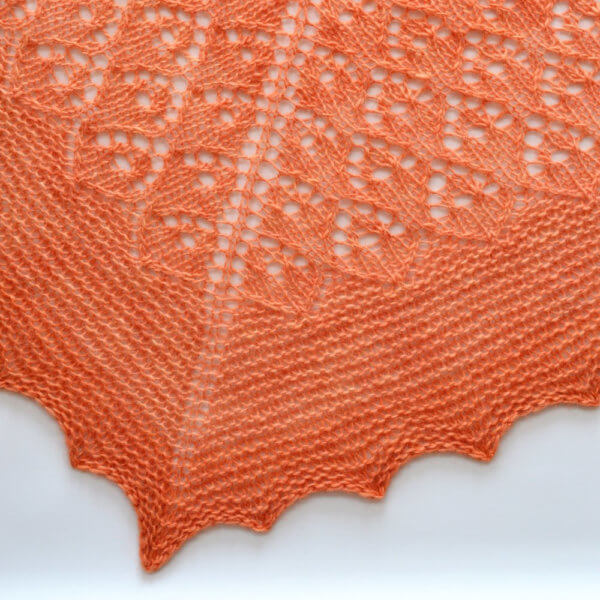
Toscane: a lovely chunky lace shawl, named after that gorgeous burned orange color so often found in the hills of Tuscany. This particular color was achieved by dyeing the Ístex Léttlopi yarn with madder. Dye your own with the tutorial or choose one of the many available colors. Toscane is a fast, top-down knit and bound to become a favorite!
Written and charted instructions are included for the lace body of the shawl.
Pay what you want: (minimum €6.50)
€
Difficulty level
This shawl is knit from the top down, starting with a garter tab cast-on. Stitches used include knit, purl, yo, k2tog, skp, double decreases, make 1 with a backward loop, as well as knitting through the back loop. This pattern is therefor suitable for the intermediate knitter.
Size and finished measurements
One size (easily adjusted): Wingspan of 177 cm (69 ½ inches) and a depth of 75 cm (29 ½ inches), measured after blocking.
Pattern details
Gauge is not critical in this design. For the sample shawl measured after blocking: 9.2 sts / 18.8 rows = 10 cm (4 inches) over lace pattern.
Pattern languages included: English and Dutch (Dit patroon omvat zowel een Nederlandse als een Engelse versie).
Digital PDF has 4 pages in the English version and 5 in the Dutch version (letter size).
Materials
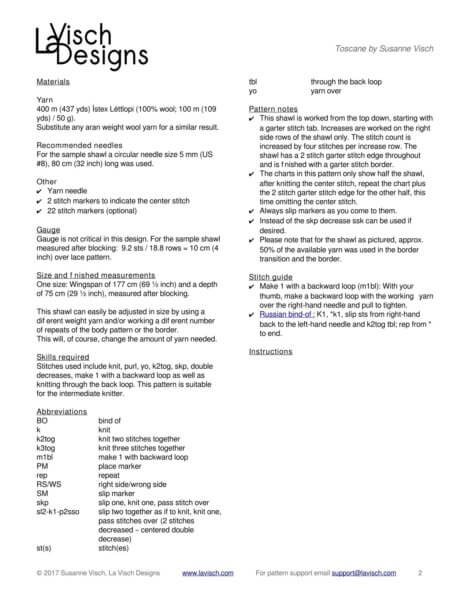
400 m (437 yds) Ístex Léttlopi (100% wool; 100 m (109 yds) / 50 g). Substitute any aran weight wool yarn for a similar result.
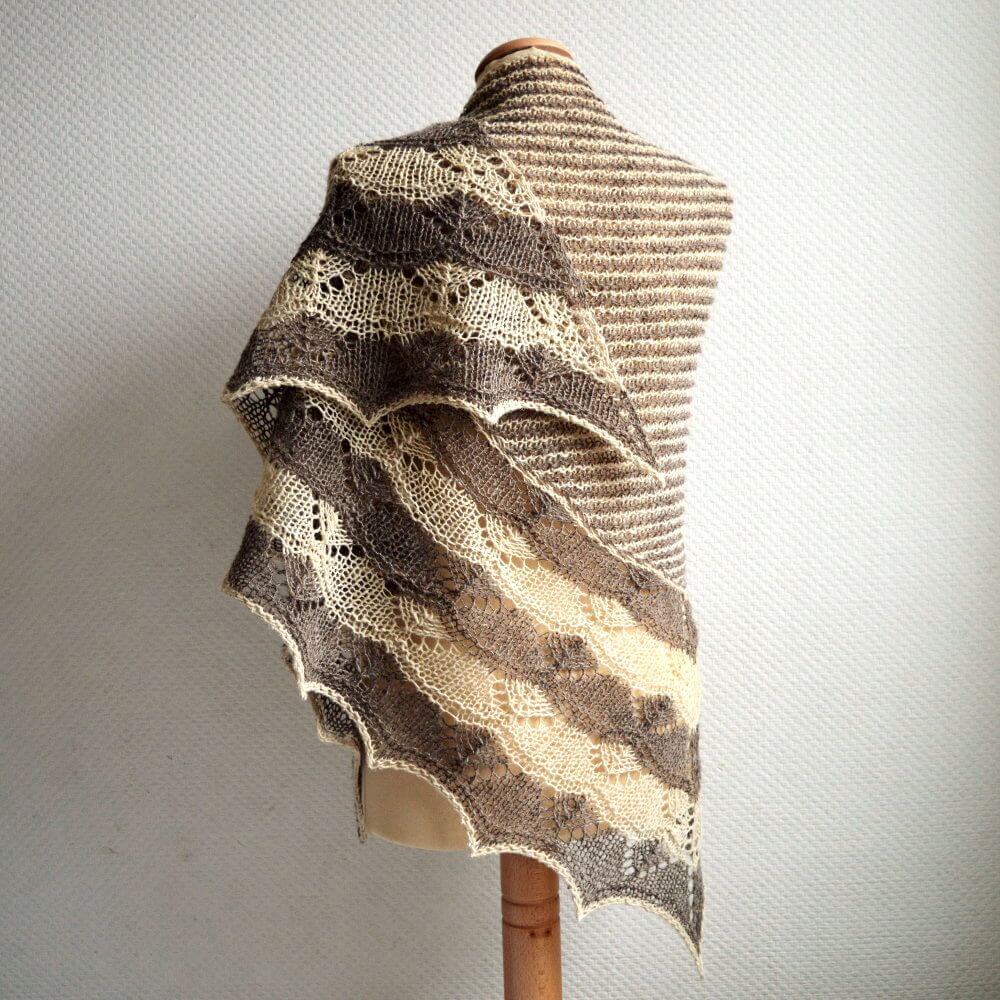
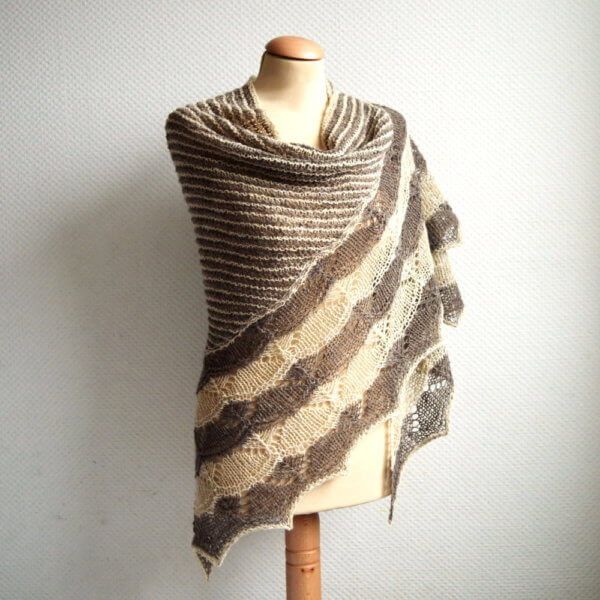
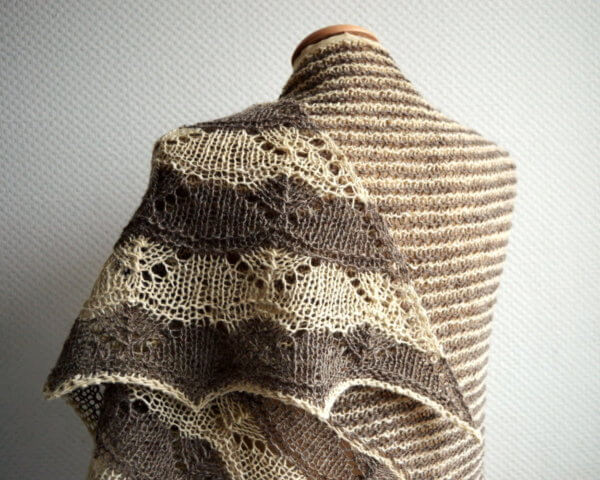
In Bichrome you find a two-color garter stitch center triangle with a stunning two-color lace edge. Made using the lovely and rustic Elena base by Moeke Yarns, Bichrome is the perfect thing to throw on when there is a bit of chill in the air. Bichrome starts at the bottom corner of the center triangle and is increased until large enough. Bind off stitches for the top of the shawl, then pick up stitches along two edges of the triangle to work the border outwards.
Written and charted instructions included for the lace border.
Pay what you want: (minimum €6.50)
€
Difficulty level
Stitches used include knit, purl, yo, kfb, skp, a double decrease as well as knitting through the back loop. This pattern is suitable for the intermediate knitter.
Size and finished measurements
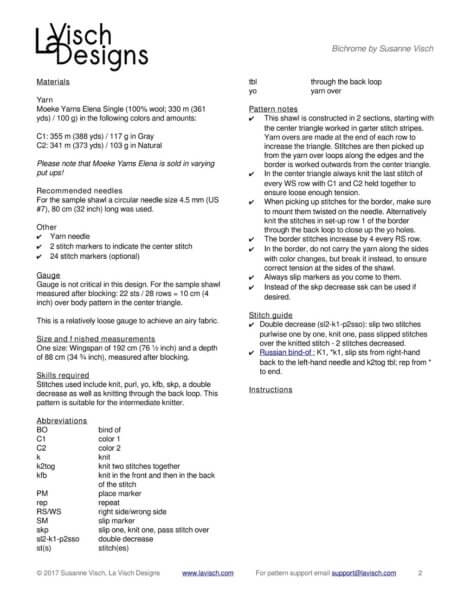
One size: Wingspan of 192 cm (76 ½ inches) and a depth of 88 cm (34 ¾ inches), measured after blocking.
Pattern details
Written for a gauge of 22 sts / 28 rows = 10 cm (4 inches) over body pattern in the center triangle after blocking. Gauge is not critical for this design, but a loose gauge is strongly advised.
Pattern languages included: English and Dutch (Dit patroon omvat zowel een Nederlandse als een Engelse versie).
Digital PDF has 4 pages (letter size).
Materials
Moeke Yarns Elena Single (100% wool; 330 m (361 yds) / 100 g) in the following colors and amounts: C1 – 355 m (388 yds) / 117 g in Gray, C2 – 341 m (373 yds) / 103 g in Natural. Please note that Moeke Yarns Elena is sold in varying put ups!
4.5 mm (US 7 / 80 cm (32 inches) circular needles.
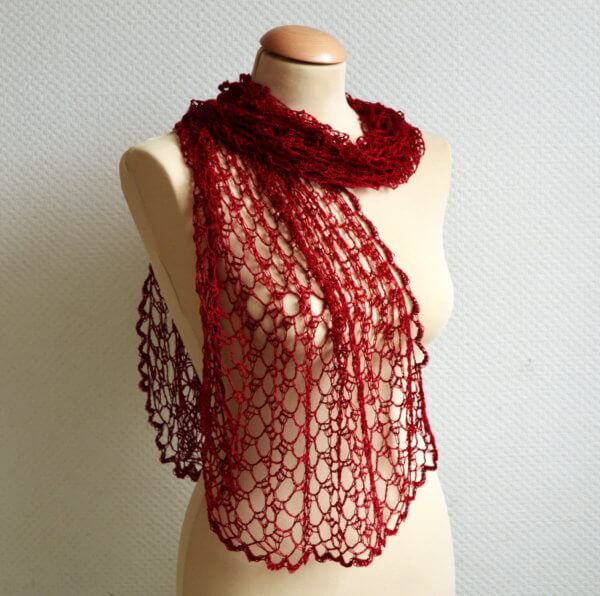
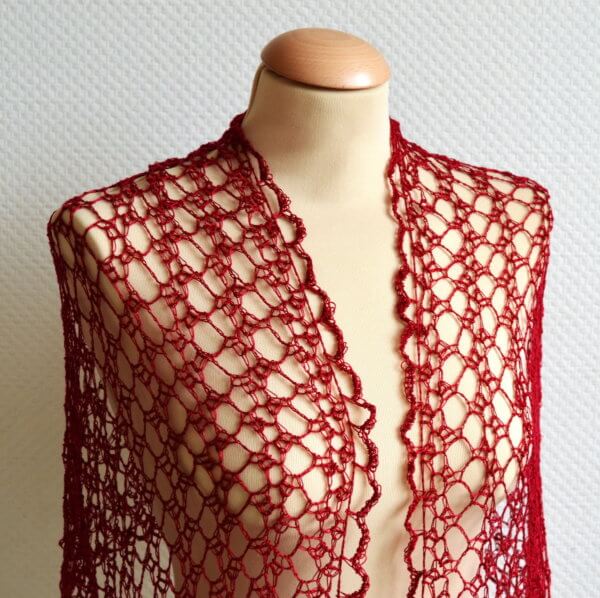
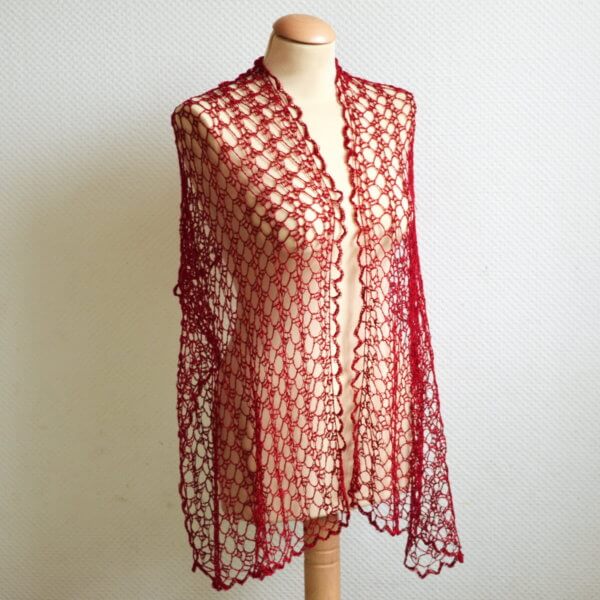
This lacy wrap is designed to give an extra bit of glamour to your outfit on that special night out. Robijn can be made as a scarf or stole, the width and length are easily adjusted for further customization This design is suitable for any drapey lace-weight or fingering-weight yarn. Robijn has also been published in issue 198 of the Dutch magazine Handwerken Zonder Grenzen! You can order this issue in Dutch here.
The body of this shawl has an easy-to-remember two-row repeat which makes it a great traveling project. The instructions are both fully charted and written out. This pattern uses standard American English crochet terminology.
Pay what you want: (minimum €6.50)
€
Difficulty level
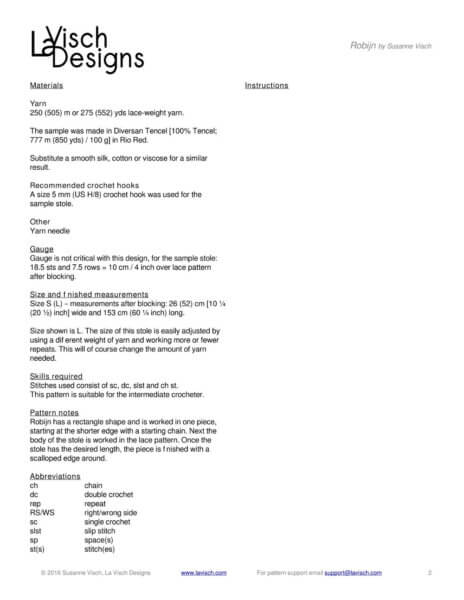
Stitches used within this pattern are of sc, dc, slst and ch st. This pattern is suitable for the intermediate crocheter.
Size and finished measurements
Size S (L) – measurements after blocking: 26 (52) cm [10 ¼ (20 ½) inches] wide and 153 cm (60 ¼ inches) long.
Pattern details
Gauge is not critical with this design, for the sample stole: 18.5 sts and 7.5 rows = 10 cm / 4 inches over lace pattern after blocking.
Pattern languages included: English and Dutch (Dit patroon omvat zowel een Nederlandse als een Engelse versie).
Digital PDF has 4 pages (letter size).
Materials
250 (505) m or 275 (552) yds lace-weight yarn. The sample is in Diversan Tencel [100% Tencel; 777 m (850 yds) / 100 g] in Rio Red. Substitute a smooth silk, cotton or viscose for a similar result.
For the sample Robijn Stole a 5 mm (US size G/8) hook was used.
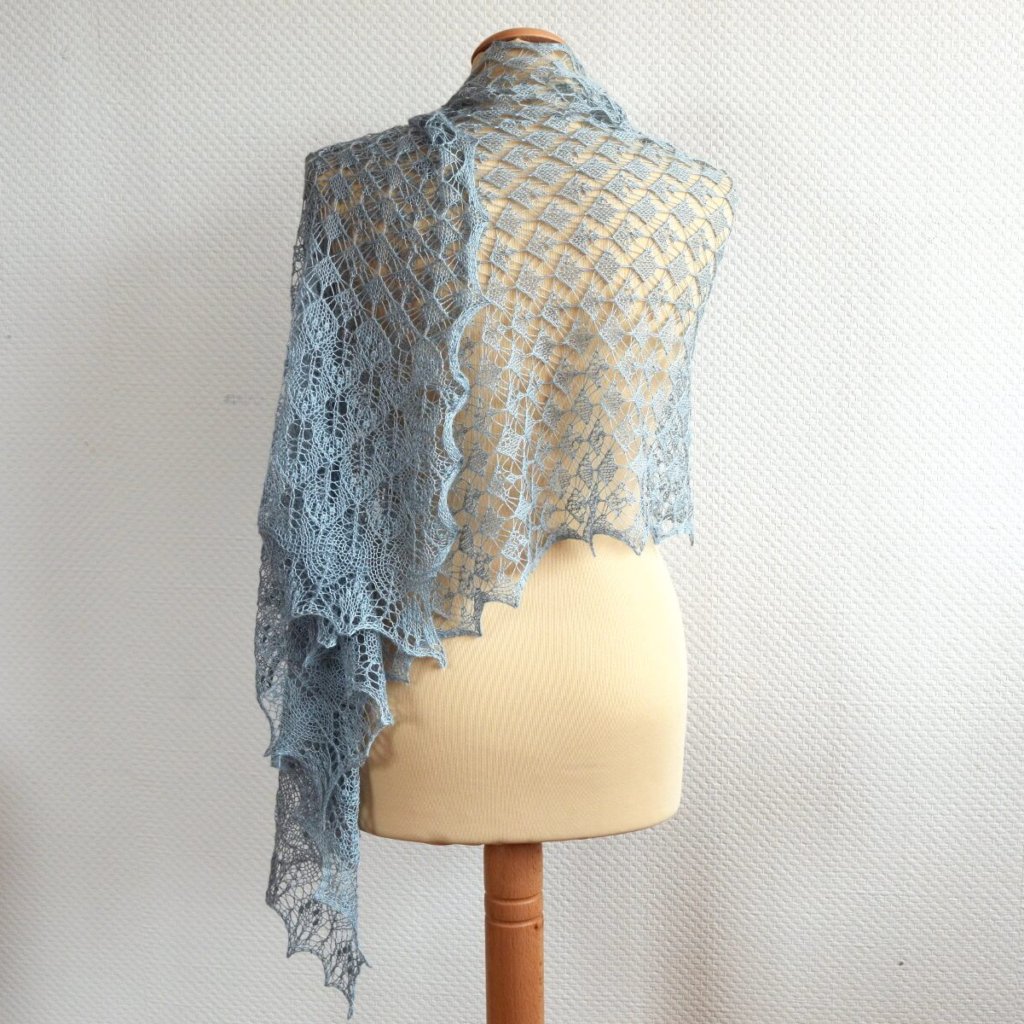
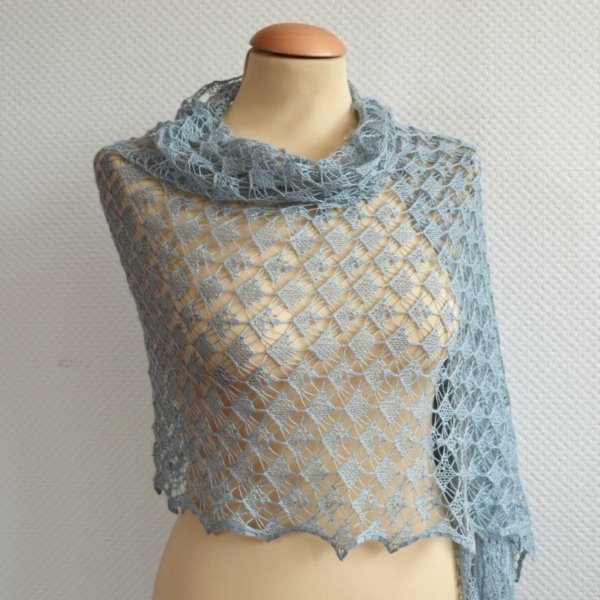
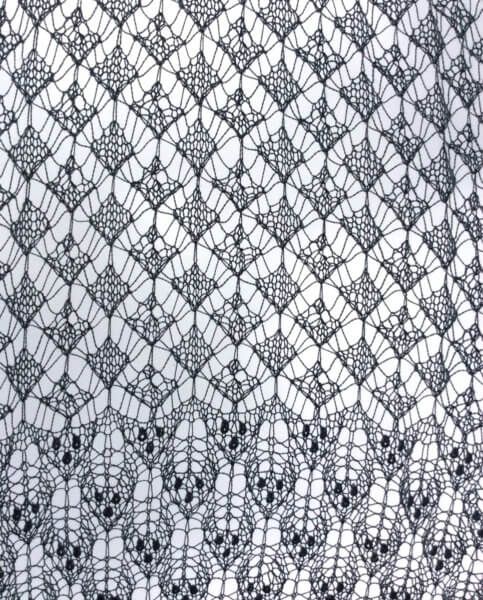
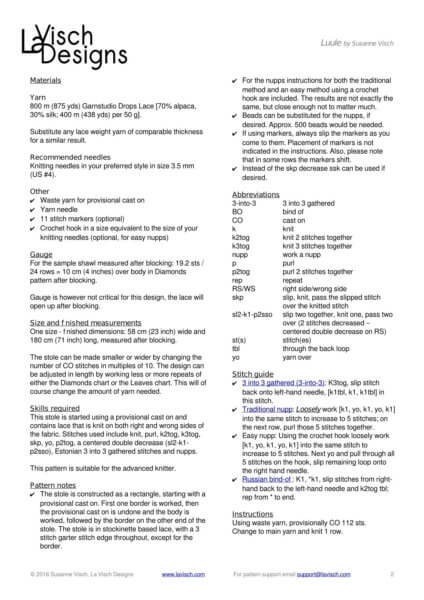
Luule means “poetry” in Estonian. The Luule stole was designed for and dedicated to my mother, because she wanted to knit pretty lace. The delicate lace is based on traditional Estonian stitch patterns, knit on both right and wrong sides of the fabric and include nupps. Instructions for both traditional and easy nupps are included.
This shawl begins with a provisional cast on followed by a lovely leaf lace edging and border. After the provisional cast on has been undone, the center is filled with diamond lace. The top edge mirrors the bottom. The instructions for the shawl are provided both fully charted and written out.
Pay what you want: (minimum €6.50)
€
Size and finished measurements
One size – finished dimensions: 58 cm (23 inches) wide and 180 cm (71 inches) long, measured after blocking.
Difficulty
This stole starts with a provisional cast on and contains lace patterning on both right and wrong sides of the fabric. Stitches used include knit, purl, k2tog, k3tog, skp, yo, p2tog, a centered double decrease (sl2-k1-p2sso), Estonian 3 into 3 gathered stitches and nupps. This pattern is suitable for the advanced knitter.
Pattern details
Worked flat back and forth.
For the sample shawl measured after blocking: 19.2 sts / 24 rows = 10 cm (4 inches) over the body in Diamonds pattern. Gauge is however not critical for this design, the lace will open up after blocking.
Pattern languages included: English and Dutch (Dit patroon omvat zowel een Nederlandse als een Engelse versie).
Digital PDF has 4 pages (letter size).
Materials
Yarn: 800 m (875 yds) Garnstudio Drops Lace [70% alpaca, 30% silk; 400 m (438 yds) per 50 g]. Substitute any lace weight yarn of comparable thickness for a similar result
Knitting needles in your preferred style in size 3.5 mm (US 4).
Yarn needle
Waste yarn for provisional cast on
11 stitch markers (optional)
Crochet hook in a size equivalent to the size of your knitting needles (optional, for easy nupps)
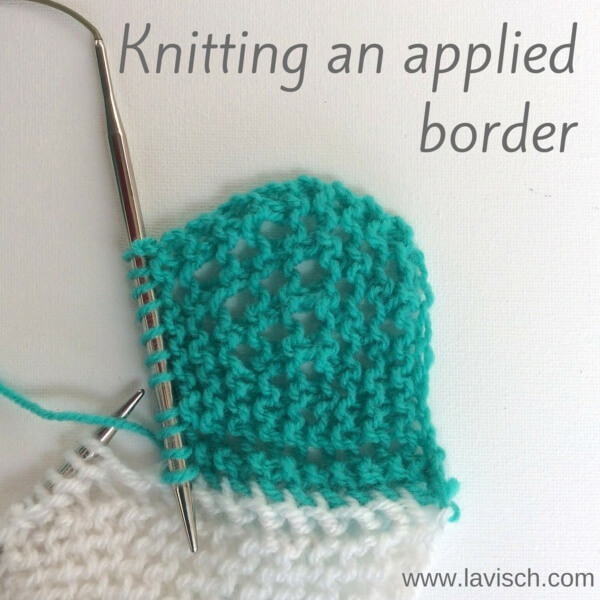
In many patterns, it is common to first knit the body of the piece followed by a lace border that is knit perpendicular to the edge of the body. Such a knitted-on border is sometimes also called an applied border. You can see this for example in the traditional Shetland shawls, but also in patterns for knitted blankets. It is also a lovely way to give the hem or cuffs of a sweater a beautiful finish.
The beauty of the knitted-on border is that it is not only very decorative but also very elastic. With a regular cast-of, the bound of edge is the limiting factor in how far you can block out your work. And as you know, lace is at its best when the patterning is opened up. When knitting on a border you won’t have a problem with a tight-ish cast-of, because there is, in fact, no cast-of!
The starting point of such a knitted edge is that the stitches of the border are knitted perpendicular to the work. The stitches of the border are connected to those of the main body by knitting or purling them together. If you knit (or purl) through the back loop, you get a more solid connection. Depending on the type of project, for example, a lacy scarf vs. a sweater, you can choose the one you prefer.
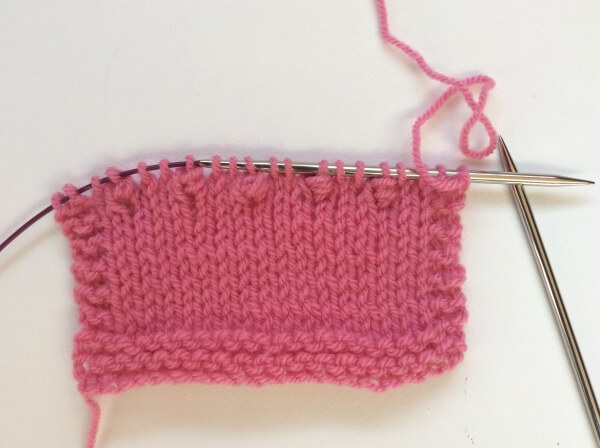
In this post, I’ll show you how to knit on an edge to your work.
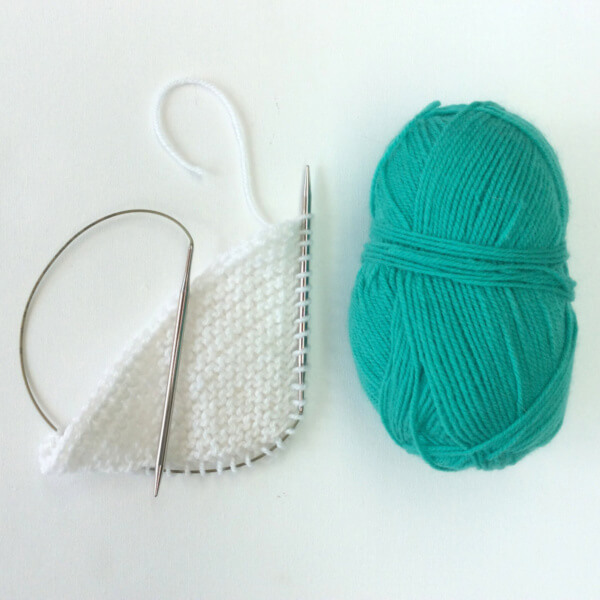
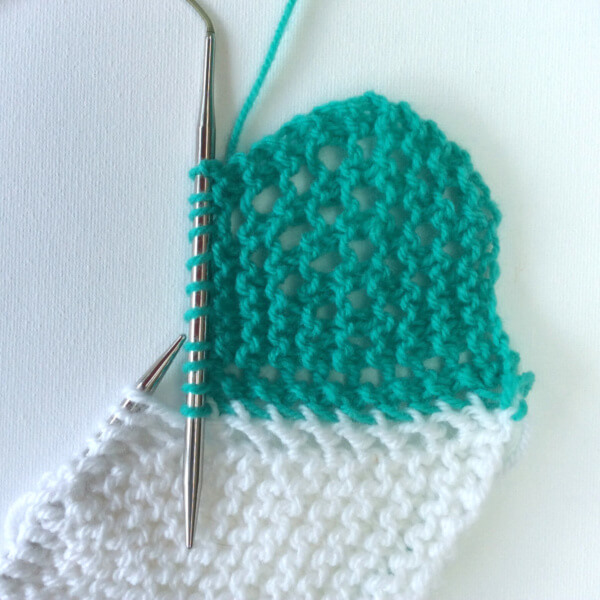
In the example in this post, I knitted a swatch in white. On this, I will knit a border in a contrasting color. If you want to make the border the same color as the main part of your project, you can, of course, continue to use the same yarn instead of attaching new yarn.
The border pattern used in this example is the “traditional scalloped lace” border that can found on page 81 of the book “The magic of Shetland Lace Knitting”. It’s written by Elizabeth Lovick.
Working a knitted-on border step by step
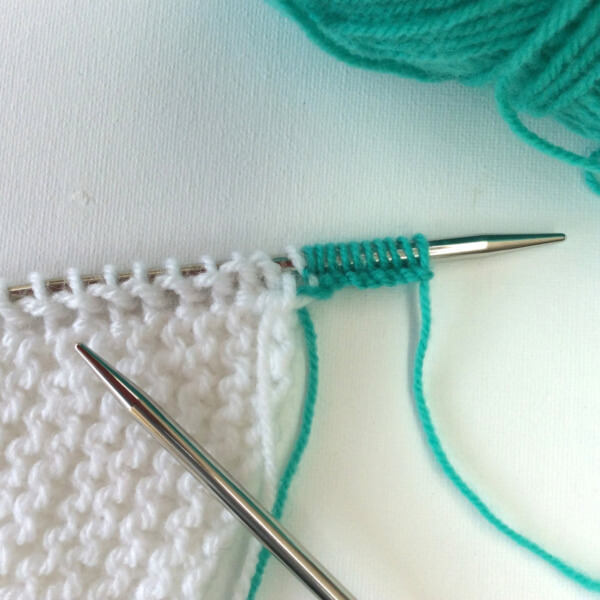
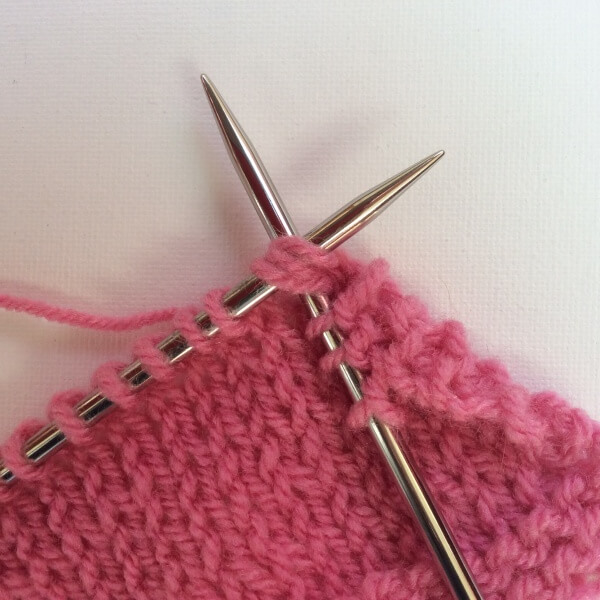
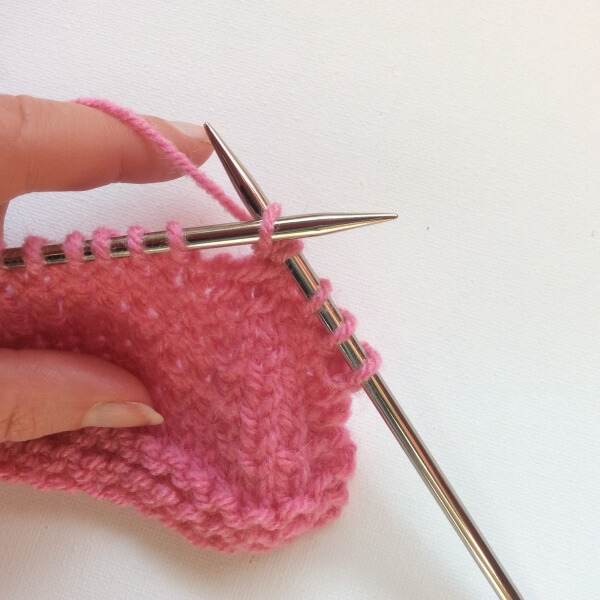
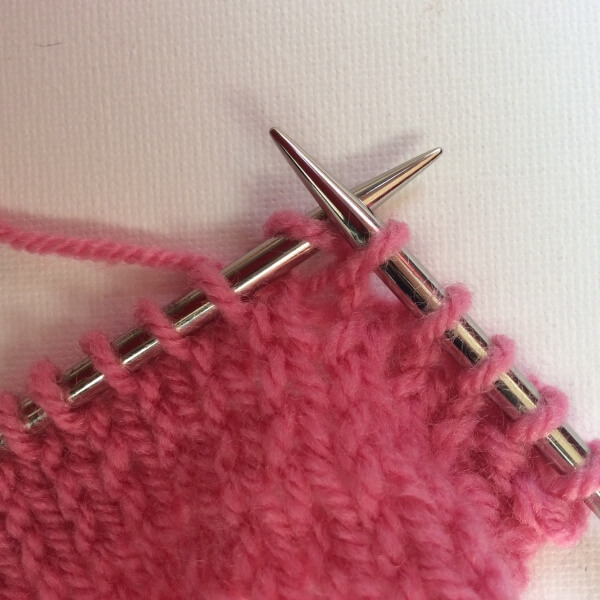
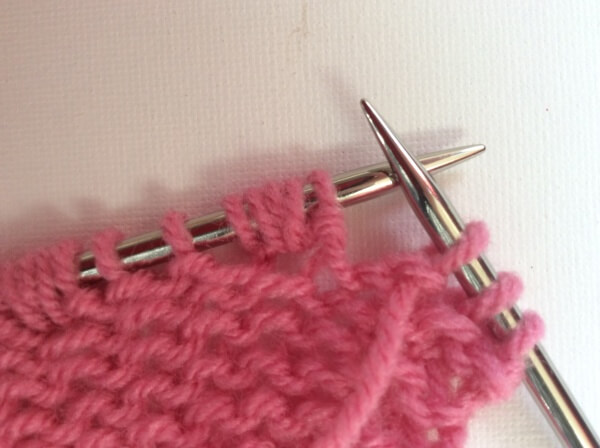
1. Start by casting on the number of stitches you need for your border, on the same needle that holds the body stitches of your project. I used the knitted-on cast-on.
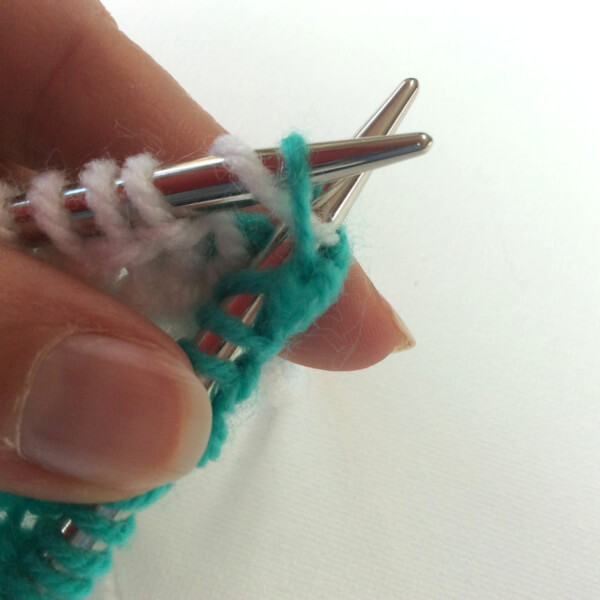
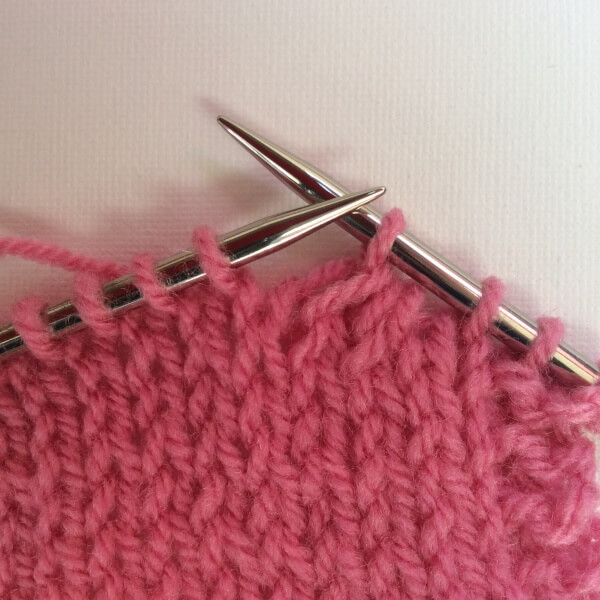
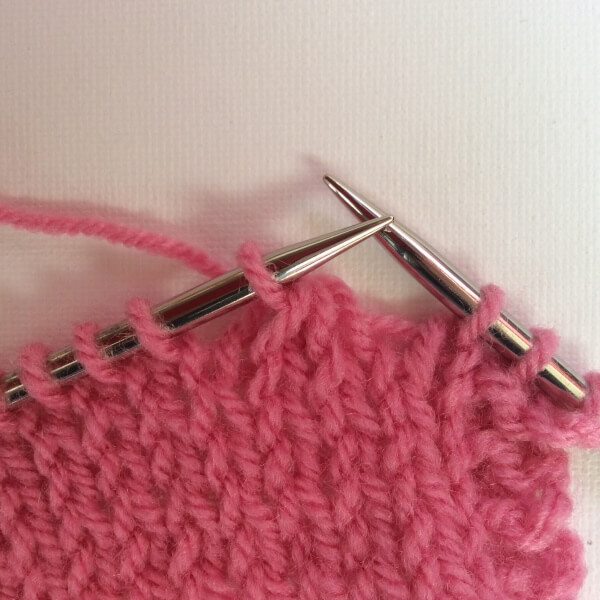
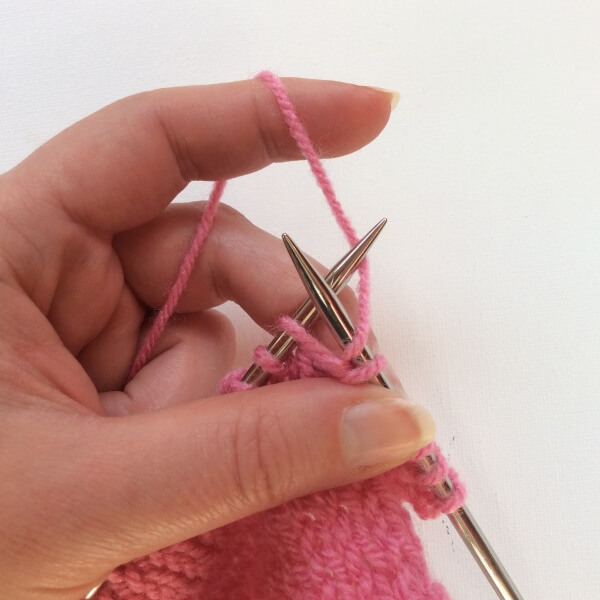
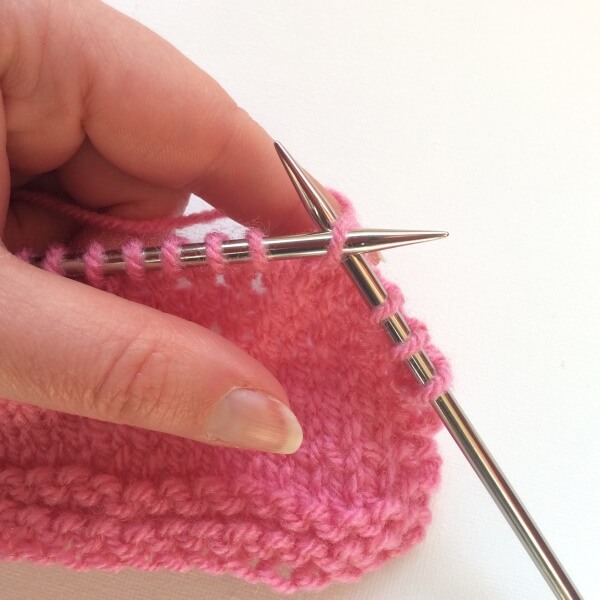
2. Now work according to the description given in the border pattern for the first row that you knit from the outside of the piece inwards, until 1 st before the end of the border stitches. Then knit the last border stitch together with the first body stitch.
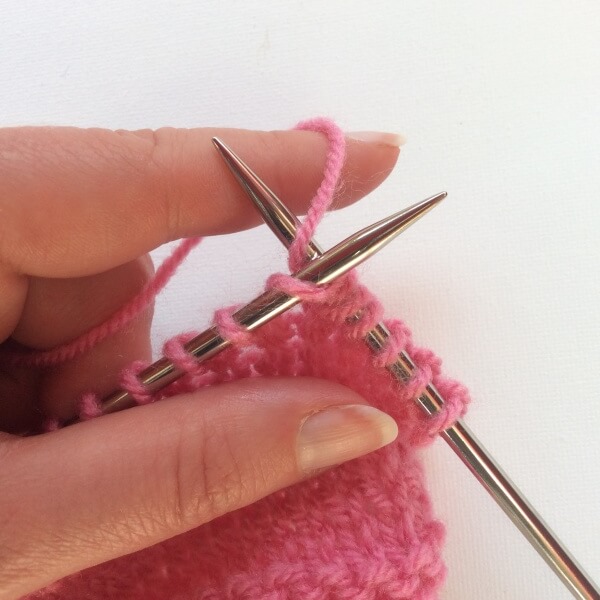
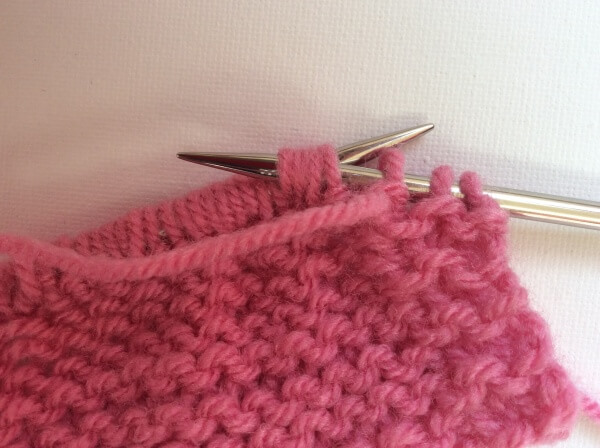
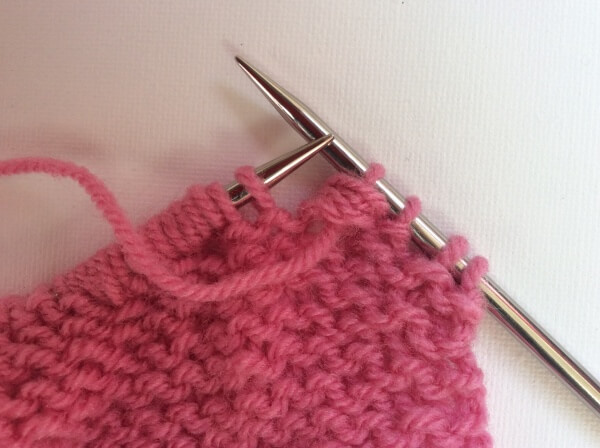
3. Turn the work. Next, slip the stitch just worked purl-wise with the yarn in front of the right-hand needle. We do this to make sure that the connection is as flat as possible. Then move the yarn to the back of the work and work the next row of the border pattern. This row is knit outwards from the body.
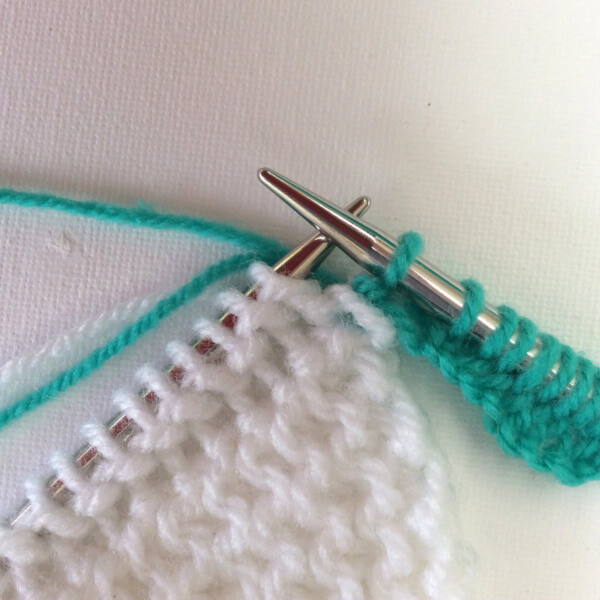
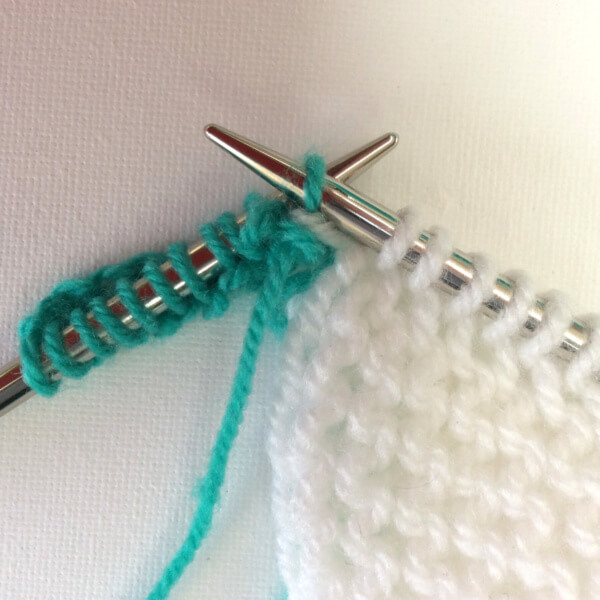
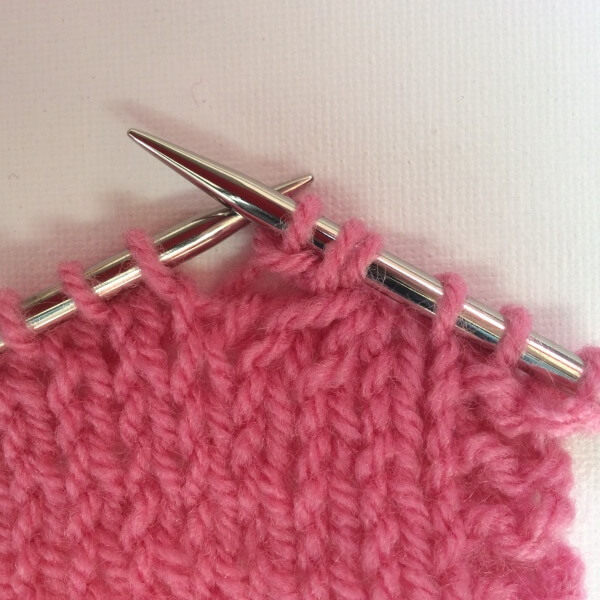
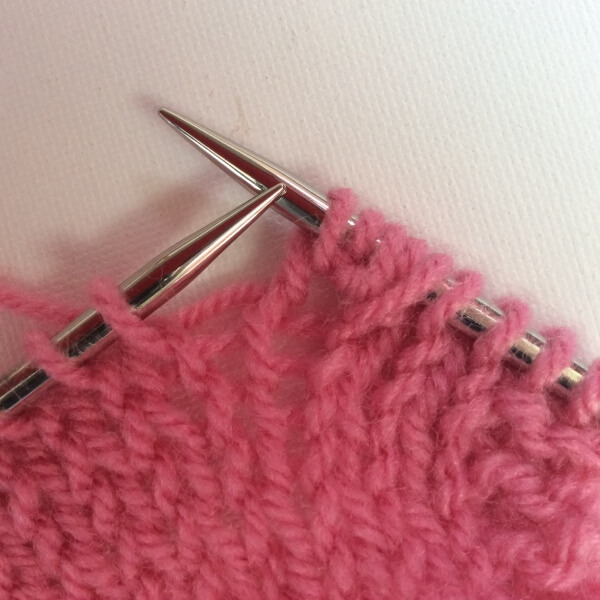
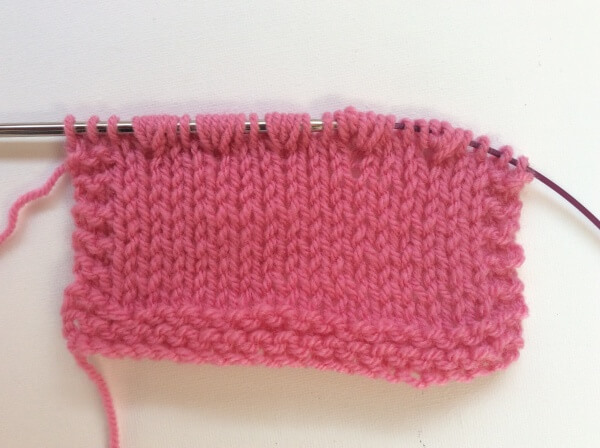
4. Repeat steps 2 and 3 until all stitches are worked. For every body stitch, you basically knit two rows of the border. On the right side of the work it will look something like this:
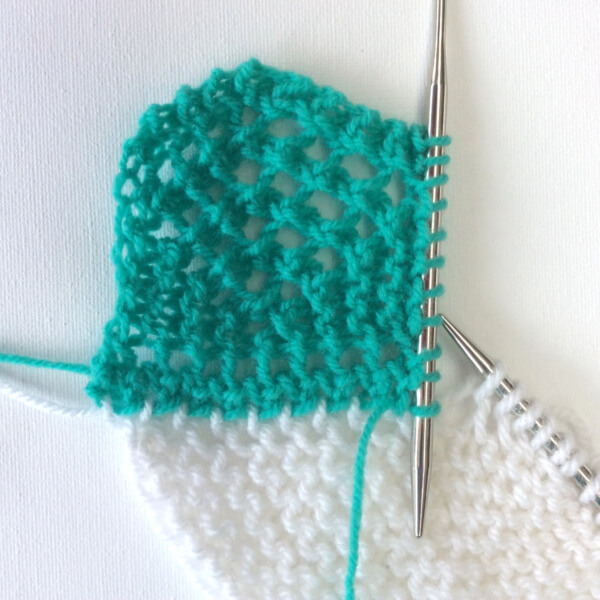
And this is the result on the wrong side of the work:
Thanks to my Patreon supporters for bringing you this freebie! Creating quality patterns and tutorials is a lot of work and resource-intensive. However, I find it important to give you free content like this tutorial. Thanks to the generous support of my Patreon supporters, I can make it happen. Thank you, patrons! Click here to join, or click here to read more about La Visch Designs on Patreon.
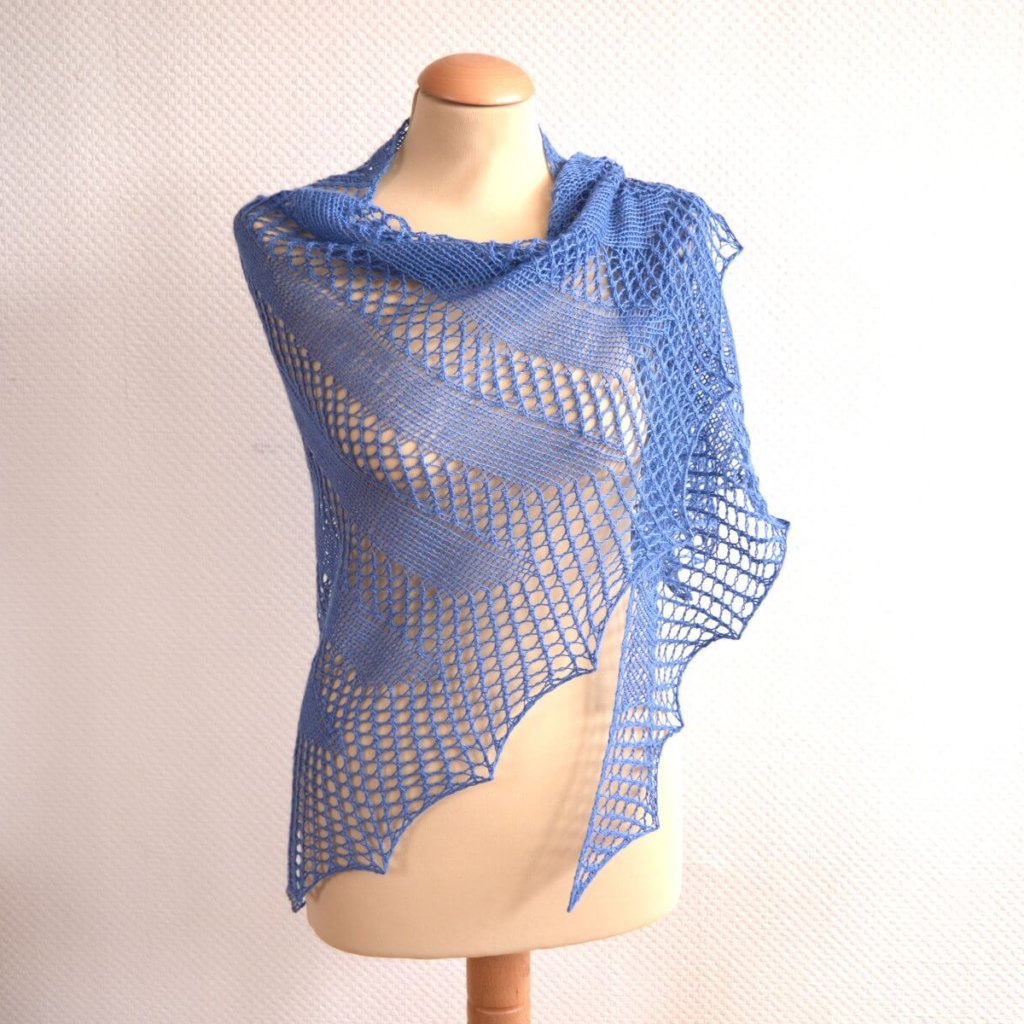
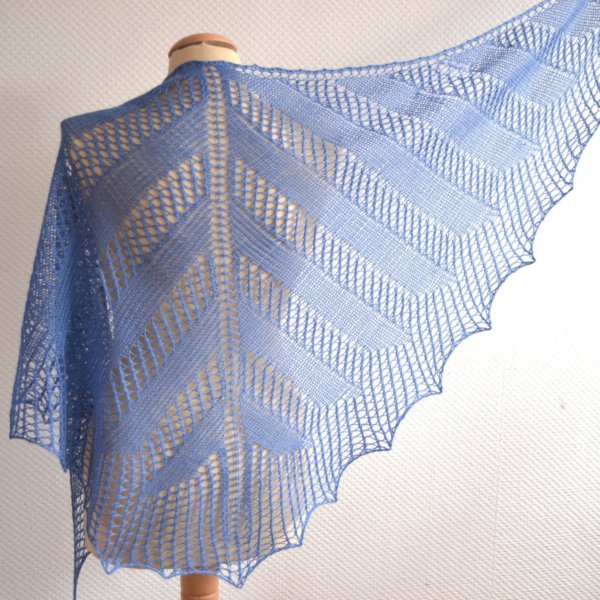
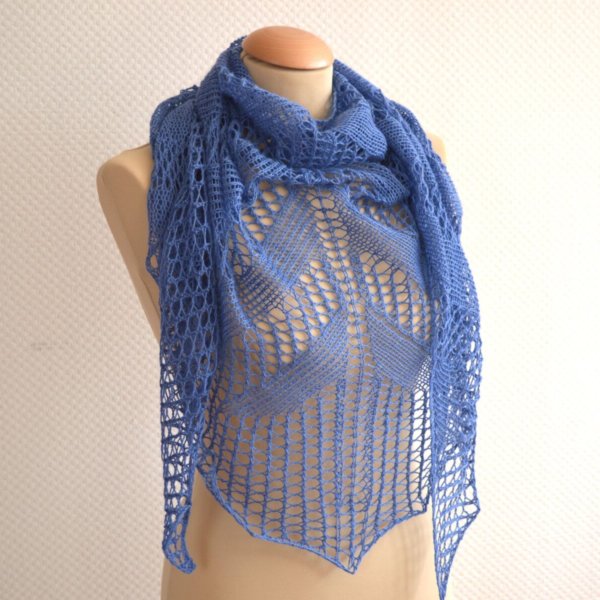
Linea is an airy lace shawl with a simple and appealing play on lines and differences in lacy texture. Using mainly yarn overs and right- and left-leaning decreases, Linea looks much more complex than it actually is to knit. The perfect choice for a first lace shawl project!
This shawl is knitted from the top-down in one piece, starting at the neck edge with a garter tab. The instructions for the body and the border of the shawl are provided both fully charted and written out.
Pay what you want: (minimum €6.50)
€
Size and finished measurements
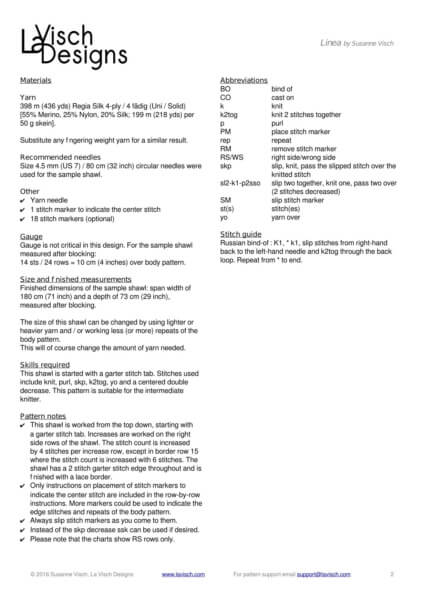
Finished dimensions of the sample shawl: span width of 180 cm (71 inches) and a depth of 73 cm (29 inches), measured after blocking.
Gauge is not critical in this design. For the sample shawl measured after blocking: 14 sts / 24 rows = 10 cm (4 inches) over body pattern.
Pattern languages included: English and Dutch (Dit patroon omvat zowel een Nederlandse als een Engelse versie).
Digital PDF has 4 pages for the English version and 5 pages for the Dutch version (A4 size).
Materials
Yarn: 398 m (436 yds) Regia Silk 4-ply / 4 fädig (Uni / Solid) [55% Merino, 25% Nylon, 20% Silk; 199 m (218 yds) per 50 g skein]. Substitute any fingering weight yarn for a similar result.
Size 4.5 mm (US 7) / 80 cm (32 inches) circular needles.
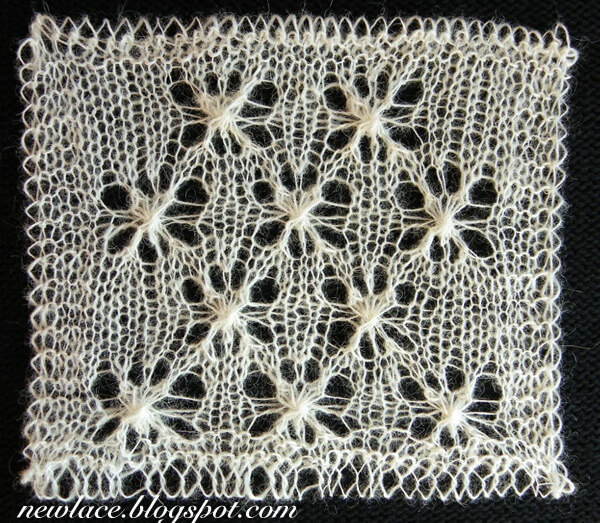
In a previous post I told you about nupps, that special textured stitch that originated in Estonia. Another distinguishing Estonian feature in lace knitting, is called a “gather”. These gathers are clearly visible in the photo pictured below.
This photo is from a very interesting website: New lace – Old traditions. On this website the authors focus on modern lace knitting in the Estonian tradition, building on and inspired by the famous Haapsalu shawls. Definitely a must-read for lovers of lace knitting, also due to the many free stitch patterns that can be found there.
What exactly are “gathers”?
Gathers are made by knitting a certain number of stitches together (“gathering” them), after which they are increased. The resulting number of stitches may be the same as the original number, for example, “2-in-2”, “3-in-3”, “5-in-5”, “7-in-7”, etc. It is however also possible to increase to a different number of stitches, the end up with more (or less) stitches. For example “5-in-7” or “3-in-5”. The result consists of small lacy textured buttons in the knitted fabric.
In this post I want to show you how to knit gathers.
Knitting gathers
In this example, I will be making “3 in 3” gathers on a surface of stockinette stitch. I’m using a relatively thick yarn, because it is easier to photograph than lace yarn.
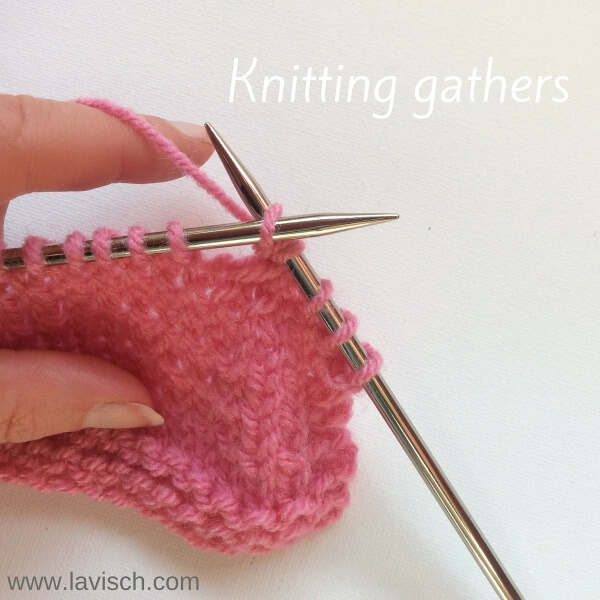
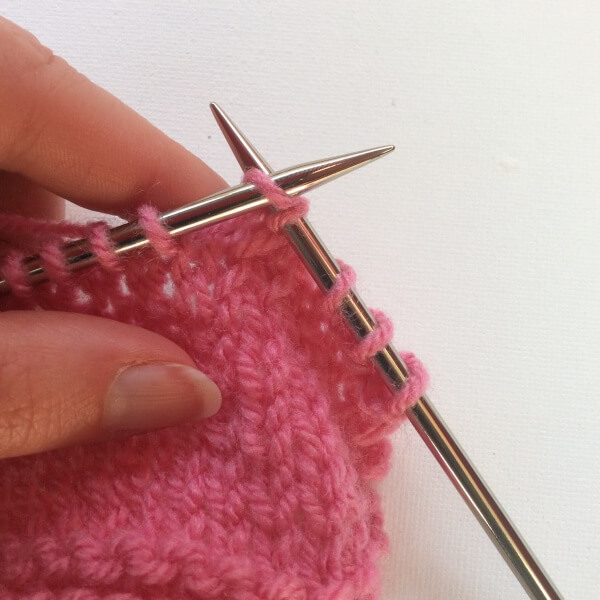
A 3-in-3 gather is made by knitting 3 stitches together, then slipping the newly knitted stitch back to the left hand needle and knitting [ktbl 1, k1, ktbl 1] in the same stitch.
Gathers step by step 1. Knit 3 stitches together.
2. Slip the last knitted stitch back to the left hand needle.
3. Knit 1 stitch through the back loop, but do not slip the original stitch off the needle.
4. Knit one stitch (insert the needle as usual in the front loop), but again do not slip the original stitch off the needle.
5. Knit 1 stitch through the back loop and slip the original stitch off the needle to complete the stitch.
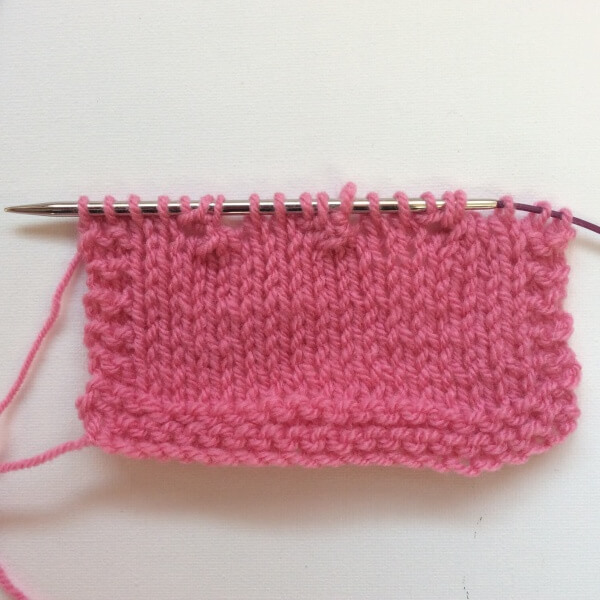
6. This looks something like this:
7. For this example, I knitted three 3-in-3 gathers in the same row:
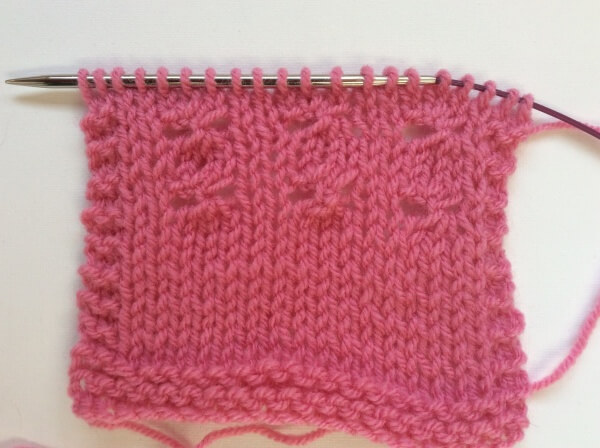
8. And this is how it looks after I knitted 2 more rows in stockinette as well as another round with three 3-in-3 gathers:
Of course the gathers look very different on a stockinette base and with this thick wool than in lace weight yarn.
Thanks to my Patreon supporters for bringing you this freebie! Creating quality patterns and tutorials is a lot of work and resource-intensive. However, I find it important to give you free content like this tutorial. Thanks to the generous support of my Patreon supporters, I can make it happen. Thank you, patrons! Click here to join, or click here to read more about La Visch Designs on Patreon.
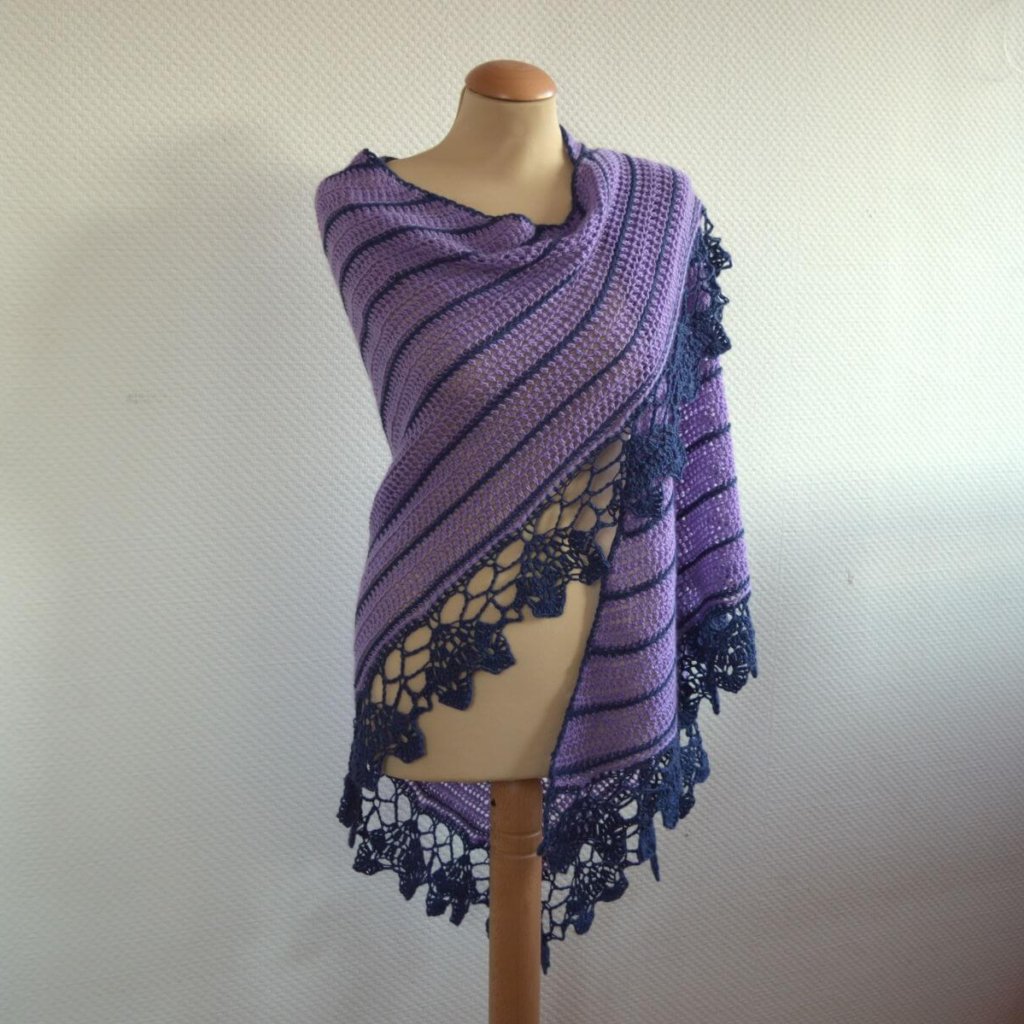
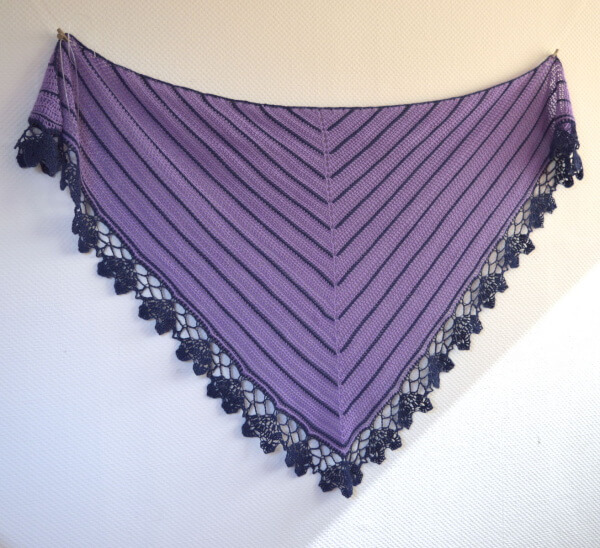
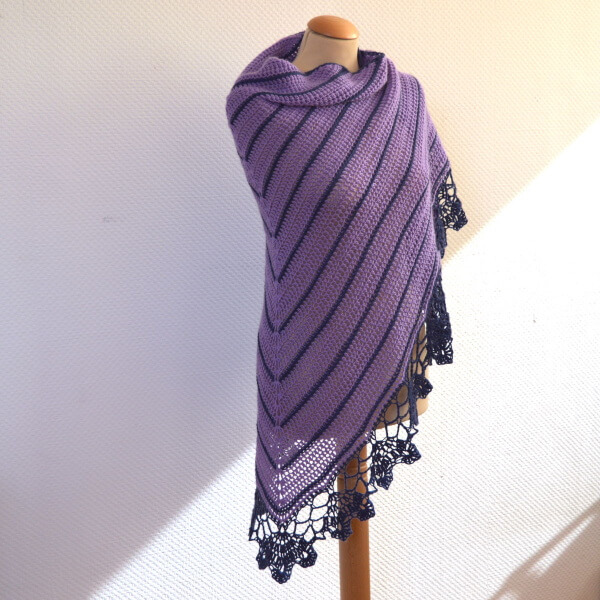
The Sedum Shawl is a lovely two-tone shawl with a striped body and delicate contrasting lace edging. Make it in the small size for a sweet kerchief or in one of the three larger sizes for a lovely elegant and warm cover-up.
This shawl is worked from the top-down in one piece, starting at the neck edge. The instructions for the border of the shawl are provided both fully charted and written out.
This pattern is written in American English crochet terminology.
Pay what you want: (minimum €6.50)
€
Size and finished measurements
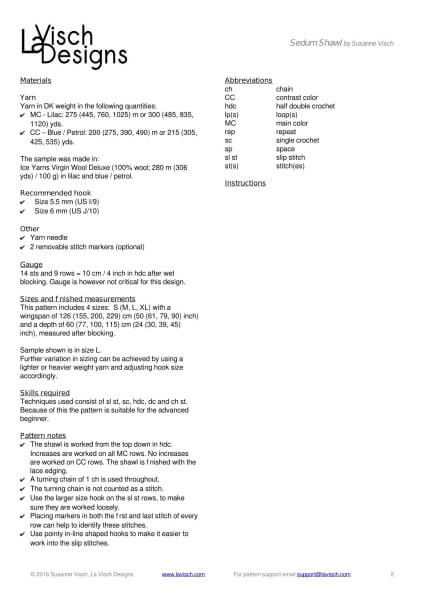
This pattern includes 4 sizes: S (M, L, XL) with a wingspan of 126 (155, 200, 229) cm (50 (61, 79, 90) inches) and a depth of 60 (77, 100, 115) cm (24 (30, 39, 45) inches), measured after blocking. The shawl pictured is in size L.
Difficulty
Techniques used in The Sedum Shawl consist of sl st, sc, hdc, dc and ch st. Because of this the pattern is suitable for the advanced beginner.
Pattern details
Worked flat back and forth.
Gauge is not critical in this design. For the sample shawl: 14 sts / 9 rows = 10 cm (4 inches) over hdc, measured after blocking.
Pattern languages included: English and Dutch (Dit patroon omvat zowel een Nederlandse als een Engelse versie).
Digital PDF has 3 pages (letter size).
Materials
Yarn: Used in the sample: Ice Yarns Virgin Wool Deluxe (100% wool; 280 m (306 yds) / 100 g) in lilac and blue / petrol. Use yarn in DK weight in the following quantities:
MC – Lilac: 275 (445, 760, 1025) m or 300 (485, 835, 1120) yds.
CC – Blue / Petrol: 200 (275, 390, 490) m or 215 (305, 425, 535) yds. Used in the sample: Ice Yarns Virgin Wool Deluxe (100% wool; 280 m (306 yds) / 100 g) in lilac and blue / petrol.
Size 5.5 mm (US I/9) and size 6 mm (US J/10) crochet hooks.
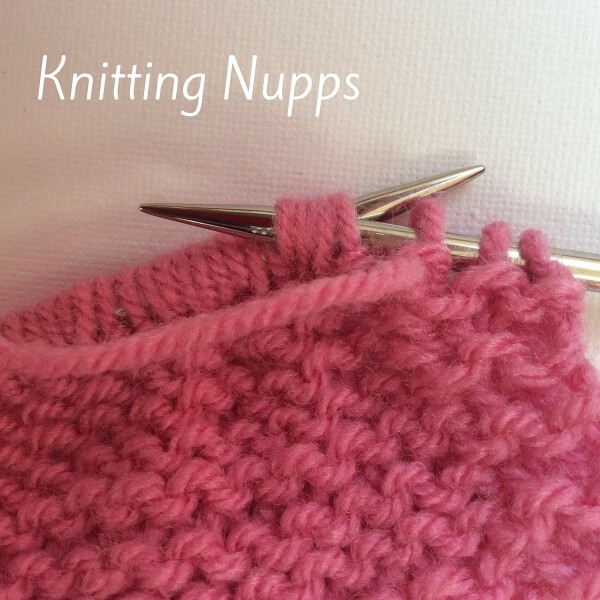
Maybe you are already familiar with them: Those funny little buttons that give beautiful lace shawls texture. Take for example the beautiful Luule shawl pictured below. A nupp (rhymes with “soup”) is a characteristic of lace as traditionally knit in Estonia.
The special thing of Estonian lace knitting is that besides the openwork it also contains a lot of texture. As a result, in lace knitting in the Estonian tradition there are many stitches that you will probably encounter (almost) nowhere else.
History of lace knitting in Estonia
The tradition of knitting lace shawls in Estonia, began about 200 years ago in the city Haapsalu. From the early 18th century until about 1918 Haapsalu was a popular destination for Russian tourists. To benefit from this tourism the women of Haapsula started selling their knitted lace shawls.
The story goes that these shawls were sold by weight. And because nupps consume a lot of yarn, a pattern with many nupps increase the weight of the resulting shawl considerably. This is the reason that the characteristic Estonian lace patterns have been devised in such a way that they combine the so popular delicate appearance as well as many nupps.
In this post I want to show you how to knit nupps.
Knitting nupps step by step
Knitting nupps is actually a 2-step process: first stitches are increased and in the following wrong side row all these stitches are decreased back to 1 stitch by purling them all together.
1 . To start knit 1 stitch, leaving the original stitch on the left hand needle. Make sure to knit loosely.
2. Make a yarn over on the right hand needle.
3. Again knit 1 stitch loosely, leaving the original stitch on the left hand needle.
4. Repeat steps 2 and 3 once more (for a five-stitch nupp), and then slip the original stitch of the left hand needle. You know have 5 stitches where there originally only was 1. The result will look something like this:
5. For this example, I set up several nupps in the same row:
6. On the following wrong side row the nupps will be completed. The clusters of five stitches look like this from the wrong side of the fabric:
7. Insert your needle in all five stitches at the same time to purl them together. This works best if you have made the new stitches for the nupps loosely and when using sharp knitting needles.
8. Once purled together it looks like this:
And this is how it looks on the right side of the work:
When knit in a thin yarn nupps will of course look very different from the ones in the worsted weight yarn I used for this tutorial. Depending on the effect you want to achieve you can make 5-stitch, 7-stitch or even 9-stitch nupps. Just repeat steps 2 and 3 as desired.
And don’t forget:
Knit loosely.
Use sharp needles.
Use a crochet hook to purl the nupps stitches together if you have to.
Don’t sweat it if they don’t turn out the way you want at first: it is only yarn!