shawl

blocking a triangle shawl
Blocking a triangle shawl

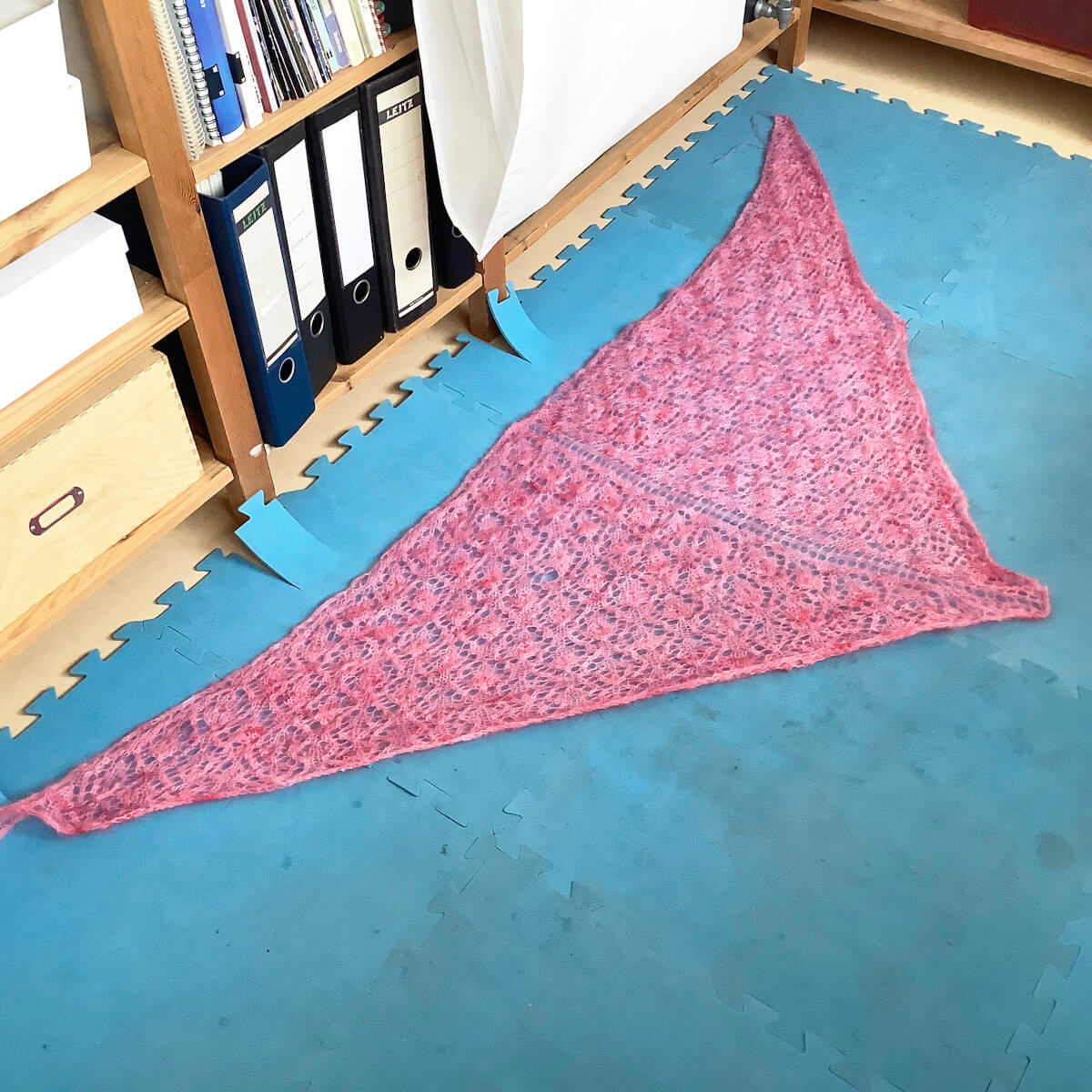
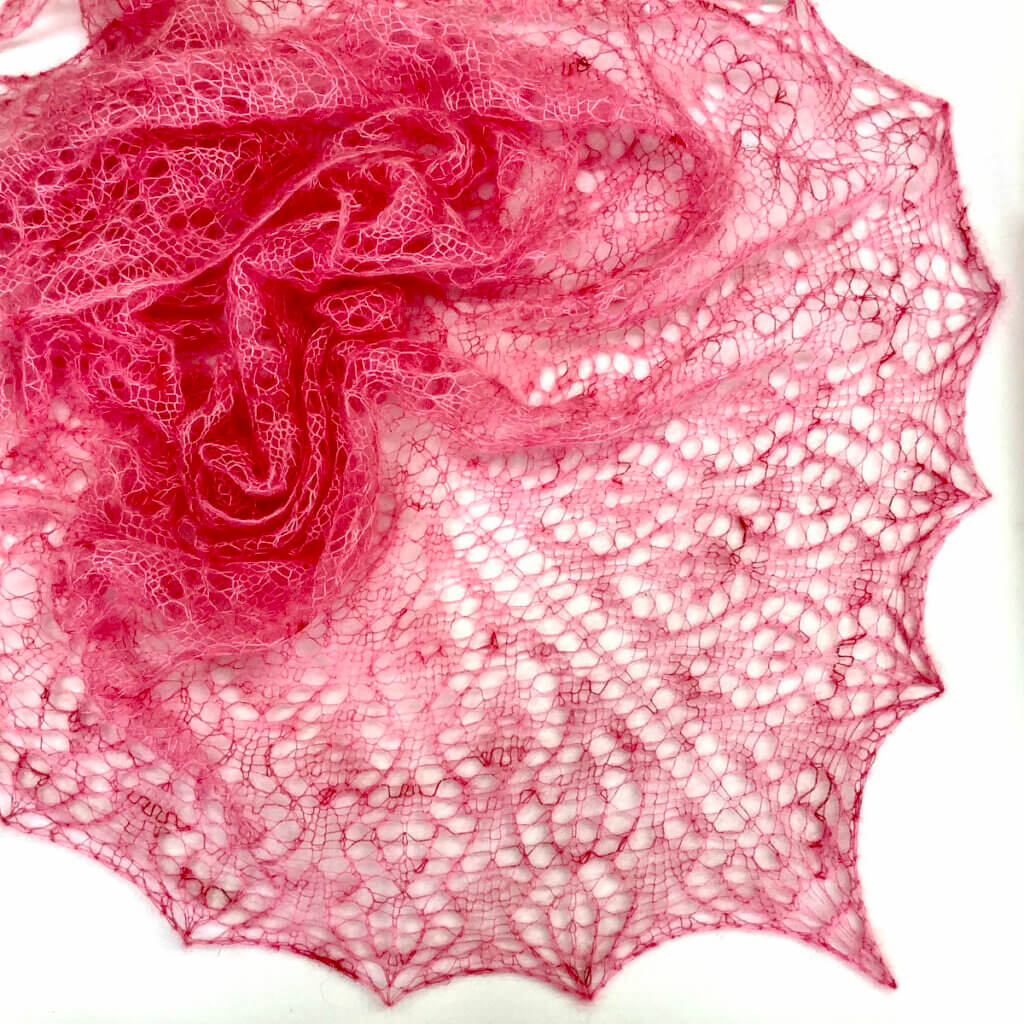
The top-down triangle must be the shawl shape I knit most often. So, it would be good to share with you how I go about blocking this type of triangle shawl. In this tutorial, I will be showing you how I blocked my Strawberry Finch. This one has all-over lace patterning, pulled into points at the bottom edge into points during blocking. In the below picture you can this shawl before blocking.
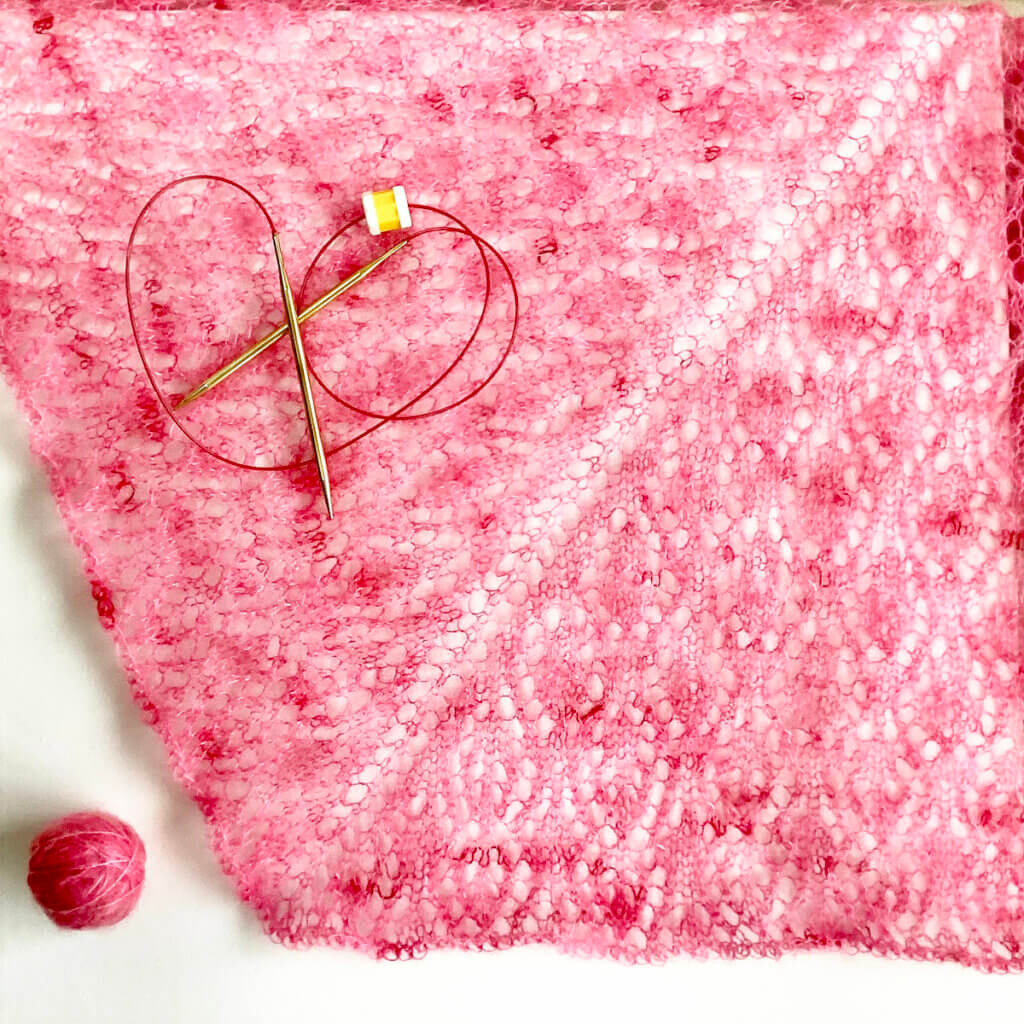
starwberry Finch shawl before blocking

What is blocking?

Before we go into details, it’s good to get clear what I mean exactly with “blocking”. Blocking is nothing more than shaping your knit or crochet pieces when moist or wet. Think of finished items or components to sew together afterwards. By blocking them, you can not only even out stitches, but also bring the item to the intended dimensions. The latter of course within reason!

For a sweater or sweater components blocking usually is nothing more than washing the item(s) and patting them gently into shape. Lace shawls, on the other hand, benefit from a rather vigorous blocking by pinning it stretched out as much as possible. After the piece has dried, it will hold its shape until the next washing.

Please note, that not all fibers are suited for the magic of blocking. Only natural fibers like wool, alpaca, cotton etc. as well as some viscose fibers can be blocked in the sense that the dimensions can be adjusted. On synthetics, like acrylic, the process of wet-blocking as described in this post has virtually no effect at all, besides evening out the stitches. Acrylics can be blocked (“killed”) by applying heat through steam blocking or ironing, but that’s an entirely different process.
Blocking an asymmetrical shawl - a tutorial by La Visch Designs

Materials needed

Since the subject of this post is the blocking of a lace triangle shawl, I go for a vigorous blocking using pins. I use the following materials:

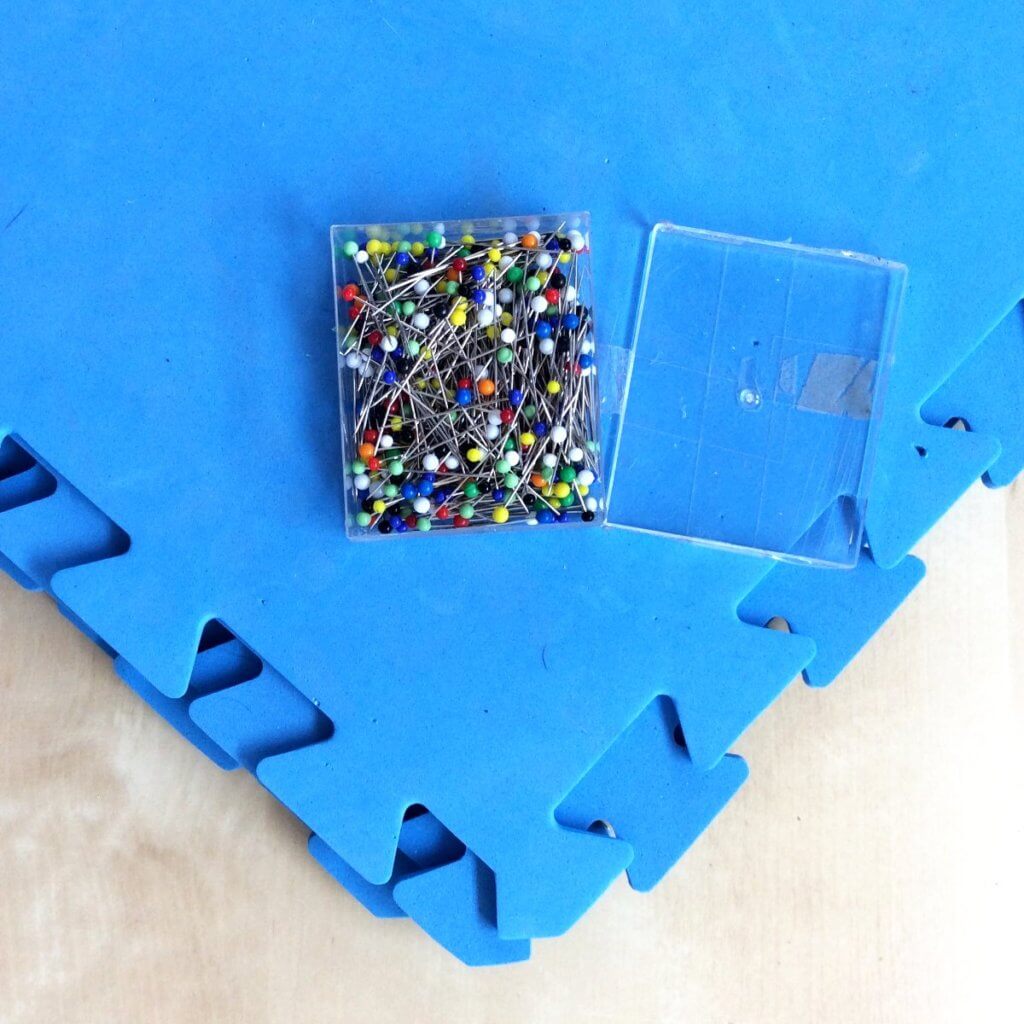
  • Blocking mats, these are usually foam mats that hold pins well. Think for example of insulation mats, mats for yoga or play tiles for children.
  • Pins, I use regular pins, but other folks sometimes prefer stainless steel T pins.
  • Wool wash.
  • A towel large enough to comfortably hold your project.

Preparations

Before we can start with the actual blocking, we have to do some preparations. These mainly consist of giving your shawl a wash, since the FO must be a tad moist for the best blocking results. For completenes’s sake below how I go about it. If you’d like pictures of these steps, please visit the tutorial on blocking an asymmetrical shawl.

  1. First I fill the sink with some lukewarm to warm water and add a dash of wool wash. Put the shawl into the water and let it rest for about 10-15 minutes to make sure the fabric is completely saturated with water.
  2. Next, rinse the shawl. Don’t use cold water for this, as “shocking” warm wool may cause it to felt. If your yarn bleeds dye a bit, you can add a splash of vinegar to the rinse water to help fix it. After rinsing, gently squeeze excess water out of your project. Don’t wring it! This may damage the fibers, causing breakage.
  3. Spread out your towel and place the shawl on top of half of it. Fold the second half of the towel over your shawl and roll it up like a sausage. Squeeze the roll well to transfer most of the wetness from the shawl to the towel. With bigger projects, I find it helps to actually stand a bit on it.

Also, prepare your blocking mats by laying them down in the shape and size needed for your project. I prefer to do that in my workroom because it can be closed off against “helping” cats.

Blocking a triangle shawl step by step

Time to get started with the actual blocking!

  1. Spread out your project on the blocking mats.

    Take care to do so in roughly the shape you want to block it in.Blocking a triangle shawl - step 1

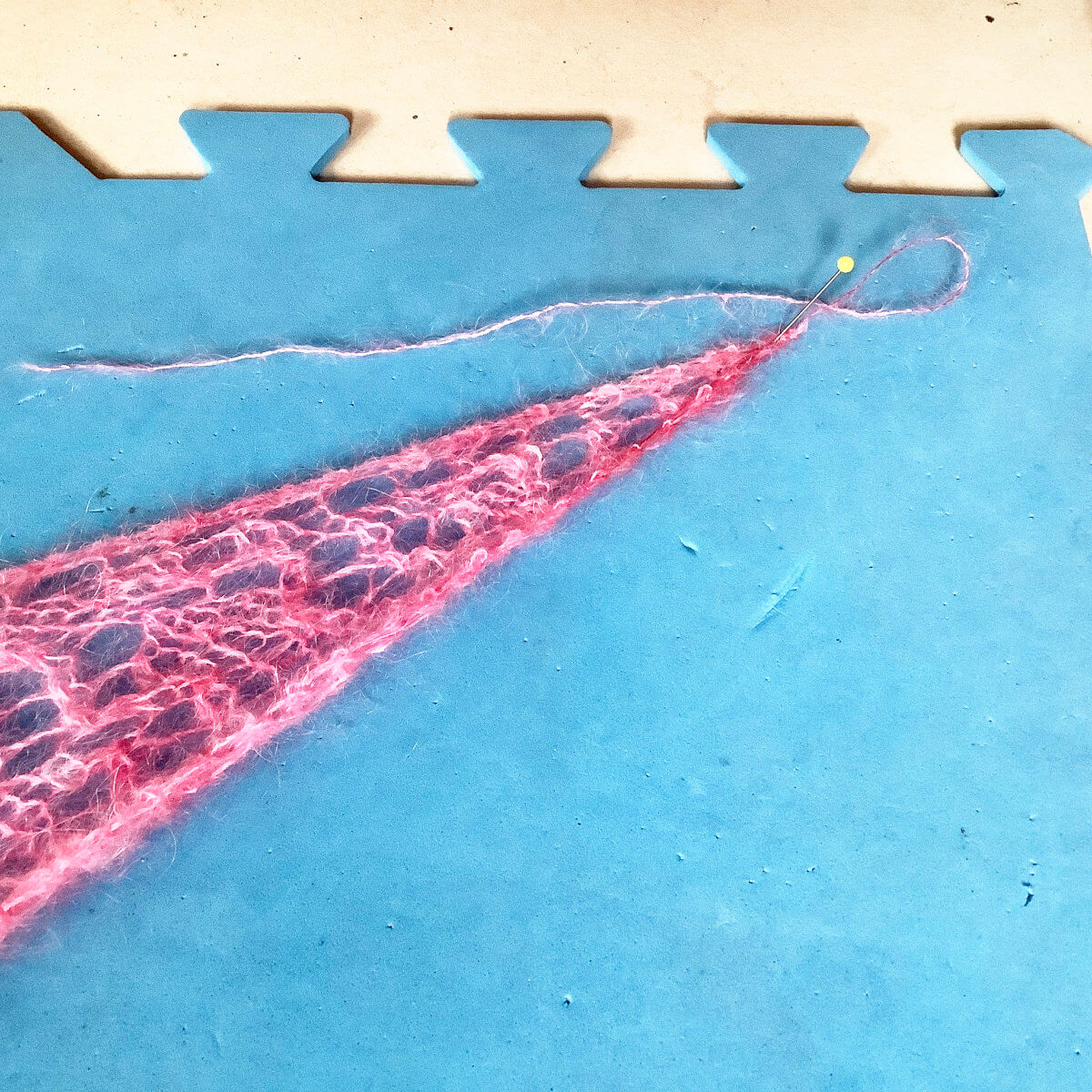
  2. Start by pinning the 2 outer corners.

    You can stretch the upper edge of the shawl out for this, but don’t stretch it to the max., we still need some slack in the fabric to accommodate stretching it out in other directions.Blocking a triangle shawl - step 2

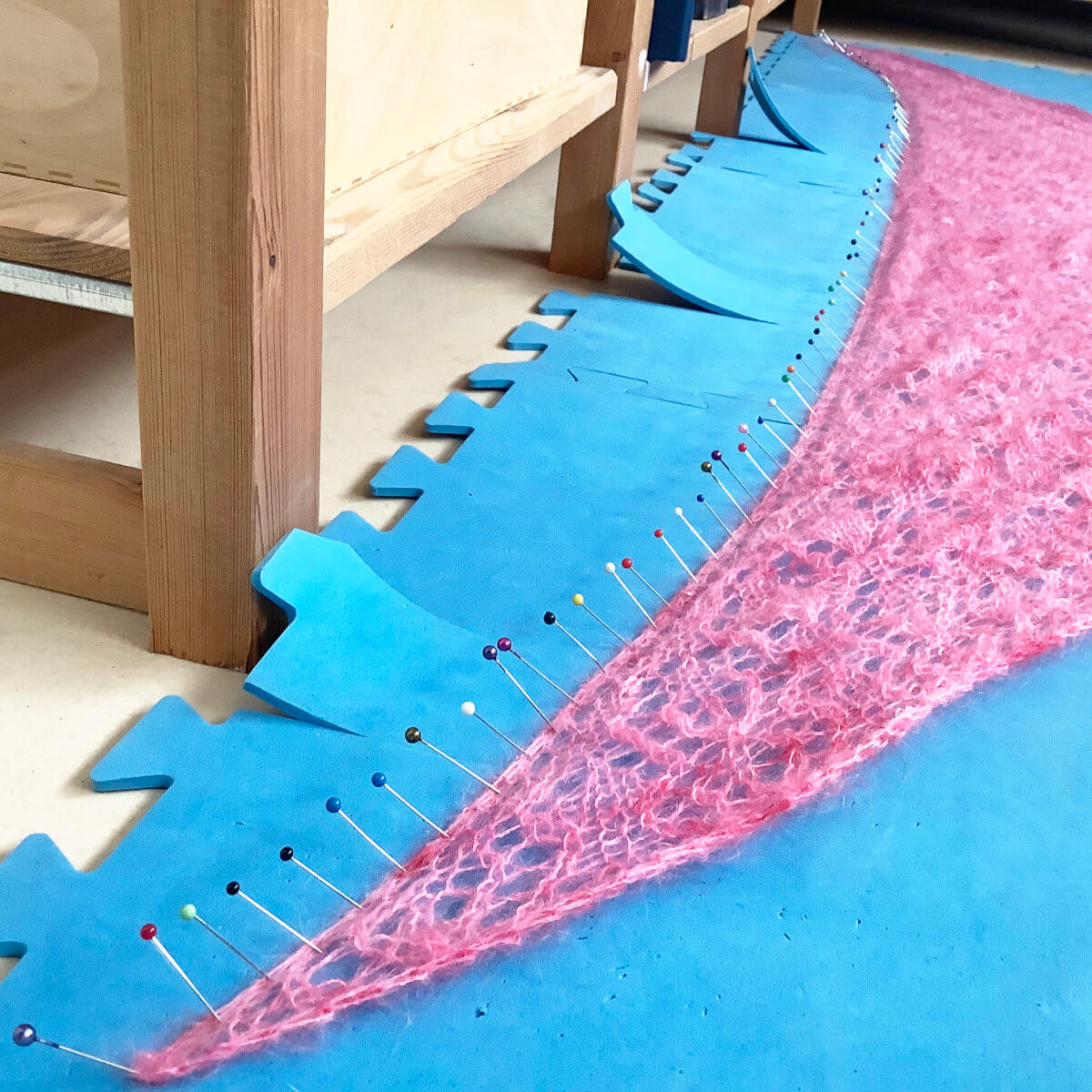
  3. Next, pin the entire upper edge of the shawl in a smooth curve, using approx. 1 pin every 1.25 – 2.5 cm (0.5 – 1 inch).

    You can, of course, pin the upper edge in a straight line, but I find a slightly curved edge sits better on the neck and shoulders.Blocking a triangle shawl - step 3

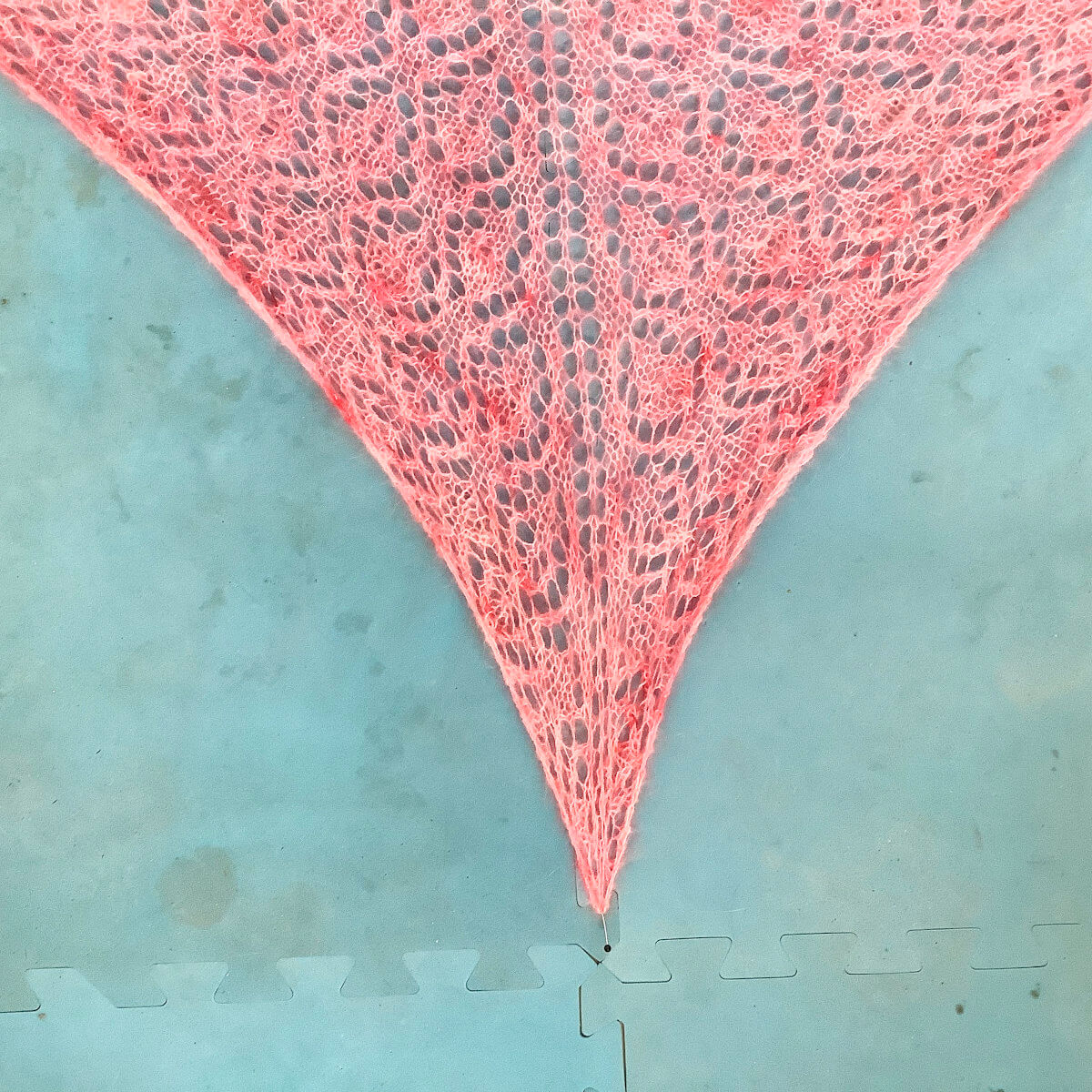
  4. Now pull down the bottom point and pin it to the mats.

    Again, don’t stretch it to the max yet!Blocking a triangle shawl - step 4

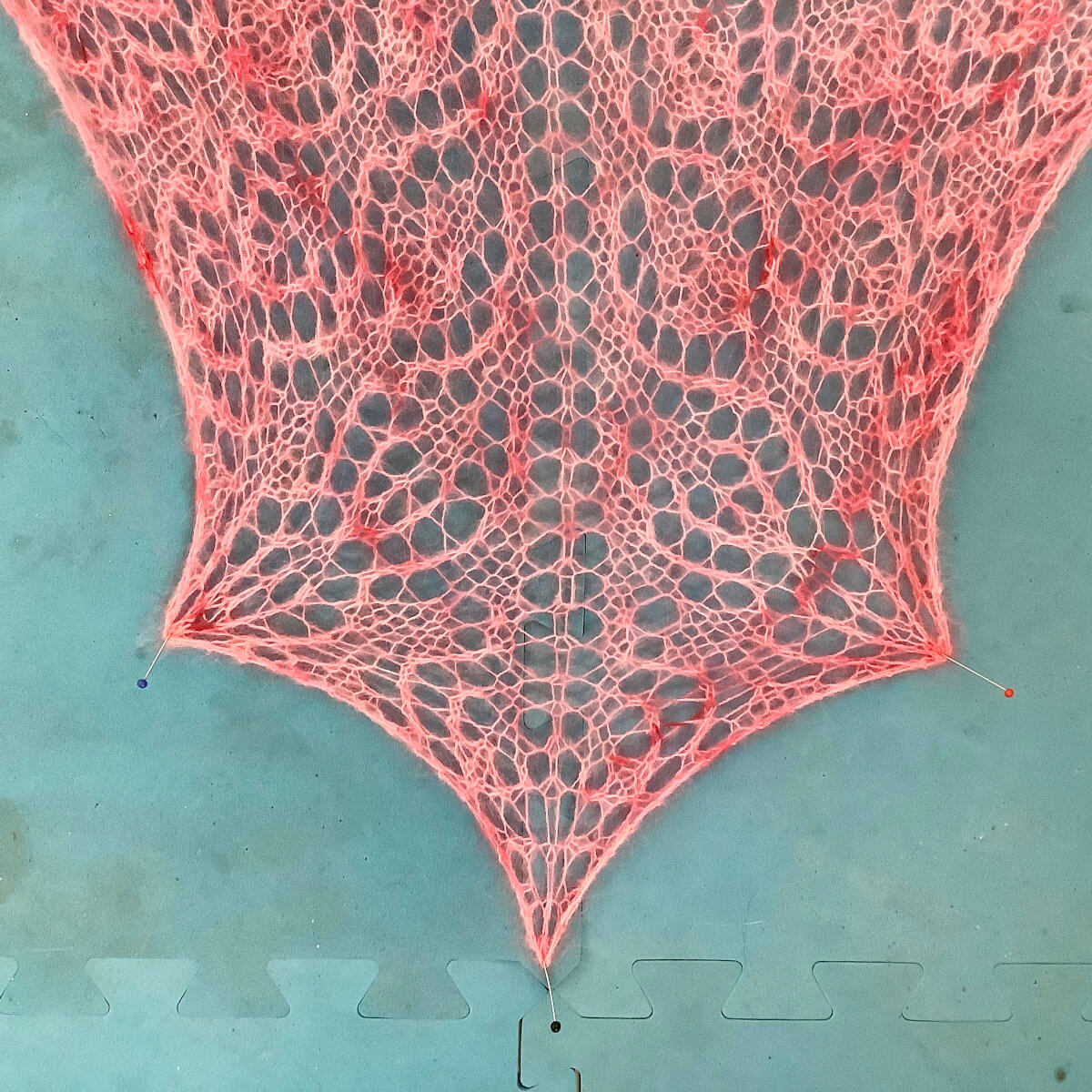
  5. Now pull a point on both the left and the right side down and pin them to the mats.

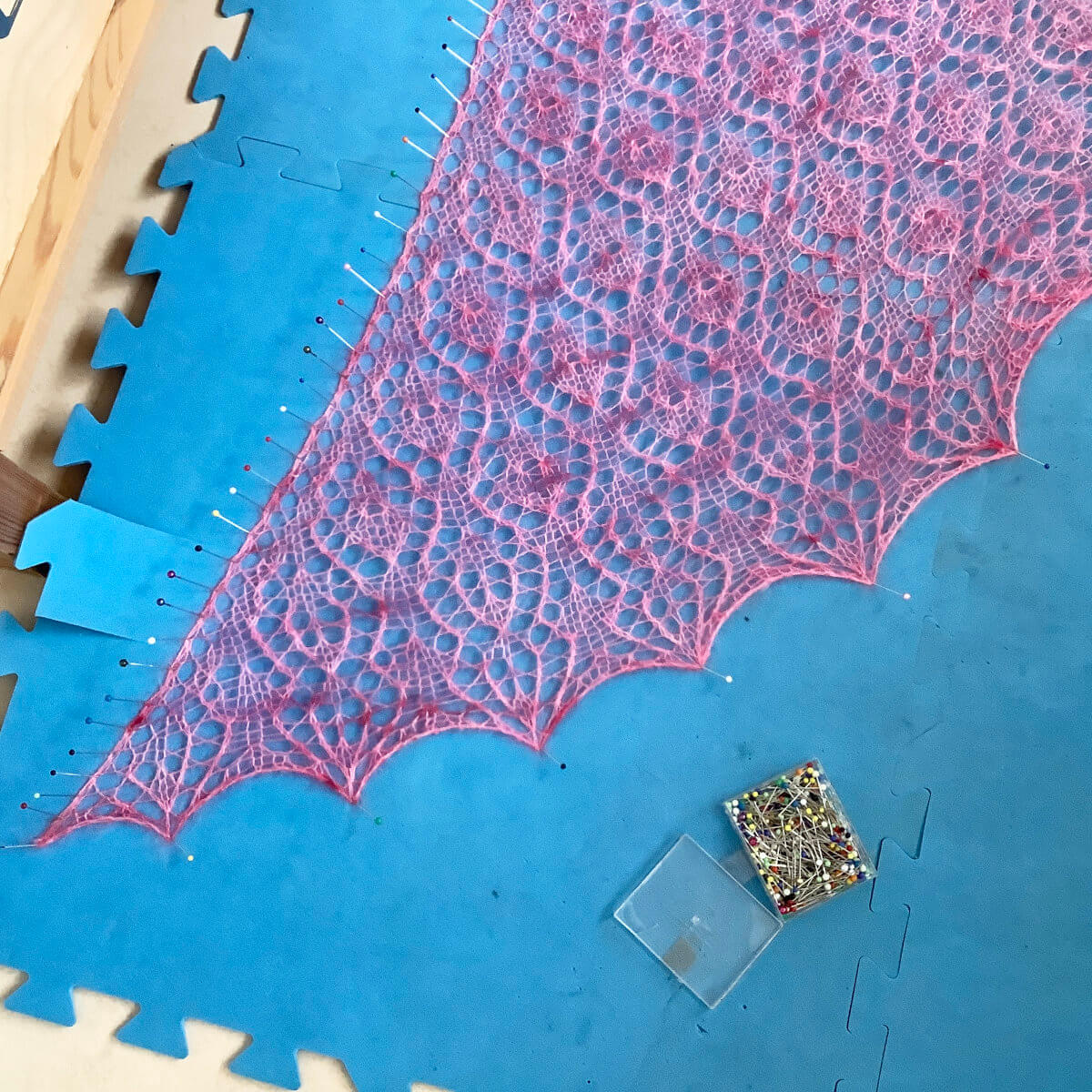
    At this point, you can still keep some slack in the fabric of the shawl. Also, note that I pinned through the point of a leaf, but that I skipped one on either side.Blocking a triangle shawl - step 5

  6. Move up 2 leaves and again pin them down symmetrically.

    At this point you can ignore any tension differences, we will get to that later on.Blocking a triangle shawl - step 6

  7. Continue as in step 5 and 6 until the whole bottom edge is pinned to the mats.

    At this point I saw it, do you see it too?Blocking a triangle shawl - step 7

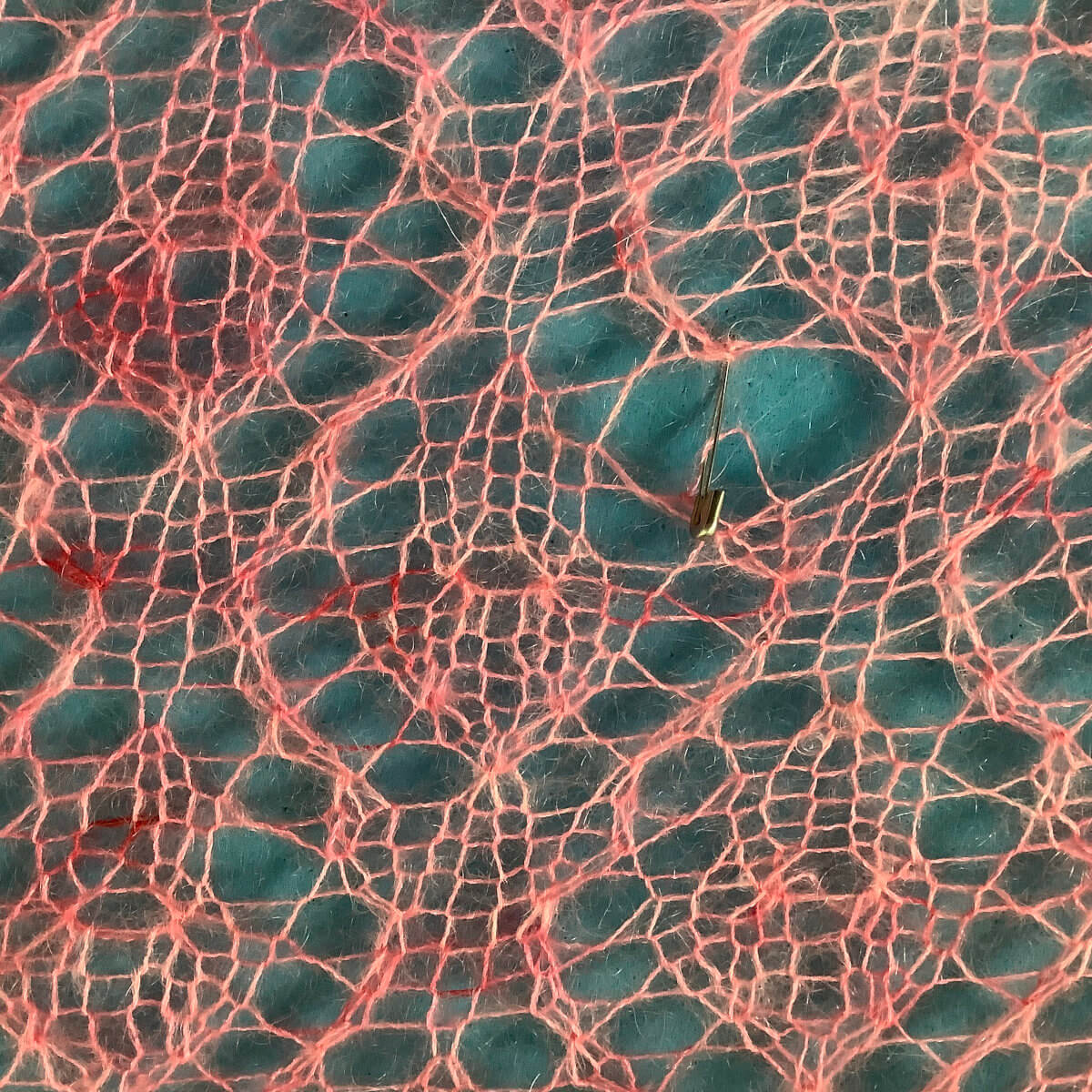
  8. A hole in my shawl!

    I must have caught the halo of the yarn there, instead of the thread itself. The tension of the blocking made it go poof. It happens…. Don’t stress, just catch the stitches with a safety pin. The shawl can be fixed after it’s dry.What you don't want to see during blocking...

  9. Back to pinning the bottom edge.

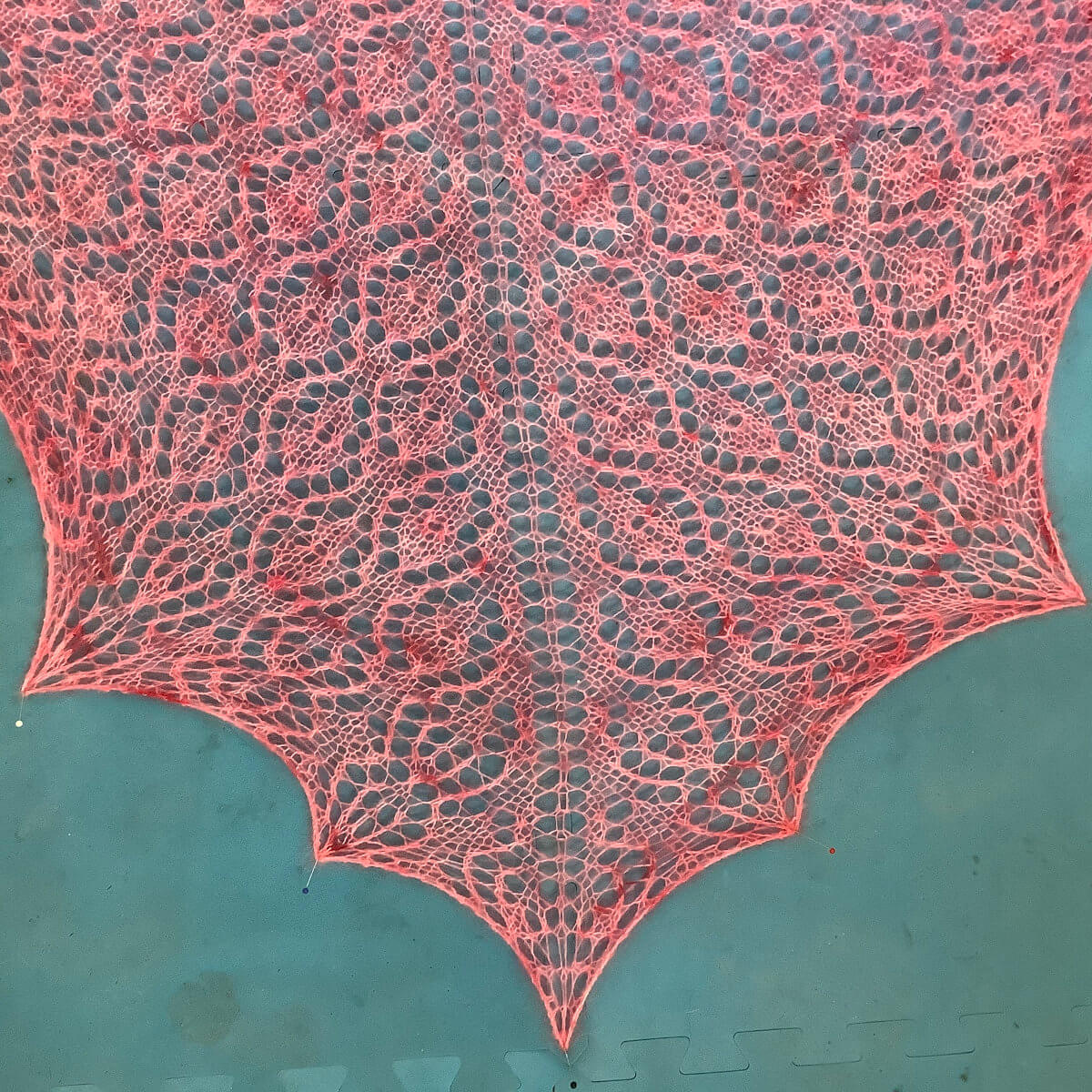
    Now I’m pinning the points I skipped previously, adjusting the pins already there where needed, to achieve a smooth curve.Blocking a triangle shawl - step 8

  10. The final step in blocking.

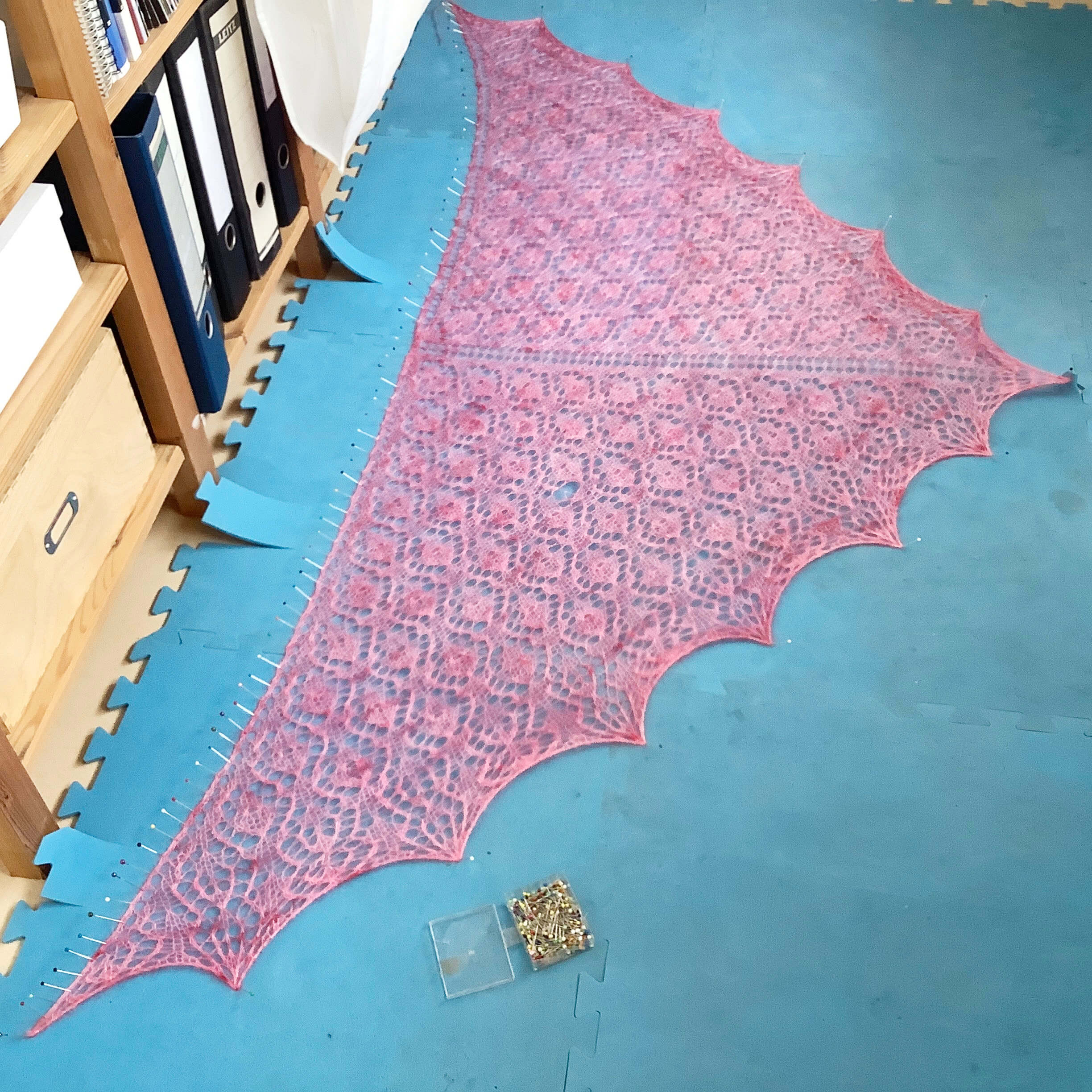
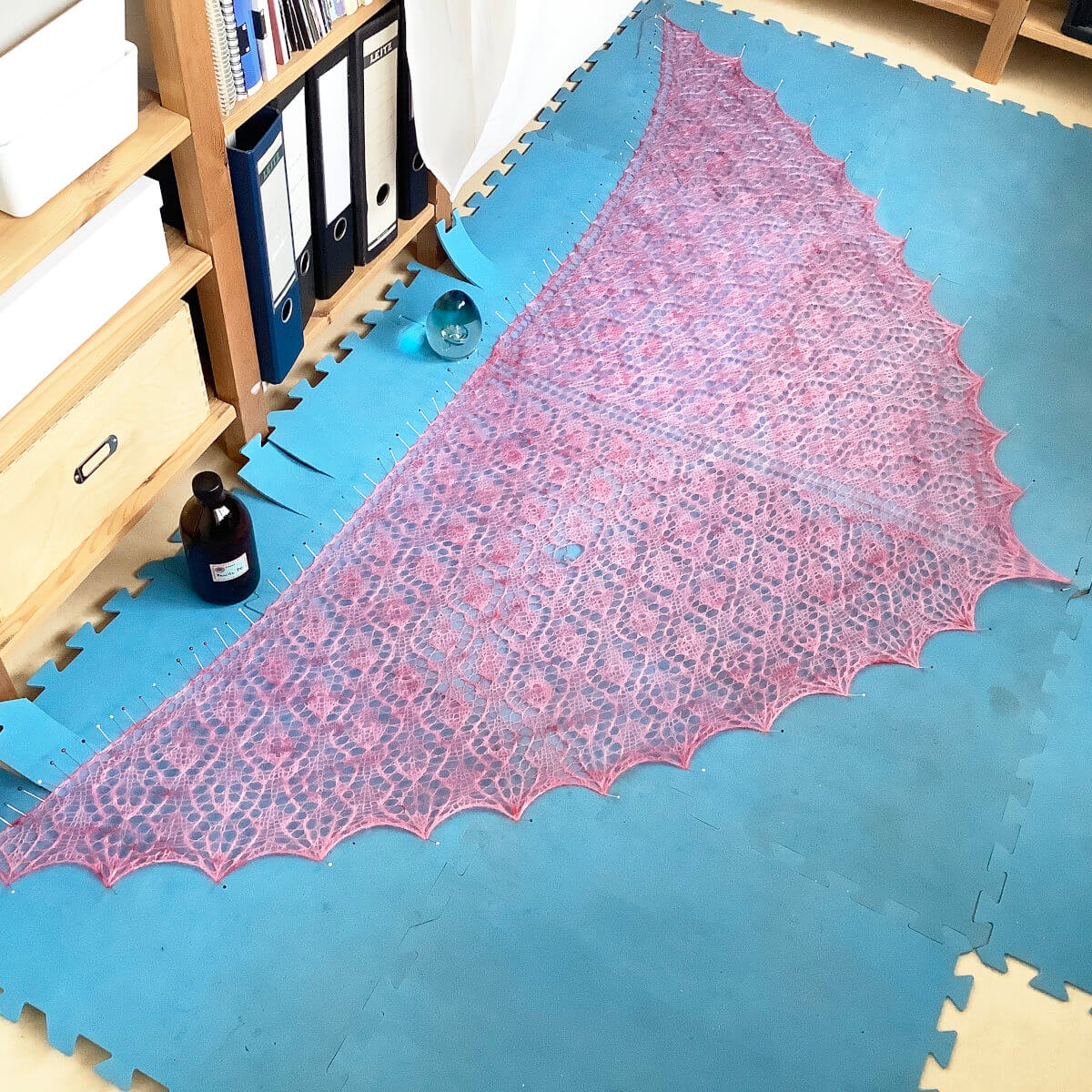
    Finally, I go over the entire bottom edge again, making sure to pull it out to the max and keeping the edge in a smooth curve. I needed some weights to keep the mats in place, and keep them from buckling under the tension I’m putting the shawl under.Blocking a triangle shawl - step 9

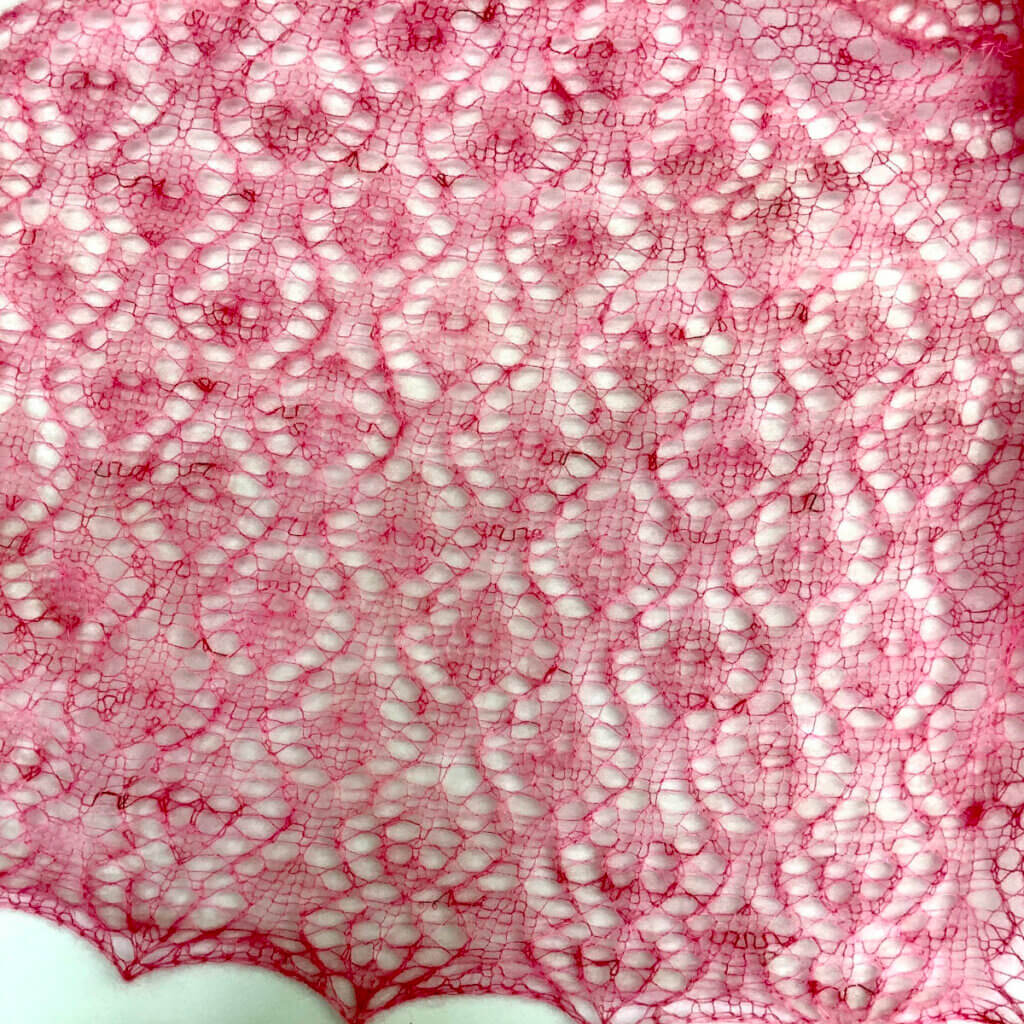
And the result is a beautifully blocked Strawberry Finch shawl! This how to go about blocking a triangle shawl.
Strawberry Finch shawl after blocking

And that hole?

I took a bit of extra yarn and did some duplicate stitch over a couple of stitches on the side of the hole. Then I caught the stitches in a manner very similar to how it should have been. The yarn ends I hid in those wavy decrease lines. Close up, you can see they’re a tad heavier than the other ones. But it’s quite invisible if you don’t know it’s there. Yay!

Patreon logo

Thanks to my Patreon supporters for bringing you this freebie! Creating quality patterns and tutorials is a lot of work and resource-intensive. However, I find it important to give you free content like this tutorial. Thanks to the generous support of my Patreon supporters, I can make it happen. Thank you, patrons! Click here to join, or click here to read more about La Visch Designs on Patreon.

blocking a triangle shawl Read More »
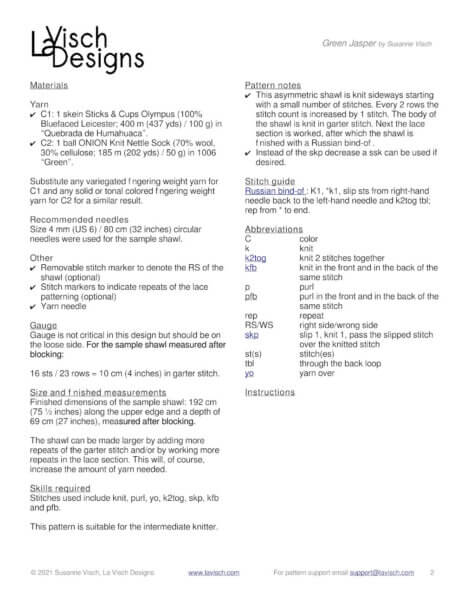
green jasper

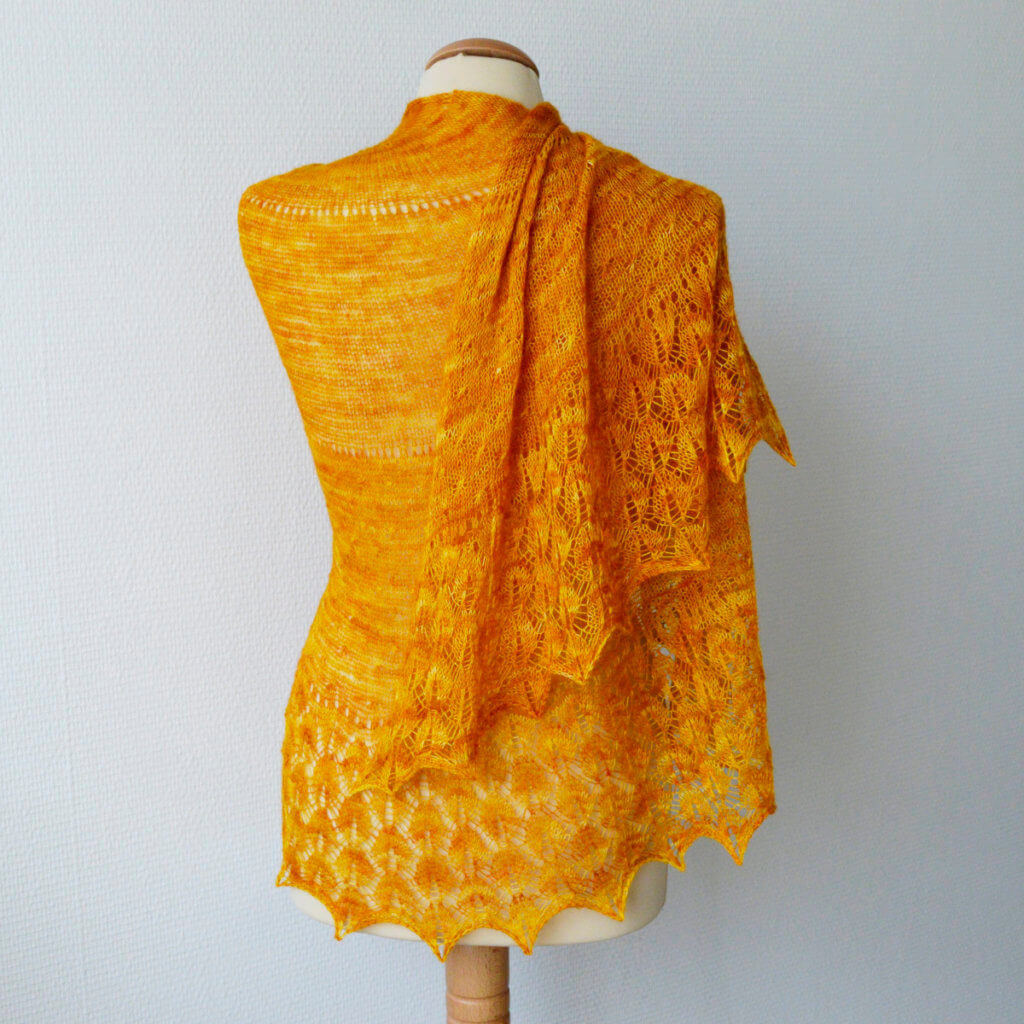
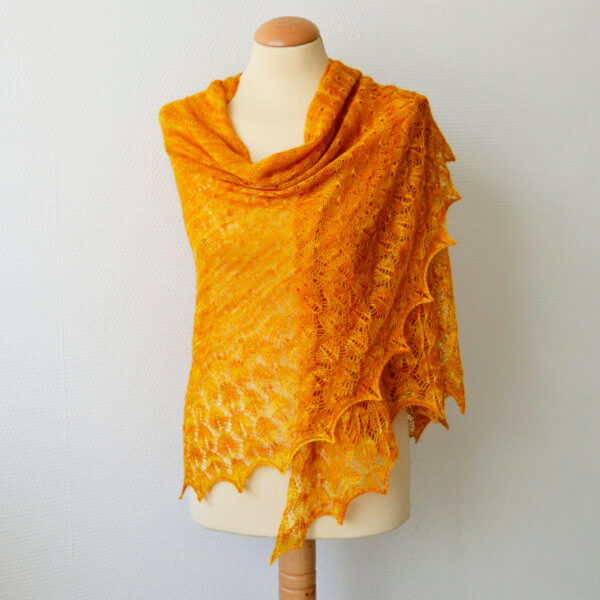
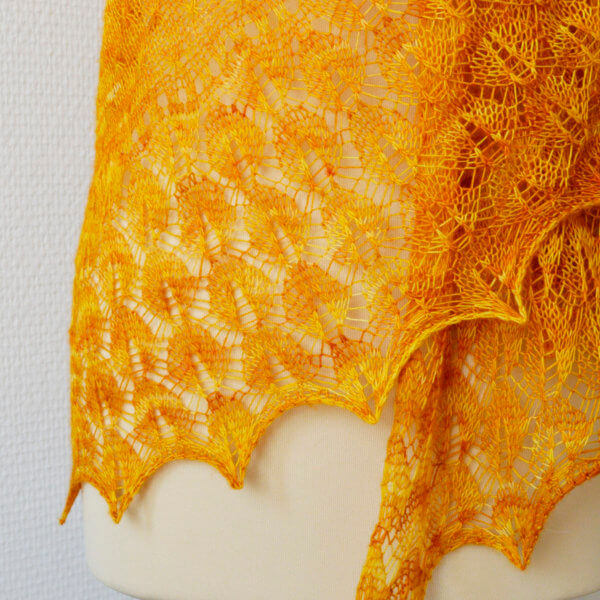
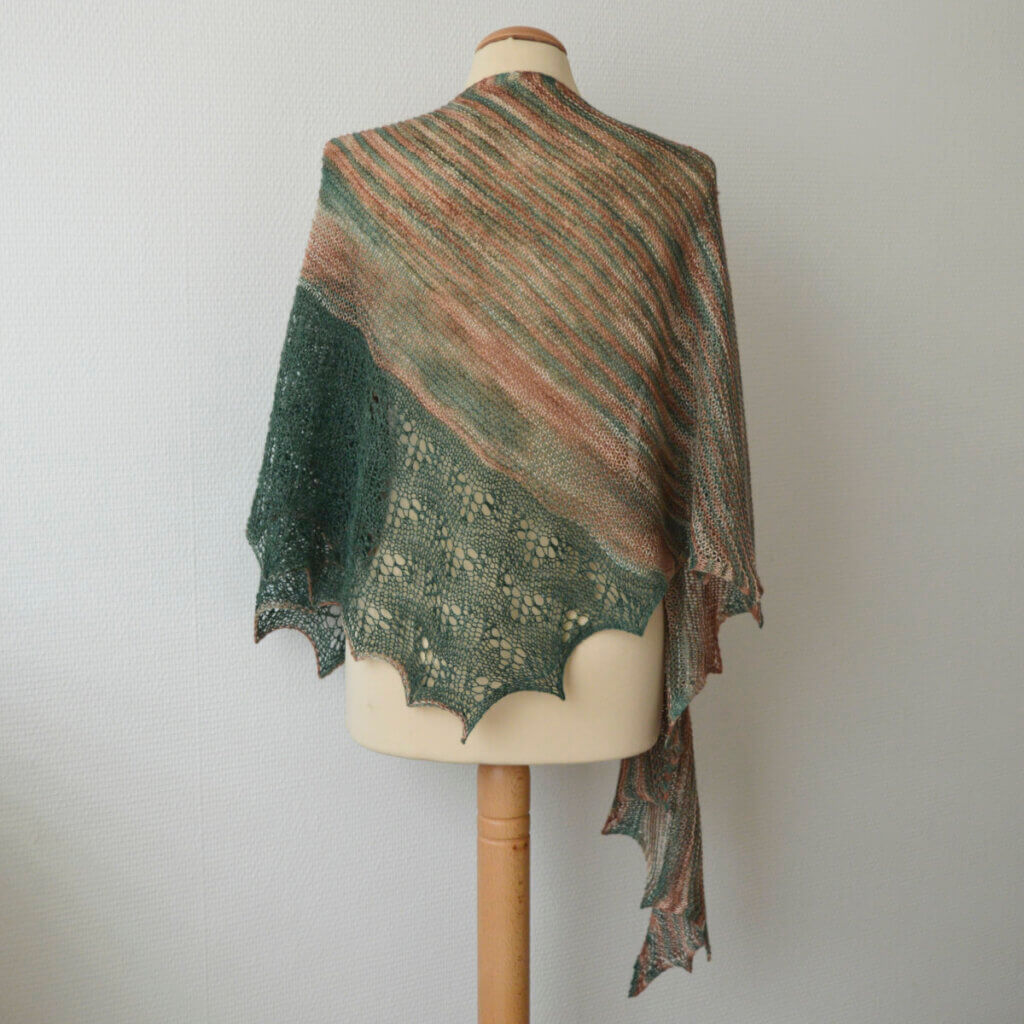
Green Jasper shawl

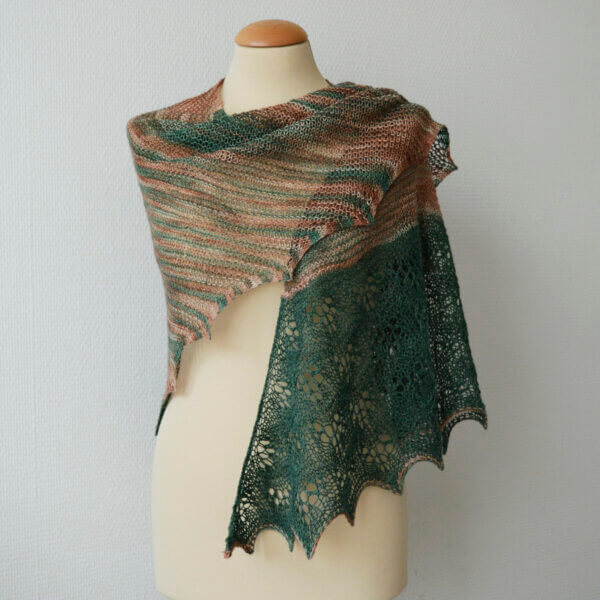
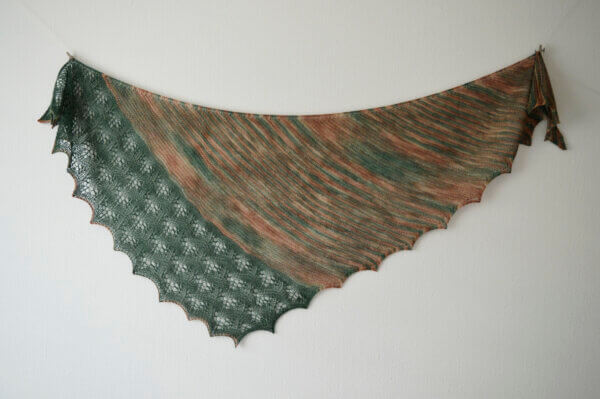
Green Jasper captures all the gorgeous variations found in the semi-precious gemstone. This design is knit sideways on the bias, making a shallow and asymmetrical triangle, perfect for wearing as an elegant scarf. The combination of garter stitch in a variegated hand-dyed yarn and simple lace in a solid/tonal yarn makes it a perfect choice to get the best of both worlds.

The pattern contains both fully written out and charted instructions for the lace section.


Pay what you want: (minimum €6.50)

Add to cart


Difficulty level

Stitches used include knit, purl, yo, k2tog, skp, kfb and pfb. This pattern is therefor suitable for the intermediate knitter.

Sizes and finished measurements

Finished dimensions of the sample shawl: 192 cm (75 ½ inches) along the upper edge and a depth of 69 cm (27 inches), measured after blocking.

Make the shawl larger by adding more repeats of the garter stitch and/or by working more repeats in the lace section. This will, of course, increase the amount of yarn needed.

Pattern details

  • Green Jasper is written for a gauge of approx. 16 sts / 23 rows = 10 cm (4 inches) over garter stitch, measured after blocking. Gauge is however not critical in this design.
  • Pattern languages included: English.
  • Digital PDF has 4 pages (letter size)

Yarn

  • C1: 1 skein Sticks & Cups Olympus (100% Bluefaced Leicester; 400 m (437 yds) / 100 g) in “Quebrada de Humahuaca”.
  • C2: 1 ball ONION Knit Nettle Sock (70% wool, 30% cellulose; 185 m (202 yds) / 50 g) in 1006 “Green”.

Substitute any variegated fingering weight yarn for C1 and any solid or tonal colored fingering weight yarn for C2 for a similar result.

Materials

  • Size 4 mm (US 6) / 80 cm (32 inches) circular needles were used for the sample shawl.
  • Removable stitch marker to denote the RS of the shawl (optional)
  • Stitch markers to indicate repeats of the lace patterning (optional)
  • Yarn needle

green jasper Read More »

zomerzon

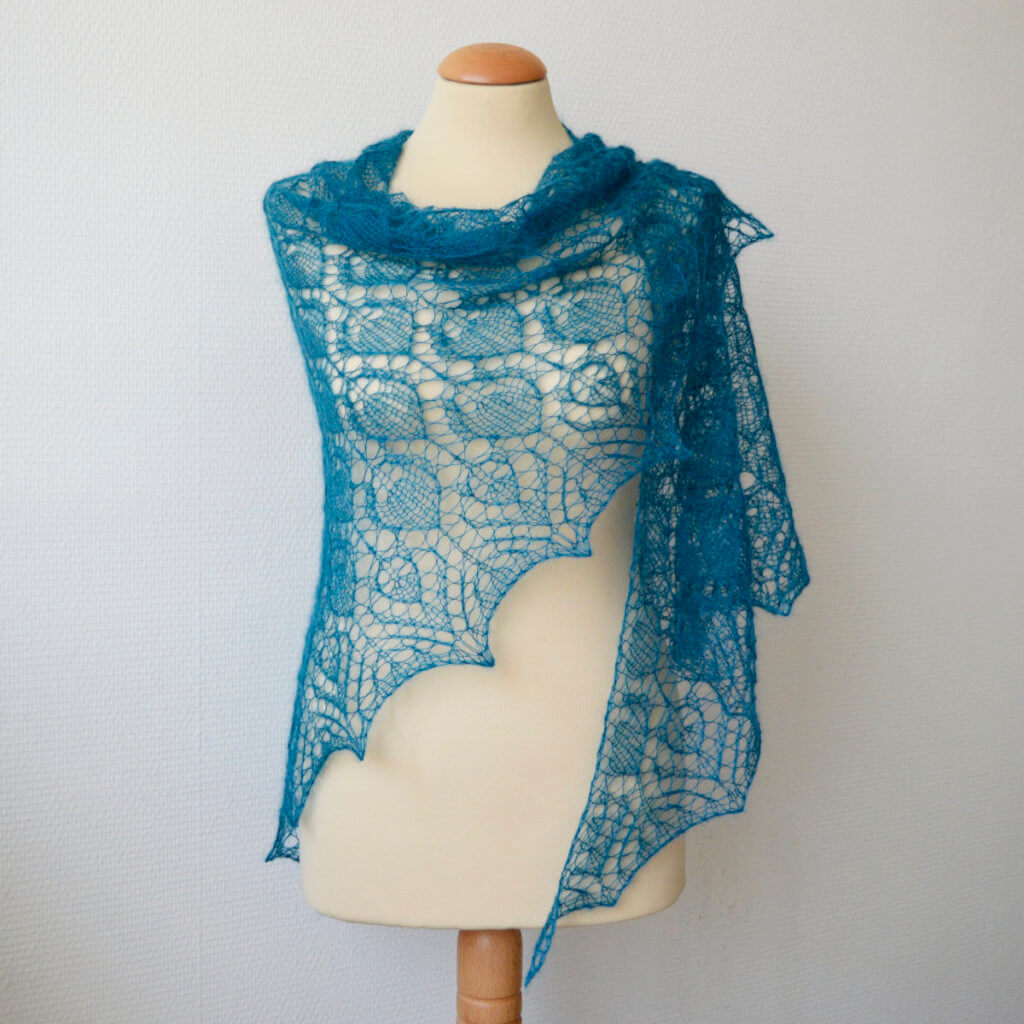
Zomerzon, a knitted lace shawl design by La Visch Designs

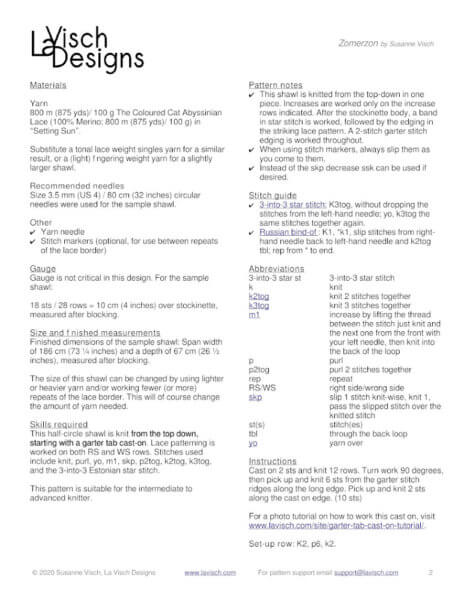
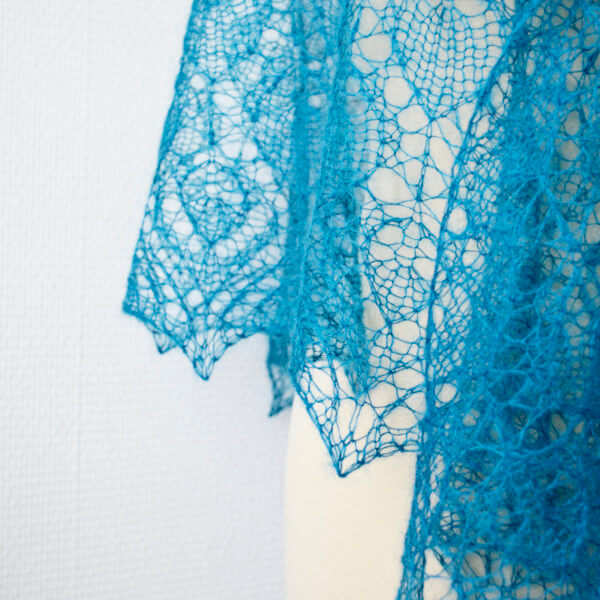
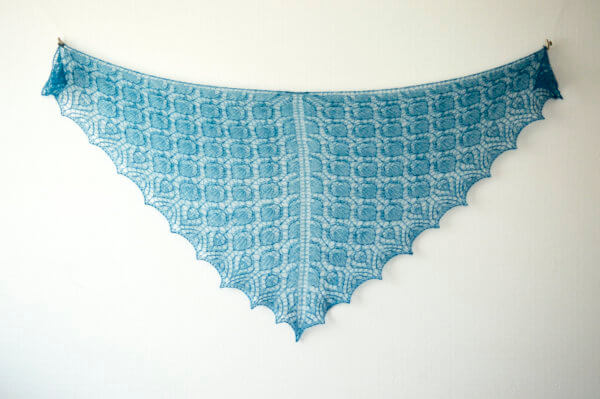
Zomerzon is a semi-circle Pi shawl, worked in a luxury merino lace weight singles yarn. Truly a ray of sunshine when it’s rainy and gray outside! This design can, of course, also be made in a (light) fingering weight yarn.

Zomerzon is worked from the top-down and is started with a garter stitch tab. The lace is patterned on both right and wrong side rows. The instructions for all patterning are, of course, both charted and fully written out.


Pay what you want: (minimum €6.50)

Add to cart


Skills required

Knit this half-circle shawl from the top down, starting with a garter tab cast-on. Lace patterning is worked on both RS and WS rows. Stitches used include knit, purl, yo, m1, skp, p2tog, k2tog, k3tog, and the 3-into-3 Estonian star stitch.

This pattern is suitable for the intermediate to advanced knitter.

Sizes and measurements

Finished dimensions of the sample shawl: Span width of 186 cm (73 ¼ inches) and a depth of 67 cm (26 ½ inches), measured after blocking.

Change the size of this shawl by using lighter or heavier yarn and/or working fewer (or more) repeats of the lace border. This will of course change the amount of yarn needed.

Pattern details

  • Top-down
  • Written for a gauge of 18 sts / 28 rows = 10 cm (4 inches) over stockinette, measured after blocking.
  • Pattern languages included: English and Dutch (Dit patroon omvat zowel een Nederlandse als een Engelse versie)
  • Digital PDF has 4 pages (letter size)

Materials

  • Yarn: 800 m (875 yds)/ 100 g The Coloured Cat Abyssinian Lace (100% Merino; 800 m (875 yds)/ 100 g) in “Setting Sun”. Substitute a tonal lace weight singles yarn for a similar result, or a (light) fingering weight yarn for a slightly larger shawl.
  • Size 3.5 mm (US 4) / 80 cm (32 inches) circular needles.
  • Yarn needle.
  • Stitch markers (optional, for use between repeats of the lace border).

zomerzon Read More »

blue duck

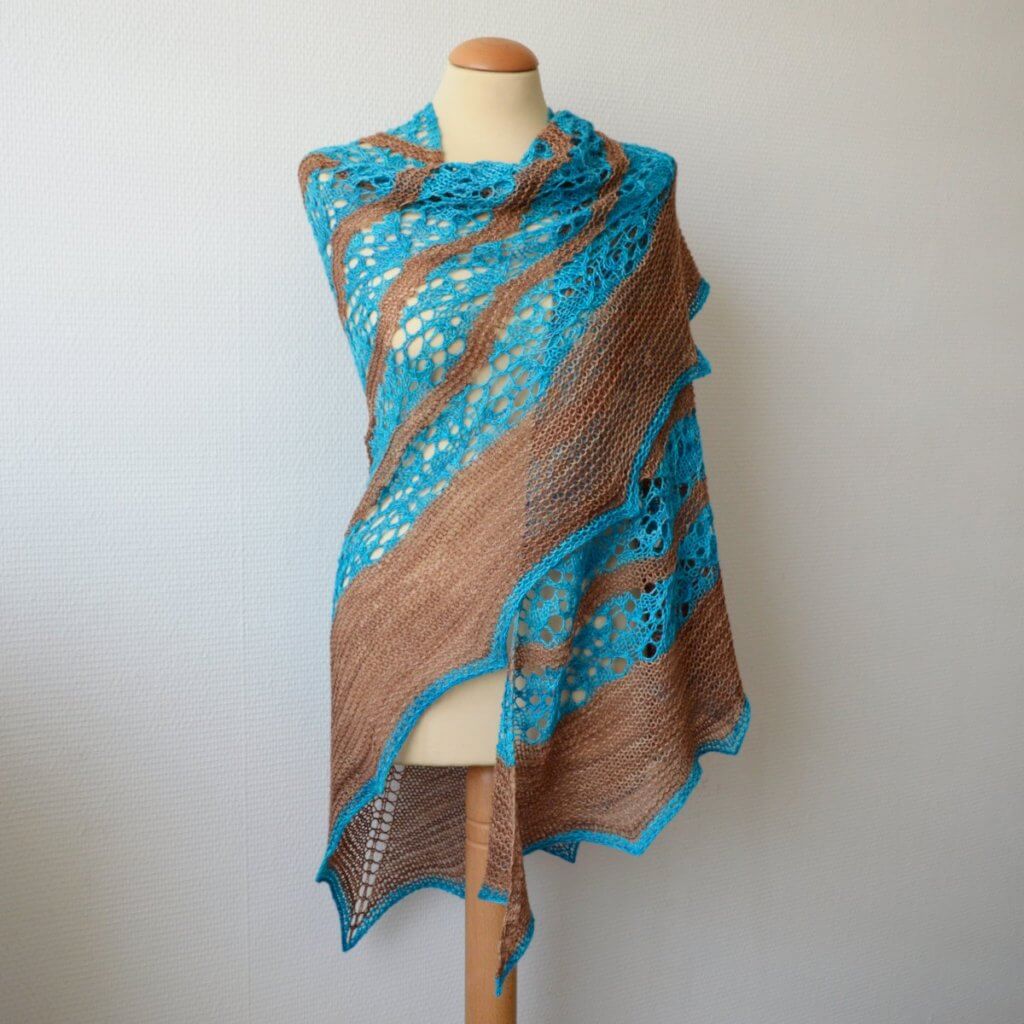
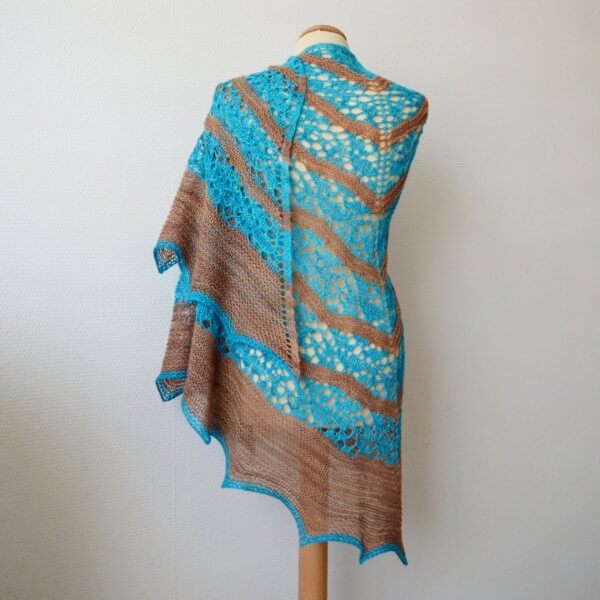
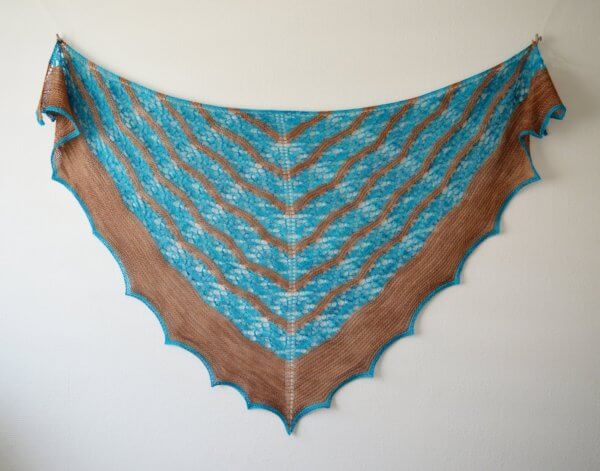
Blue Duck shawl by La Visch Designs

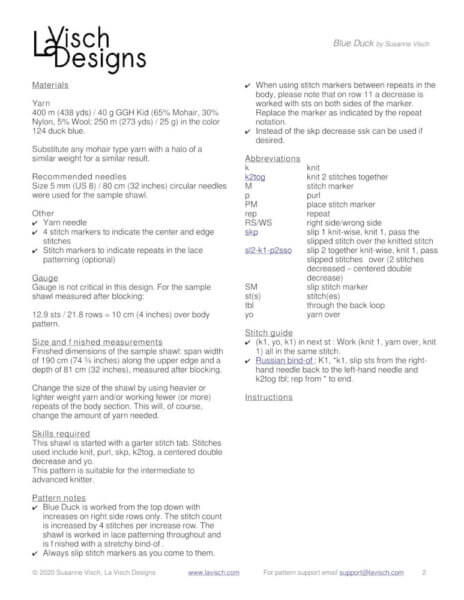
You know that gorgeous blue-green that male ducks have? That is what this lovely lace-weight mohair yarn reminded me off. What better way to show it off than with all-over lace? Of course, the Blue Duck shawl can also be knit in fingering-weight yarns; just adjust the needle size a bit!

The Blue Duck shawl is knitted in lace patterning from the top-down in one piece, starting at the neck edge with a garter tab. The instructions are, of course, provided charted and written out.


Pay what you want: (minimum €6.50)

Add to cart


Difficulty level

Knit this triangle-shaped shawl from the top-down, starting with a garter tab cast-on. Stitches used include knit, purl, k2tog, skp, yo, double yo, and a centered double decrease. Therefor, this pattern is suitable for the intermediate to advanced knitter.

Sizes and finished measurements

Finished dimensions of the sample shawl: span width of 190 cm (74 ¾ inches) along the upper edge and a depth of 81 cm (32 inches), measured after blocking.

Change the size of the shawl by using heavier or lighter weight yarn and/or working fewer (or more) repeats of the body section. This will, of course, change the amount of yarn needed.

Pattern details

  • Gauge: approx. 12.9 sts / 21.8 rows = 10 cm (4 inches) over body pattern, measured after blocking.
  • Pattern languages included: English and Dutch (Dit patroon omvat zowel een Nederlandse als een Engelse versie)
  • Digital PDF has 5 pages (letter size)

Materials

  • Yarn: 400 m (438 yds) / 40 g GGH Kid (65% Mohair, 30% Nylon, 5% Wool; 250 m (273 yds) / 25 g) in the color 124 duck blue. Substitute any mohair type yarn with a halo of a similar weight for a similar result.
  • Size 5 mm (US 8) / 80 cm (32 inches) circular needles.
  • Yarn needle.
  • 4 stitch markers to indicate the center stitch and the edge stitches.
  • Stitch markers to indicate repeats in the lace patterning (optional).

blue duck Read More »

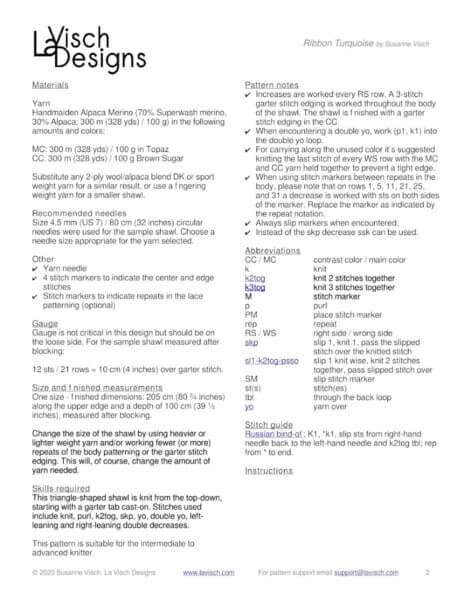
ribbon turquoise

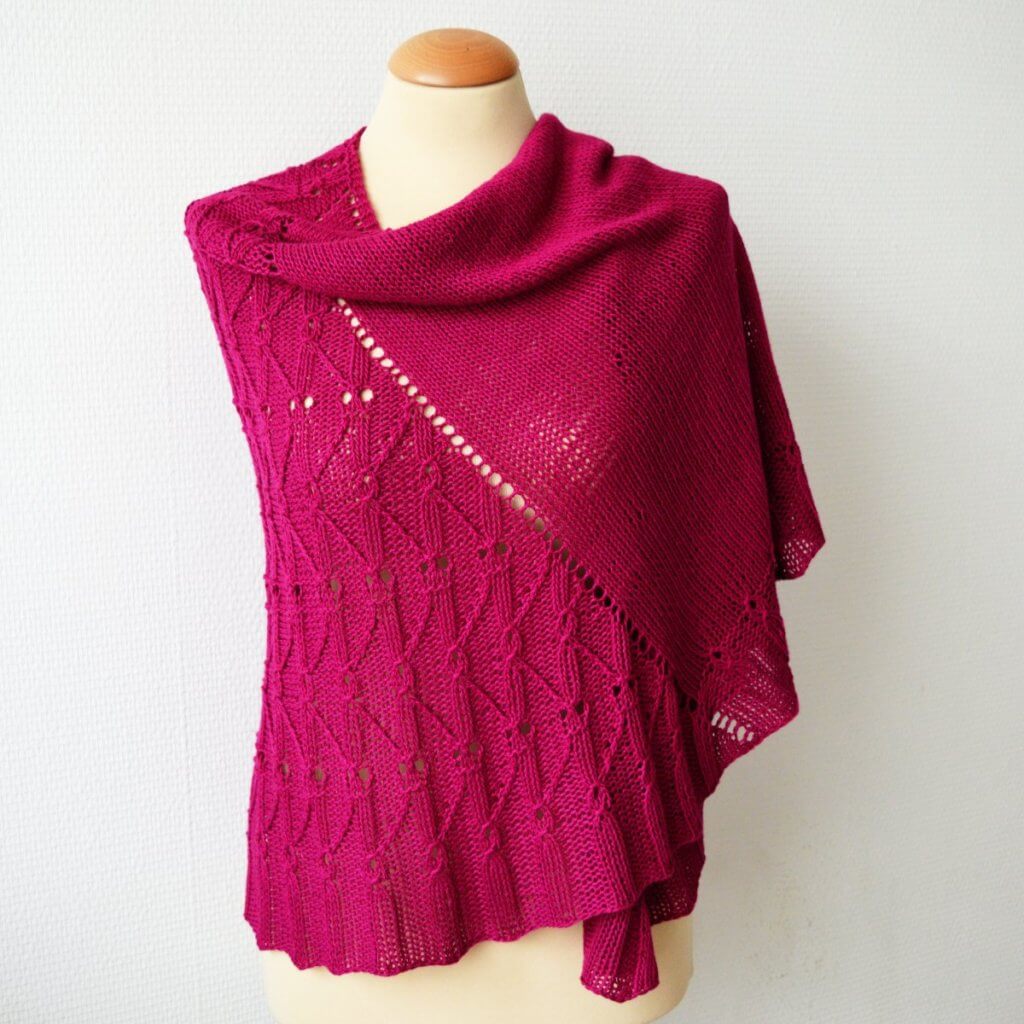
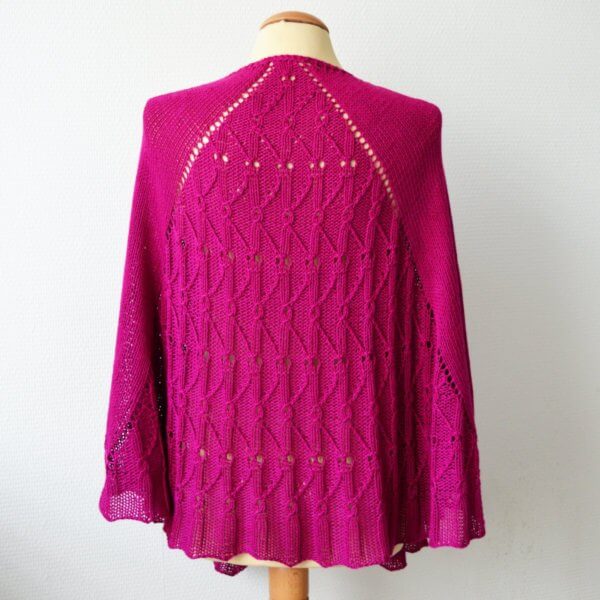
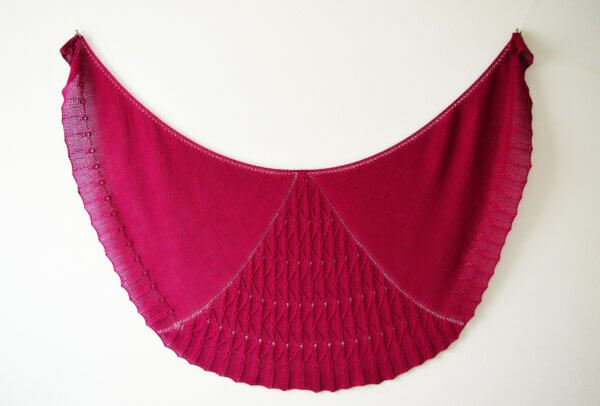
Ribbon Turquoise by La Visch Designs

The Ribbon Turquoise shawl is not only named for the wavy ribbons of brown and turquoise shown. The name also refers to how the semi-precious stone is cut. Turquoise forms in veins of various widths within the surrounding rock. It’s called “ribbon turquoise” when the stone is cut to show the mother rock as the main feature with the original vein or ribbon of turquoise running through it as an accent.

Ribbon Turquoise is a triangle shawl worked from the top-down in one piece, starting at the neck with a garter stitch tab. The instructions for the lace are provided both charted and written out.


Pay what you want: (minimum €6.50)

Add to cart


Difficulty level

Knit this triangle-shaped shawl from the top-down, starting with a garter tab cast-on. Stitches used include knit, purl, k2tog, skp, yo, double yo, left-leaning and right-leaning double decreases. This pattern is suitable for the intermediate to advanced knitter.

Sizes and finished measurements

One size – finished dimensions: 205 cm (80 ¾ inches) along the upper edge and a depth of 100 cm (39 ½ inches), measured after blocking.

Change the size of the shawl by using heavier or lighter weight yarn and/or working fewer (or more) repeats of the body patterning or the garter stitch edging. This will, of course, change the amount of yarn needed.

Pattern details

  • Gauge: approx. 12 sts / 21 rows = 10 cm (4 inches) over garter stitch, after blocking.
  • Pattern languages included: English and Dutch (Dit patroon omvat zowel een Nederlandse als een Engelse versie)
  • Digital PDF has 5 pages in the English version and 6 pages in the Dutch version (letter size)

Materials

  • Yarn: Handmaiden Alpaca Merino (70% Superwash merino, 30% Alpaca; 300 m (328 yds) / 100 g) in the following amounts and colors: MC: 300 m (328 yds) / 100 g in Topaz and CC: 300 m (328 yds) / 100 g Brown Sugar. This yarn and pattern are also available as a kit from Sweater Sisters! Substitute any 2-ply wool/alpaca blend DK or sport weight yarn for a similar result, or use a fingering weight yarn for a smaller shawl.
  • Sample shawl: size 4.5 mm (US 7) / 80 cm (32 inches) circular needles. Choose a needle size appropriate for the yarn selected.
  • Yarn needle.
  • 4 stitch markers to indicate the center stitch and the edge stitches.
  • Stitch markers to indicate repeats in the lace patterning (optional).

ribbon turquoise Read More »

think pink

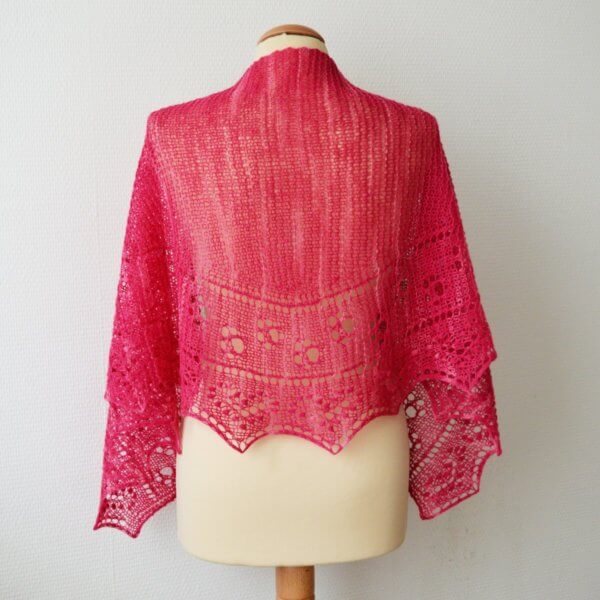
Think Pink shawl - a design by La Visch Designs

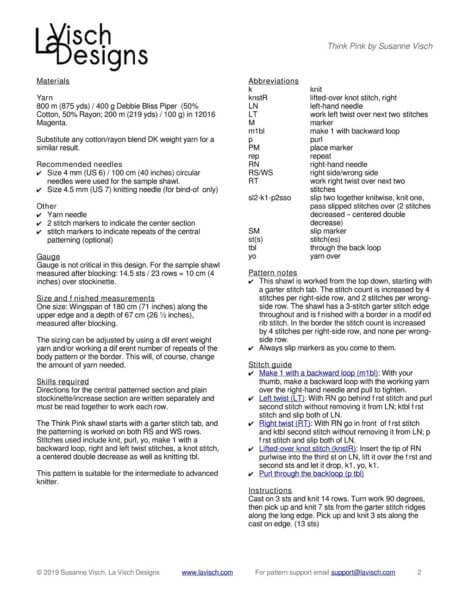
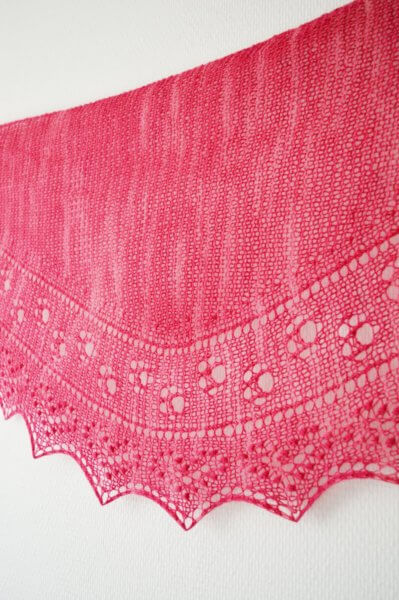
Looking for an eye-catching layering piece for when the weather and seasons turn? A knit that combines both relaxing stockinette as well as challenging patterning? Look no further! The Think Pink shawl has you covered. And yes, pun intended! Or make the shawl in a different color.

Written and charted instructions for the patterned central section are included. Written directions for the central section and plain stockinette/increase section are written separately and must be read together to work each row.


Pay what you want: (minimum €6.50)

Add to cart


Difficulty level

The Think Pink shawl starts with a garter stitch tab, and the patterning is worked on both RS and WS rows. Stitches used include knit, purl, yo, make 1 with a backward loop, right and left twist stitches, a knot stitch, a centered double decrease as well as knitting tbl.

This pattern is suitable for the intermediate to advanced knitter.

Sizes and finished measurements

One size: Wingspan of 180 cm (71 inches) along the upper edge and a depth of 67 cm (26 ½ inches), measured after blocking.

Adjust the sizing by using a different weight yarn and/or working a different number of repeats of the body pattern or the border. This will, of course, change the amount of yarn needed.

Pattern details

  • Gauge: 14.5 sts / 23 rows = 10 cm (4 inches) over stockinette, measured after blocking. Gauge is, however, not critical in this design.
  • Pattern languages included: English, the Dutch version will be available soon. (Dit patroon omvat zowel een Nederlandse als een Engelse versie)
  • Digital PDF has 6 pages (letter size)

Materials

  • Yarn: 800 m (875 yds) / 400 g Debbie Bliss Piper (50% Cotton, 50% Rayon; 200 m (219 yds) / 100 g) in 12016 Magenta. Substitute any cotton/rayon blend DK weight yarn for a similar result.
  • Size 4 mm (US 6) / 100 cm (40 inches) circular needles
  • Size 4.5 mm (US 7) knitting needle (for bind-off only)
  • Yarn needle
  • 2 stitch markers to indicate the center section
  • Stitch markers to indicate repeats of the central patterning (optional)

think pink Read More »

kitty cat shawl

Kitty Cat Shawl by La Visch Designs

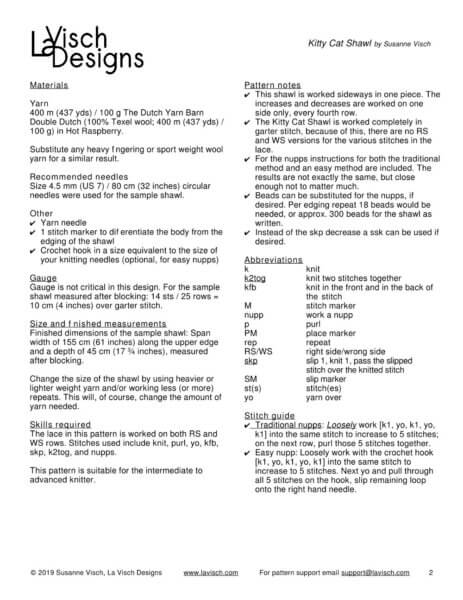
The Kitty Cat Shawl is a shallow, triangle scarf, knit sideways. It has paw prints and hearts because my daughter loves cats and therefore wanted this in her new shawl. This design features a lace edging that is worked at the same time as the body of the shawlette. Worked at a loose gauge, the Kitty Cat Shawl is a lovely and airy layering piece.

The pattern contains both fully written out as well as charted instructions for the lace. The lace in the border of the shawl is true lace knitting, worked on both wrong and right side rows.


Pay what you want: (minimum €6.50)

Add to cart


Difficulty level

Stitches used include knit, purl, yo, kfb, skp, k2tog, and nupps. This pattern is suitable for the intermediate to advanced knitter.

Sizes and finished measurements

Finished dimensions of the sample shawl: Span width of 155 cm (61 inches) along the upper edge and a depth of 45 cm (17 ¾ inches), measured after blocking.

Change the size of the shawl by using heavier or lighter weight yarn and/or working less (or more) repeats. This will, of course, change the amount of yarn needed.

Pattern details

  • Gauge: 14 sts / 25 rows = 10 cm (4 inches) over garter stitch, measured after blocking. Gauge is, however, not critical in this design.
  • Pattern languages included: English, the Dutch version will be available soon. (Dit patroon omvat zowel een Nederlandse als een Engelse versie)
  • Digital PDF has 4 pages (letter size)

Materials

  • Yarn: 400 m (437 yds) / 100 g The Dutch Yarn Barn Double Dutch (100% Texel wool; 400 m (437 yds) / 100 g) in Hot Raspberry. Substitute any heavy fingering or sport weight wool yarn for a similar result.
  • Size 4.5 mm (US 7) / 80 cm (32 inches) circular needles.
  • Yarn needle
  • 1 stitch marker to differentiate the body from the edging of the shawl
  • Crochet hook in a size equivalent to the size of your knitting needles (optional, for easy nupps)

kitty cat shawl Read More »
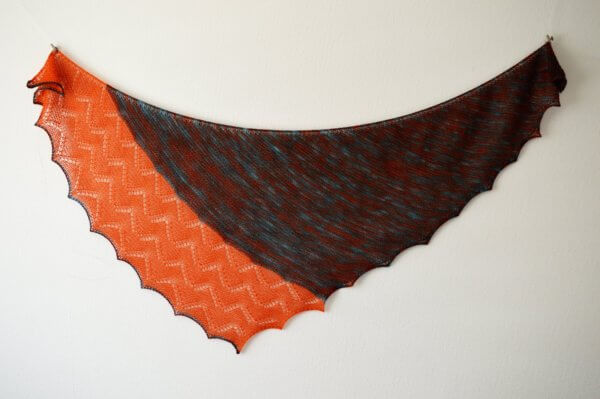
monegros

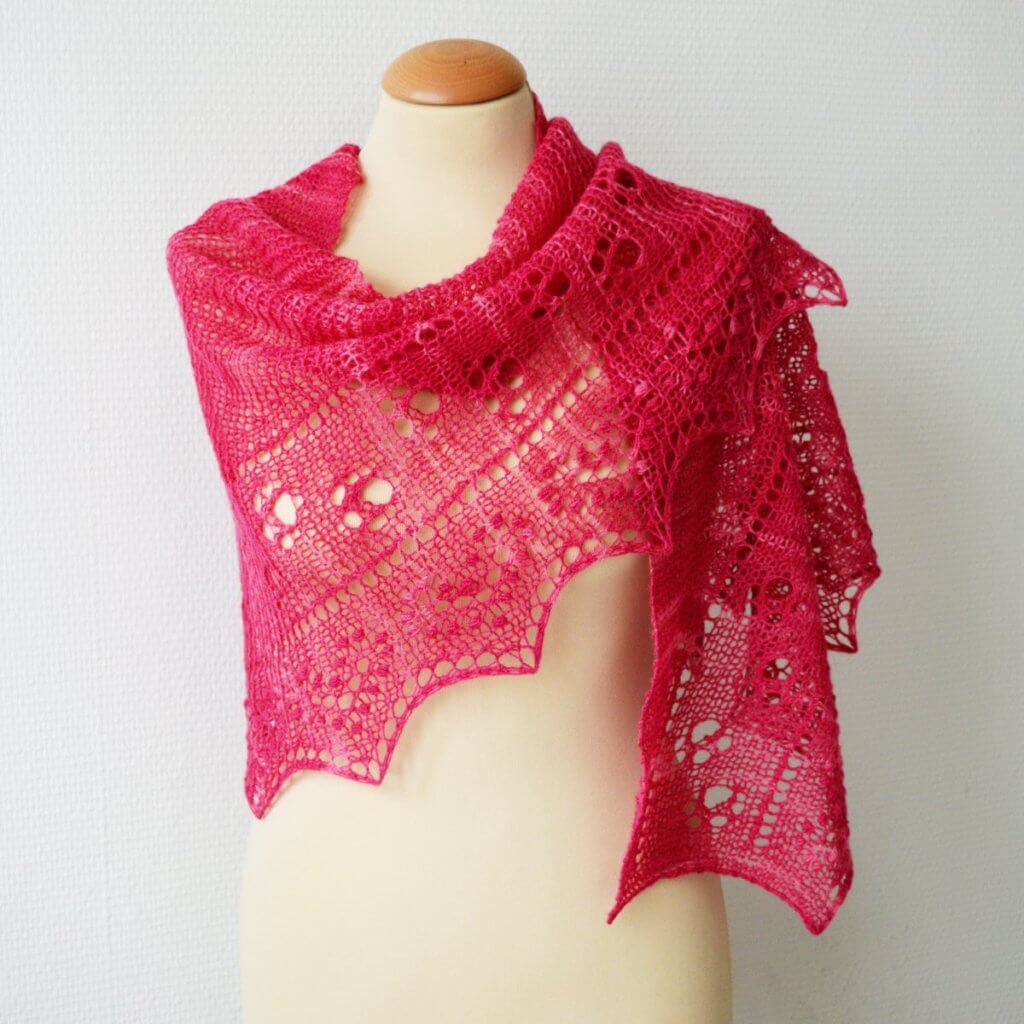
Monegros shawl by La Visch Designs

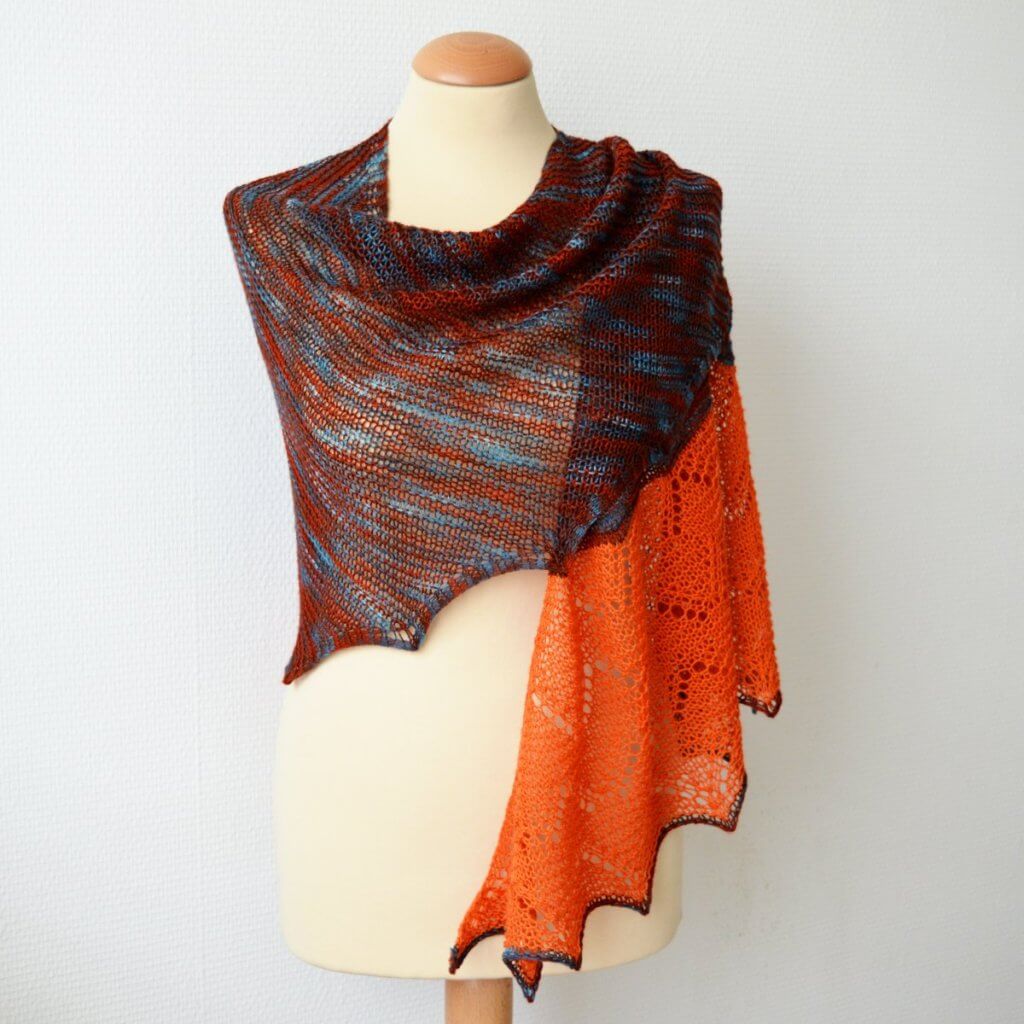
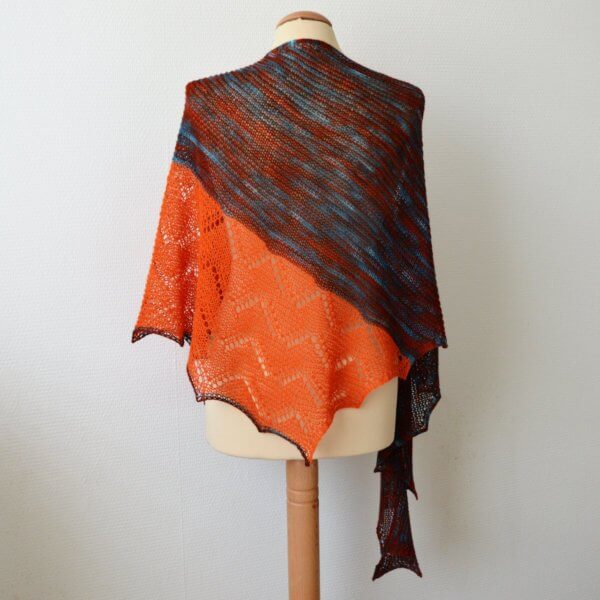
Monegros is a simple yet stylish triangular shawl knit sideways on the bias, named after the Monegros Desert in northeastern Spain. The combination of garter stitch in a variegated hand-dyed yarn and simple lace in a solid/tonal yarn makes it a perfect choice to get the best of both worlds. Due to its shape and generous size, it’s perfect to wear as an elegant scarf.

The pattern contains both fully written out as well as charted instructions for the lace section.


Pay what you want: (minimum €6.50)

Add to cart


Difficulty level

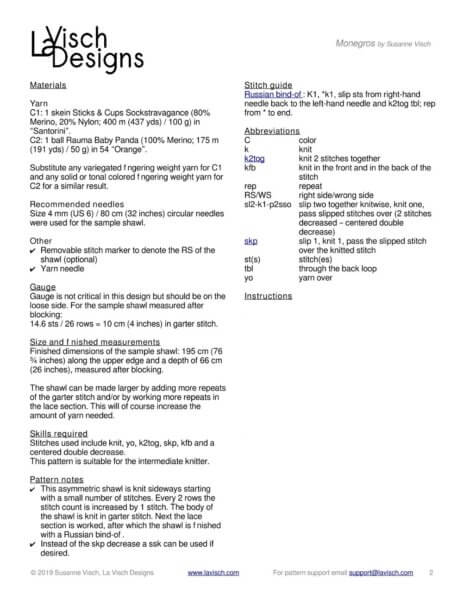
Stitches used include knit, yo, k2tog, skp, kfb and a centered double decrease. This pattern is suitable for the intermediate knitter.

Sizes and finished measurements

Finished dimensions of the sample shawl: 195 cm (76 ¾ inches) along the upper edge and a depth of 66 cm (26 inches), measured after blocking.

The shawl can be made larger by adding more repeats of the garter stitch and/or by working more repeats in the lace section. This will, of course, increase the amount of yarn needed.

Pattern details

  • Gauge: 14.6 sts / 26 rows = 10 cm (4 inches) over garter stitch, measured after blocking. Gauge is, however, not critical in this design.
  • Pattern languages included: English, the Dutch version will be available soon. (Dit patroon omvat zowel een Nederlandse als een Engelse versie)
  • Digital PDF has 4 pages (letter size)

Materials

  • Yarn: C1 – 1 skein Sticks & Cups Sockstravagance (80% Merino, 20% Nylon; 400 m (437 yds) / 100 g) in “Santorini”, C2 – 1 ball Rauma Baby Panda (100% Merino; 175 m (191 yds) / 50 g) in 54 “Orange”. Substitute any variegated fingering weight yarn for C1 and any solid or tonal colored fingering weight yarn for C2 for a similar result.
  • Size 4 mm (US 6) / 80 cm (32 inches) circular needles.
  • Removable stitch marker to denote the RS of the shawl (optional)
  • Yarn needle

monegros Read More »
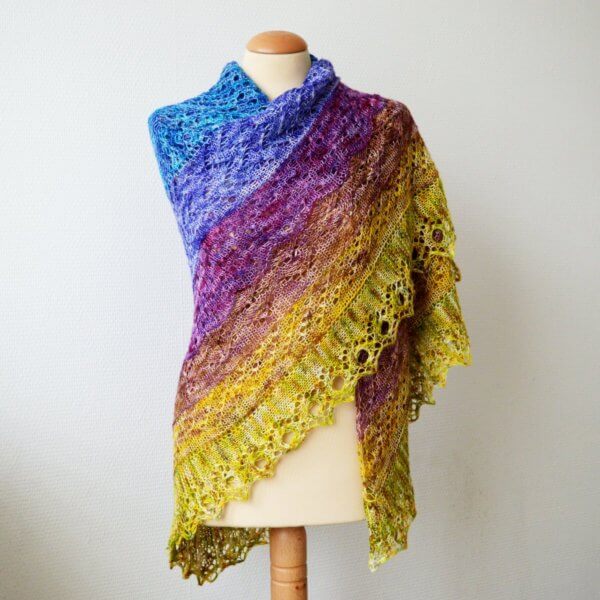
full fade hap

Full Fade Hap - a design by La Visch Designs

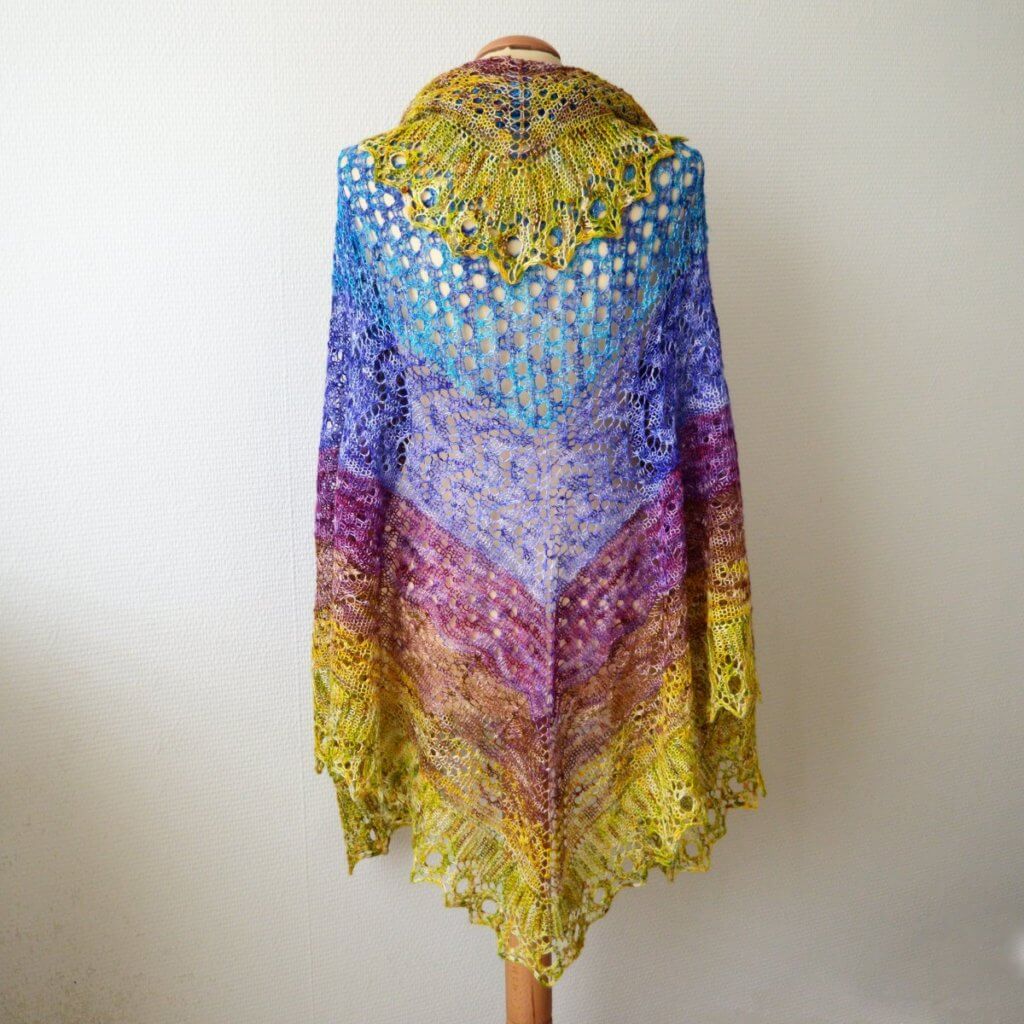
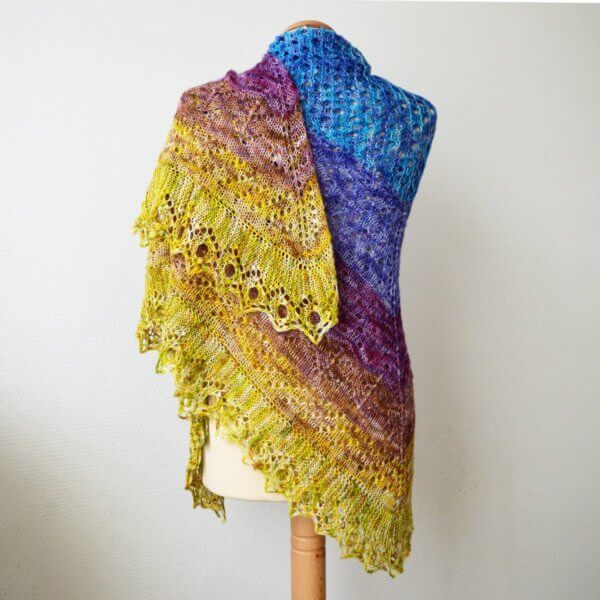
Worked in this lovely fade yarn, hand-dyed by AG2N Hand Dyed Yarns, the Full Fade Hap makes for a wonderful, cozy shawl, which is perfect to wrap up in on a chilly day. This shawl is made in the tradition of the shawls from the Shetland Isles, making for a very interesting construction.

Start the Full Fade Hap at one corner of the center square and increase until big enough, then decrease. Pick up stitches along the edges, and work the stunning border outwards. Each color band in its own lace patterning. The shawl is finished with a gorgeous edging that is knitted on sideways and attached to the live stitches of the border as it is being worked.

Want to knit this shawl in the smaller, triangular version? Take a look a the Half Fade Hap!


Pay what you want: (minimum €6.50)

Add to cart


Difficulty level

This shawl is worked both flat back and forth as in the round. Techniques used include working a knitted-on edging and grafting remaining stitches together using Kitchener stitch. Stitches used include knit, purl, yo, k2tog, k3tog, skp, and various double decreases.

This pattern is suitable for the intermediate to advanced knitter.

Sizes and finished measurements

Finished dimensions of the sample shawl: 146 cm (57 ½ inches) square, measured after blocking.

Pattern details

  • Gauge: approx. 12.7 sts / 25 rows = 10 cm (4 inches) over the center square, measured after blocking Gauge is not critical in this design.
  • Pattern languages included: English and Dutch (Dit patroon omvat zowel een Nederlandse als een Engelse versie)
  • Digital PDF has 8 pages (letter size)

Yarn

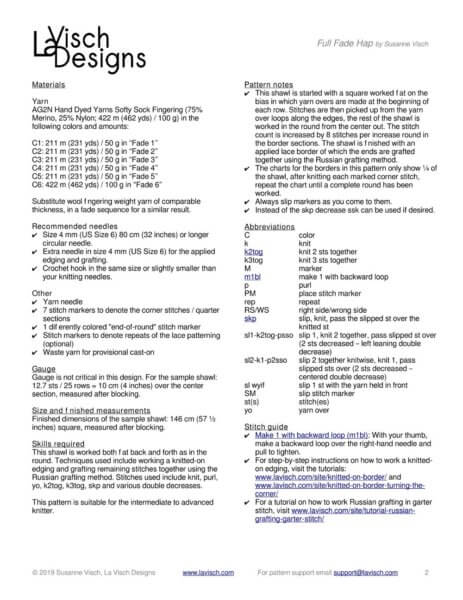
In the sample hap shown, AG2N Hand Dyed Yarns Softy Sock Fingering (75% Merino, 25% Nylon; 422 m (462 yds) / 100 g) in the following colors and amounts was used:

C1: 211 m (231 yds) / 50 g in “Fade 1”
C2: 211 m (231 yds) / 50 g in “Fade 2”
C3: 211 m (231 yds) / 50 g in “Fade 3”
C4: 211 m (231 yds) / 50 g in “Fade 4”
C5: 211 m (231 yds) / 50 g in “Fade 5”
C6: 422 m (462 yds) / 100 g in “Fade 6”

Substitute wool fingering weight yarn of comparable thickness, in a fade sequence for a similar result, or with 1477 m (1617 yds) / 350 g yarn in a single color.

Materials

  • Size 4 mm (US Size 6) 80 cm (32 inches) or longer circular needle.
  • Extra needle in size 4 mm (US Size 6) for the applied edging and grafting.
  • Yarn needle
  • 7 stitch markers to denote the corner stitches/quarter sections
  • 1 differently colored “end-of-round” stitch marker
  • Stitch markers to denote repeats of the lace patterning (optional)
  • Waste yarn for provisional cast-on

full fade hap Read More »
half fade hap

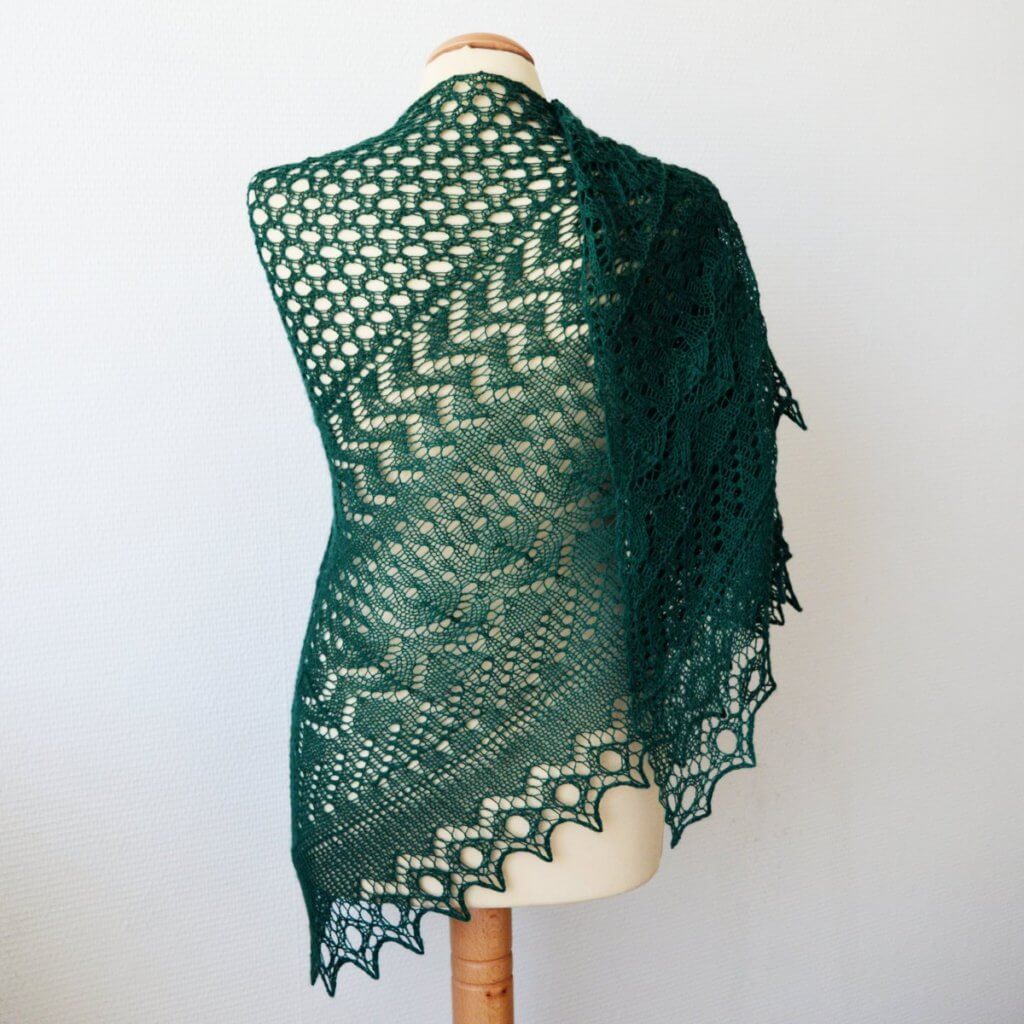
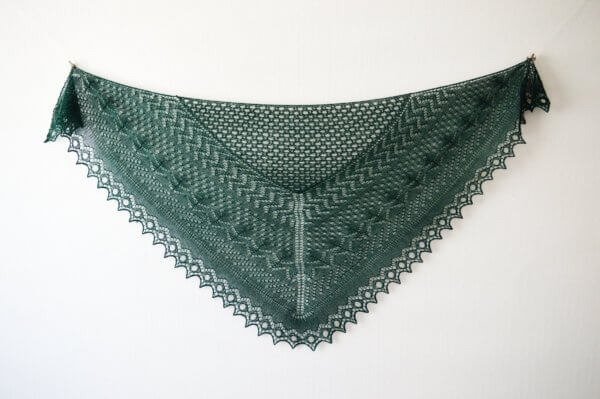
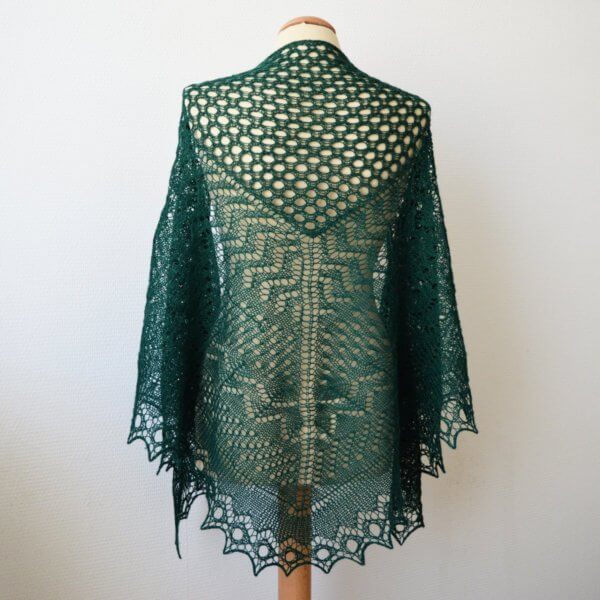
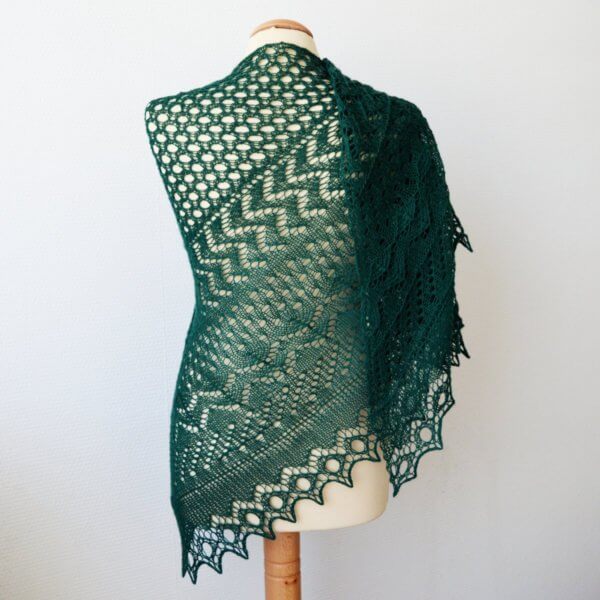
Half Fade Hap in green

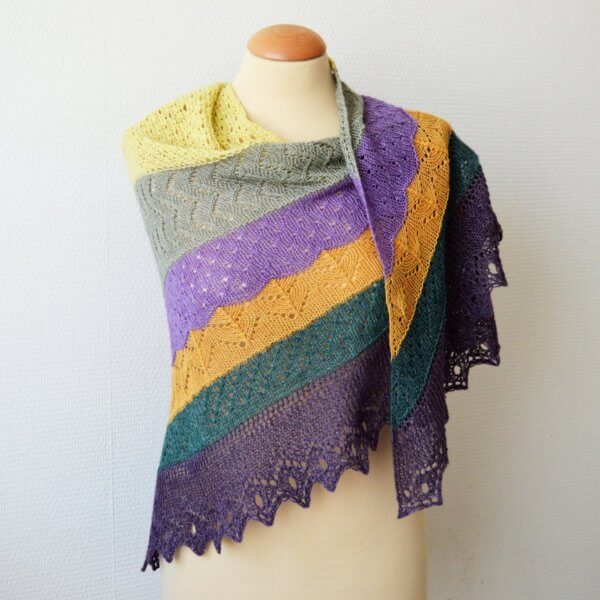
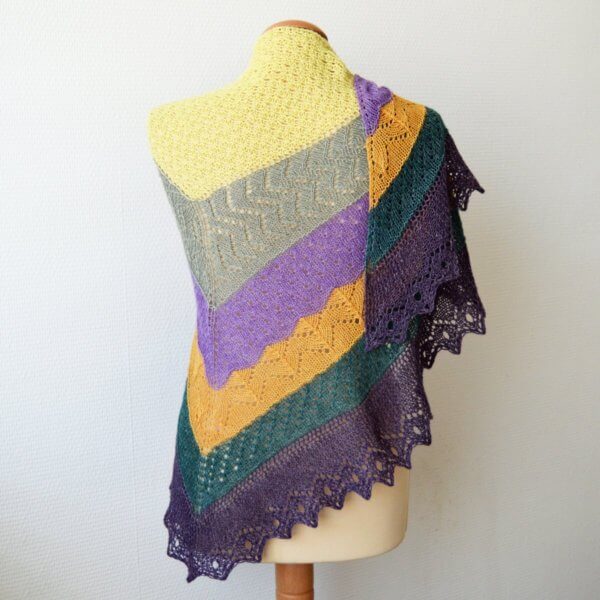
The Half Fade Hap is the smaller, triangular sister of the Full Fade Hap. With its generous size, it makes for a wonderful, cozy shawl. This shawl is made in the tradition of the shawls from the Shetland Isles, making for a very interesting construction.

The Half Fade Hap starts at one corner of the center triangle and increased until big enough. Stitches are picked up along the edges and the stunning border is worked outwards. Each color band in its own lace patterning. The shawl is finished with a gorgeous edging that is knitted on sideways and attached to the live stitches of the border as it is being worked.

The instructions for the lace are provided both charted and written out.


Pay what you want: (minimum €6.50)

Add to cart


Difficulty level

This shawl is worked flat back and forth. Techniques used include working a knitted-on edging. Stitches used include knit, purl, yo, k2tog, skp, and various double decreases.

This pattern is suitable for the intermediate to advanced knitter.

Sizes and finished measurements

Finished dimensions of the dark green sample shawl: Wingspan of 192 cm (76 ½ inches) and a depth of 82 cm (32 ¼ inches), measured after blocking.

Pattern details

  • This shawl pattern is written for a gauge of approx. 25 sts / 30 rows = 10 cm (4 inches) over the center triangle, measured after blocking Gauge is not critical in this design.
  • Pattern languages included: English and Dutch (Dit patroon omvat zowel een Nederlandse als een Engelse versie)
  • Digital PDF has 8 pages (letter size)

Yarn

AG2N Hand Dyed Yarns Softy Squishy Fingering 2 (100% Merino; 399 m (436 yds) / 100 g) in the following colors and amounts: C1: 100 m, (109 yds) / 25 g in “Fade 1”, C2: 100 m (109 yds) / 25 g in “Fade 2”, C3: 100 m (109 yds) / 25 g in “Fade 3”, C4: 100 m (109 yds) / 25 g in “Fade 4”, C5: 100 m (109 yds) / 25 g in “Fade 5” and C6: 200 m (218 yds) / 50 g in “Fade 6”.

AG2N Hand Dyed Yarns has dyed several fade sets (with yarn enough for the full hap or 2 half haps), these can be found here.

Substitute wool fingering weight yarn of comparable thickness, in a fade sequence for a similar result, or with 742 m (812 yds) / 175 g yarn in a single color.

Dark green version: Worked by I. Kooiman in Zettle Treviso (75% Wool, 25% Nylon; 209 m (229 yds) / 50 g) in green.

Multicolored version with the center triangle in yellow: Worked by M. Veldhuijzen van Zanten in Geilsk 3 ply Bomuld og uld (55% Wool, 45% Cotton; 232 m (254 yds) / 50 g) in multiple colors.

Materials

  • Size 4 mm (US Size 6) 80 cm (32 inches) or longer circular needle.
  • Yarn needle
  • 4 stitch markers to denote the edge and center stitches
  • Stitch markers to denote repeats of the lace patterning (optional)

half fade hap Read More »