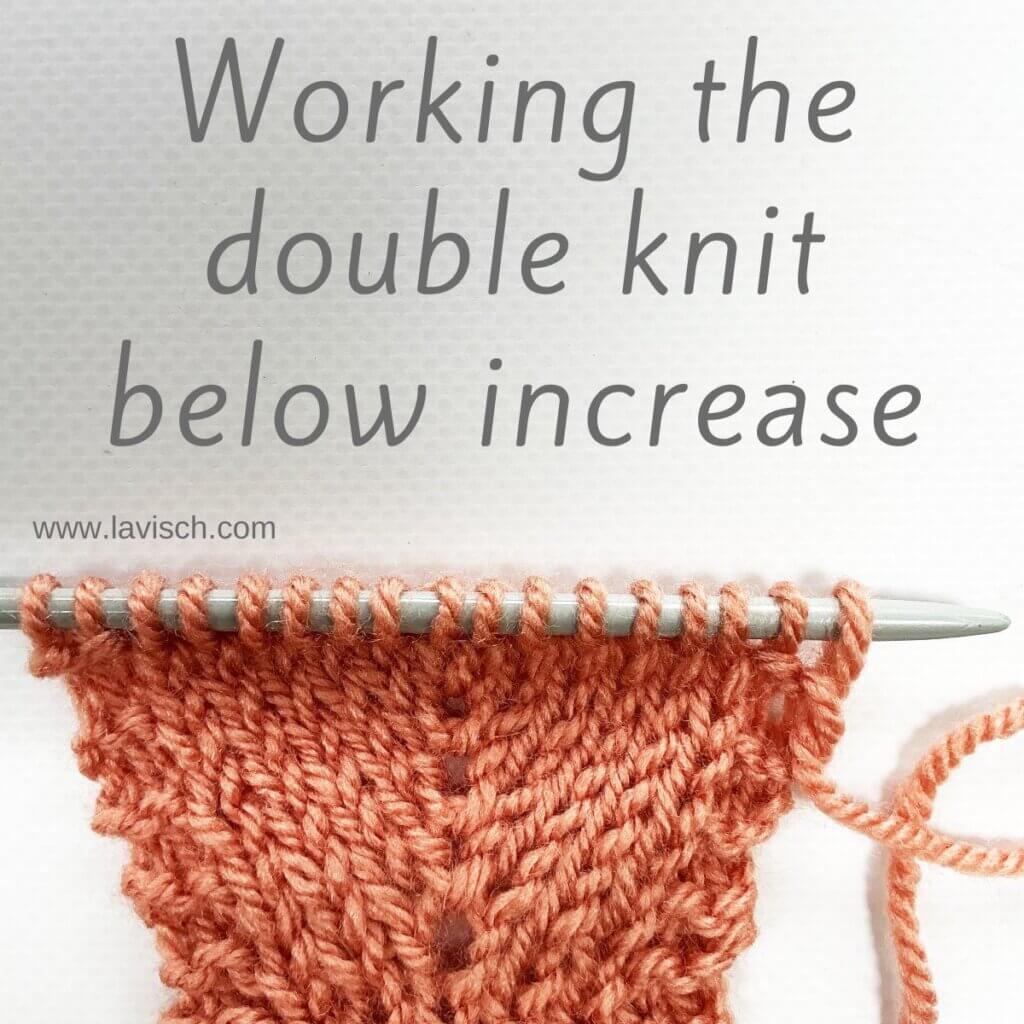
Double increases aren’t as commonly used as basic single increases. Nevertheless, they absolutely have their place in the knitter’s toolkit. The double knit below increase is a variation of a lifted increase. Instead of only increasing 1 stitch, however, you’re increasing 1 stitch to 3 stitches.
As you’ll see, the structure of this increase, is very similar to the k-yo-k increase. Rather than placing a yarn over between the two knit stitches, this variation uses a double-knit-below increase centered in the same spot: work a knit-below increase flanked by two knit stitches, all drawn from a single point. The resulting eyelets are subtler and more refined than those created by the classic k-yo-k, while still forming a pretty decorative line. This double increase is symmetrical and quite decorative, and for this reason also a very good choice to use for the central spine in top-down triangle shawls.
Below you can find how to work this increase step by step, so get your materials and follow along!
Materials
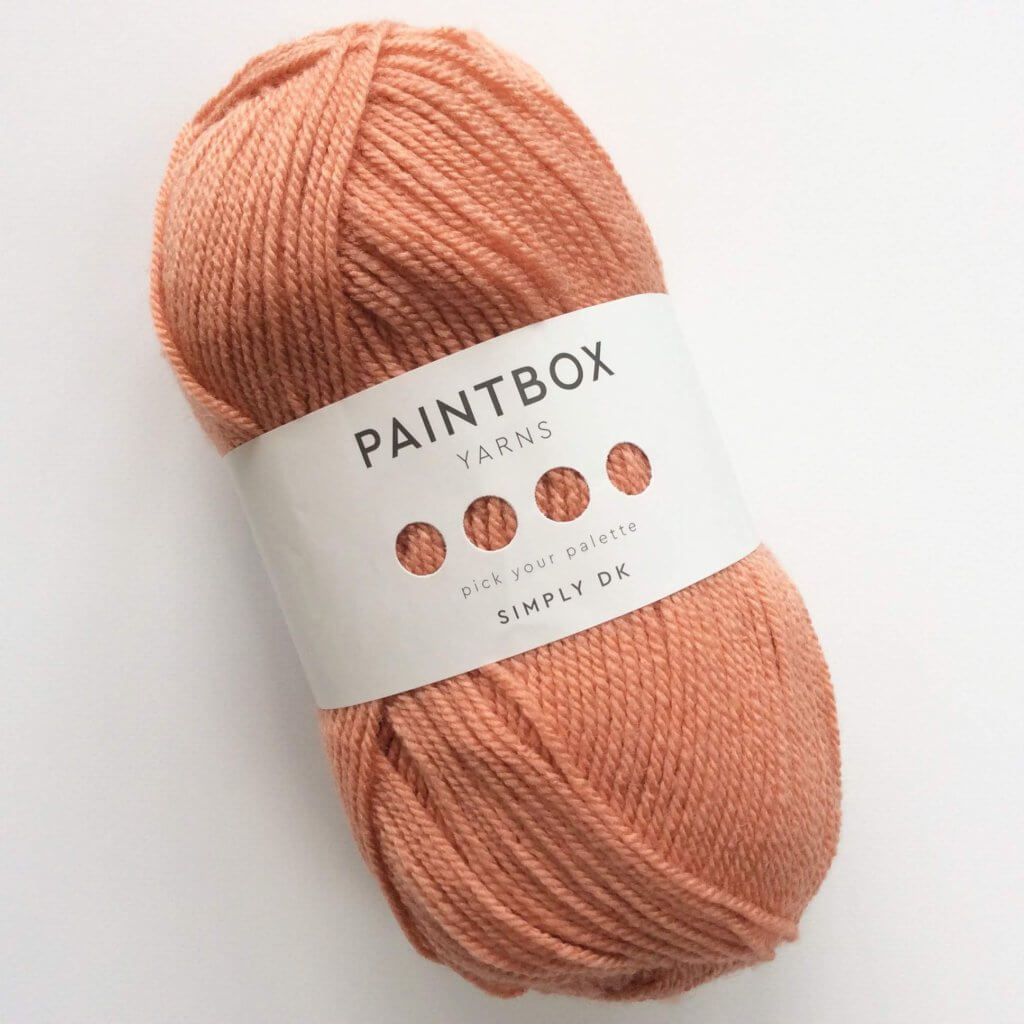
Yarn: Paintbox Yarns Simply DK, a good value, good quality 100% acrylic yarn, here in the color 155 Vintage pink.
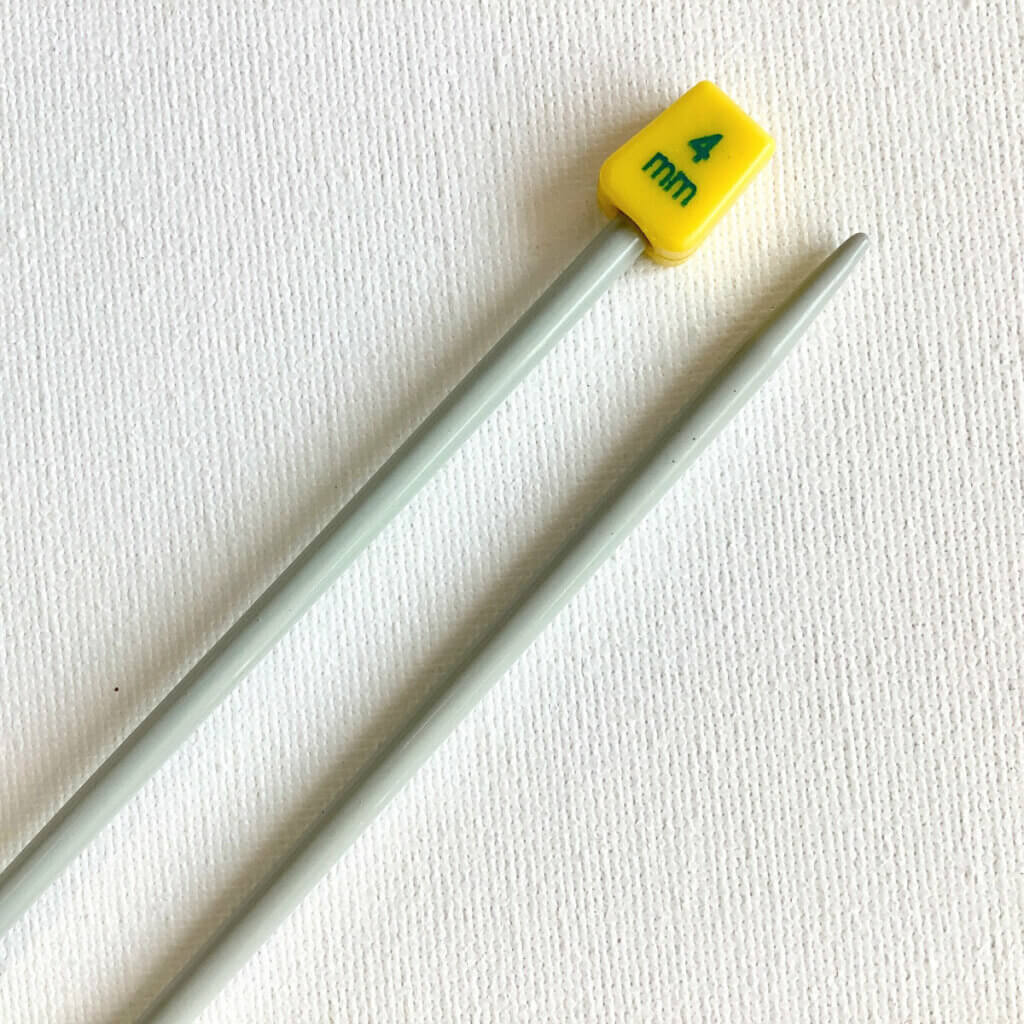
Knitting needles: This is a pair of straights that I picked up at the second-hand store when I started knitting, brand unknown.
Working the double knit below increase step by step
- Work your way across the row until you’ve reached the point where you want to make the double increase.
In this case, I want to work the increase in the center stitch of the swatch, where I’ve already worked some rows with increases.
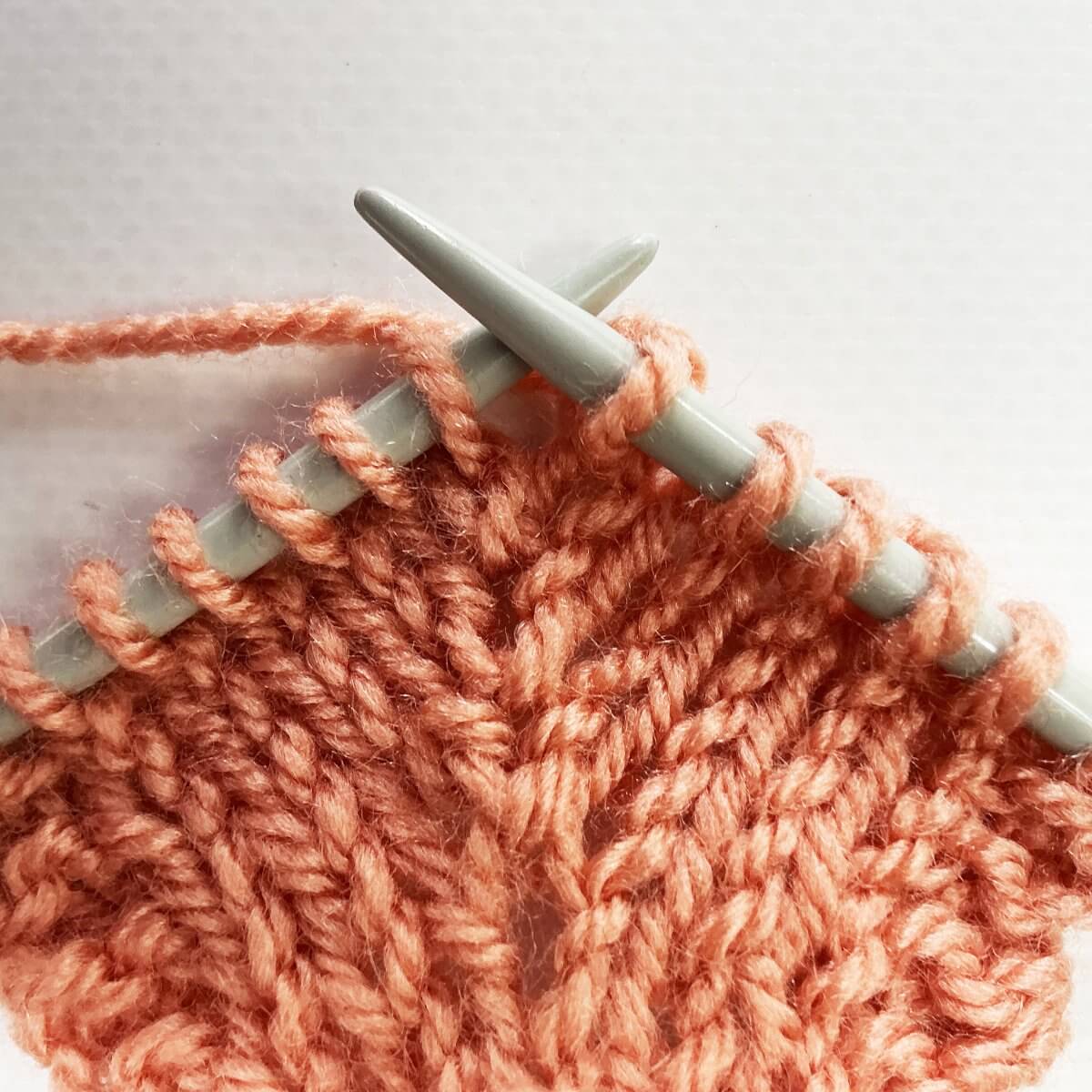
- First, work a knit stitch in the first stitch on the left-hand needle.
Don’t let the stitch slide off the needle yet!
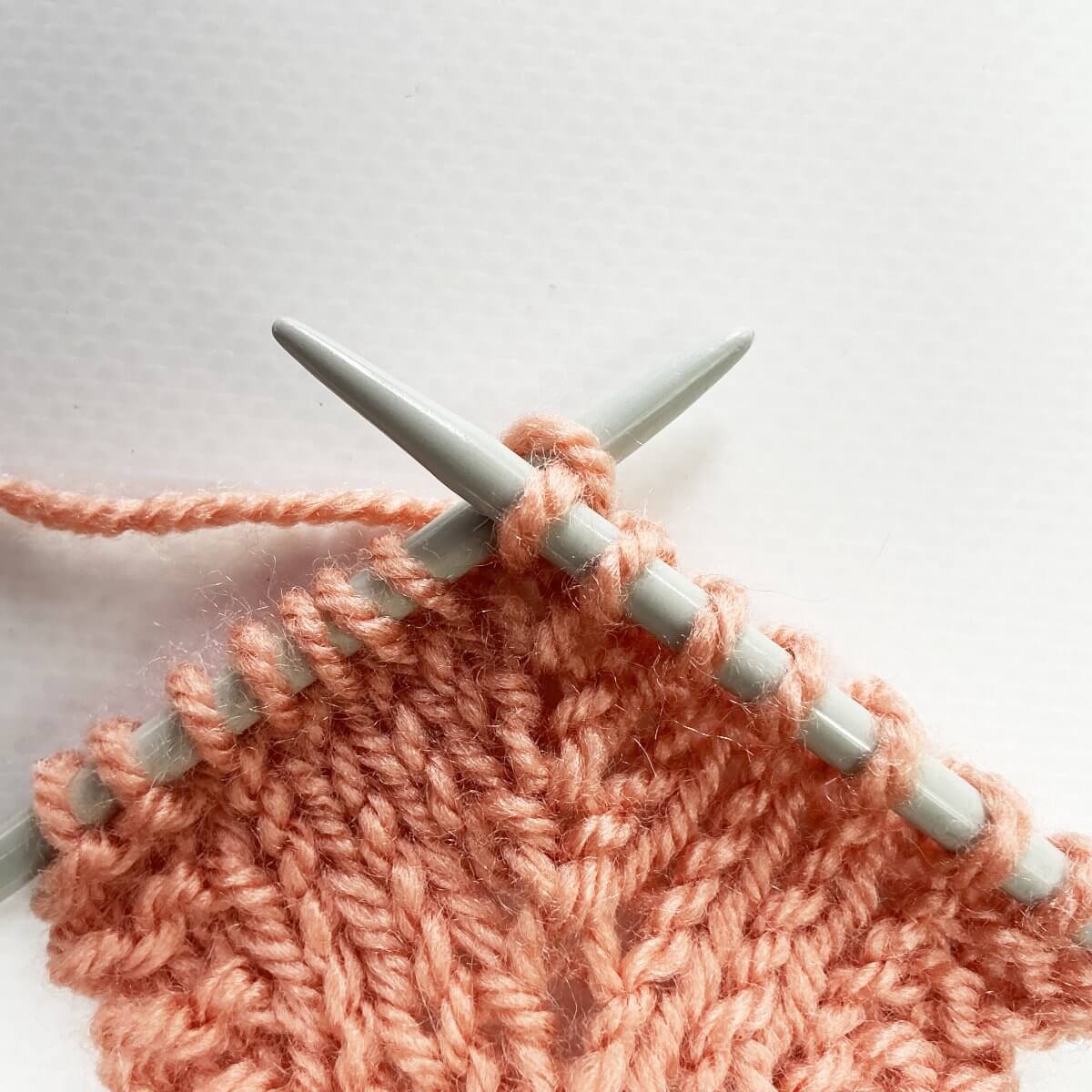
- For the middle stitch in the increase, we’re going to knit below the stitch just worked. Do you see the horizontal bar just below it? That’s where to insert your right-hand needle for this next step!
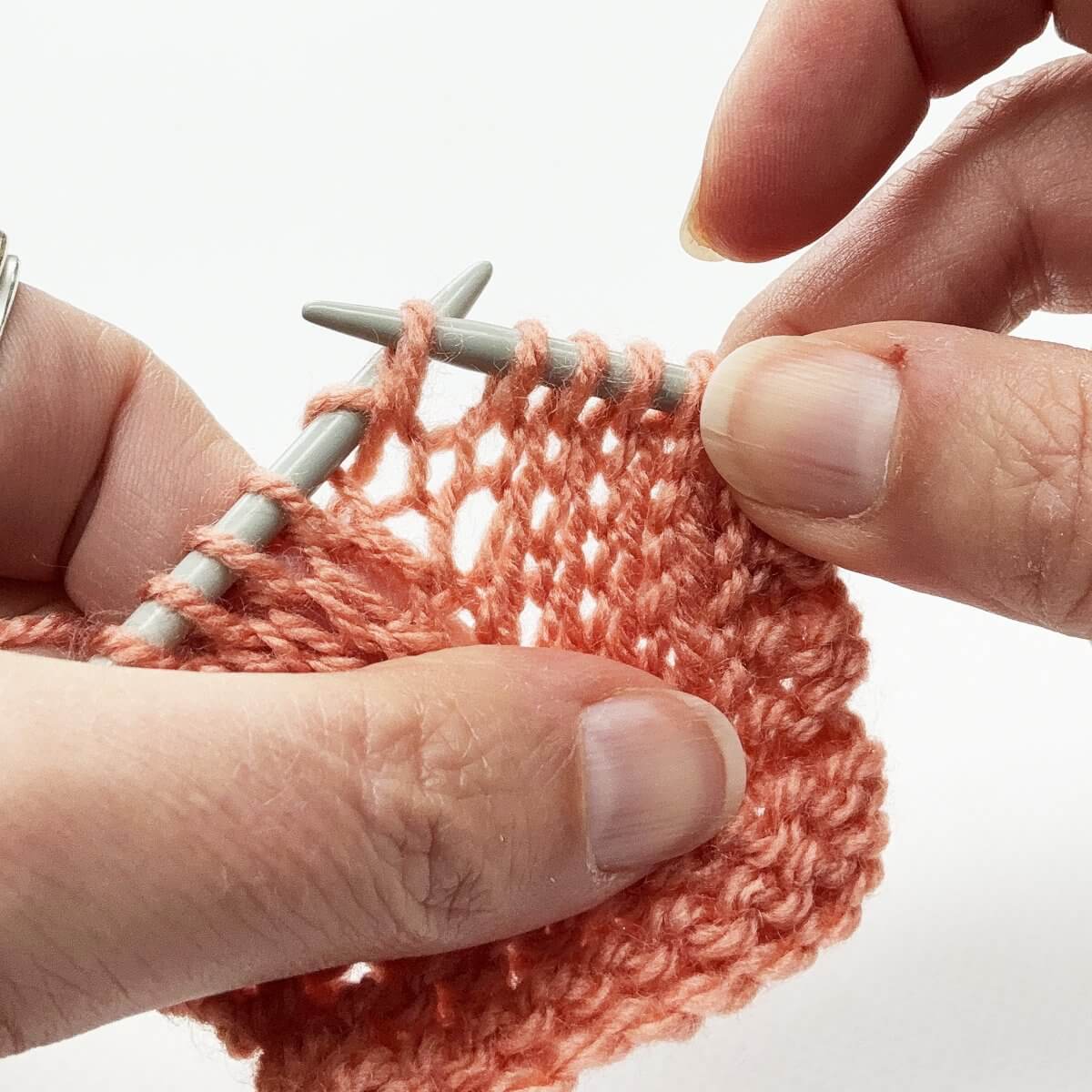
- So, insert your needle, wrap the yarn around, and pull it through to make a knit stitch, one stitch below. Don’t let the original stitch slide off the needle yet!
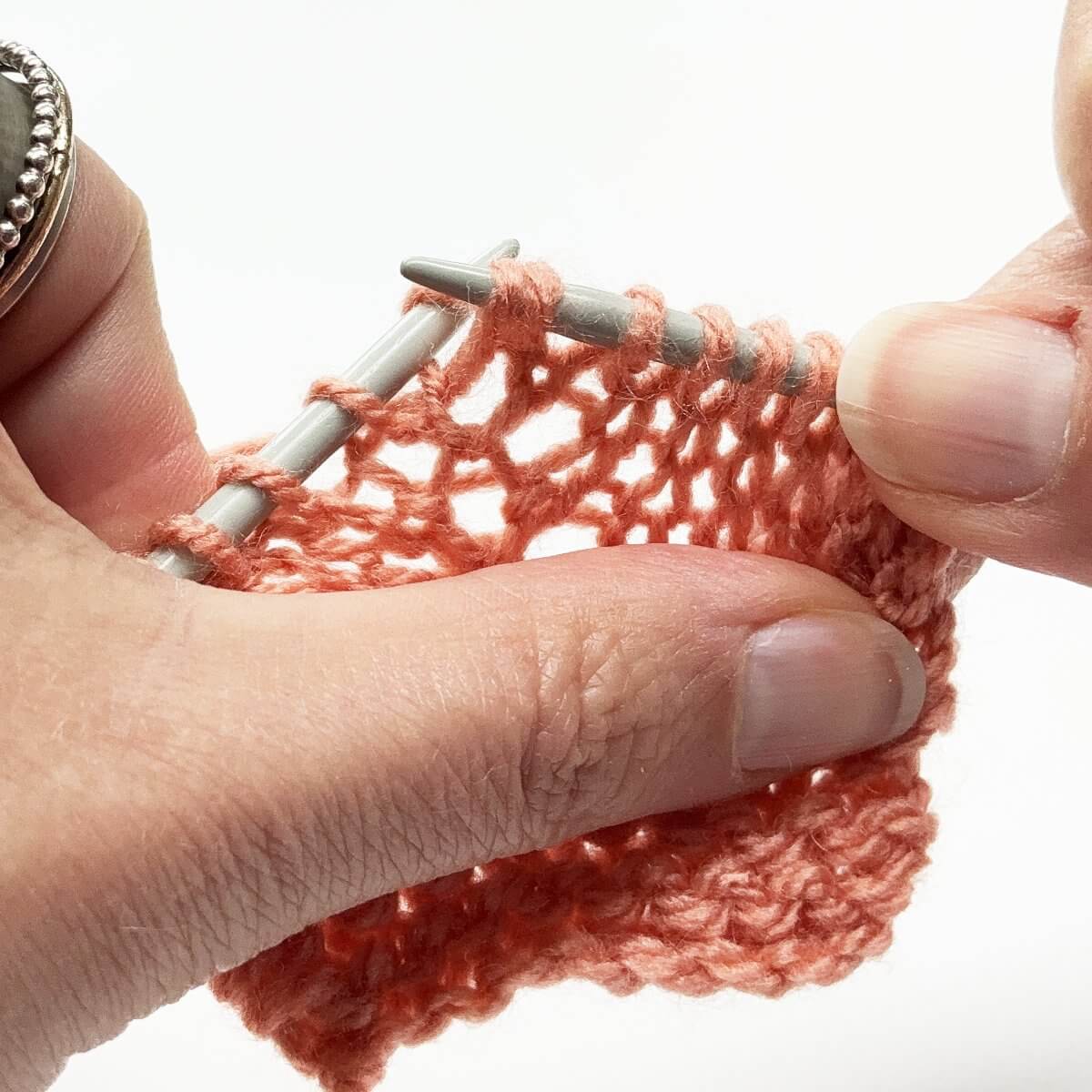
- Then work another knit stitch, this time into the original stitch as you did in step 2.
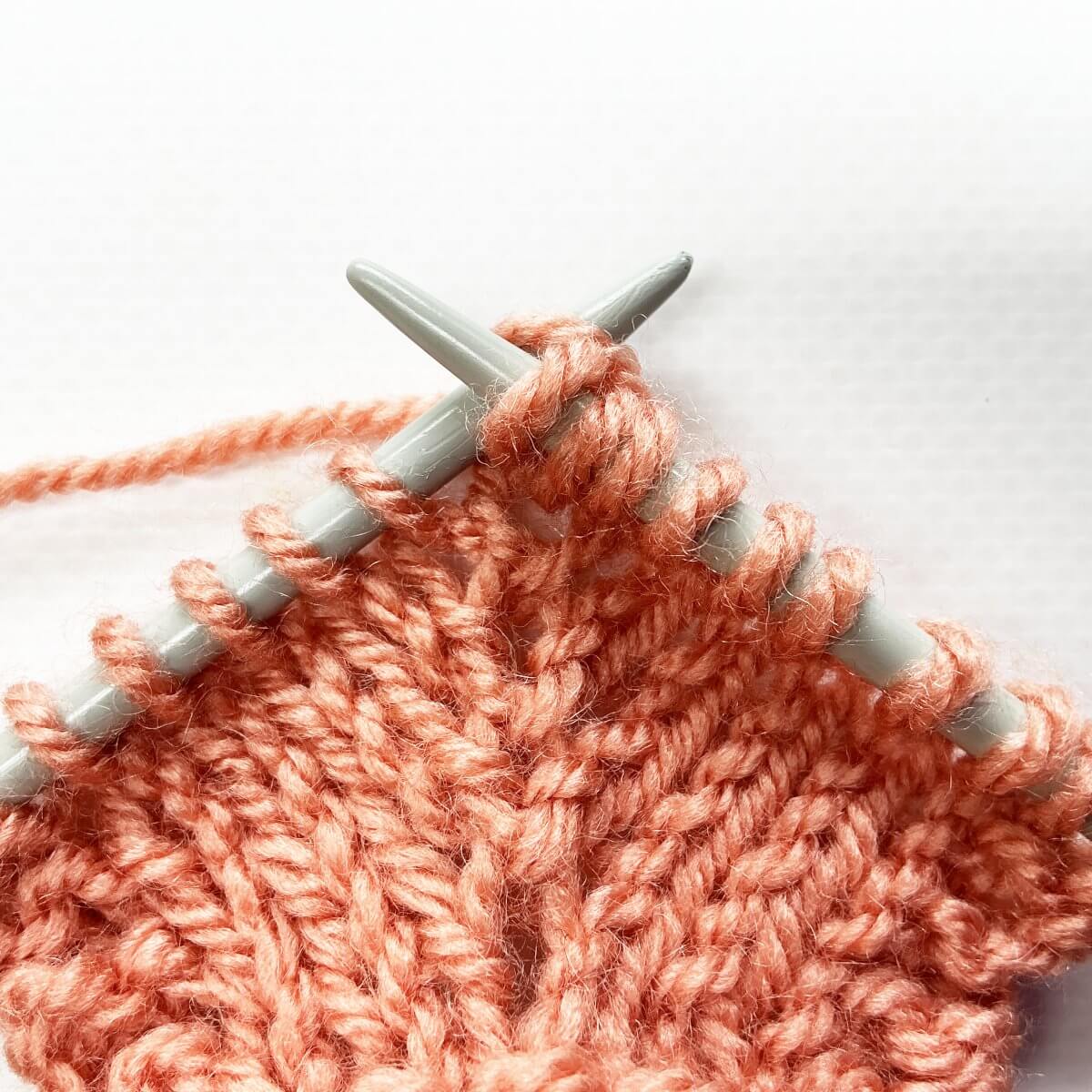
- To complete the increase, slip the stitch worked off the needle.
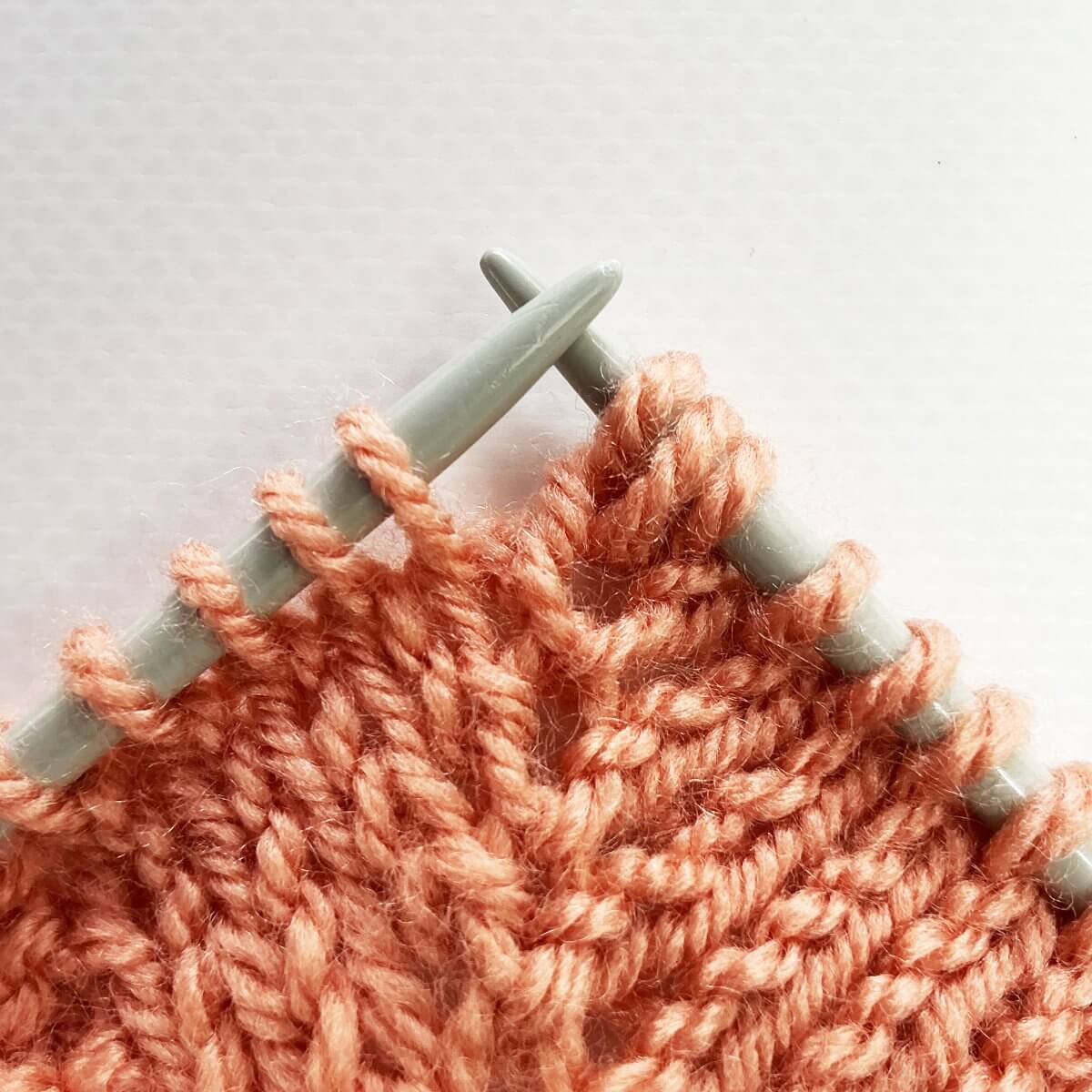
The result
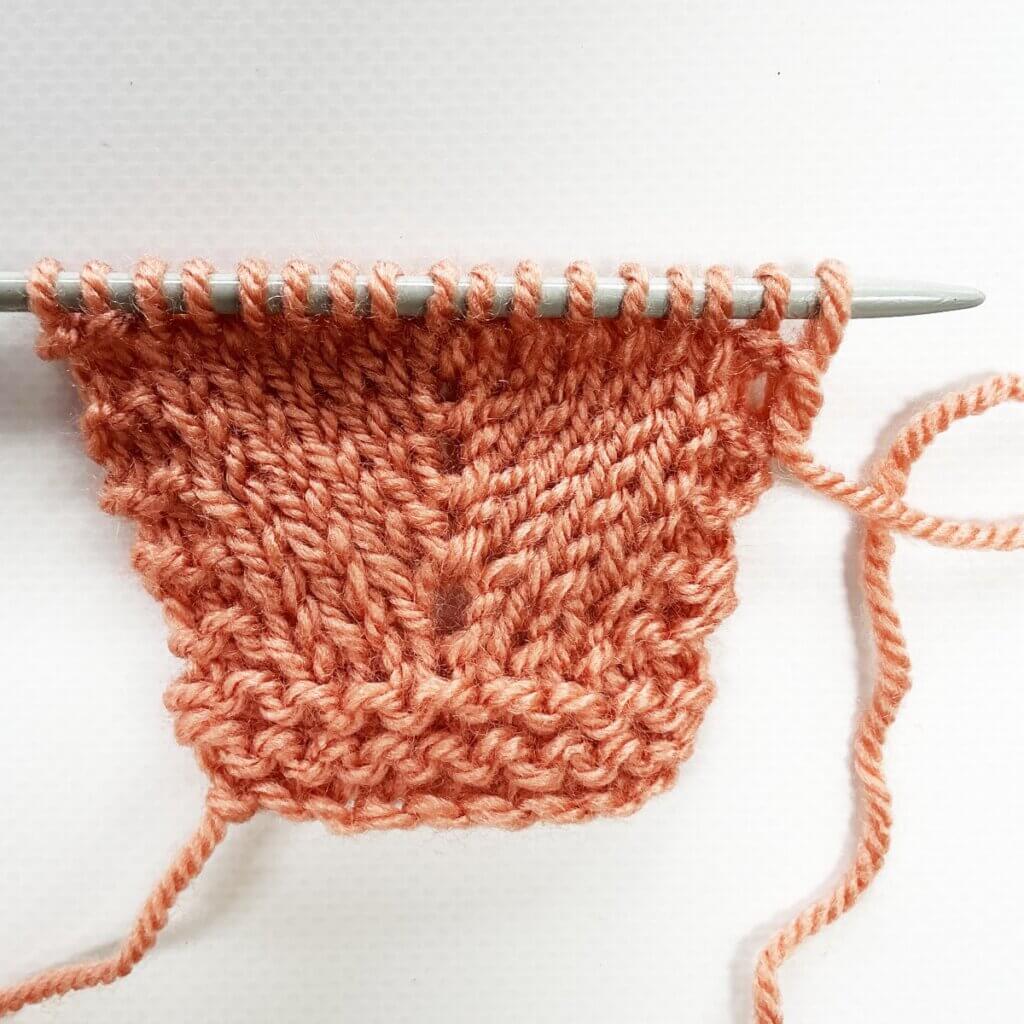
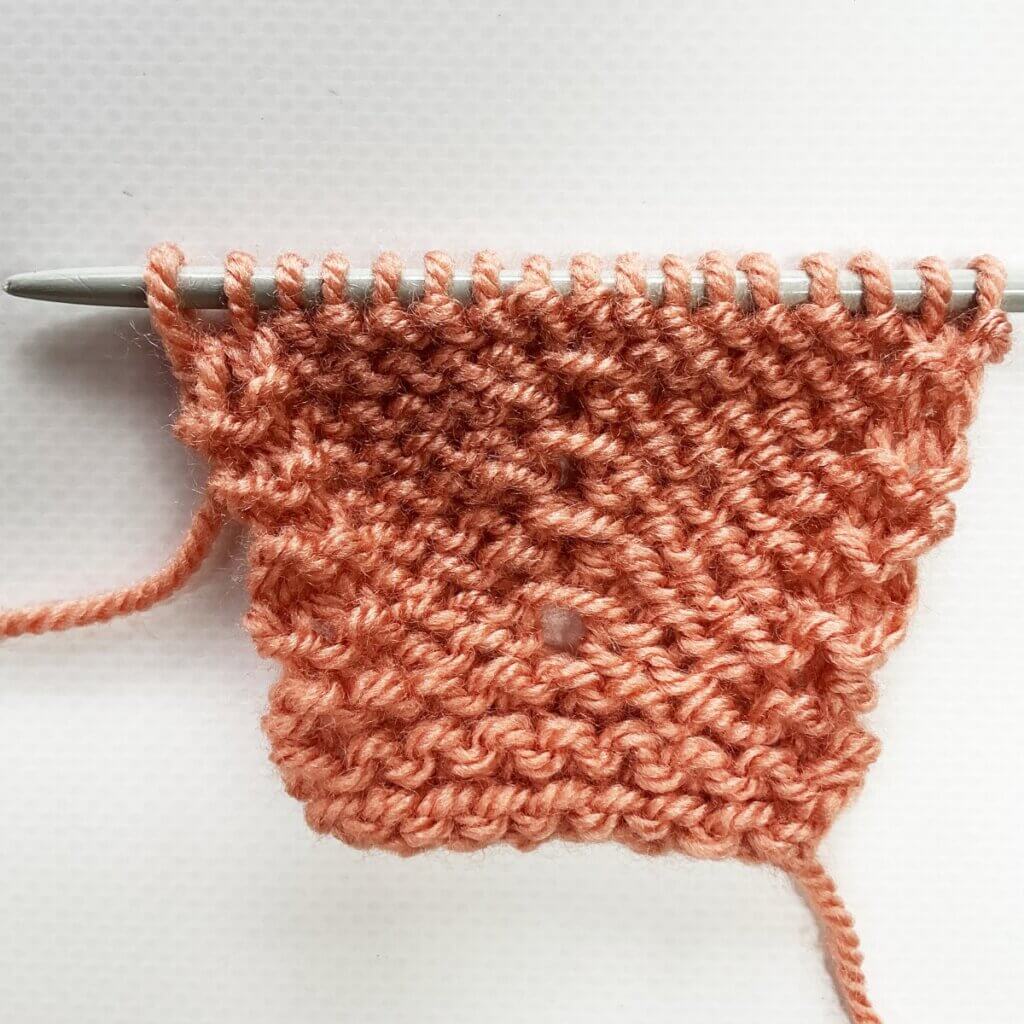
Below, you can see the result of working several rows of these increases. First shown from the right side, then from the wrong side of the fabric. Doesn’t it look pretty?

Thanks to my Patreon supporters for bringing you this freebie! Creating quality patterns and tutorials is a lot of work and resource-intensive. However, I find it important to give you free content like this tutorial. Thanks to the generous support of my Patreon supporters, I can make it happen. Thank you, patrons! Click here to join, or click here to read more about La Visch Designs on Patreon.