second sock (or sleeve) syndrome

second sock (or sleeve) syndrome

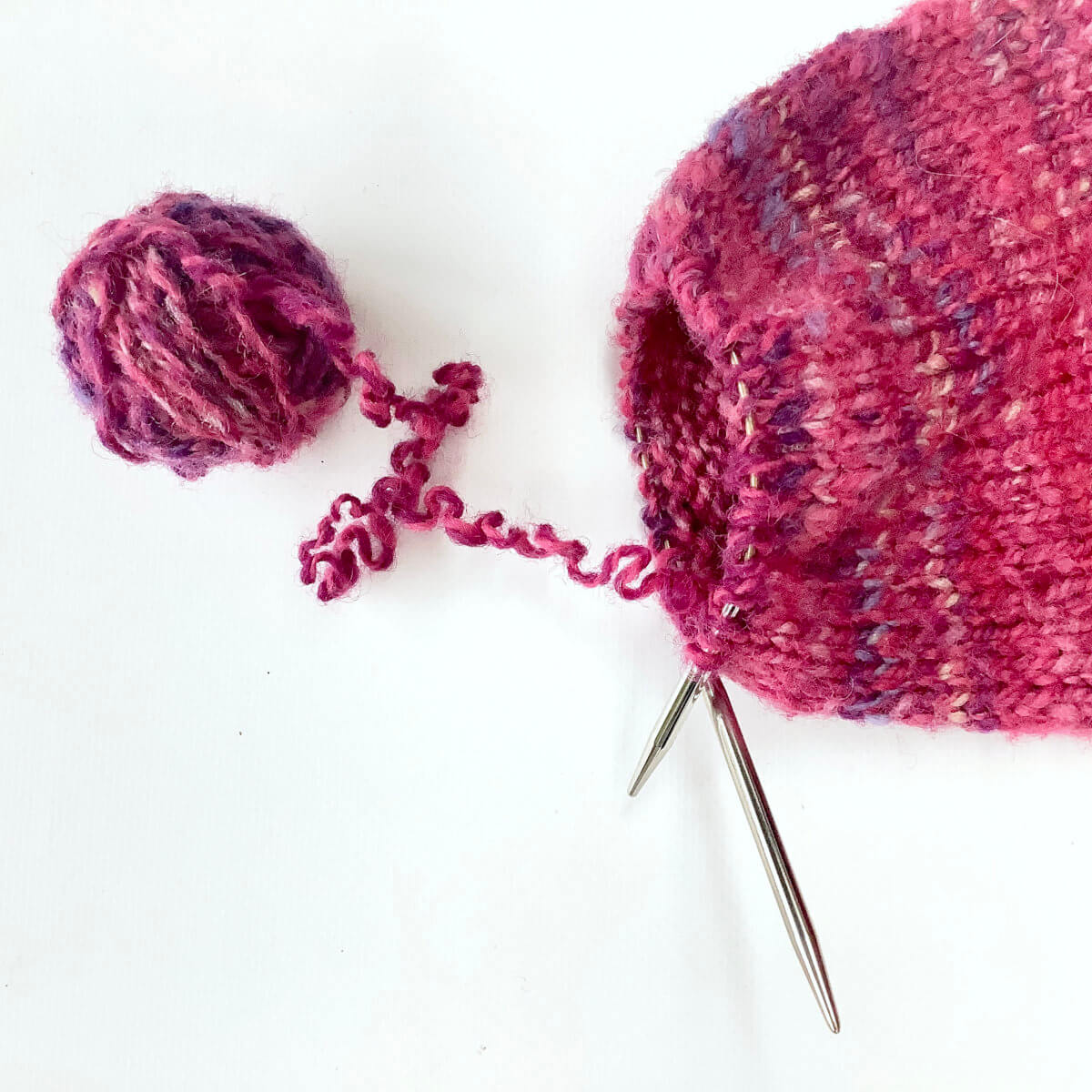
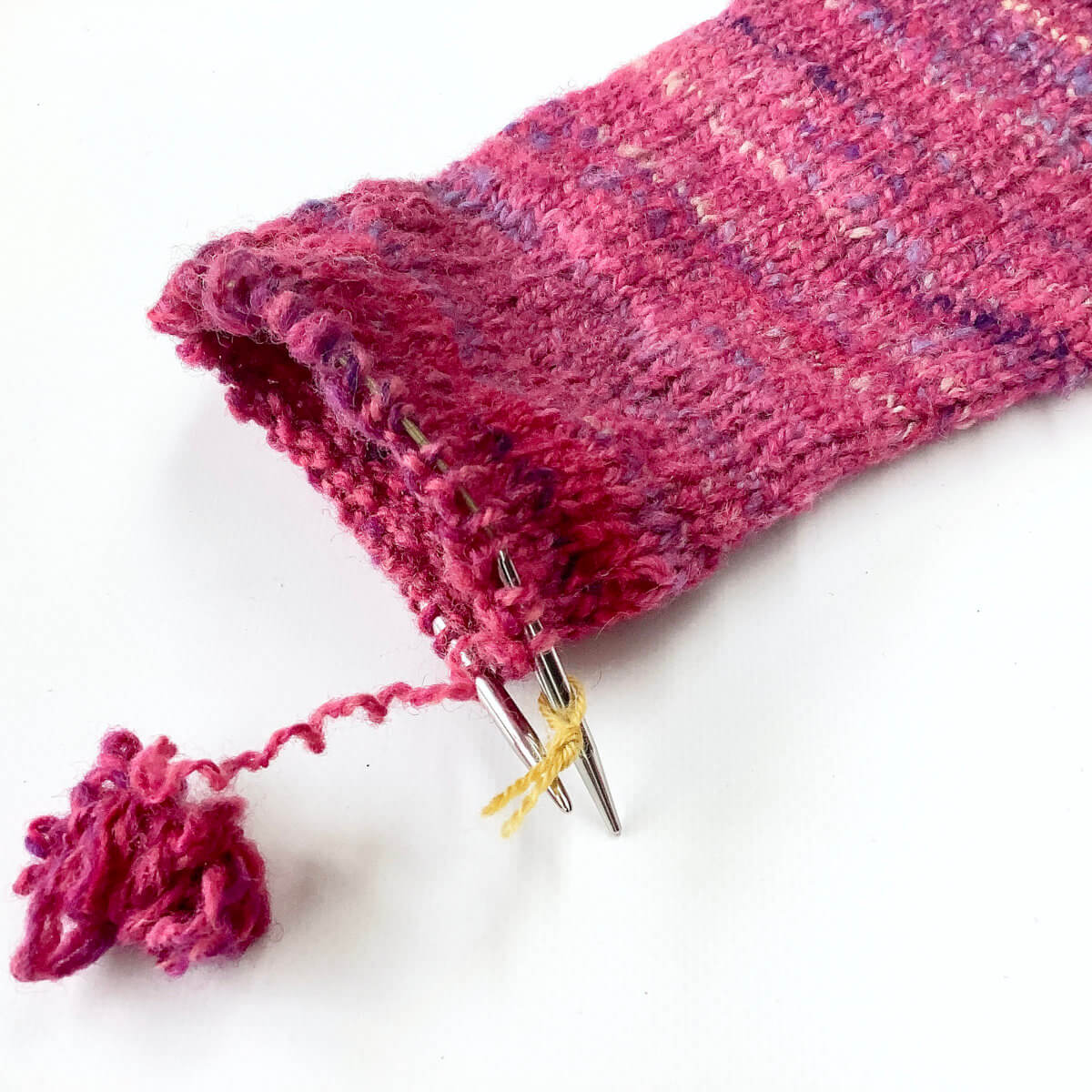
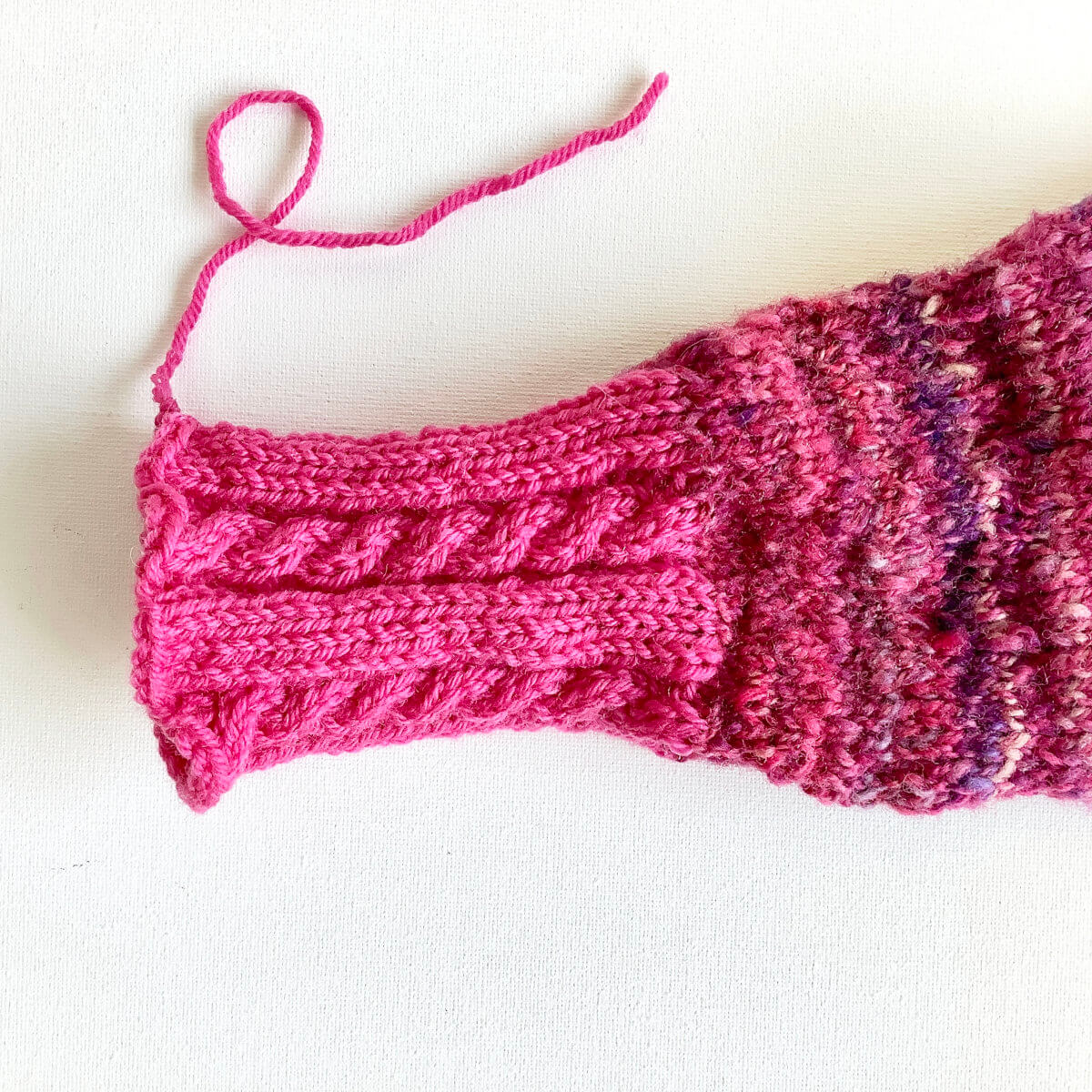
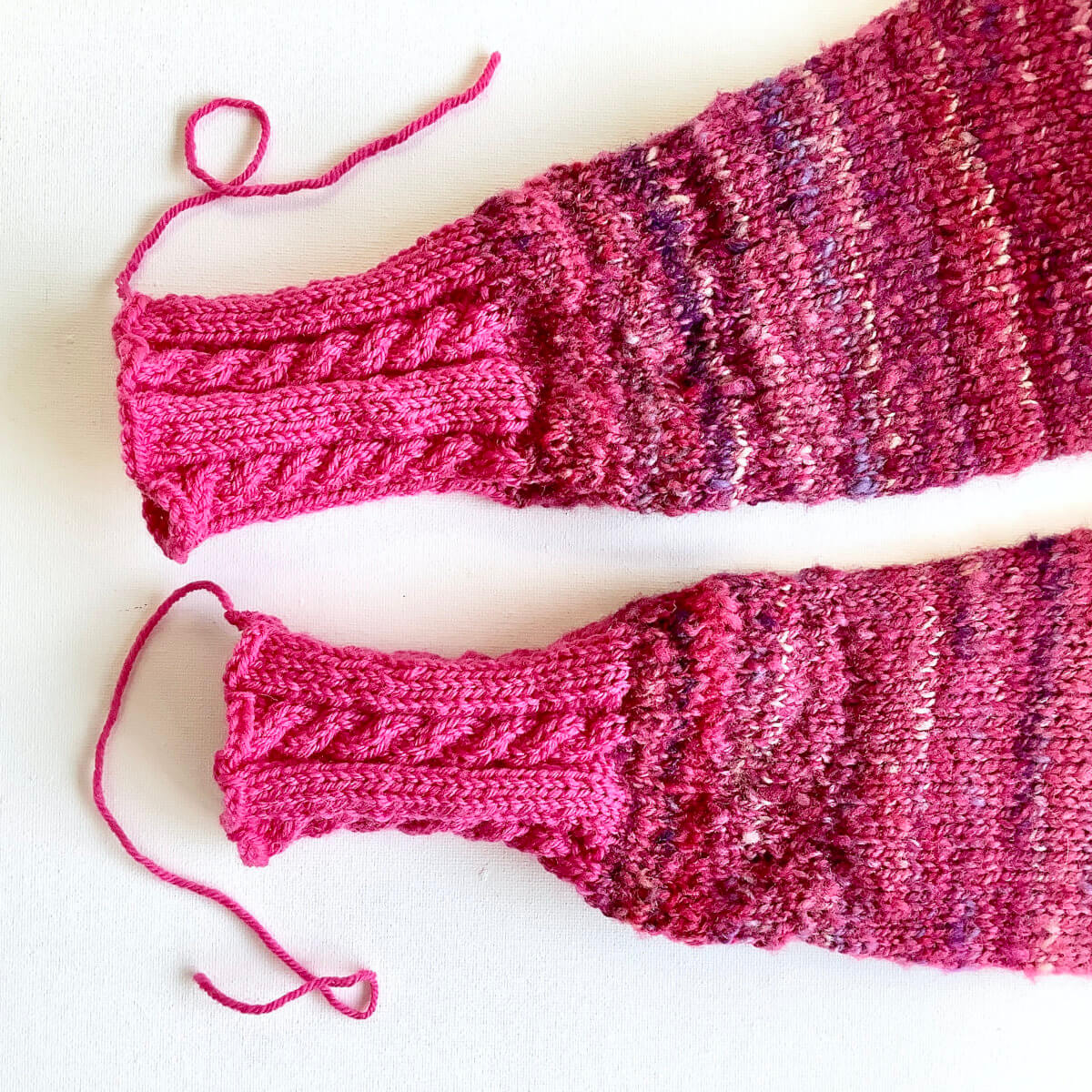
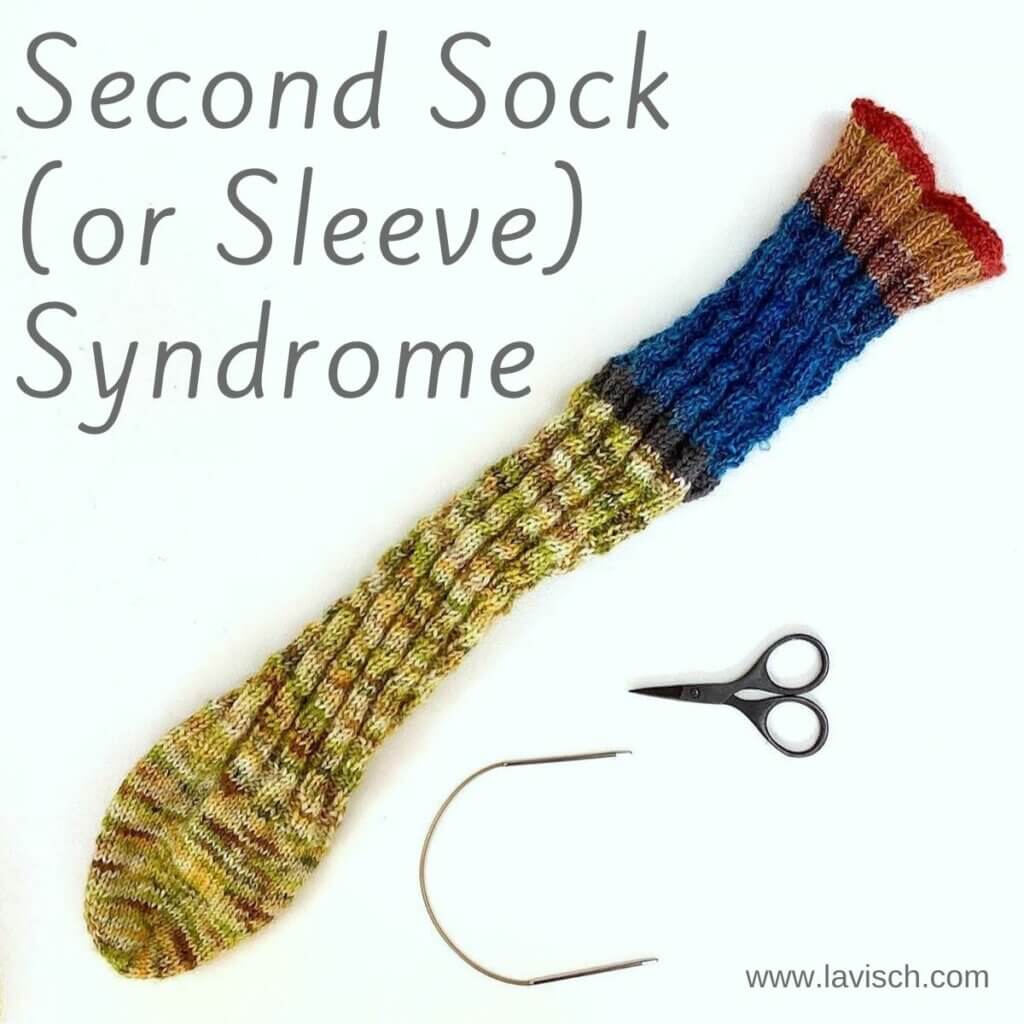
For anyone who has ever made socks, a sweater or cardigan, this will probably sound very familiar: You’ve finished your first sock or sleeve, and it’s just great. The fit is good, the length is exactly how you like it. And then you realize you HAVE to make another one. And you really want to cast-on something new, instead of doing that thing again. That, my friends, is second sock (or sleeve) syndrome.

I’m not really into sock knitting, although I’ve made a couple of pairs in the past. But I am into a me-made wardrobe, and have been knitting quite some sweaters, tees and cardigans for myself over the years. So yes, feeling bored and stranded on sleeve-island really is a thing, and carries the risk of having a growing pile of one-sleeved sweaters (or single socks) instead of things you can actually wear. Fortunately, there are ways to deal with second sock (or sleeve) syndrome. In this post, I’ll tell you all about it!

1. Working two-at-a-time (TAAT)

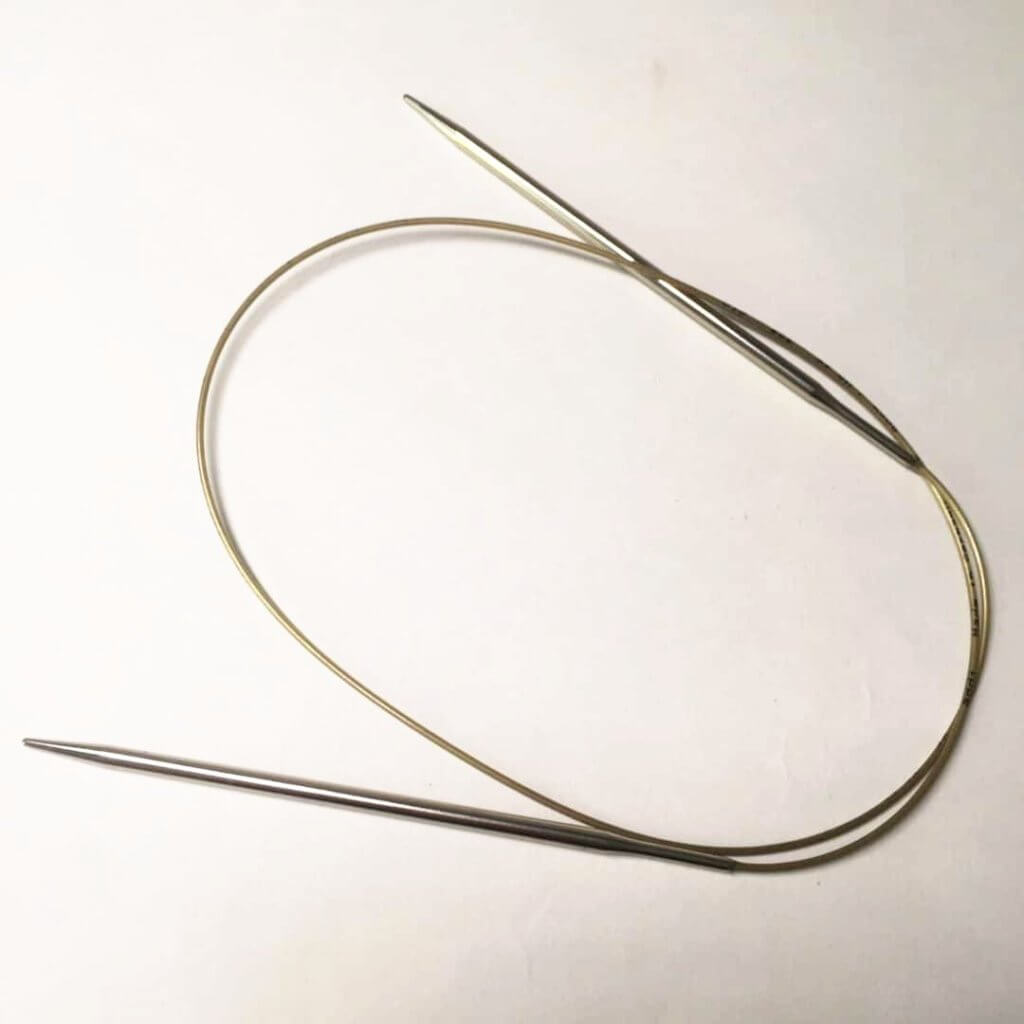
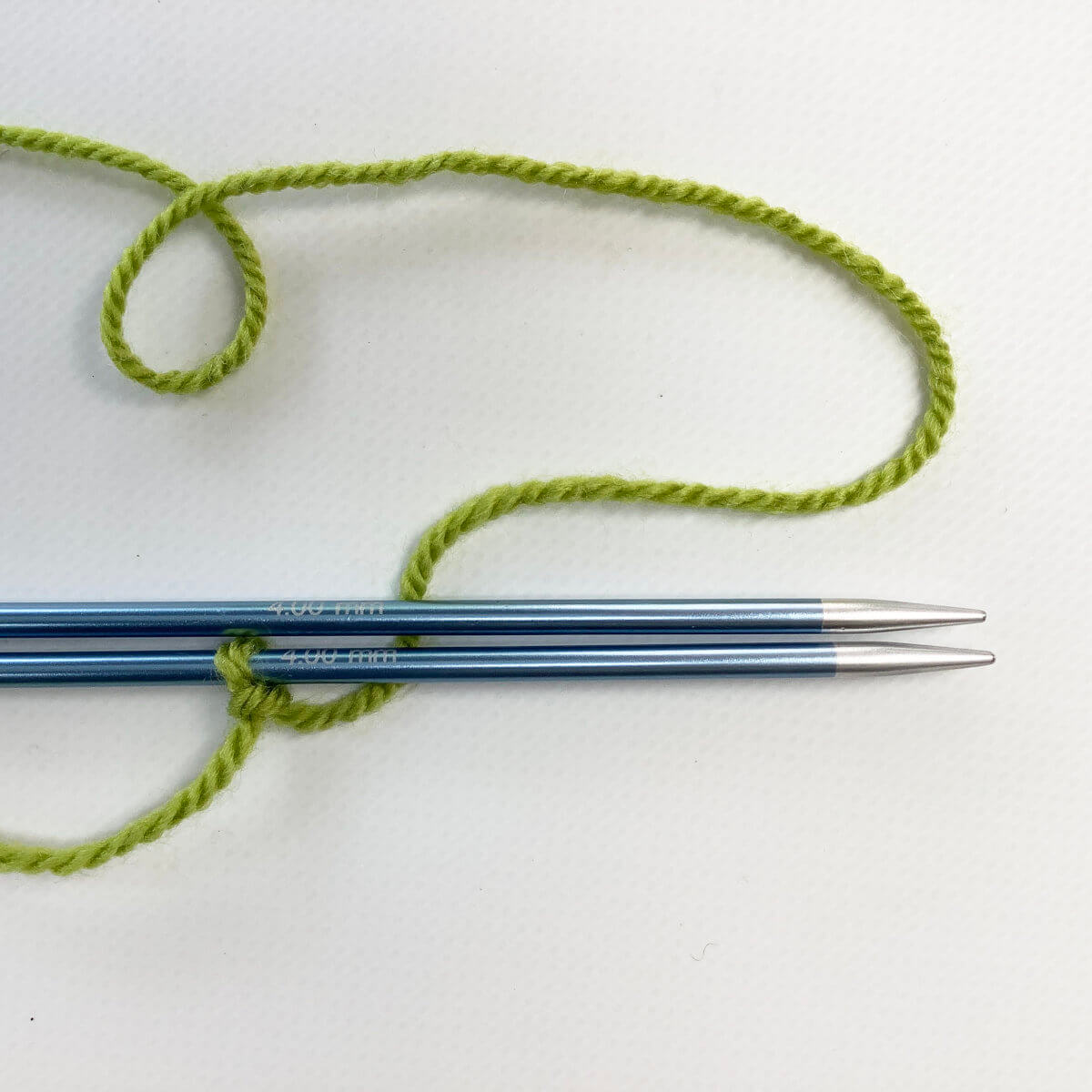
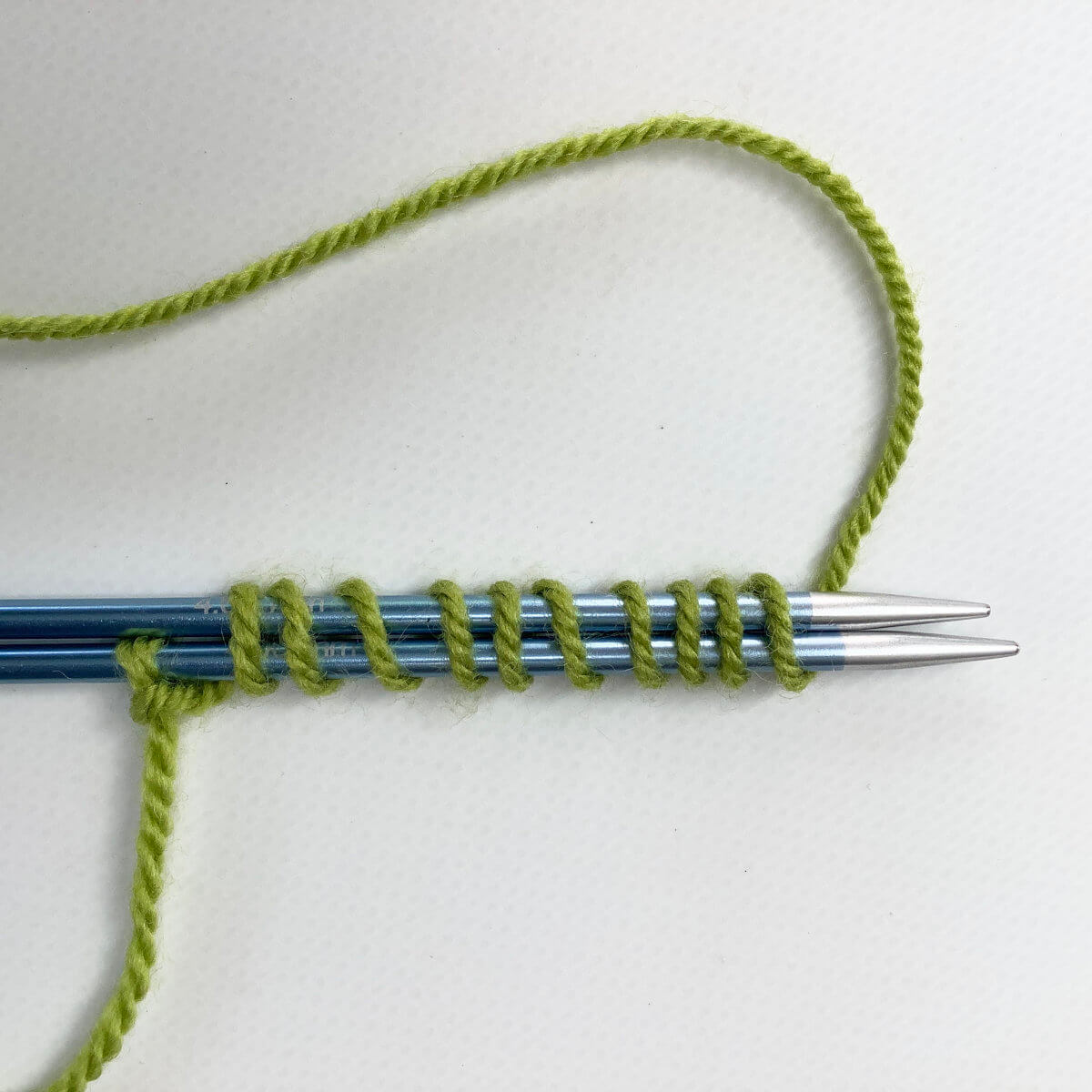
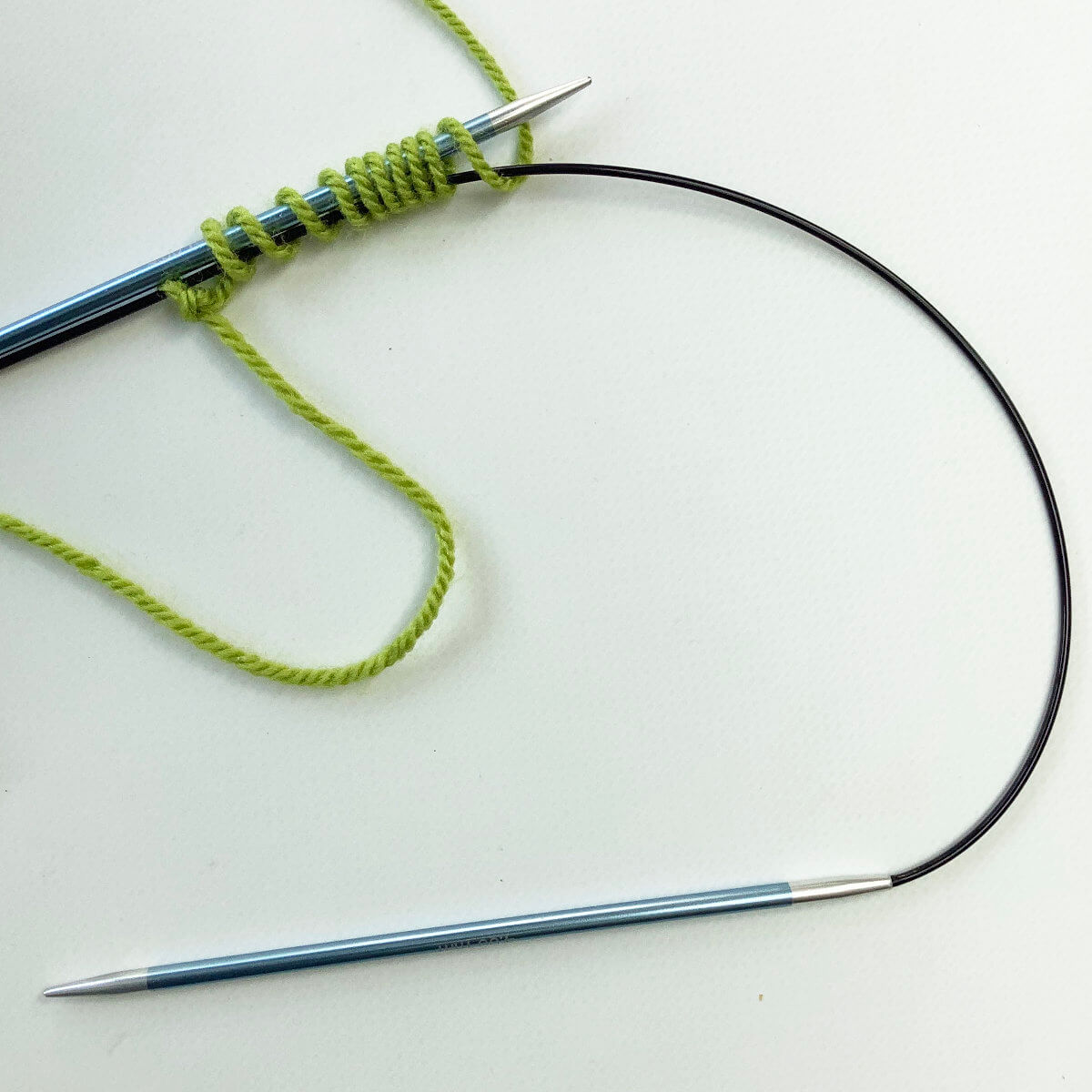
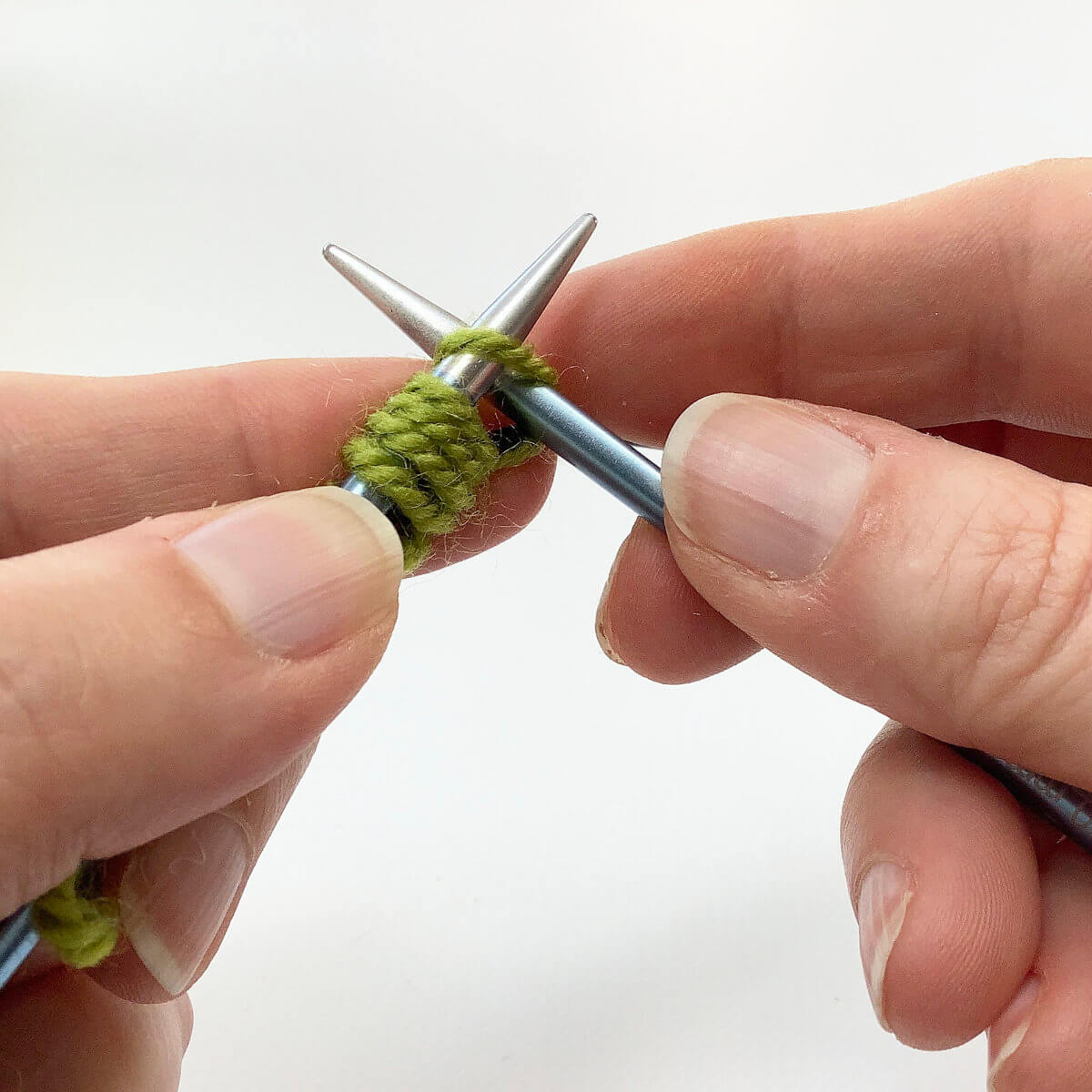
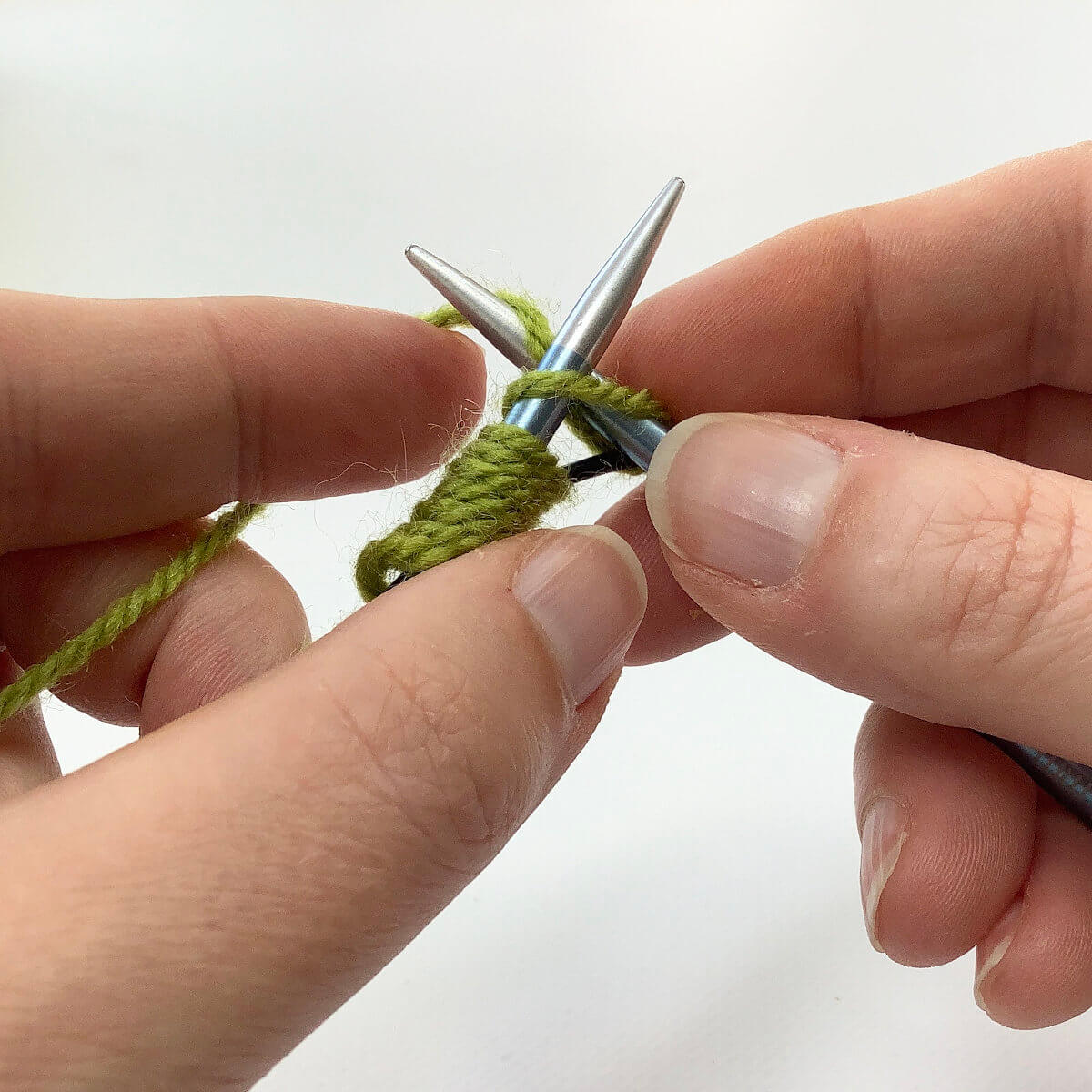
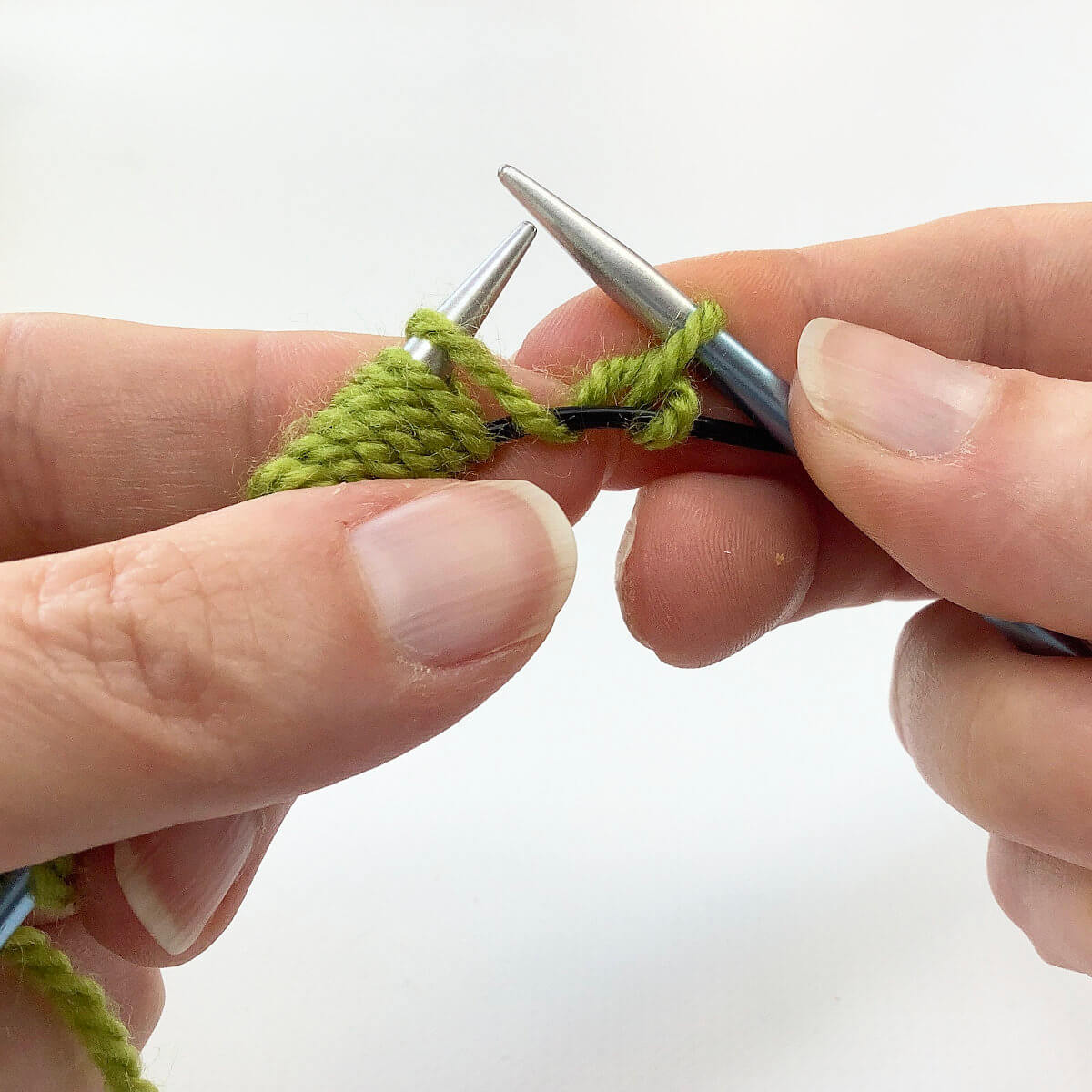
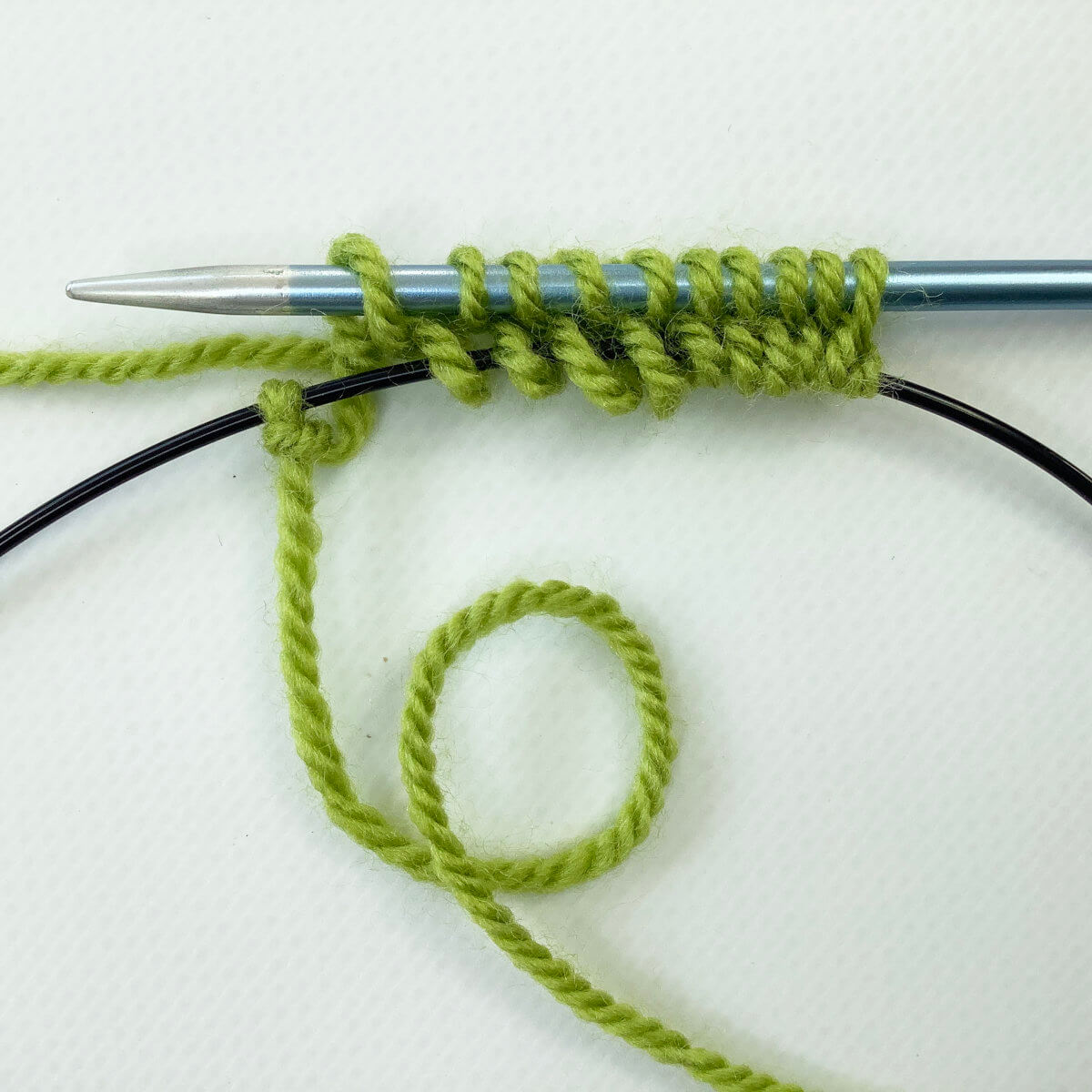
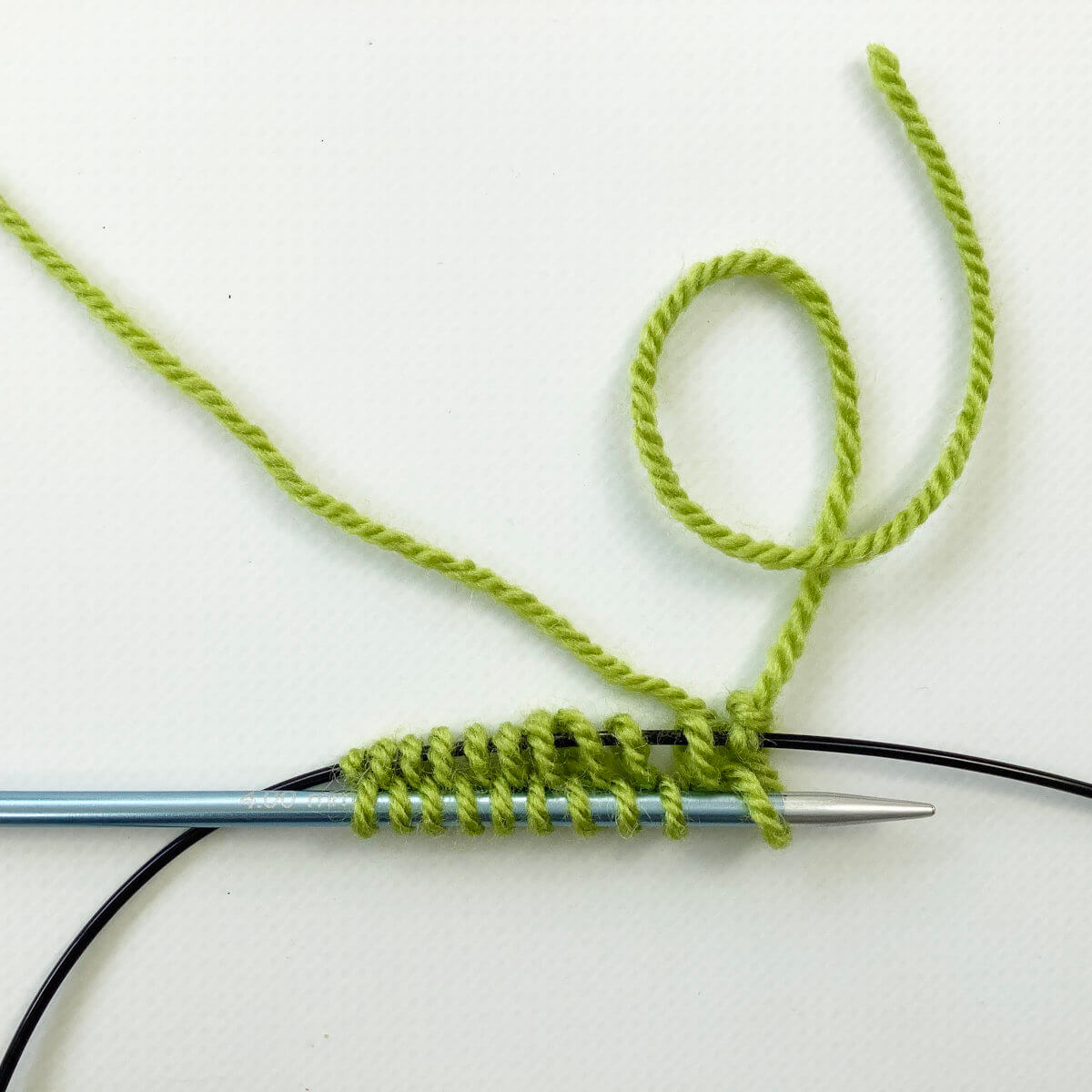
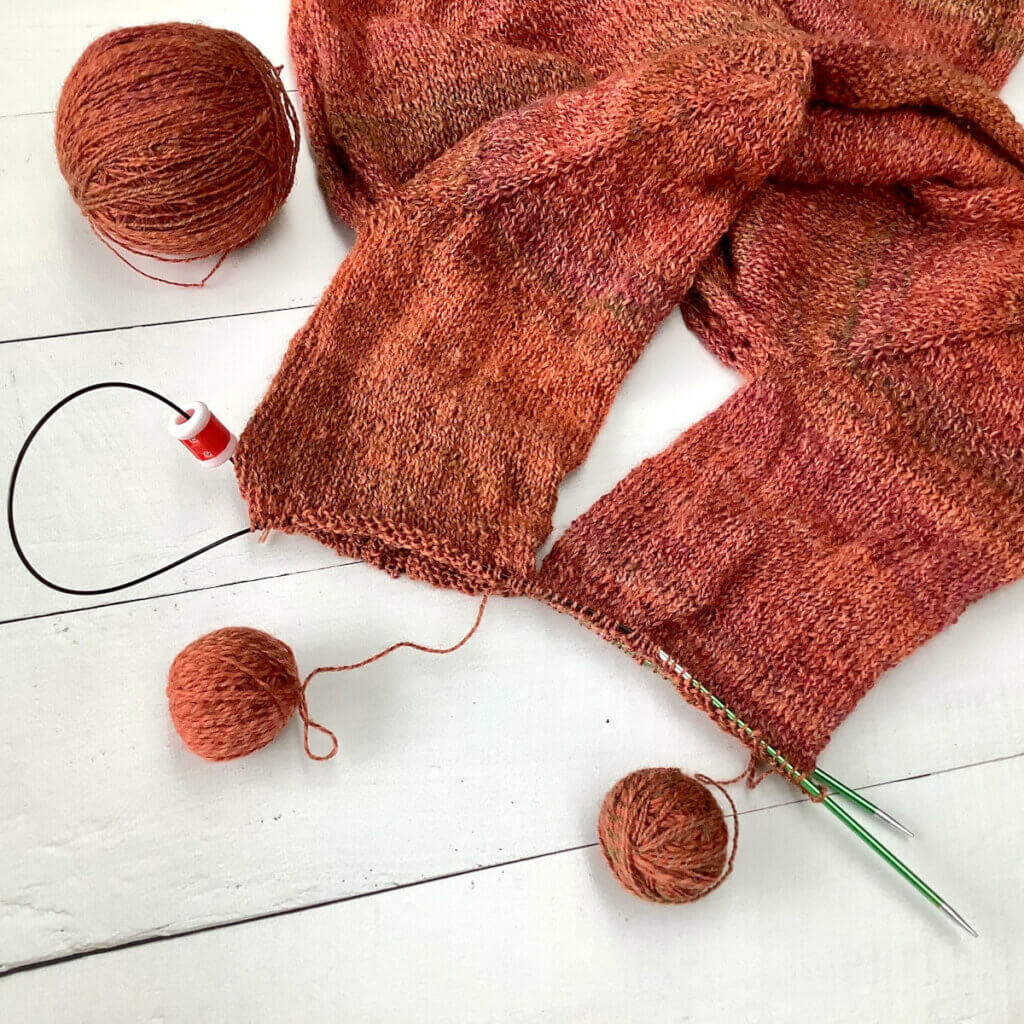
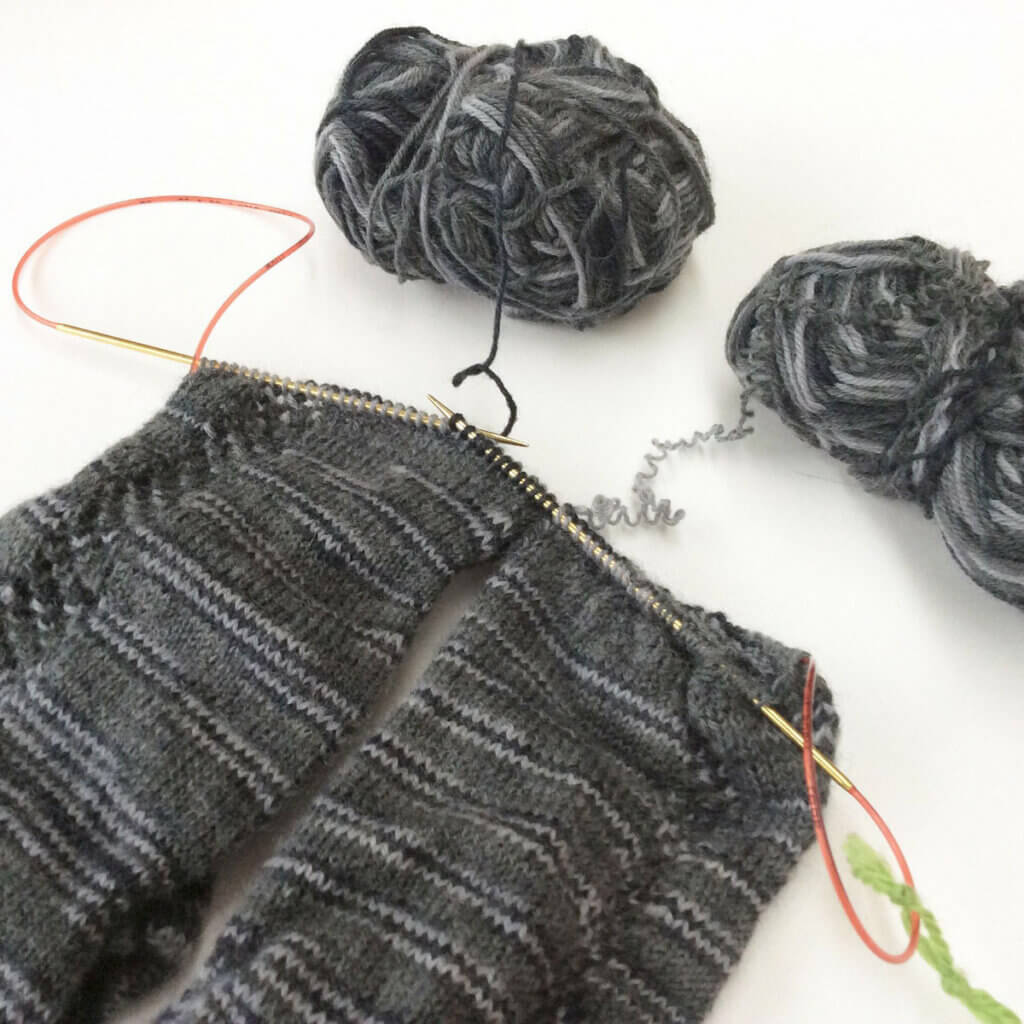
This is the method I usually go for, using circular needles with a cable length of either 80 cm / 32 inches or 100 cm / 40 inches. The basic premise with this approach is to work the sleeve or sock magic loop style, but instead of putting the stitches of only 1 tube on the circular needle, you put the stitches of both tubes (or even more!) on the needle. This forces you to work one round of each tube, before you can proceed with the next round. This also has the advantage that even if there are differences in tension from round tot round, they will at least be the same for both socks or sleeves.

Of course, there are also disadvantages to the TAAT technique. For one, progress seems to go very slow when compared with working on only one sock or sleeve. Also, you’re continually adjusting the cable and juggling the balls of yarn to prevent them from tangling. For me, this really breaks the knitting flow.

That said, getting both done and exactly the same is the main reason I often do choose this option.

2. Using two circulars or sets of DPN’s and knit simultaneously

With this option, you’re working each sleeve or sock on their own needle. For this, it really doesn’t matter what your preference is for small-circumference knitting, being it DPN’s, tiny circulars, or longer circulars for travelling loop or magic loop knitting. The main take is, that each sock or sleeve is worked on individually, but that you switch back and forth between them in regular intervals. You can, for example, first work ribbing on both tubes, then the same number of plain rounds plus 1 shaping round etc. etc.

With this method, it is important to keep track of where you are, and that you end both tubes at the same point. Or, of course, keep good track of any differences to correct when starting a new knitting session.

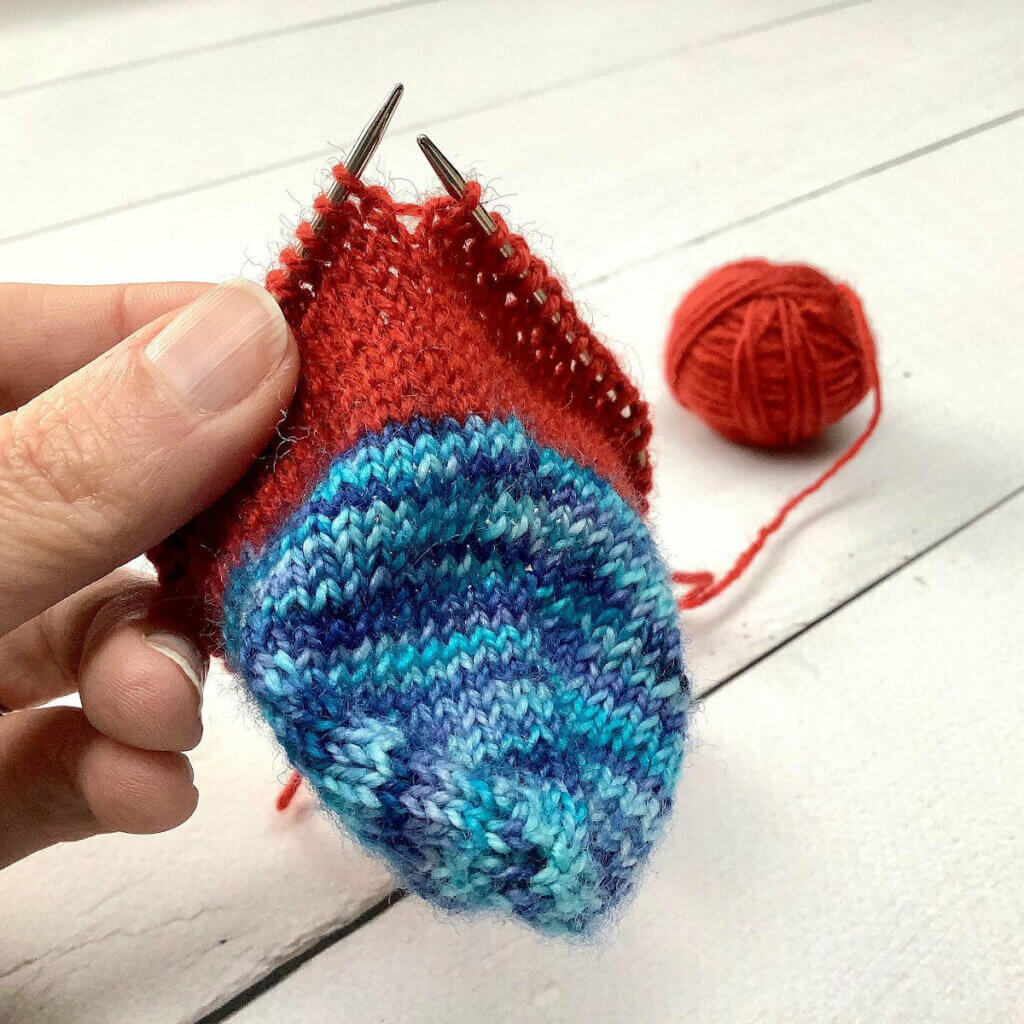
Sock on a tiny circular

3. Embrace the differences!

This option is, depending on design, possibly better suited for socks then for sleeves. That said, it really is a good option. The main issue with second sock (or sleeve) syndrome is the boredom associated with knitting the exact same thing again. So, if you make sure there are differences, this may be enough to keep your attention on the project.

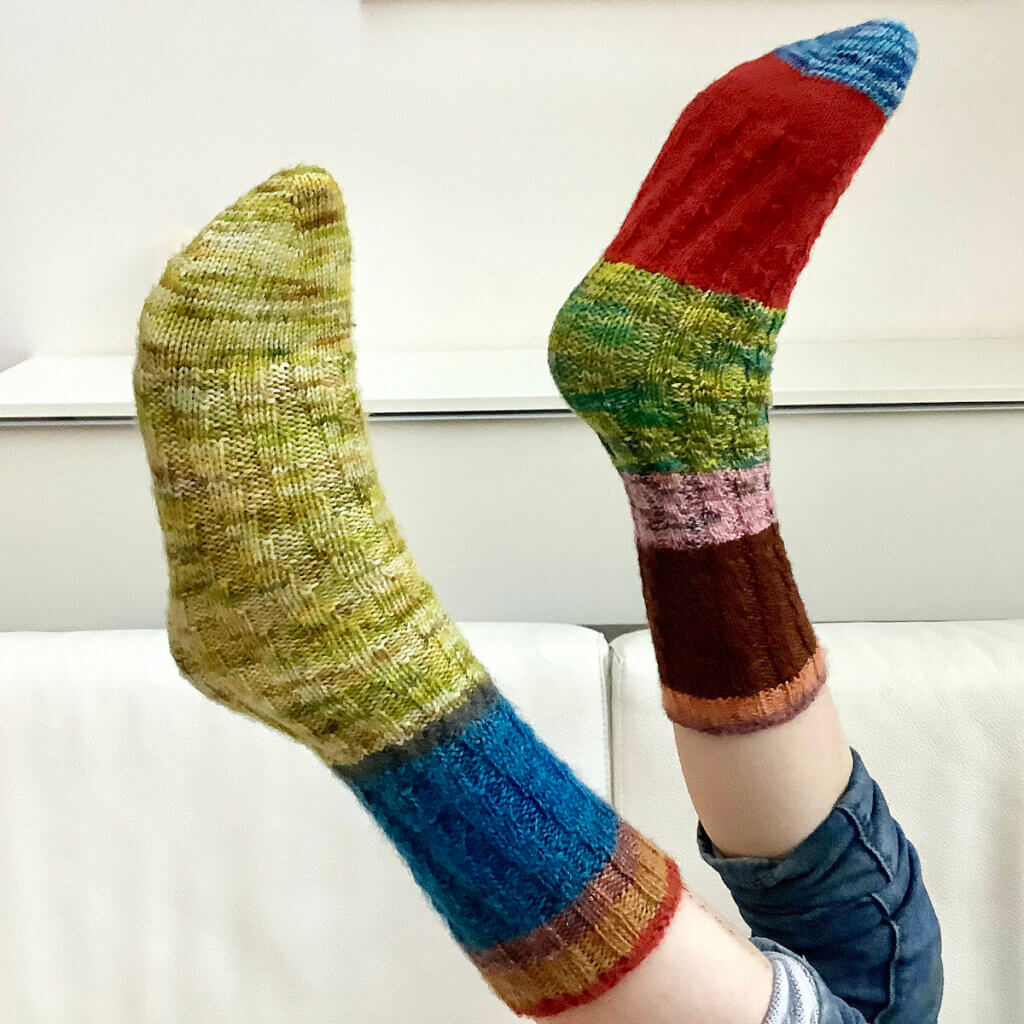
You can think, for example, of different stitch patterns or textures. For me, self-striping or gradient yarn never fails to want to work another round to see what happens next. Alternatively, you can really embrace the differences and go for mismatched socks on purpose. This is what I did with the socks pictured below for my youngest. I used up various odds and ends of fingering weight yarn for wildly unique socks. The pattern is No-Heel Spiral Socks by La Maison Rililie.

Let me know if there are more ways with dealing with second sock (or sleeve) syndrome. I’m happy to expand on the options already mentioned!

Patreon logo

Thanks to my Patreon supporters for bringing you this freebie! Creating quality patterns and tutorials is a lot of work and resource-intensive. However, I find it important to give you free content like this tutorial. Thanks to the generous support of my Patreon supporters, I can make it happen. Thank you, patrons! Click here to join, or click here to read more about La Visch Designs on Patreon.

second sock (or sleeve) syndrome Read More »
mamaku

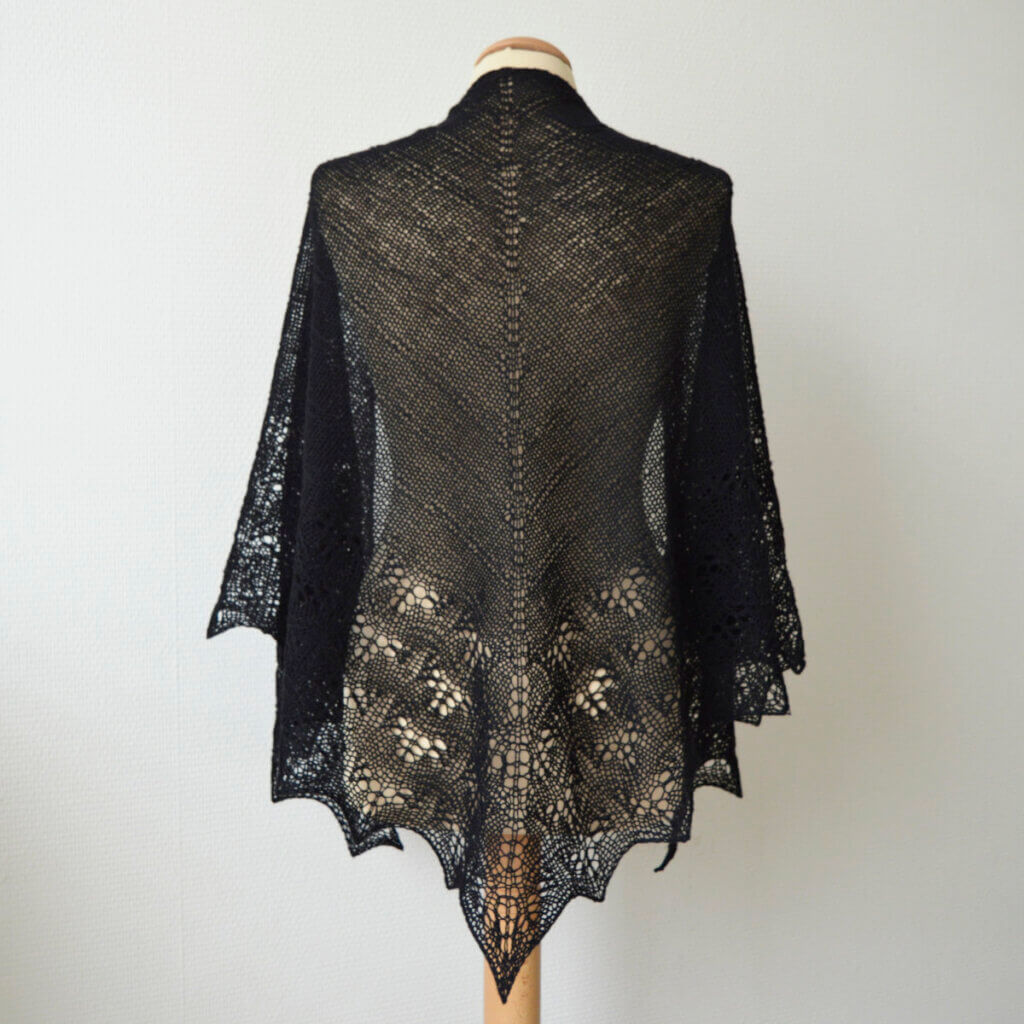
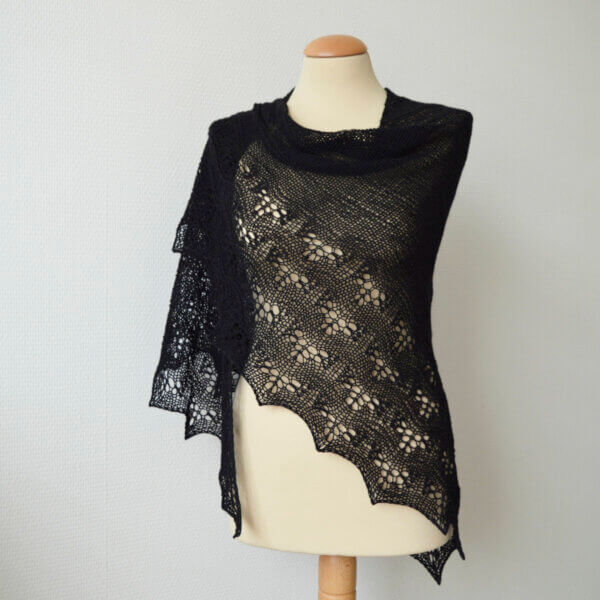
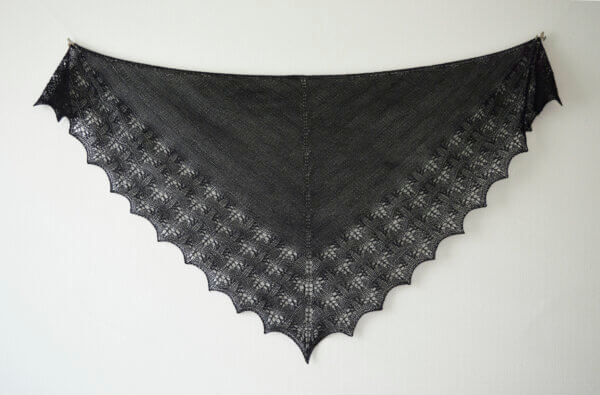
Mamaku shawl by la Visch Designs

Mamaku, scientifically known as Cyathea medullaris, is a black tree fern native to New Zealand, that is commonly found in damp gullies across forested areas in the country. While I’ve never been to New Zealand, the lace edging of this shawl really looks like fern fronds. The Mamaku shawl pairs this delightful lace edging with a lovely, relaxing-to-knit textured body.

This shawl is knitted from the top-down in one piece, starting at the neck edge with a garter stitch tab. The instructions for the edging are both charted and written out.


Pay what you want: (minimum €6.50)

Add to cart


Difficulty level

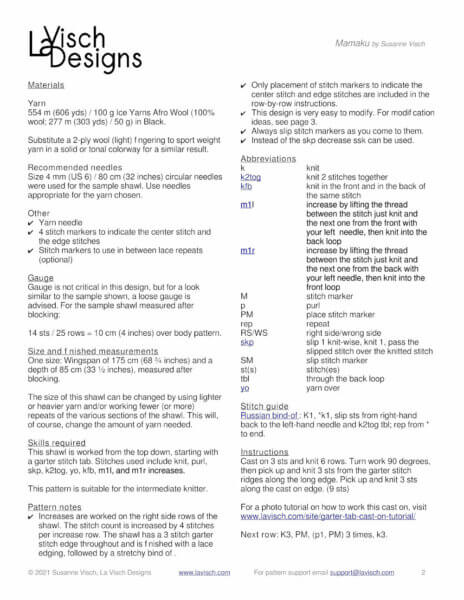
This shawl is worked from the top down, starting with a garter stitch tab. Stitches used include knit, purl, yo, k2tog, skp, kfb, m1l, and m1r increases. This pattern is therefor suitable for the intermediate knitter.

Sizes and finished measurements

Finished dimensions of the sample shawl: 175 cm (68 ¾ inches) and a depth of 85 cm (33 ½ inches), measured after blocking.

Change the size of this shawl by using lighter or heavier yarn and/or working fewer (or more) repeats of the various sections of the shawl. This will, of course, change the amount of yarn needed.

Pattern details

  • Mamaku has a gauge of approx. 14 sts / 25 rows = 10 cm (4 inches) over body pattern, measured after blocking. Gauge is not critical in this design, but for a look similar to the sample shown, a loose gauge is advised.
  • Pattern languages included: English.
  • Digital PDF has 4 pages (letter size)

Yarn

554 m (606 yds) / 100 g Ice Yarns Afro Wool (100% wool; 277 m (303 yds) / 50 g) in Black.

Substitute a 2-ply wool (light) fingering to sport weight yarn in a solid or tonal colorway for a similar result.

Materials

  • In the sample shawl: Size 4 mm (US 6) / 80 cm (32 inches) circular needles. Use needles appropriate for the yarn chosen.
  • 4 stitch markers to indicate the center stitch and the edge stitches.
  • Stitch markers to indicate repeats of the lace patterning (optional)
  • Yarn needle

mamaku Read More »
tutorial – the standard knitted bind-off

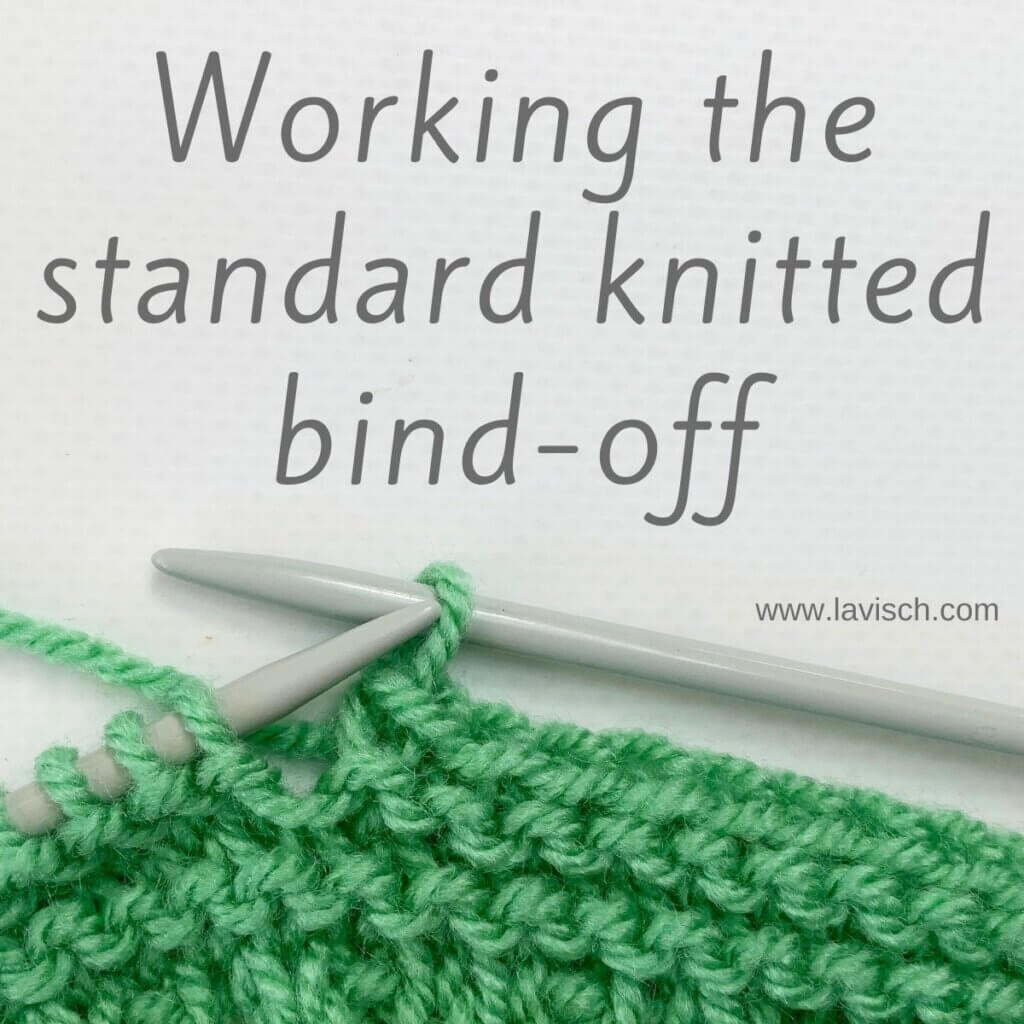
Working the standard knitted bind-off

This particular bind-off is the one most knitters learn first, and with good reason: it’s a very versatile bind-off that can be used in both knit and purl variations. This makes it my go-to bind-off when a pattern instructs me to bind-off “in pattern”. That said, in this tutorial, I will focus only on the knit variation, to work this in purl, just replace all knits by purls!

But I’m getting ahead of myself. The standard knitted bind-off creates a lovely edge, that is perfect for seaming, picking up stitches or doing “pick up and knit” for further finishing. Think for example of knitting a button band for a cardigan. That said, while this bind-off has some elasticity, it can be hard to get the tension exactly right. It’s not advised to use for edges that need a lot of stretch, like the ribbing of toe-up socks. If you know you’re a tight knitter, it may be a good idea to go up a needle size when doing this bind-off. Likewise, if you’re a very loose knitter, you may want to drop down a size.

Materials used

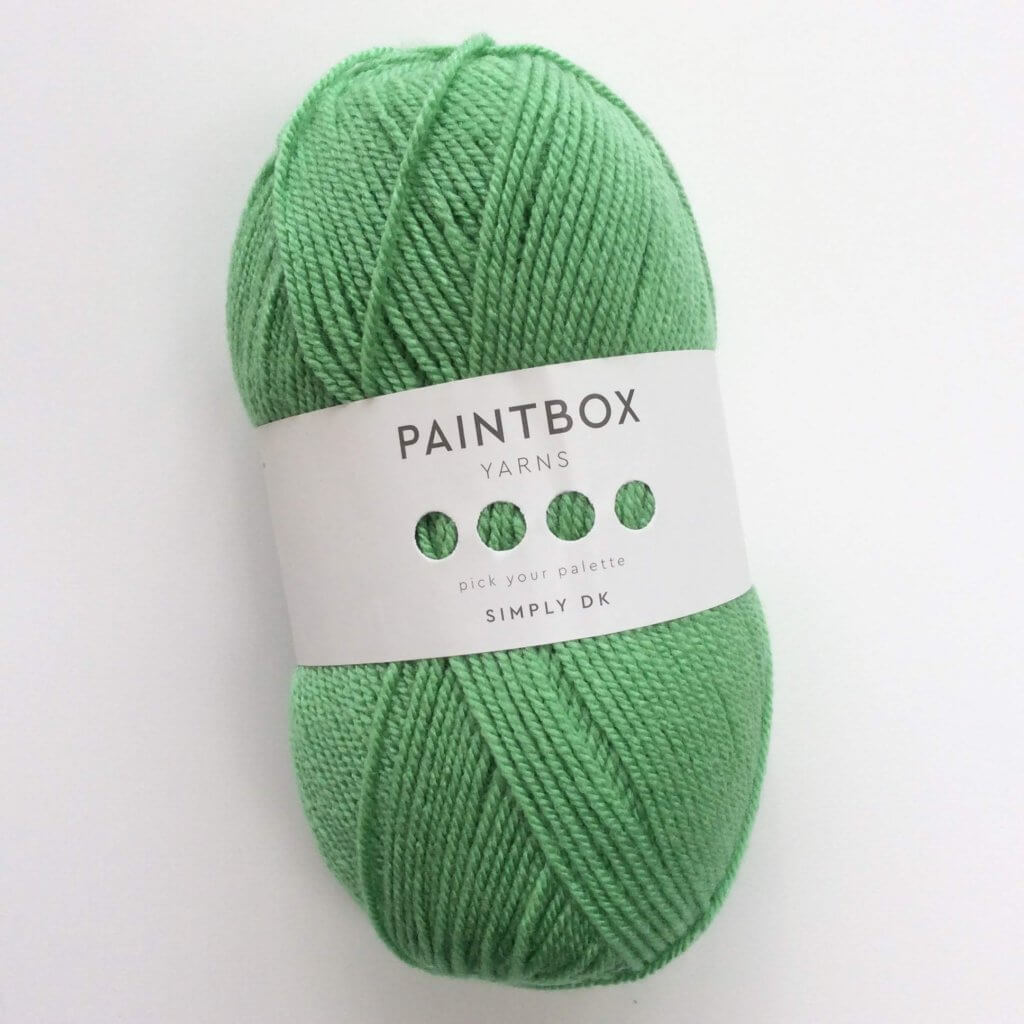
Yarn: Paintbox Yarns Simply DK, a good value, good quality 100% acrylic yarn, here in the color 125 Spearmint Green.

Knitting needles: This is a pair of straights that I picked up at the second-hand store when I started knitting, brand unknown.

The standard knitted bind-off step by step

In patterns, you may see the following instruction for this bind-off:
K1, *k1, insert tip of the left-hand needle into first stitch on the right-hand needle, pass this stitch over the second stitch; repeat from * to end.
Below, I’ll show you step by step how this looks like in knitting!

  1. To start, take the piece of knitting you want to bind-off.

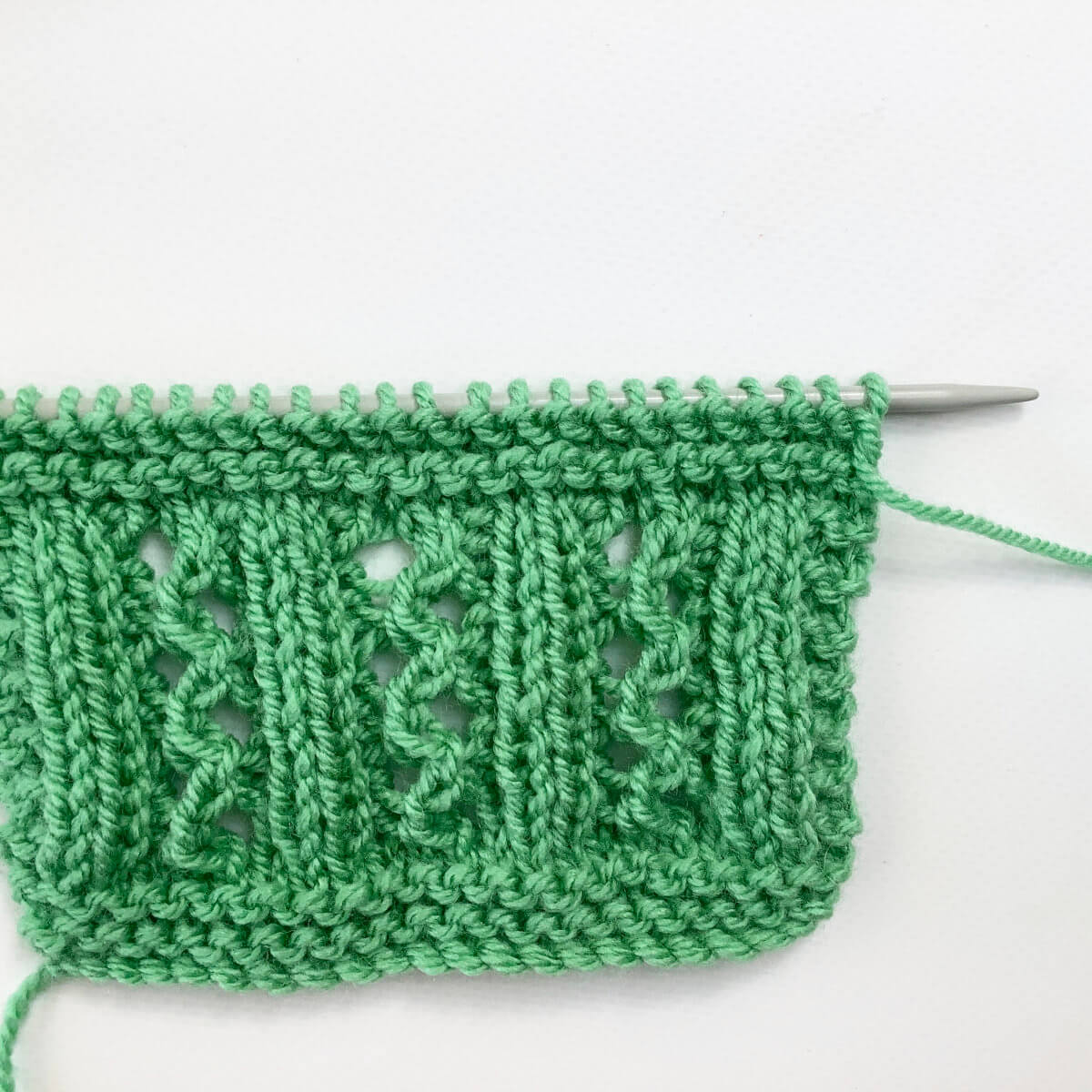
    In this case, I’m using the swatch I made for the Double Lace Rib stitch pattern.Step 1

  2. Knit the first stitch on the left-hand needle.

    Step 2

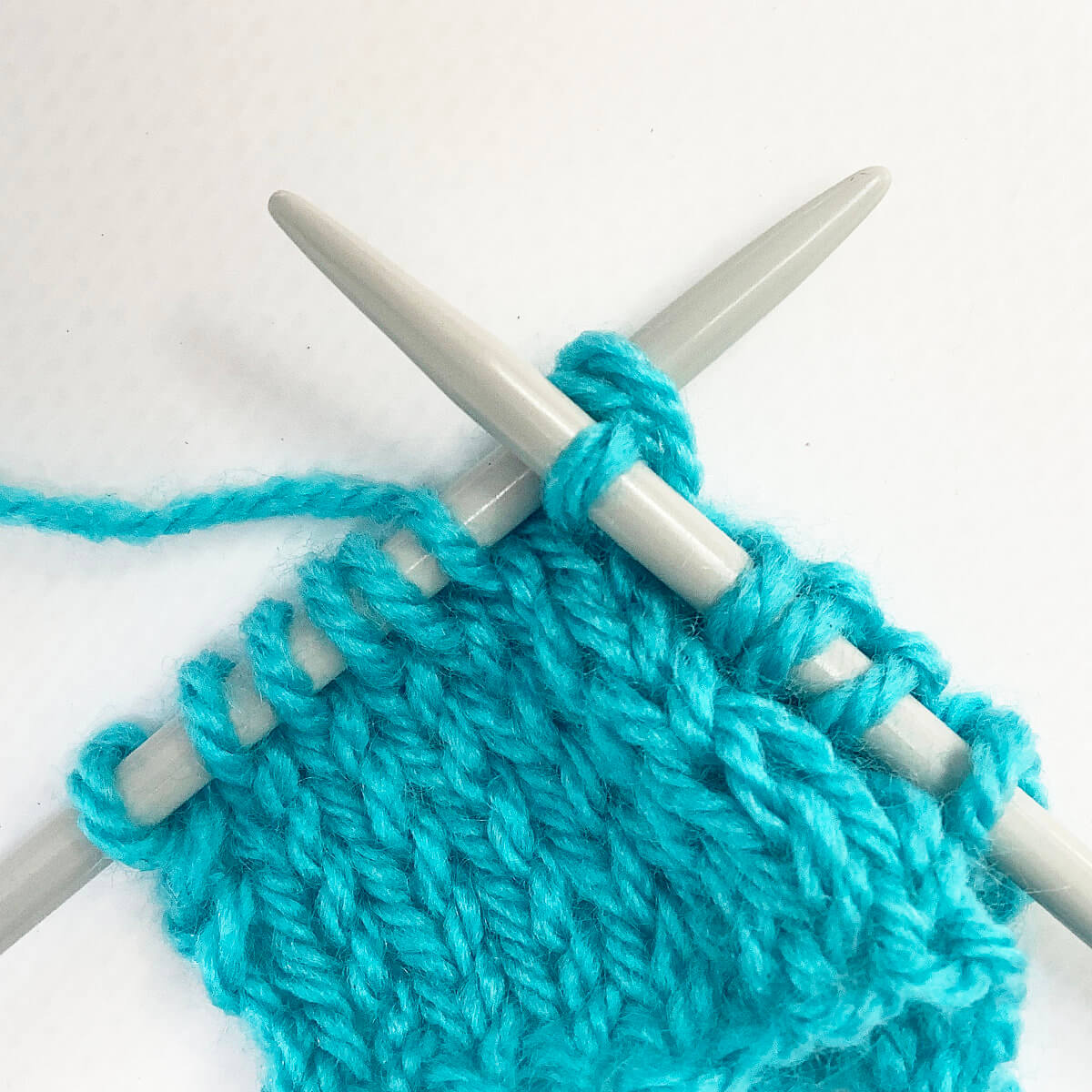
  3. Next, knit the new stitch nearest to the tip of the left-hand needle.

    Step 3

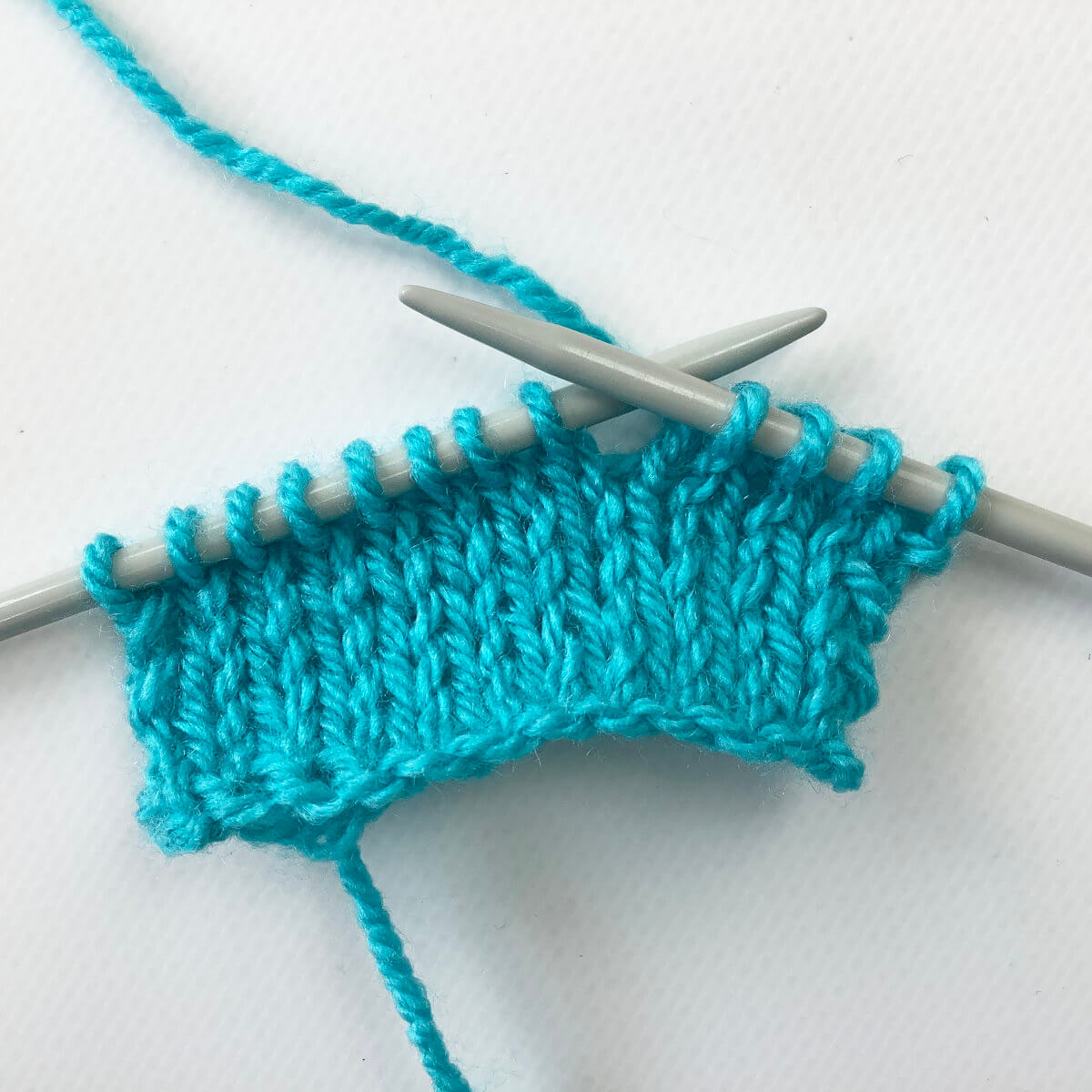
  4. Insert the tip of the left-hand needle into the second stitch on the right-hand needle….

    Step 4

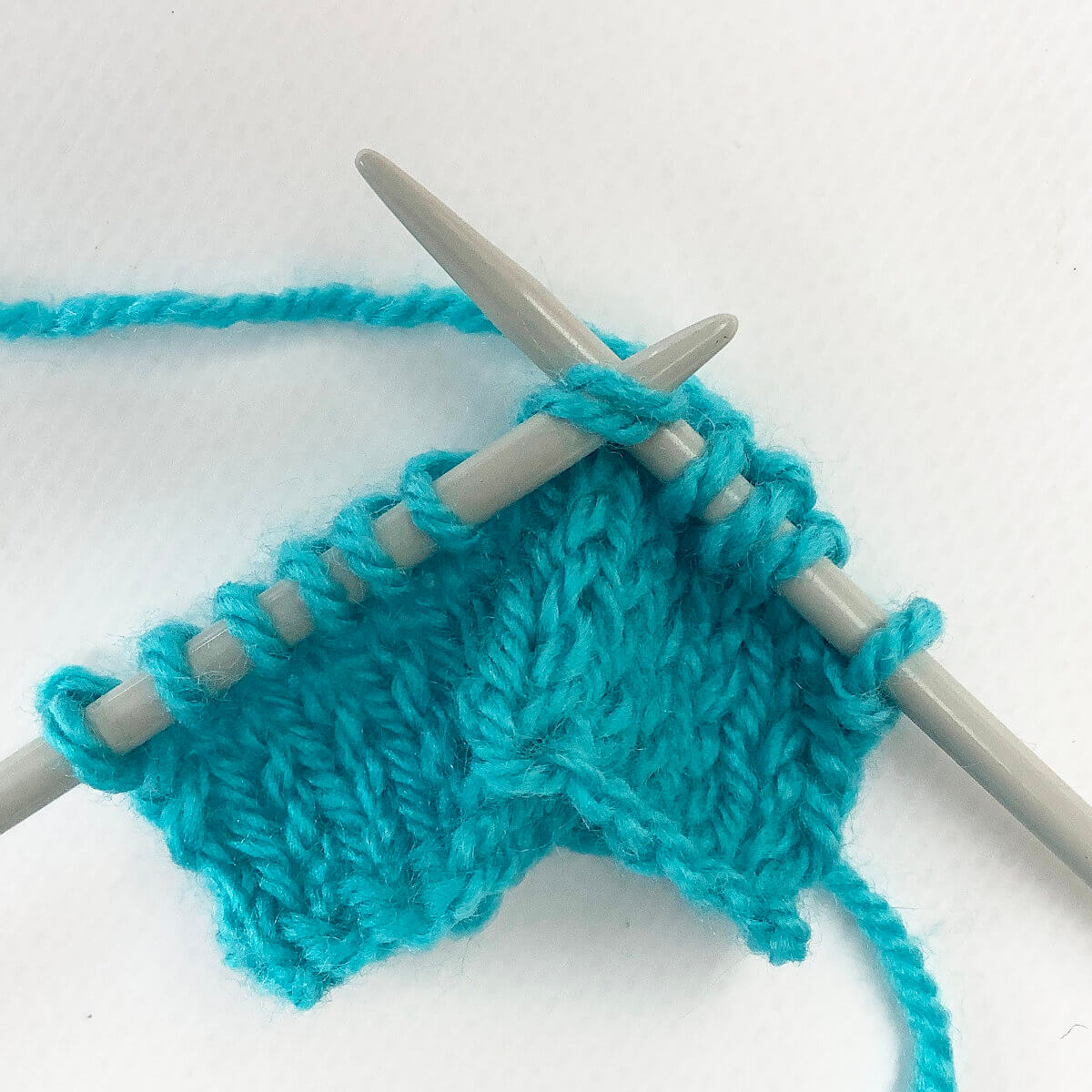
  5. …., and pass this second stitch over the first one.

    You have now bound-off a stitch!Step 5

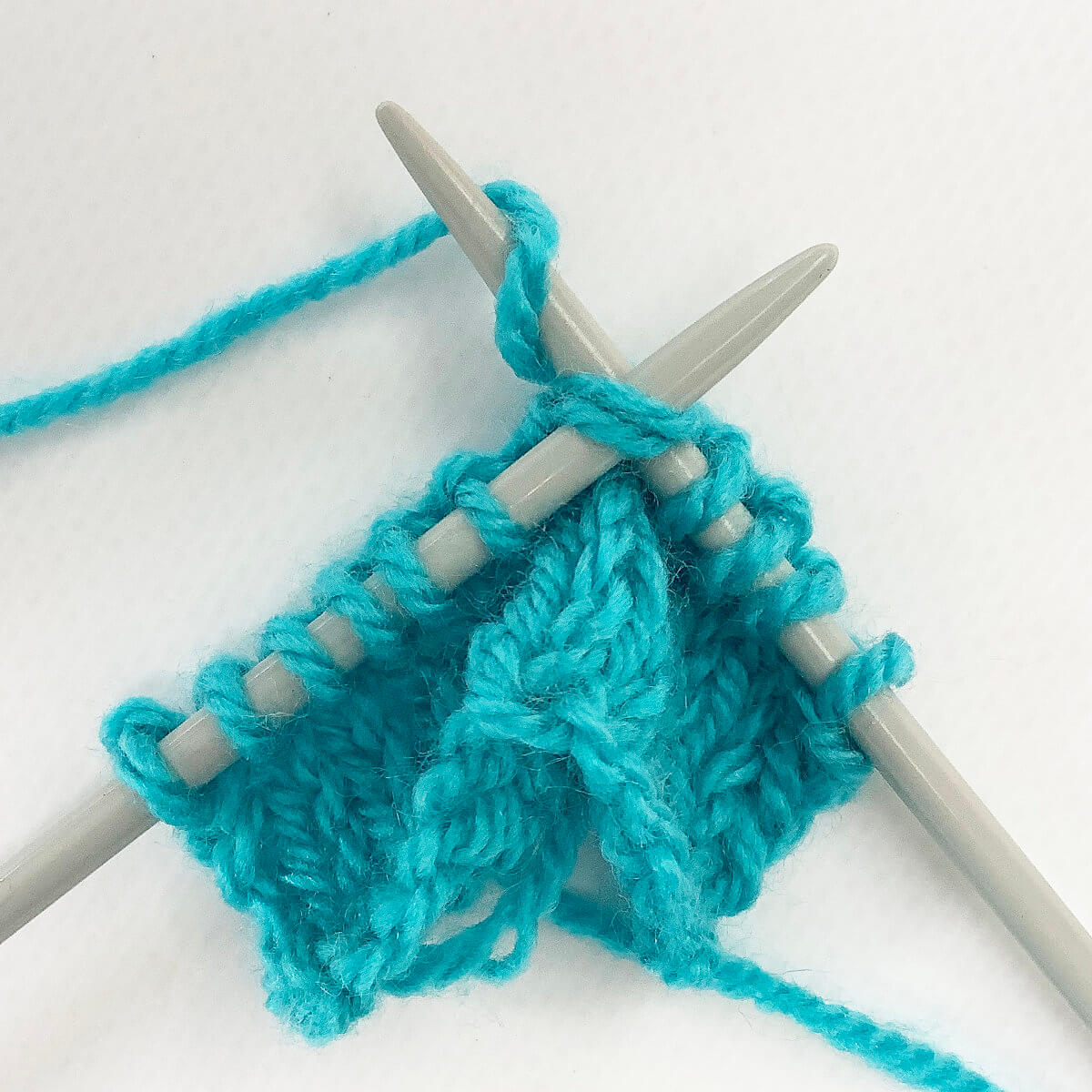
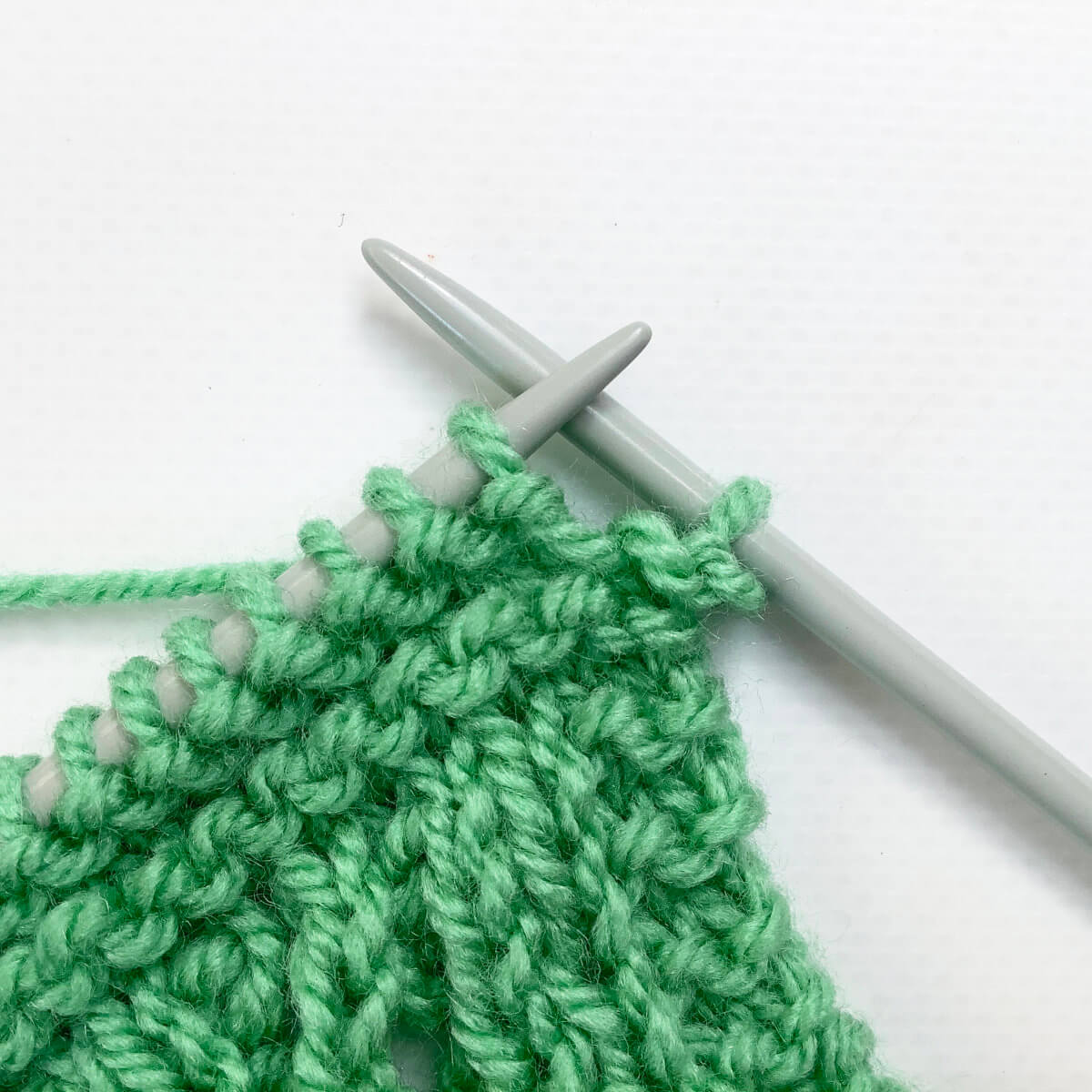
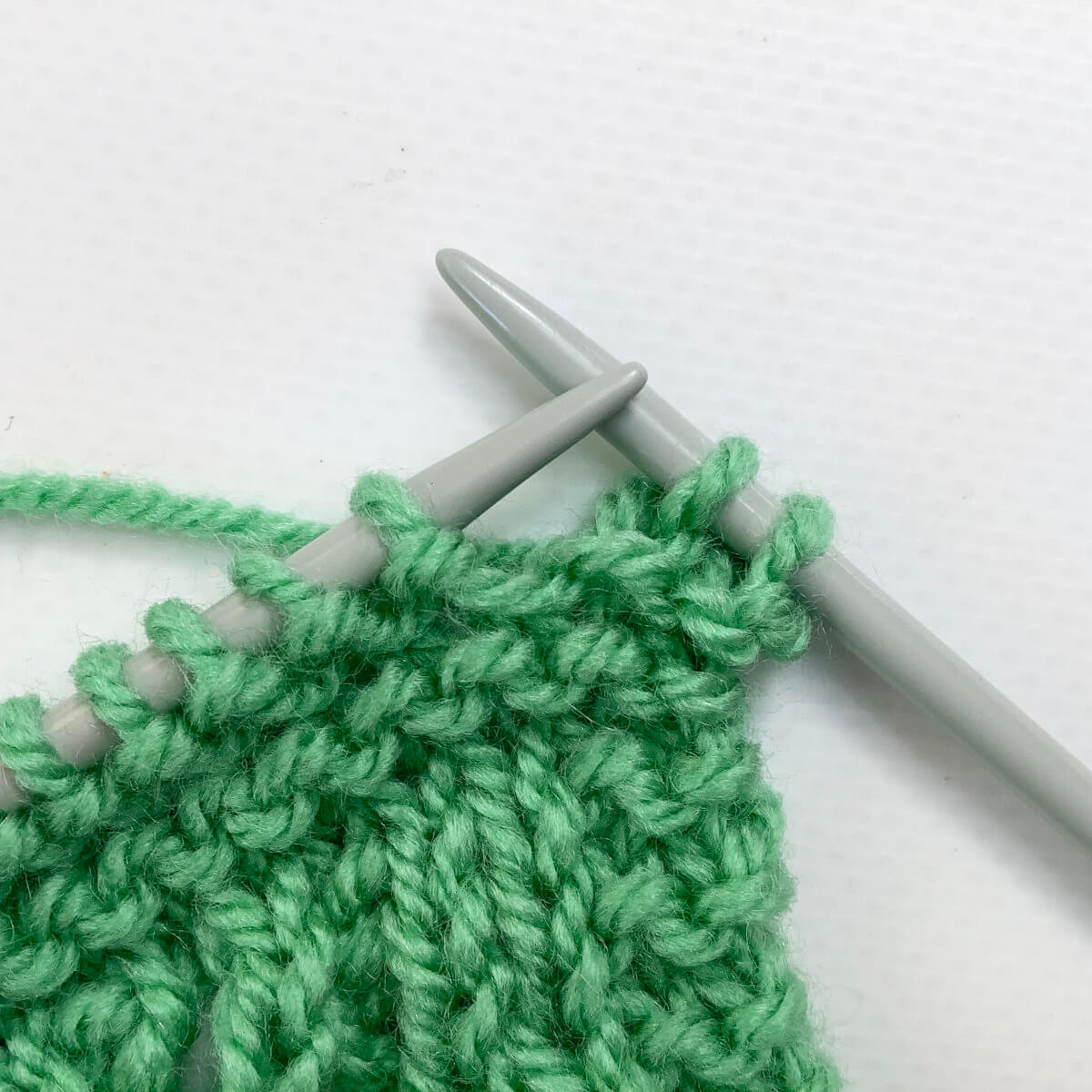
  6. Repeat steps 3-5 until all stitches have been bound-off.

    Midway, it will look something like this:Step 6

And here also a picture of the resulting edge. Pretty, isn’t it?!

The Standard Knitted Bind-Off - the result
Patreon logo

Thanks to my Patreon supporters for bringing you this freebie! Creating quality patterns and tutorials is a lot of work and resource-intensive. However, I find it important to give you free content like this tutorial. Thanks to the generous support of my Patreon supporters, I can make it happen. Thank you, patrons! Click here to join, or click here to read more about La Visch Designs on Patreon.

tutorial – the standard knitted bind-off Read More »
stitch pattern – double lace rib

Stitch pattern - Double Lace Rib

This post is about working the double lace rib stitch pattern. It works well both as an insert or as all-over patterning. This stitch pattern is worked on both right side and wrong side rows, and is a multiple of 6 + 2 stitches.

Materials used

Yarn: Paintbox Yarns Simply DK, a good value, good quality 100% acrylic yarn, here in the color 125 Spearmint Green.

Knitting needles: This is a pair of straights that I picked up at the second-hand store when I started knitting, brand unknown.

Stitches used

Double Lace Rib stitch pattern instructions

Row 1 (right side): K2, *p1, yo, k2tog tbl, p1, k2; rep from * to end.

Row 2: (wrong side): P2, *k1, p2; rep from * to end.

Row 3: K2, *p1, k2tog, yo, p1, k2; rep from * to end.

Row 4: P2, *k1, p2; rep from * to end.

Repeat rows 1-4 for pattern.

Double Lace Rib stitch pattern
Patreon logo

Thanks to my Patreon supporters for bringing you this freebie! Creating quality patterns and tutorials is a lot of work and resource-intensive. However, I find it important to give you free content like this tutorial. Thanks to the generous support of my Patreon supporters, I can make it happen. Thank you, patrons! Click here to join, or click here to read more about La Visch Designs on Patreon.

stitch pattern – double lace rib Read More »
tutorial – working a k2tog tbl

Working a k2tog tbl

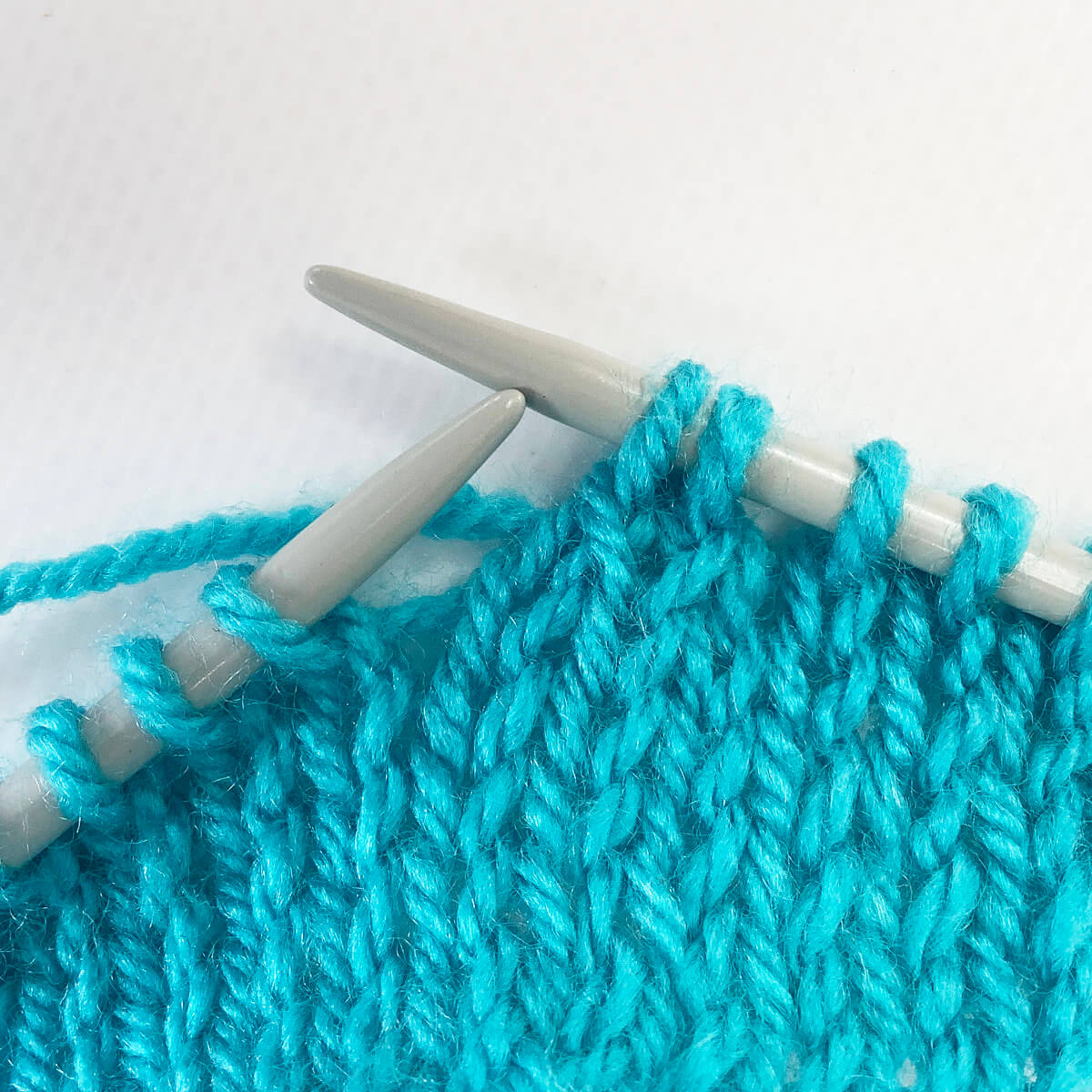
In this tutorial, I’ll show you how to work the k2tog tbl decrease. The abbreviation stands for “knit 2 stitches together through the back loop”. Basically, it’s the twisted version of the k2tog decrease. However, while the k2tog is a right-leaning decrease, k2tog tbl is a left-leaning decrease. It’s similar in appearance to the skp and ssk decreases.

Knitting the k2tog tbl decrease step by step

  1. First, take your project and work to the spot indicated in your pattern, where the decrease is supposed to be made.

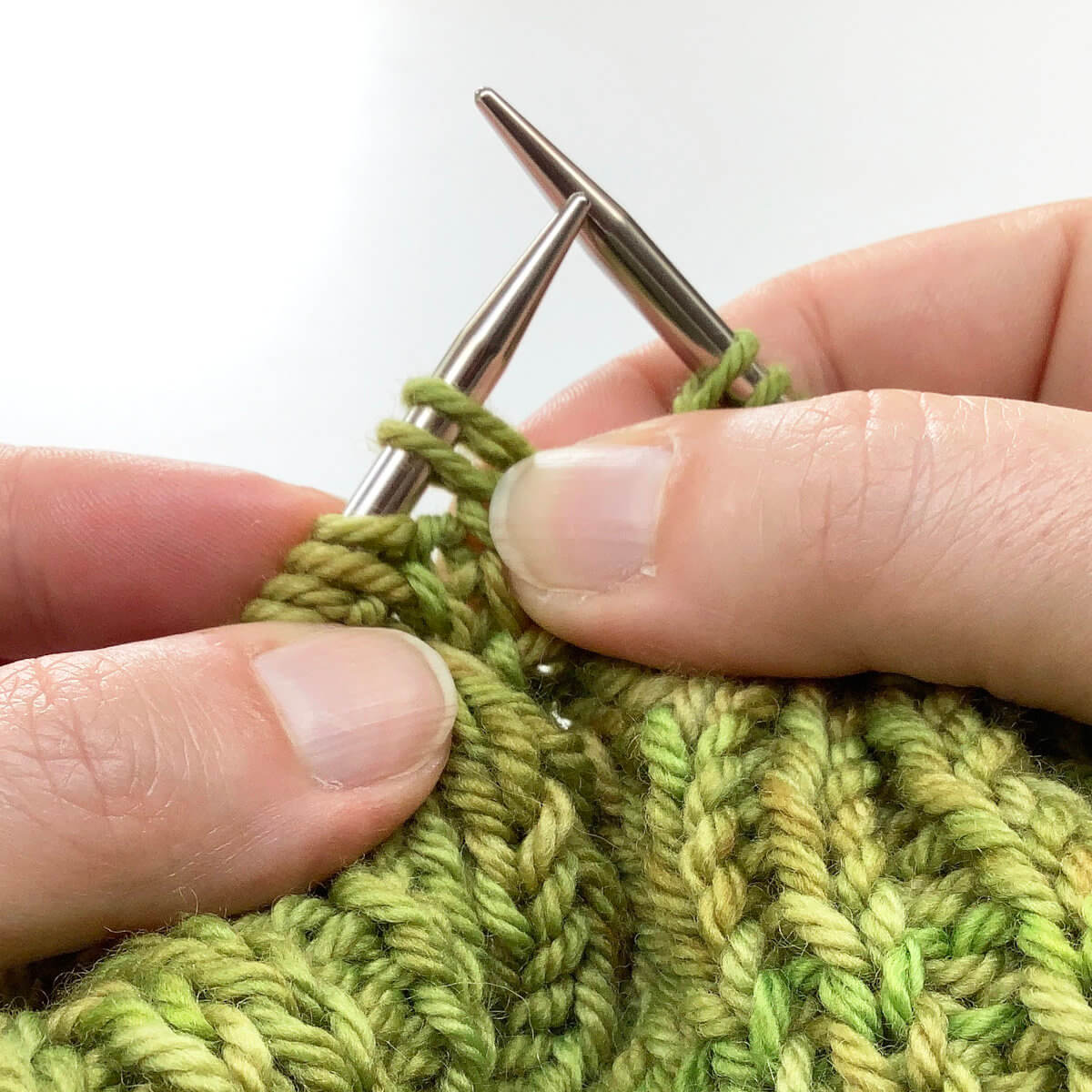
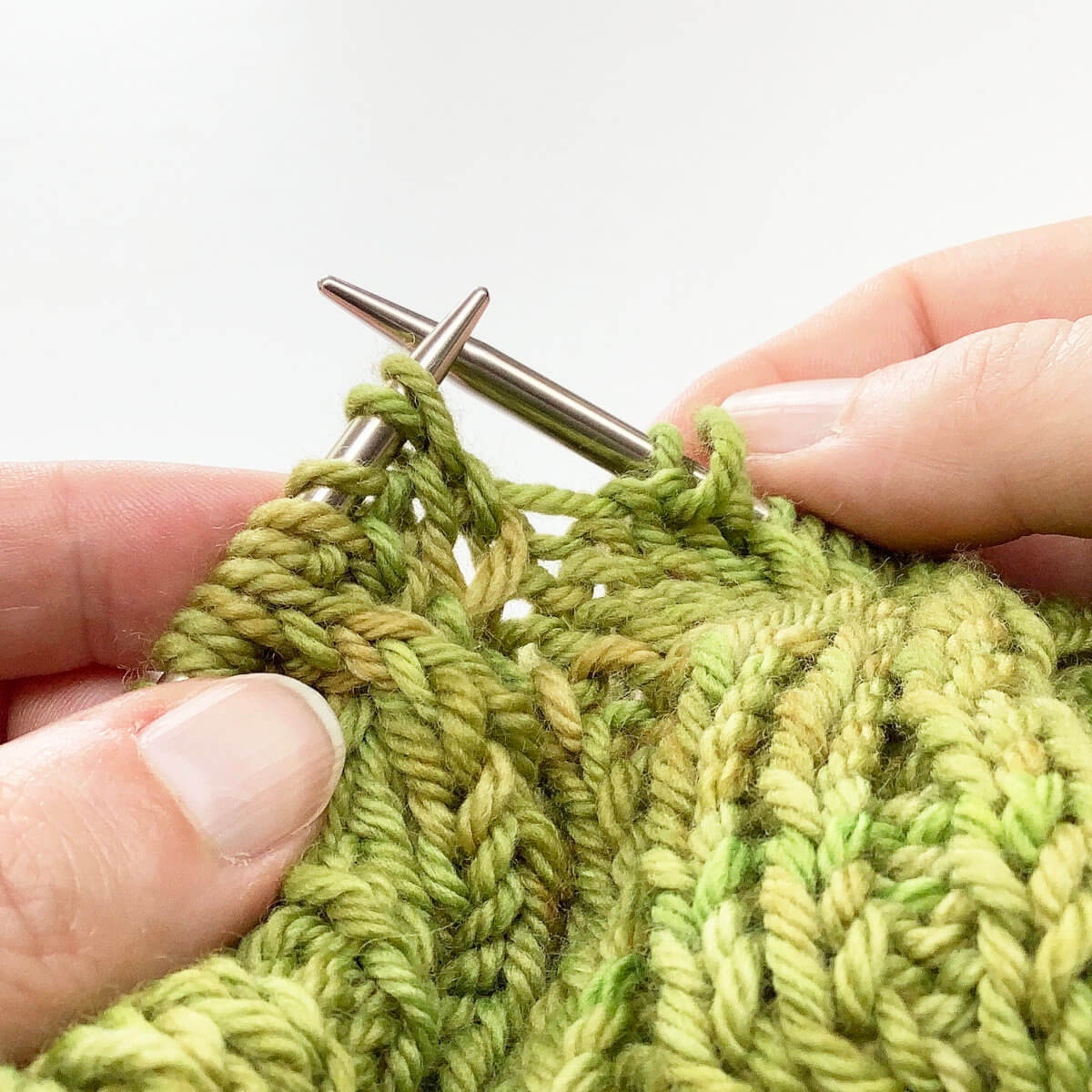
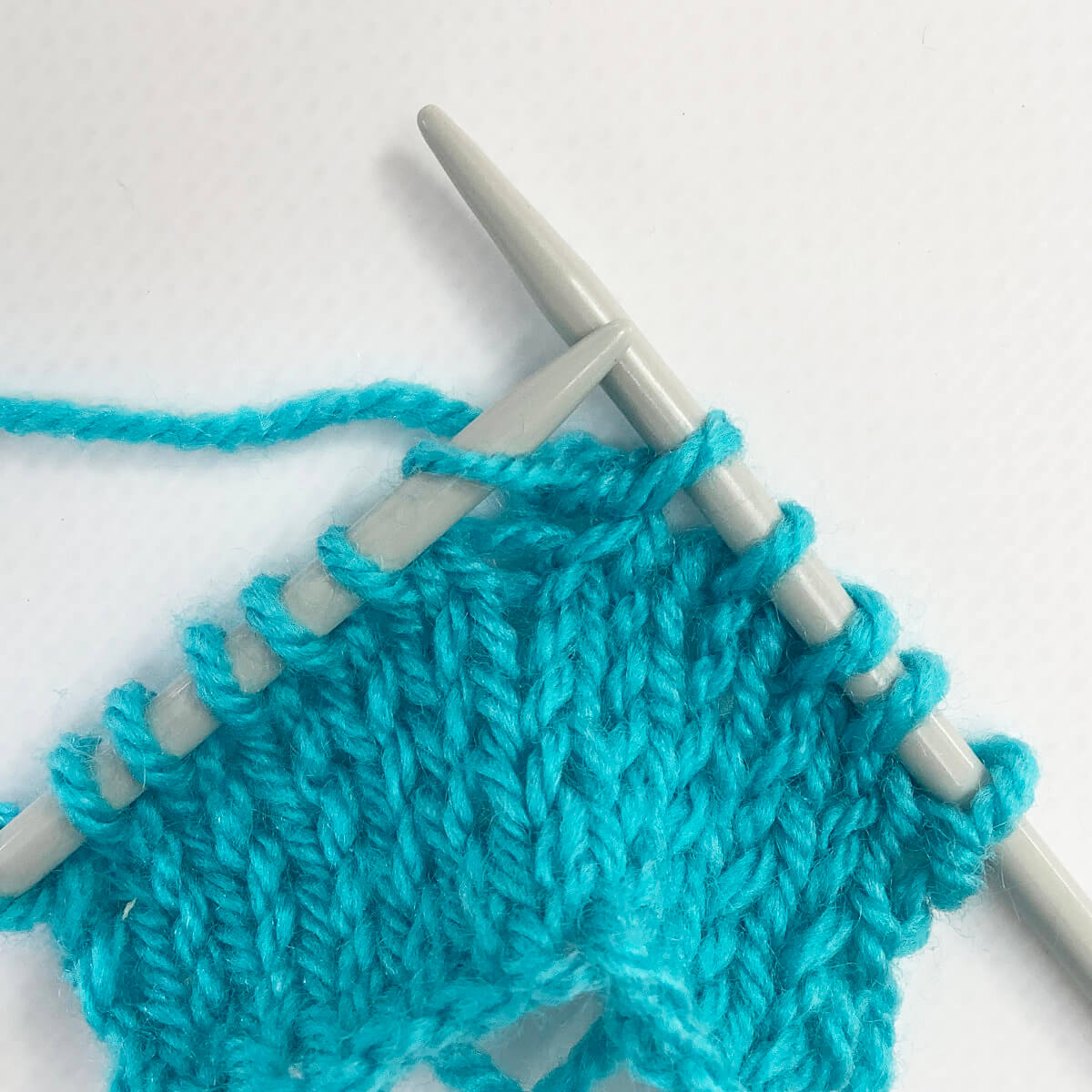
    In this case, I’m working a stitch pattern in which I have to work a k2tog tbl directly after a YO, over the 2 stitches near the tip of the left-hand needle.Step 1

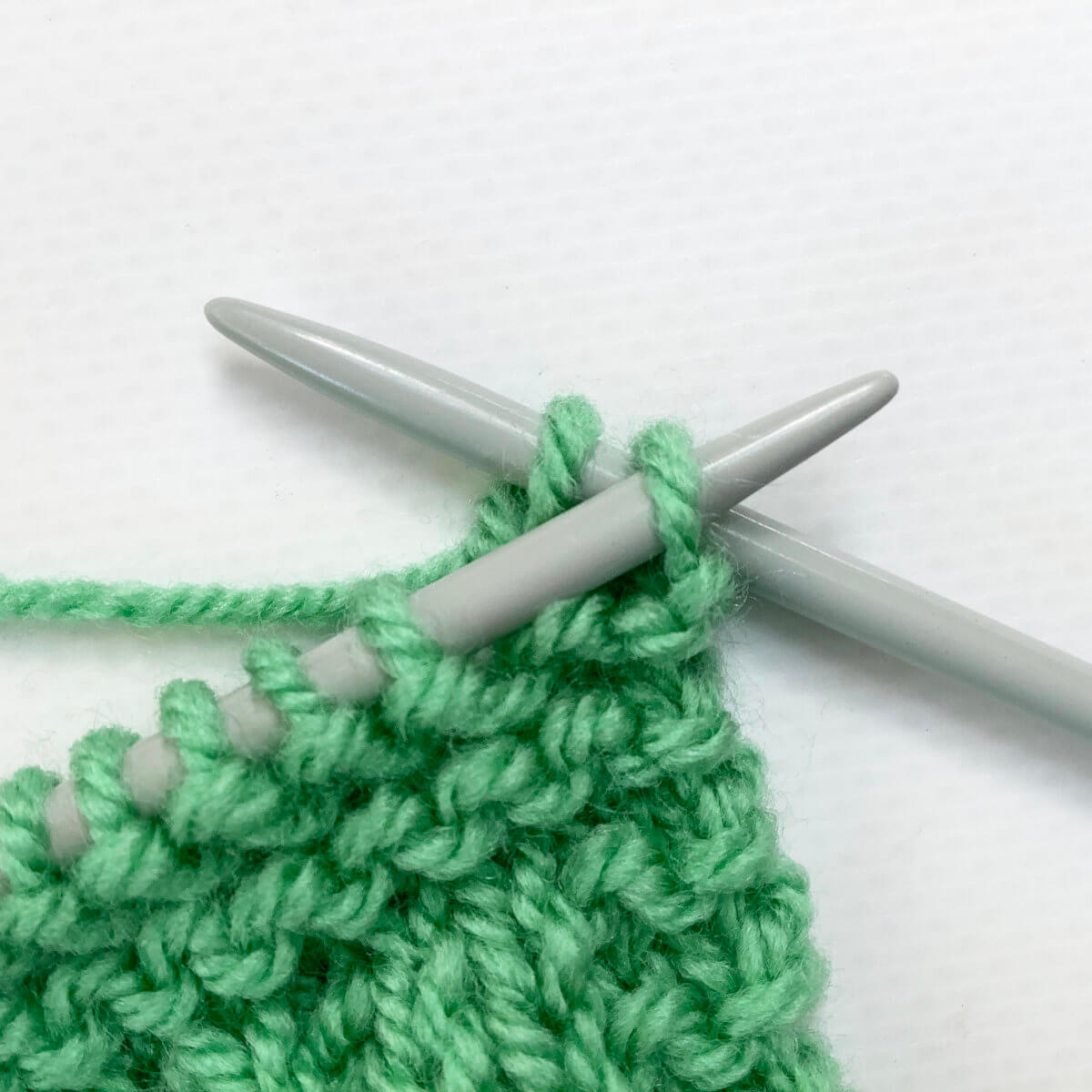
  2. Next, insert the tip of the right-hand needle into the first 2 stitches at the same time as if to knit through the back loop of these stitches.

    This can be a tad hard to get right, I find it helps to pull the fabric down a bit.Step 2

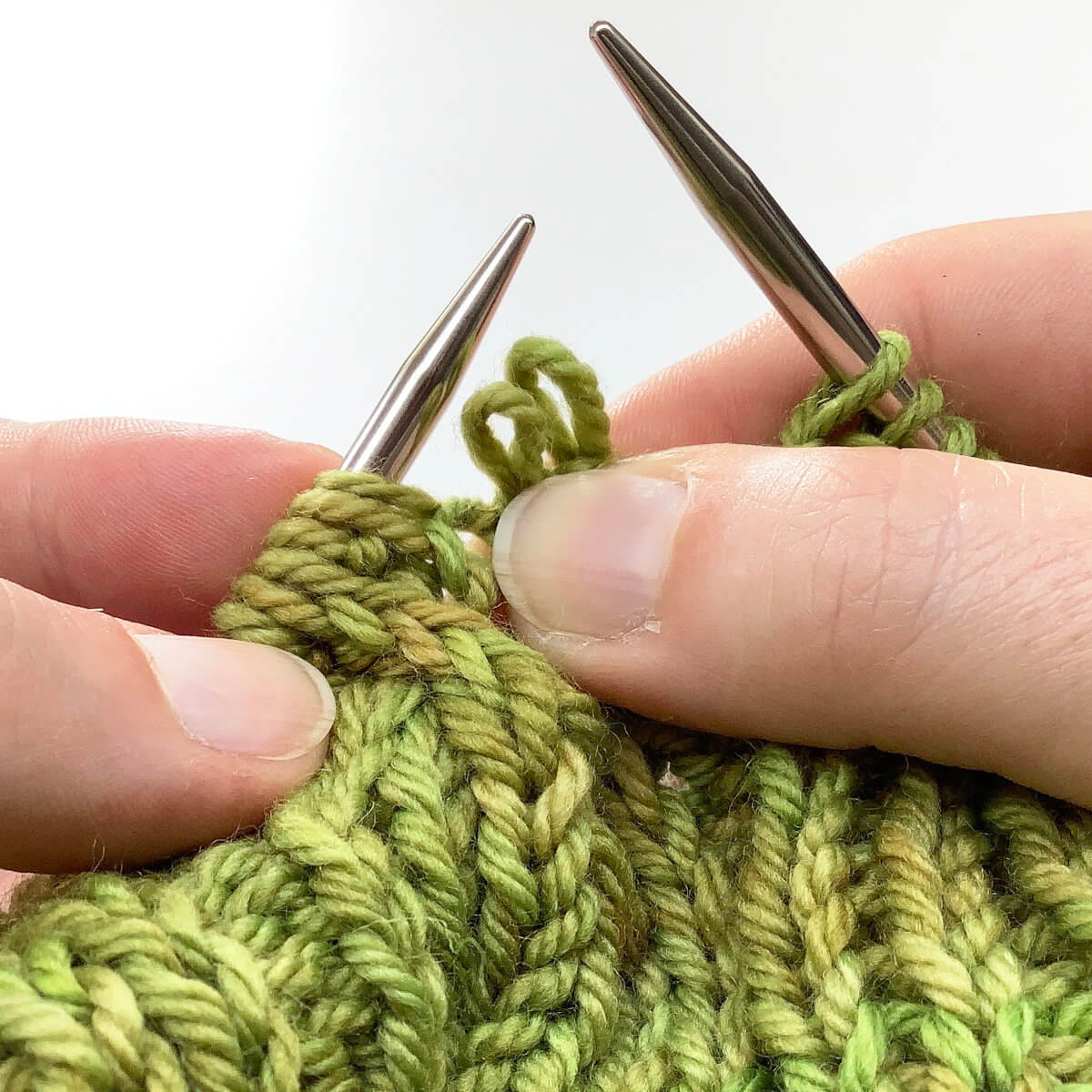
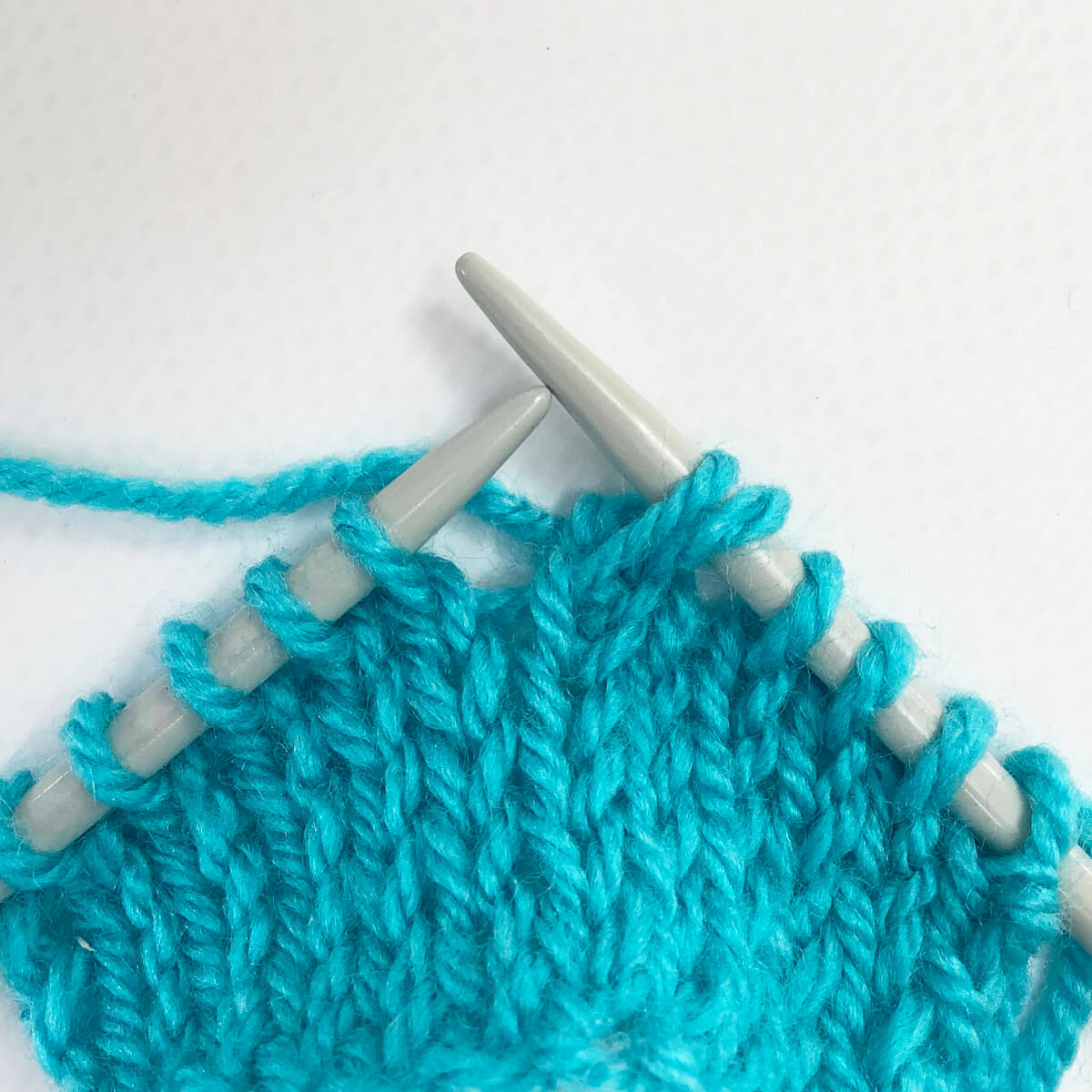
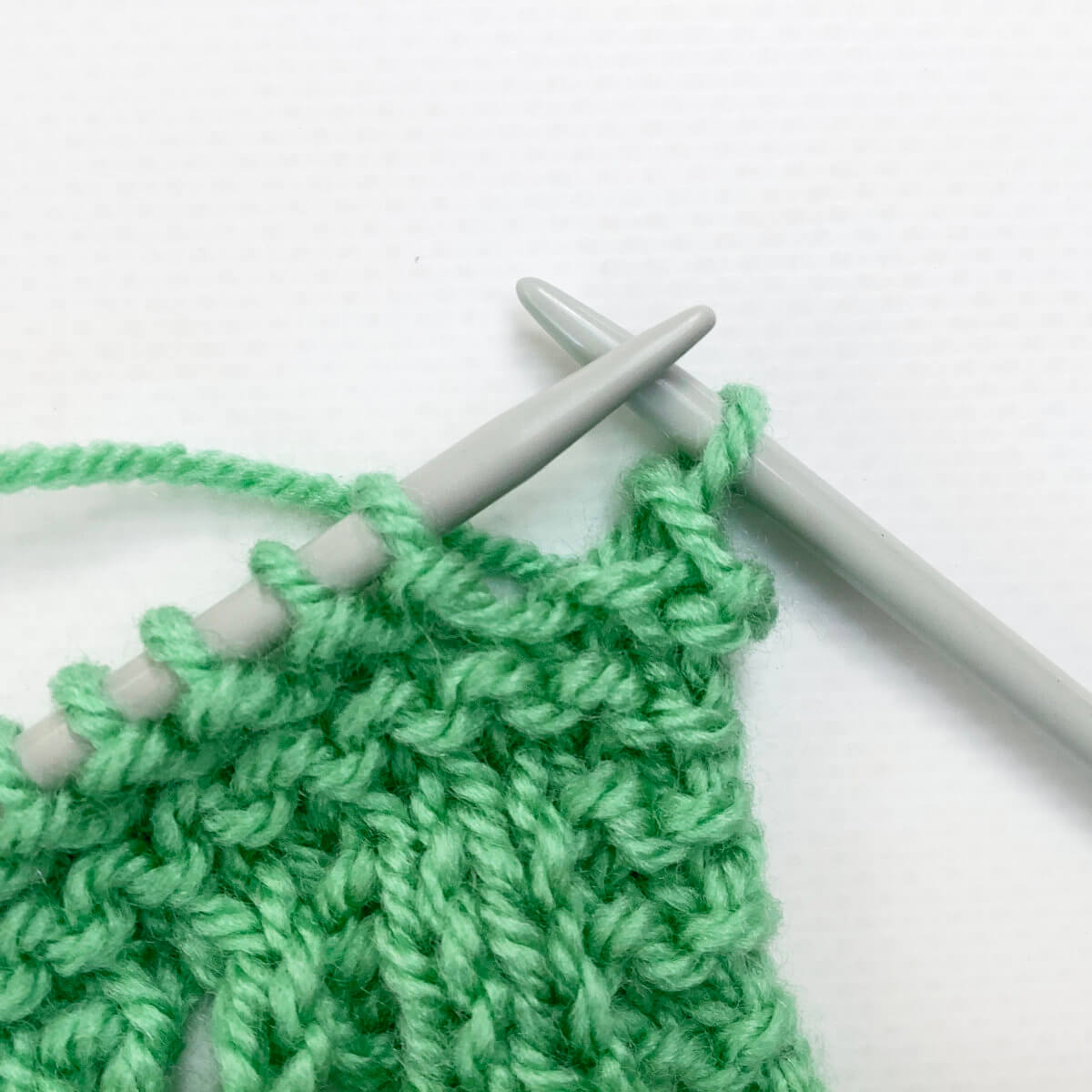
  3. Wrap the yarn around the needle…

    Step 3

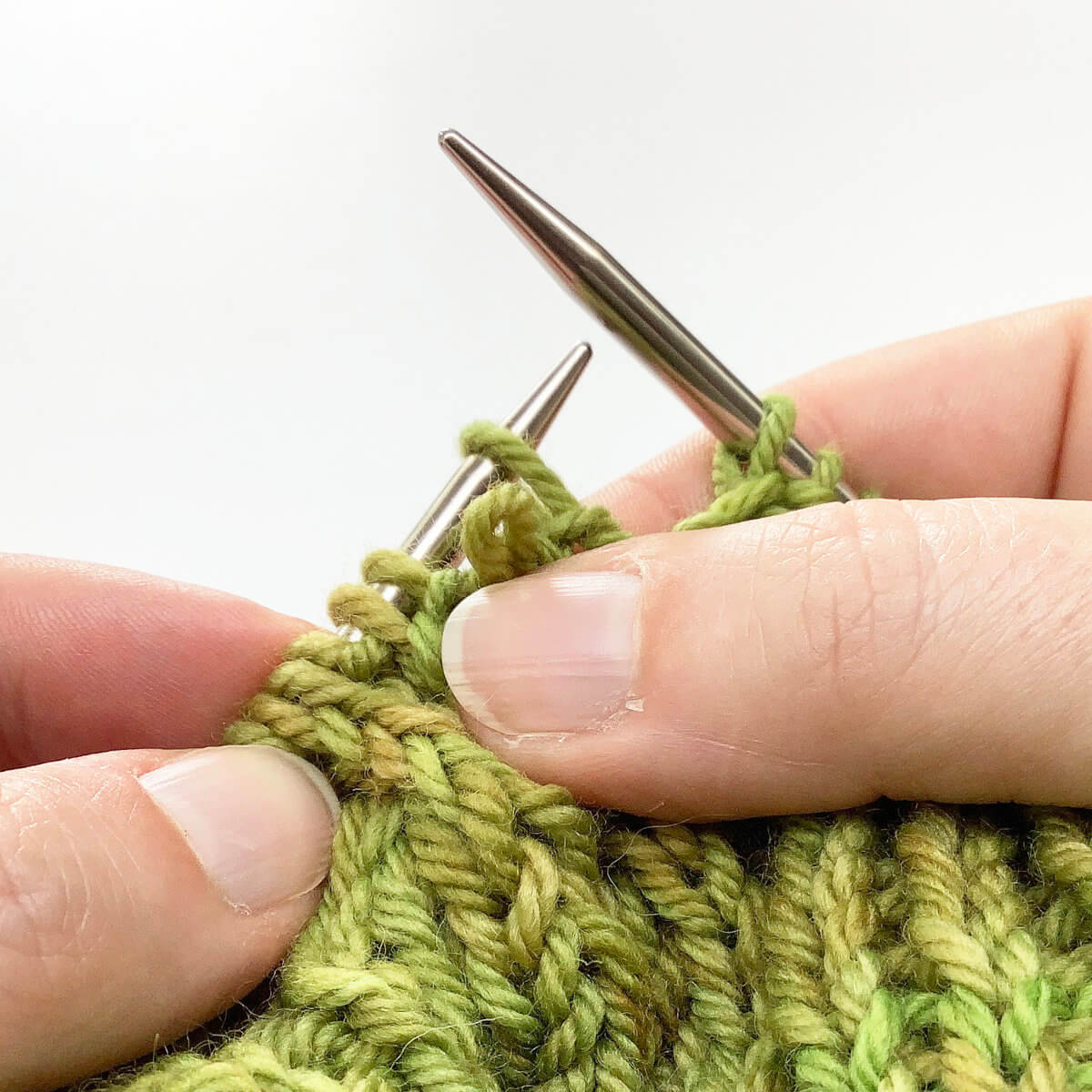
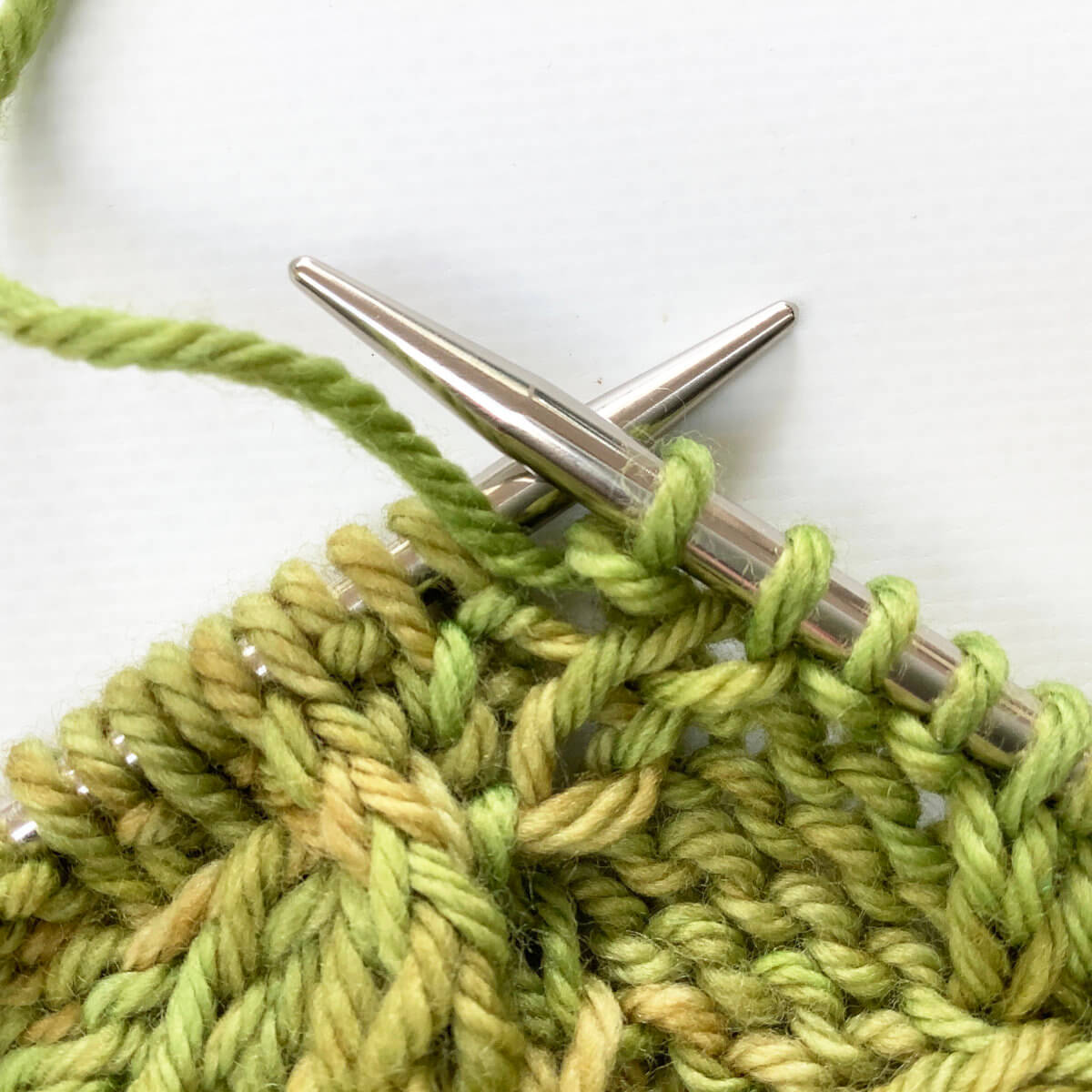
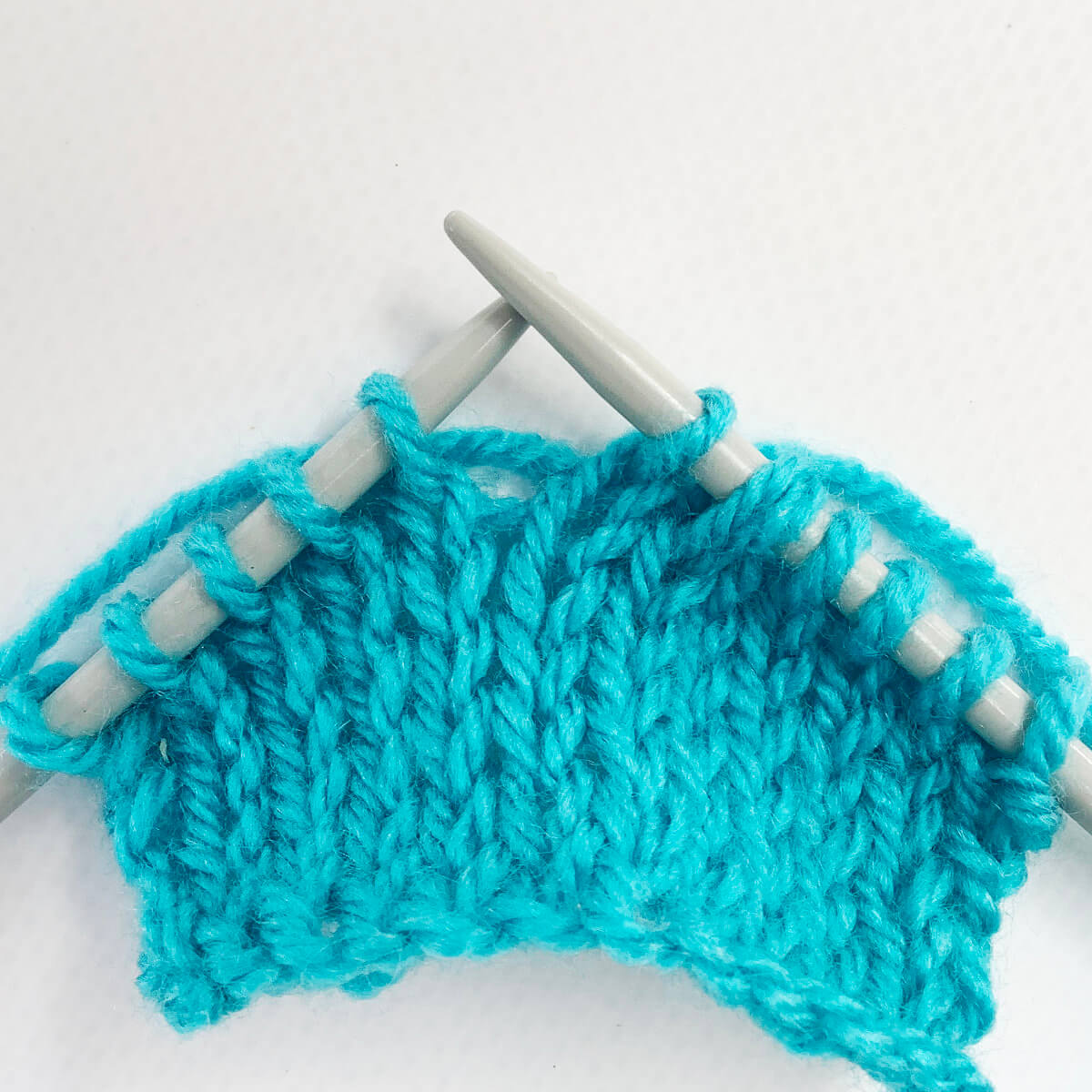
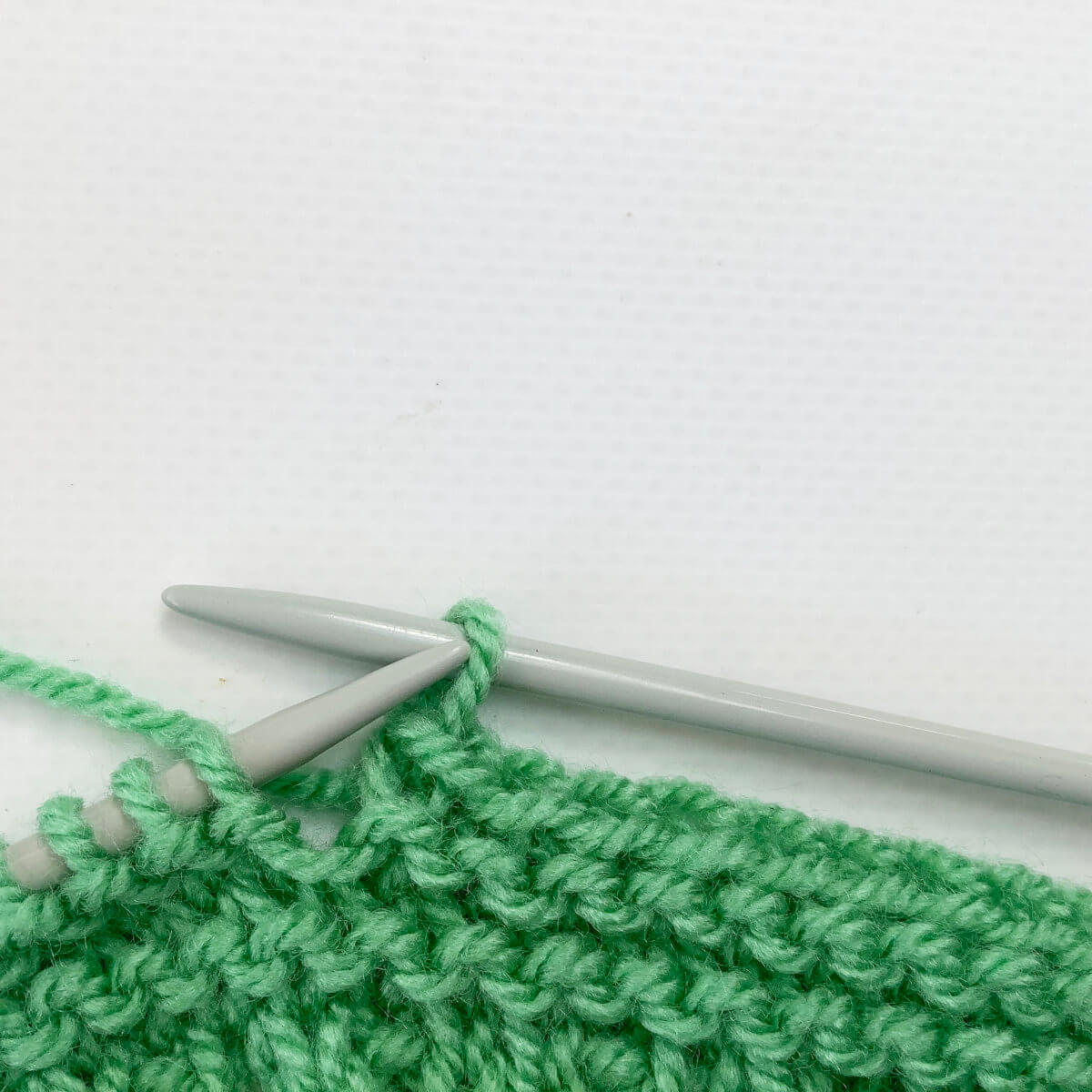
  4. …, and pull it through the stitches you inserted the right-hand needle in.

    step 4

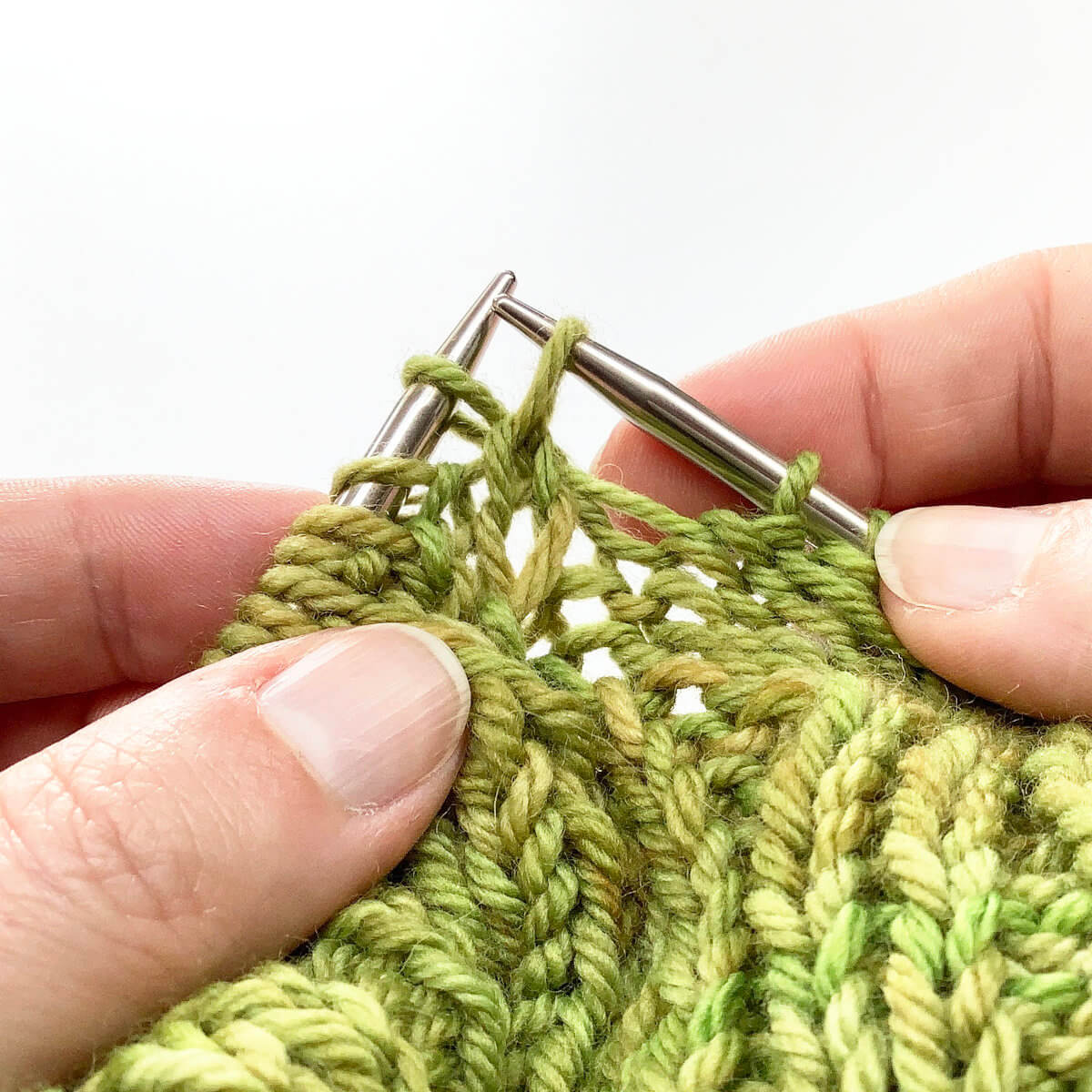
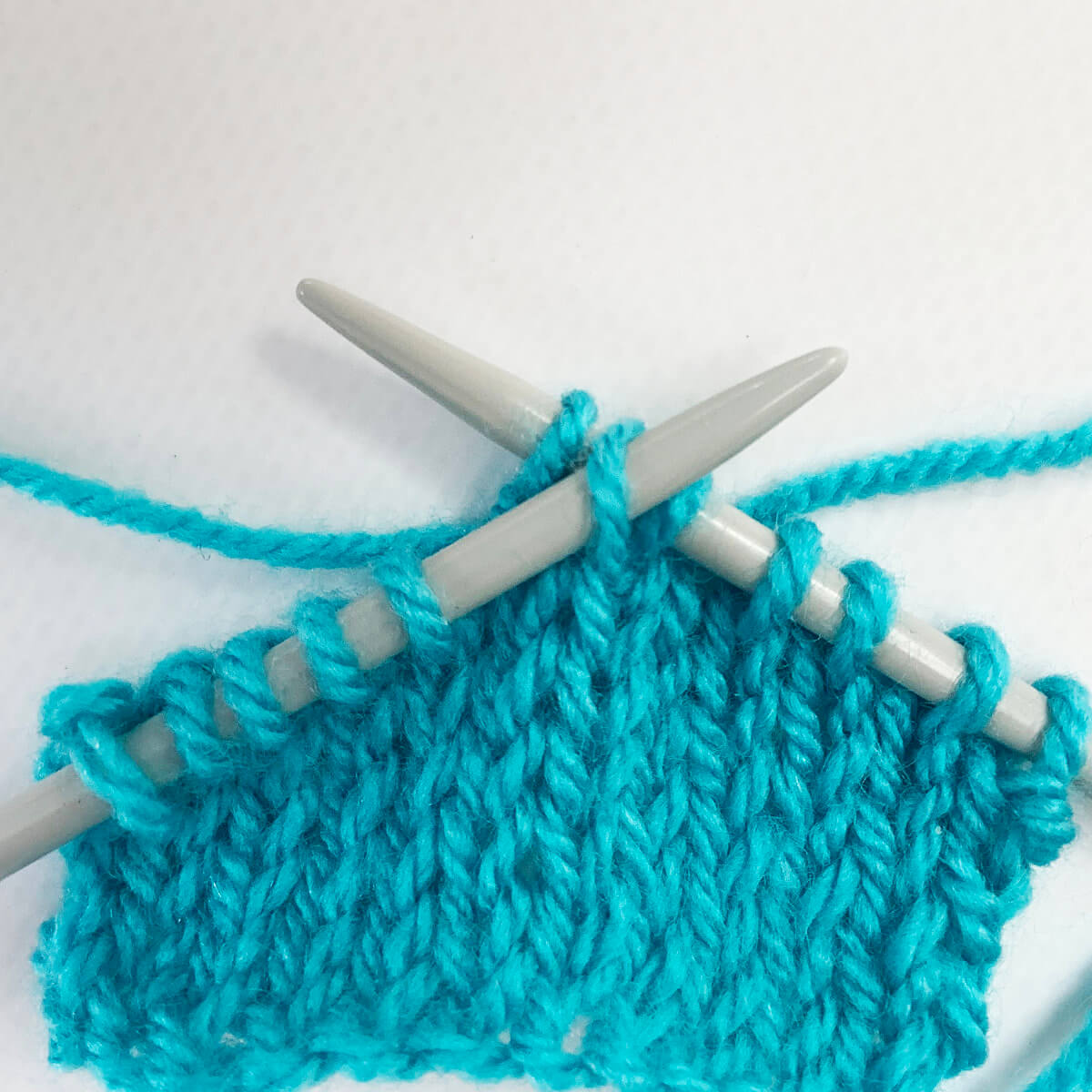
  5. To finish the decrease, slip the original stitches of the left-hand needle.

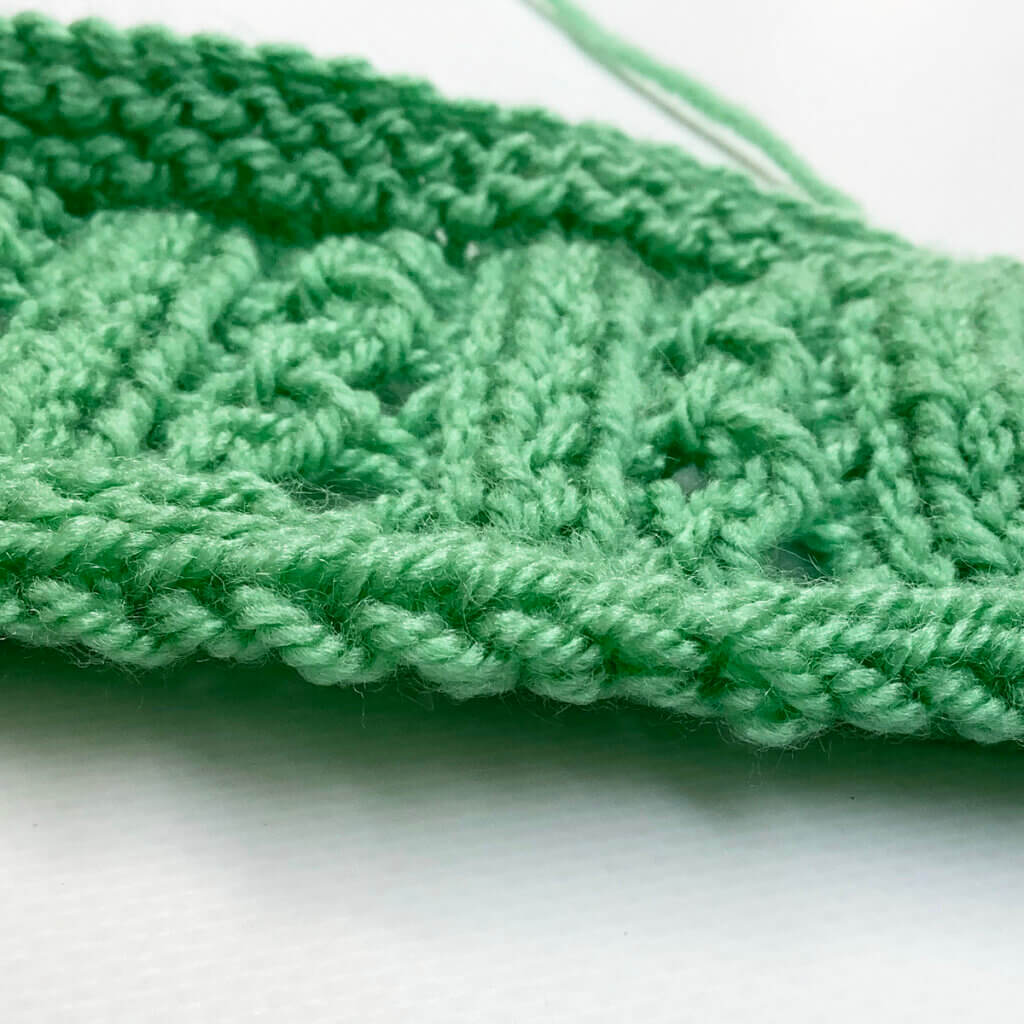
    The k2tog tbl decrease finished

And this is how to work the k2tog tbl decrease!

Patreon logo

Thanks to my Patreon supporters for bringing you this freebie! Creating quality patterns and tutorials is a lot of work and resource-intensive. However, I find it important to give you free content like this tutorial. Thanks to the generous support of my Patreon supporters, I can make it happen. Thank you, patrons! Click here to join, or click here to read more about La Visch Designs on Patreon.

tutorial – working a k2tog tbl Read More »
tutorial – the cable cast-on

Working the cable cast-on

The cable cast-on is a cast-on very similar to the knitted on cast-on. It is worked similarly and creates a clean, and sturdy edge. It is, however, more firm and less stretchy; a very good choice for edges that benefit from that stability and don’t need any stretch. Take for example edges from which stitches are picked up and knit. For this reason, I personally wouldn’t use it for a knitting project that would be blocked heavily. For most other applications, though, it makes a very nice decorative edge. Think for example of edges of non-lace blankets.

This particular method is also great for the beginner knitter because it is basically the knit stitch that is used to cast on. In this post, I’ll show you how to do it!

Materials used

Yarn: Paintbox Yarns Simply DK, a good value, good quality 100% acrylic yarn, here in the color 125 Spearmint Green.

Knitting needles: This is a pair of straights that I picked up at the second-hand store when I started knitting, brand unknown.

The cable cast-on step by step

  1. Make a slip knot and place it on your needle.

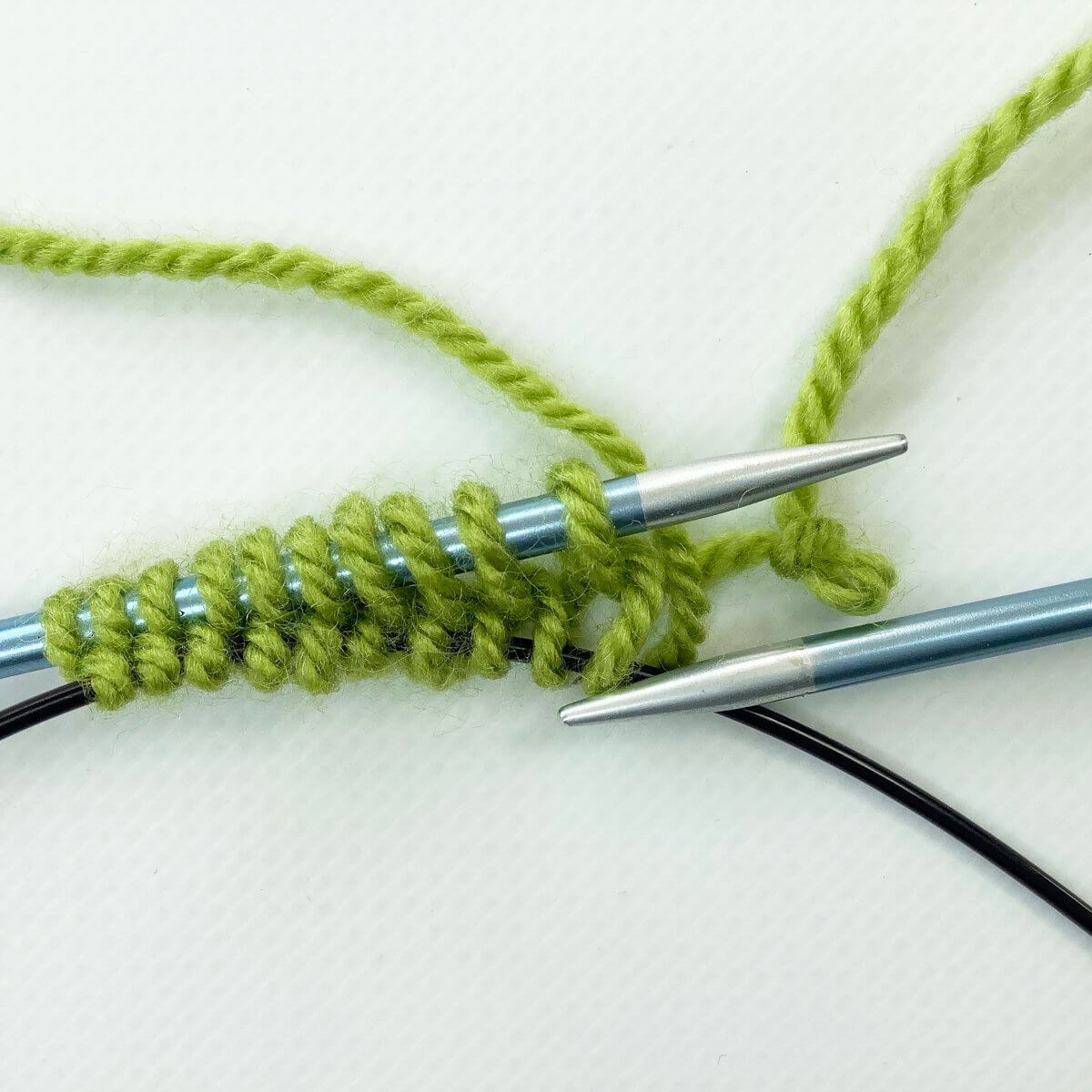
    This forms the first stitch, make sure to leave enough on the tail of the yarn to weave in later. It is also possible not to use a slip knot and just loop the yarn around the needle for your first stitch, thus avoiding the knot in the corner of your work. For the sake of this tutorial, however, I’m going with the slip knot version.Step 1

  2. Take your second needle and insert the tip into the stitch with the needle under your main needle.

    Insert at an angle, so your needles cross as pictured.Step 2

  3. Hold the crossed needles together, take the yarn connected to your ball and wrap it around the bottom needle: go around, and then over.

    Depending on your knitting style, this can be done with either your left or your right hand. The end result is however always the yarn wrapped around the needle as pictured.Step 3

  4. Take the bottom needle and bring it back through the stitch, pulling the yarn with it in a loop.

    Step 4

  5. Now transfer the new loop from the bottom needle to the other needle and tighten the yarn.

    You have now cast on a stitch!Step 5 of working a cable cast-on

  6. Take your second needle and insert the tip in between the 2 stitches closest to the tip of the main needle.

    In this step, we’re deviating from the knitted-on cast-on.Step 6

  7. Wrap the yarn around the needle….

    Step 7

  8. … and pull it through the stitch.

    Step 8

  9. To finish adding the new stitch, place it on the main needle.

    Step 9

  10. Repeat steps 6-9 until you have reached the desired amount of stitches on your needle.

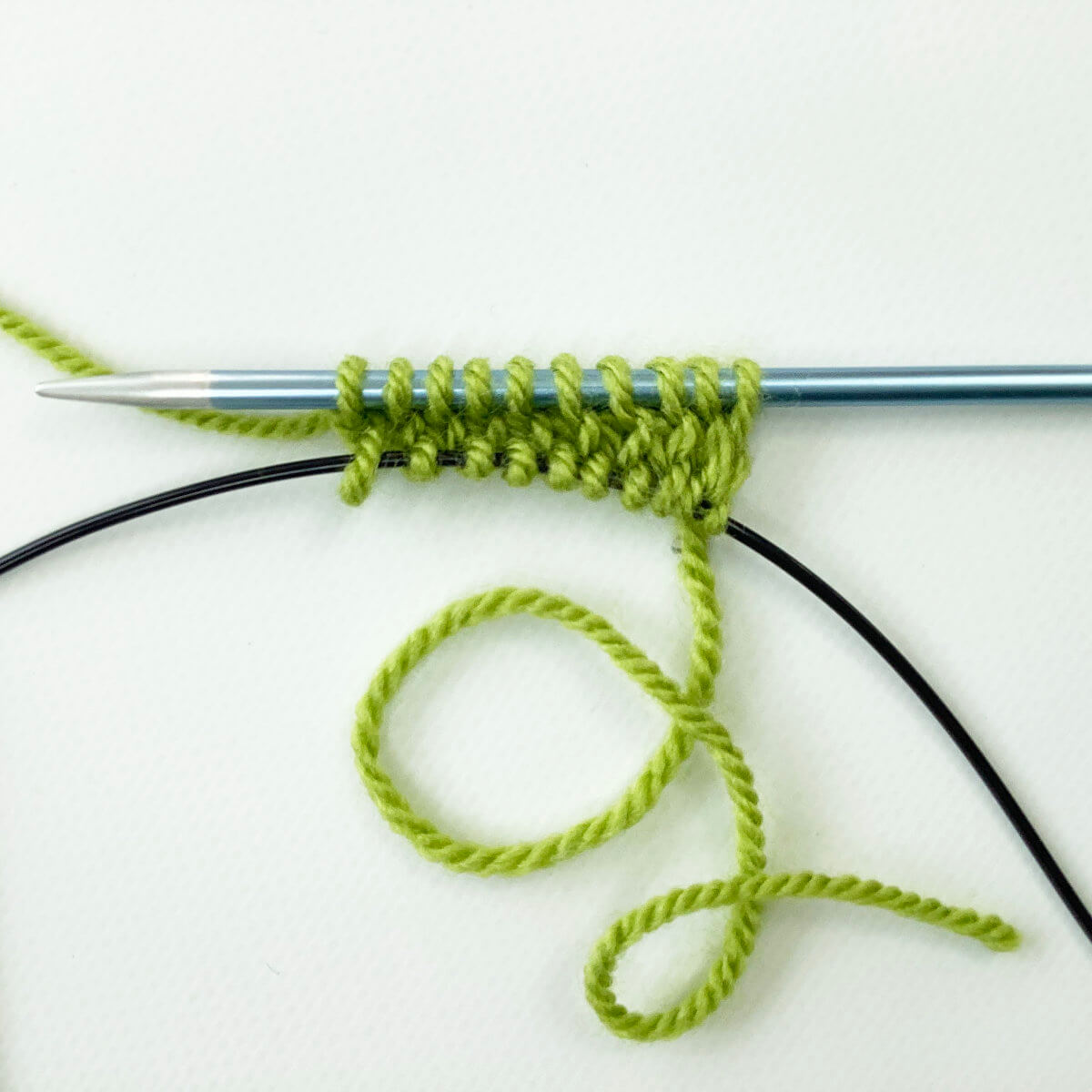
    This is how it looks from the RS of the work, after a couple rows have been worked in garter stitch.The result of the cable cast-on from the RS

  11. And the result from the WS:

    The result of the cable cast-on from the WS

Patreon logo

Thanks to my Patreon supporters for bringing you this freebie! Creating quality patterns and tutorials is a lot of work and resource-intensive. However, I find it important to give you free content like this tutorial. Thanks to the generous support of my Patreon supporters, I can make it happen. Thank you, patrons! Click here to join, or click here to read more about La Visch Designs on Patreon.

tutorial – the cable cast-on Read More »
cherry blossom stole in tinyStudio Creative Life magazine

Cherry Blossoms Stole by La Visch Designs

I’ve got some exciting news for you: my Cherry Blossom Stole pattern makes an appearance in issue 11 of tinyStudio Creative Life magazine! I can tell you it’s a very special edition. Not only does it have over 120 pages of articles on spinning, weaving, knitting & crochet, it’s also available in both digital and print format!

I don’t know if you’re familiar with it, so I’ll just tell you. It’s a quarterly digital publication, with rich content like embedded videos, and slidable galleries of eye candy. It focuses on mindfulness, freedom from stress and clutter, and a conscious approach to fiber crafts. tinyStudio Creative Life is not just a magazine for spinners and fiber artists. There is also the tinyStudio TV video podcast. This gives hands on demonstrations of techniques, interviews with contributors, etc. to enrich and enhance the content of each issue. Below you can find the table of contents of this issue:

The underlying theme of this issue is naturally beautiful. Editor Suzy Brown has left this deliberately quite open, because it is a subject that could have many different interpretations. And indeed, throughout this issue you will see many naturally beautiful things. We all see beauty
in our own unique ways and find our own expressions of the inspiration it brings us by using our own voices.

Cherry Blossoms Stole by La Visch Designs

To get your copy of this issue of tinyStudio Creative Life, visit this link. Not sure yet whether you’d like it? Visit this page to download the free anniversary issue of tinyStudio magazine, and see all the rich content each and every issue provides.

cherry blossom stole in tinyStudio Creative Life magazine Read More »
strawberry finch

Strawberry Finch shawl

The gorgeous color of this kid silk yarn reminded me of the wonderfully bright plumage of the Strawberry Finch, a cute little bird found throughout Asia. What better way to show it off this gorgeous yarn than with all-over lace? Of course, this shawl can also be knit in fingering-weight yarn.

The Strawberry Finch shawl is knitted in lace patterning from the top-down in one piece, starting at the neck edge with a garter tab. The instructions are provided charted and written out.


Pay what you want: (minimum €6.50)

Add to cart


Difficulty level

Patterning in the body of the shawl is on both RS and WS rows. Stitches used include knit, purl, yo, k2tog, skp, purl 1 below, bunny ears yo, and a centered double decrease. This pattern is therefor suitable for the intermediate to advanced knitter.

Sizes and finished measurements

Finished dimensions of the sample shawl: span width of 180 cm (71 inches) along the upper edge and a depth of 78 cm (30 ¾ inches), measured after blocking.

Change the size of the shawl by using heavier or lighter weight yarn and/or working fewer (or more) repeats of the body, the border, or both. This will, of course, change the amount of yarn needed.

Pattern details

  • Strawberry Finch is written for a gauge of approx. 11.1 sts / 19.4 rows = 10 cm (4 inches) over body pattern, measured after blocking. Gauge is however not critical in this design.
  • Pattern languages included: English.
  • Digital PDF has 5 pages (letter size)

Yarn

420 m (459 yds) / 50 g WayfaringYarns Sophia (72% brushed superkid mohair, 28% mulberry silk; 420 m (459 yds) / 50 g) in the color “Fuschia”.

This yarn and pattern are also available as a kit from Sweater Sisters!

Substitute any mohair type yarn with a halo of a similar lace weight for a similar result. Of course, this design can also be worked in a regular fingering weight yarn.

Materials

  • Size 5 mm (US 6) / 80 cm (32 inches) circular needles were used for the sample shawl. If using fingering weight yarn with less halo, needles in size 4 mm (US 6) are suggested.
  • 4 stitch markers to indicate the center and edge stitches.
  • Stitch markers to indicate repeats of the lace patterning (optional).
  • Yarn needle.

strawberry finch Read More »
tutorial – preventing the hump in a top-down crescent

Preventing the hump in top-down crescents

Crescent or sickle-shaped scarves/shawls are very popular and rightly so: because of their special shape, they stay better draped over the shoulders than traditional triangular scarves. I have designed and made several, take for example Art-Deco and Sunglow Forest as shown below.

The one thing that these shawls haven’t, is a well-know issue with this shawl shape: The Dreaded Hump.

Crescent shaped shawl with hump

In this tutorial I’ll show you how to construct a crescent-shaped shawl, without this “hump”.

Top-down crescent shawl construction

Before we go into details, it’s good to get clear what particular construction method I’m using. There are various ways to construct a crescent-shaped shawl. Some are worked from the bottom-up, some from the top-down, some with short rows and some without.

Here, in this tutorial I focus on the top-down construction in which increases are worked on both right side and wrong side rows. The stitch count is increased by 4 stitches at the edges on right-side rows and by 2 on wrong-side rows.

In order to know how to prevent the hump, we first must know why it appears in the first place. Take a look at the picture below:

Regular top-down crescent - including tension arrows

The fast increase ratio, located at the edges only, creates tension in the piece and pushes the fabric into a “hump” at the center edge. In other words: The increases at the outer edges, force the edges outwards. However, the bottom edge of the work only has so much give, ultimately pushing the center upwards creating a hump.

The solution to prevent the hump

The solution: creating more slack in the bottom edge of the shawl, to prevent the tension from pushing the work upwards! Like this:

Adjusted top-down crescent, including tension arrows

The secret: Strategically placing increases in the center of the shawl to create a pie-shaped wedge.

This gives enough extra fabric at the bottom edge of the work to prevent the hump from occurring! The type of increase is completely up to your own preference. In this example, a yarn over is used to make it very visible, in the Art Deco shawl the more discreet m1L and m1R increases are used. In a (reverse) stockinette fabric, extra increases once every 8 rows would do the trick.

Garter stitch has quite a different row gauge than stockinette does. The precise ratio of garter stitch to stockinette, however, depends greatly on the yarn used, and personal gauge. Perhaps the phase of the moon as well. Some sources say that the ratio of garter stitch to stockinette is 1:2. Others say it’s 3:5, 4:6 or even closer to a 5:7 ratio. Taking the latter as an example, this means that (for example) for every 26 rows per 10 cm/4 inches in stockinette there are 36 rows per 10 cm/4 inches in garter stitch when worked with the same yarn and needles. To know your exact ratio and thus the exact repeat for working a pie shaping row in garter stitch, swatching would be needed.

Based on the various possible ratios of garter stitch to stockinette, extra increases every 12 to 16 rows would do the trick in a garter stitch based fabric.

Patreon logo

Thanks to my Patreon supporters for bringing you this freebie! Creating quality patterns and tutorials is a lot of work and resource-intensive. However, I find it important to give you free content like this tutorial. Thanks to the generous support of my Patreon supporters, I can make it happen. Thank you, patrons! Click here to join, or click here to read more about La Visch Designs on Patreon.

tutorial – preventing the hump in a top-down crescent Read More »
blocking a triangle shawl

Blocking a triangle shawl

The top-down triangle must be the shawl shape I knit most often. So, it would be good to share with you how I go about blocking this type of triangle shawl. In this tutorial, I will be showing you how I blocked my Strawberry Finch. This one has all-over lace patterning, pulled into points at the bottom edge into points during blocking. In the below picture you can this shawl before blocking.

starwberry Finch shawl before blocking

What is blocking?

Before we go into details, it’s good to get clear what I mean exactly with “blocking”. Blocking is nothing more than shaping your knit or crochet pieces when moist or wet. Think of finished items or components to sew together afterwards. By blocking them, you can not only even out stitches, but also bring the item to the intended dimensions. The latter of course within reason!

For a sweater or sweater components blocking usually is nothing more than washing the item(s) and patting them gently into shape. Lace shawls, on the other hand, benefit from a rather vigorous blocking by pinning it stretched out as much as possible. After the piece has dried, it will hold its shape until the next washing.

Please note, that not all fibers are suited for the magic of blocking. Only natural fibers like wool, alpaca, cotton etc. as well as some viscose fibers can be blocked in the sense that the dimensions can be adjusted. On synthetics, like acrylic, the process of wet-blocking as described in this post has virtually no effect at all, besides evening out the stitches. Acrylics can be blocked (“killed”) by applying heat through steam blocking or ironing, but that’s an entirely different process.

Blocking an asymmetrical shawl - a tutorial by La Visch Designs

Materials needed

Since the subject of this post is the blocking of a lace triangle shawl, I go for a vigorous blocking using pins. I use the following materials:

  • Blocking mats, these are usually foam mats that hold pins well. Think for example of insulation mats, mats for yoga or play tiles for children.
  • Pins, I use regular pins, but other folks sometimes prefer stainless steel T pins.
  • Wool wash.
  • A towel large enough to comfortably hold your project.

Preparations

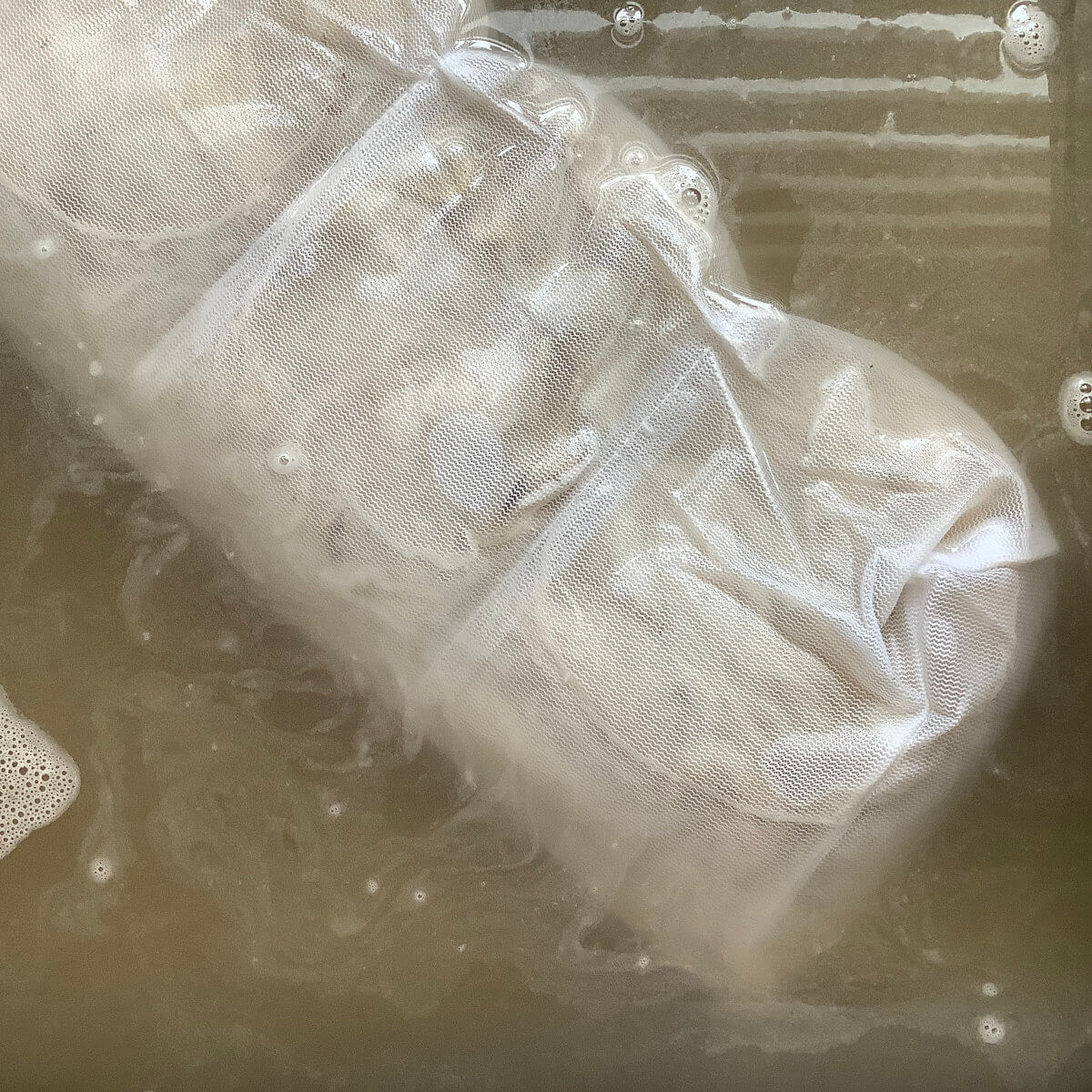
Before we can start with the actual blocking, we have to do some preparations. These mainly consist of giving your shawl a wash, since the FO must be a tad moist for the best blocking results. For completenes’s sake below how I go about it. If you’d like pictures of these steps, please visit the tutorial on blocking an asymmetrical shawl.

  1. First I fill the sink with some lukewarm to warm water and add a dash of wool wash. Put the shawl into the water and let it rest for about 10-15 minutes to make sure the fabric is completely saturated with water.
  2. Next, rinse the shawl. Don’t use cold water for this, as “shocking” warm wool may cause it to felt. If your yarn bleeds dye a bit, you can add a splash of vinegar to the rinse water to help fix it. After rinsing, gently squeeze excess water out of your project. Don’t wring it! This may damage the fibers, causing breakage.
  3. Spread out your towel and place the shawl on top of half of it. Fold the second half of the towel over your shawl and roll it up like a sausage. Squeeze the roll well to transfer most of the wetness from the shawl to the towel. With bigger projects, I find it helps to actually stand a bit on it.

Also, prepare your blocking mats by laying them down in the shape and size needed for your project. I prefer to do that in my workroom because it can be closed off against “helping” cats.

Blocking a triangle shawl step by step

Time to get started with the actual blocking!

  1. Spread out your project on the blocking mats.

    Take care to do so in roughly the shape you want to block it in.Blocking a triangle shawl - step 1

  2. Start by pinning the 2 outer corners.

    You can stretch the upper edge of the shawl out for this, but don’t stretch it to the max., we still need some slack in the fabric to accommodate stretching it out in other directions.Blocking a triangle shawl - step 2

  3. Next, pin the entire upper edge of the shawl in a smooth curve, using approx. 1 pin every 1.25 – 2.5 cm (0.5 – 1 inch).

    You can, of course, pin the upper edge in a straight line, but I find a slightly curved edge sits better on the neck and shoulders.Blocking a triangle shawl - step 3

  4. Now pull down the bottom point and pin it to the mats.

    Again, don’t stretch it to the max yet!Blocking a triangle shawl - step 4

  5. Now pull a point on both the left and the right side down and pin them to the mats.

    At this point, you can still keep some slack in the fabric of the shawl. Also, note that I pinned through the point of a leaf, but that I skipped one on either side.Blocking a triangle shawl - step 5

  6. Move up 2 leaves and again pin them down symmetrically.

    At this point you can ignore any tension differences, we will get to that later on.Blocking a triangle shawl - step 6

  7. Continue as in step 5 and 6 until the whole bottom edge is pinned to the mats.

    At this point I saw it, do you see it too?Blocking a triangle shawl - step 7

  8. A hole in my shawl!

    I must have caught the halo of the yarn there, instead of the thread itself. The tension of the blocking made it go poof. It happens…. Don’t stress, just catch the stitches with a safety pin. The shawl can be fixed after it’s dry.What you don't want to see during blocking...

  9. Back to pinning the bottom edge.

    Now I’m pinning the points I skipped previously, adjusting the pins already there where needed, to achieve a smooth curve.Blocking a triangle shawl - step 8

  10. The final step in blocking.

    Finally, I go over the entire bottom edge again, making sure to pull it out to the max and keeping the edge in a smooth curve. I needed some weights to keep the mats in place, and keep them from buckling under the tension I’m putting the shawl under.Blocking a triangle shawl - step 9

And the result is a beautifully blocked Strawberry Finch shawl! This how to go about blocking a triangle shawl.

Strawberry Finch shawl after blocking

And that hole?

I took a bit of extra yarn and did some duplicate stitch over a couple of stitches on the side of the hole. Then I caught the stitches in a manner very similar to how it should have been. The yarn ends I hid in those wavy decrease lines. Close up, you can see they’re a tad heavier than the other ones. But it’s quite invisible if you don’t know it’s there. Yay!

Patreon logo

Thanks to my Patreon supporters for bringing you this freebie! Creating quality patterns and tutorials is a lot of work and resource-intensive. However, I find it important to give you free content like this tutorial. Thanks to the generous support of my Patreon supporters, I can make it happen. Thank you, patrons! Click here to join, or click here to read more about La Visch Designs on Patreon.

blocking a triangle shawl Read More »